Why Tea Processing Wastewater Is Unusually Demanding
Tea factory effluent is not a generic food-industry stream. The combined discharge from washing, fermentation, rolling, extraction, and cleaning operations typically generates 5–30 m³ of wastewater per tonne of processed leaf, and the chemistry is hostile to conventional activated sludge. Influent COD runs 3,000–8,000 mg/L with documented spikes to 12,000 mg/L during fermentation; BOD/COD sits in a moderately biodegradable 0.45–0.55 range; total polyphenols measure 800–2,500 mg/L as gallic acid equivalent; pH swings between 4.0 and 6.5 depending on whether black, green, or oolong processing dominates the schedule; and suspended solids reach 1,500–4,000 mg/L from fine tea leaf particles and pectin residues (HydropureWater field data, 2026).
| Parameter | Typical Range | Peak / Surge |
|---|---|---|
| COD (mg/L) | 3,000–8,000 | up to 12,000 (fermentation) |
| BOD/COD ratio | 0.45–0.55 | — |
| Total polyphenols (mg/L GAE) | 800–2,500 | >3,000 during withering |
| pH | 4.0–6.5 | 3.8 during fermentation |
| Suspended solids (mg/L) | 1,500–4,000 | 5,000+ if extraction line dumps |
| Specific flow | 5–30 m³/t leaf | — |
Polyphenols and tannins are the central problem. These compounds inhibit nitrifying bacteria and slow heterotrophic kinetics in suspended-growth systems, and they explain why copy-pasting a municipal activated-sludge design into a tea factory produces chronic bulking, foaming, and effluent that fails CPCB tea-industry norms. Plucking season adds a second layer of stress: 3–5× flow surges lasting 4–8 weeks during first and second flush in Assam, Darjeeling, and the Kenyan highlands. Equalization is not optional for any biological train that aims to hold its rated removal efficiency through a flush.
How MBBR Treats Tea Effluent: The Process Logic
The moving bed biofilm reactor was developed in the 1980s by Prof. Hallvard Ødegaard at the Norwegian University of Science and Technology (NTNU) and has since become a workhorse for industrial wastewater with high organic and inhibitory loads (per NTNU / AUC Group background, 2024-10). The reactor is filled to 30–40% by volume with HDPE biofilm carriers — typically 10–25 mm elements with 500–700 m²/m³ of specific surface area and a density of 0.94–0.97 g/cm³ that keeps them suspended in the mixed liquor. Coarse-bubble aeration from a floor-mounted grid keeps the carriers in motion, transfers oxygen, and shears excess biofilm without damaging the active layer.
For tea wastewater, the biofilm architecture is the decisive feature. Polyphenol-degrading consortia grow slowly and wash out of conventional activated sludge at the hydraulic and sludge ages typical of municipal designs; in MBBR they remain attached to the carrier surface and acclimate over 2–4 weeks. The biofilm also buffers pH shock between 4.0 and 8.5, which matches the swing a tea factory actually sees between black-tea fermentation and the neutralization step. Standard design parameters for tea effluent are HRT 8–14 hours, DO 2–4 mg/L, F/M 0.15–0.25 kg BOD/kg MLVSS-day, and ambient temperature 20–35°C. Below 15°C — a real concern in the Nilgiris winter and in northern Chinese plants from November through February — COD removal efficiency drops 5–10 percentage points, so either an enclosed reactor or seasonal heating is recommended for those sites.
When higher ammonia removal is required, the reactor can be operated in IFAS mode by adding suspended mixed liquor and return-activated sludge, combining biofilm and activated-sludge populations in a single tank (per Transcend MBBR primer, 2023-03). For most tea factories this is unnecessary: influent TKN is typically low (20–60 mg/L) because the feedstock is plant leaf, not animal protein, and the binding constraint is COD and polyphenol, not nitrogen.
Recommended Process Flow for a Tea Factory
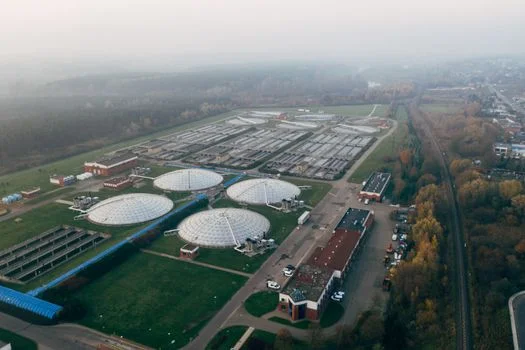
MBBR alone is not a complete plant. The trains that consistently meet discharge norms in India, China, and East Africa all start with mechanical pre-treatment and equalization. A defensible end-to-end flow for a 50–500 m³/day tea factory runs as follows:
- Screening. A rotary bar screen with 1–3 mm openings strips leaf fragments, packaging string, and grit before they enter the wet stream. This protects downstream pumps and prevents media fouling in the MBBR tank.
- Equalization. A 12–24 hour buffer tank dampens the 3–5× plucking-season surge and lets an NaOH dosing loop stabilize pH in the 6.5–7.5 range. A 100 m³/day plant needs a 50–100 m³ EQ basin; the same tank serves as the nutrient dosing point for any nitrogen or phosphorus supplementation required by local discharge rules.
- DAF pre-treatment. A DAF pre-treatment system removes fine suspended tea solids and colloidal polyphenols before they reach the biology. Expect 15–25 mg/L of anionic or cationic polymer, 30–50% TSS removal, and 20–35% COD removal at this step — a meaningful load reduction that protects the MBBR from shock and reduces aeration demand downstream.
- MBBR reactor. HDPE media at 30–40% fill, 8–14 hours HRT, coarse-bubble aeration grid sized at 1.5–2.5 kg O₂ per kg BOD removed, with a 1.3× blower safety factor.
- Solids separation. Either a secondary clarifier for the standard MBBR train, or an MBR polishing module with submerged PVDF membranes when reuse or stricter discharge limits apply.
- Disinfection. Chlorine dioxide (1–2 mg/L residual) or UV (≥30 mJ/cm²) before surface-water discharge, sized to local CPCB, GB 30485-2013, or EU Industrial Emissions Directive limits.
For a deeper look at how DAF compares with oil-water separation in food-industry streams, see the DAF system engineering comparison.
MBBR Design Parameters for Tea Processing Wastewater
The table below is sized directly from a tea-effluent design basis. Reactor volume assumes the listed flow rate at the listed HRT with 15% freeboard and 35% media fill; media volume is the empty-reactor volume times 0.35. Aeration and sludge numbers follow from the same basis.
| Parameter | 50 m³/day | 100 m³/day | 250 m³/day | 500 m³/day |
|---|---|---|---|---|
| Reactor volume (m³) | 20–30 | 40–60 | 100–145 | 200–290 |
| HDPE media at 35% fill (m³) | 7–10 | 14–21 | 35–50 | 70–100 |
| HRT (hours) | 10–14 | 10–14 | 10–14 | 8–14 |
| DO setpoint (mg/L) | 2.0–4.0 | 2.0–4.0 | 2.0–4.0 | 2.0–4.0 |
| F/M ratio (kg BOD/kg MLVSS-d) | 0.15–0.25 | 0.15–0.25 | 0.15–0.25 | 0.15–0.25 |
| COD removal (%) | 80–88 | 82–90 | 85–92 | 85–92 |
| BOD removal (%) | 90–95 | 90–96 | 92–96 | 92–97 |
| Polyphenol removal (%) | 65–75 | 70–80 | 72–82 | 75–85 |
Sludge yield for tea effluent runs 0.3–0.5 kg MLVSS per kg BOD removed — meaningfully lower than the 0.6–0.8 typical of conventional activated sludge, which is a direct OPEX advantage. Aeration demand sits at 1.5–2.5 kg O₂/kg BOD removed, on the high side of the industrial range because of the recalcitrant polyphenol fraction. A 100 m³/day plant handling 4,000 mg/L COD at 90% removal produces 50–90 kg DS/day of waste activated sludge; dewatering is normally done with a plate and frame filter press for plants above 100 m³/day, or a screw press for smaller sites.
MBBR CAPEX for Tea Processing Wastewater: 2026 Numbers
All-in 2026 CAPEX for a tea-specific MBBR system — civil works, tankage, HDPE media, DAF pre-treatment, equalization, blowers, automation, installation, and commissioning — runs $1,400–$2,600 per m³/day of installed capacity. That is higher than the $800–$1,500/m³/day benchmark for domestic MBBR plants because tea effluent requires DAF, equalization, NaOH dosing, and corrosion-resistant materials that municipal work does not.
| Plant Size | CAPEX Range (USD) | Indicative $/m³/day |
|---|---|---|
| 50 m³/day | $130,000–$180,000 | $2,600–$3,600 |
| 100 m³/day | $180,000–$260,000 | $1,800–$2,600 |
| 250 m³/day | $260,000–$340,000 | $1,040–$1,360 |
| 500 m³/day | $340,000–$450,000 | $680–$900 |
Typical CAPEX split: MBBR tank and HDPE media 30–35%, DAF pre-treatment 15–20%, blowers and aeration grid 10–15%, clarification or filtration 10–15%, automation and instrumentation 5–10%, civil works and installation 15–20% (HydropureWater project data, 2026). Continuous-process systems like MBBR can simplify site work compared with batch systems such as SBR, an installation-cost advantage that the Nov 2024 cost-system analysis flagged (per Transcend / industry cost article, 2024-11). For 100 m³/day, the savings typically land at 15–25% versus an equivalent SBR design.
MBBR OPEX for Tea Processing Wastewater: 2026 Breakdown
Total OPEX for an MBBR-based tea wastewater plant sits between $0.18 and $0.55 per m³ treated, with the lower end at 500 m³/day with cheap grid power and the upper end at 50 m³/day with diesel-backed aeration. The headline numbers and the breakdown are below.
| OPEX Category | Share of Total | Driver / Notes |
|---|---|---|
| Electricity (aeration blowers) | 35–45% | 0.8–1.4 kWh/m³ for MBBR step; 1.5–2.5 kWh/m³ total plant |
| Sludge dewatering and disposal | 20–30% | See sludge dewatering cost optimization |
| Chemicals (pH correction, nutrients) | 10–15% | NaOH, urea/phosphoric acid, polymer for DAF |
| Media replacement reserve | 3–5% | HDPE carriers 10–15 year life |
| Labor and maintenance | 10–15% | Skilled operator, membrane cleaning if MBR fitted |
| Total OPEX | 100% | $0.18–$0.55 per m³ treated |
Energy intensity is the line item a CFO will press on. For a 100 m³/day plant at Indian industrial tariffs (~₹8/kWh or $0.095/kWh), the electricity line alone runs $0.07–$0.11/m³, which is why variable-frequency drives on the blowers pay back in 12–18 months. The textile MBBR-MBR study (per Reduction of Cost and Environmental Impact in Textile Wastewater, 2024) demonstrated that the OPEX reduction from higher effluent quality — and therefore lower discharge tax — covers the membrane premium within three to five years; the same logic applies to a tea factory discharging into a CPCB-regulated receiving water.
When to Choose MBBR Alone vs MBBR+MBR vs UASB+MBBR
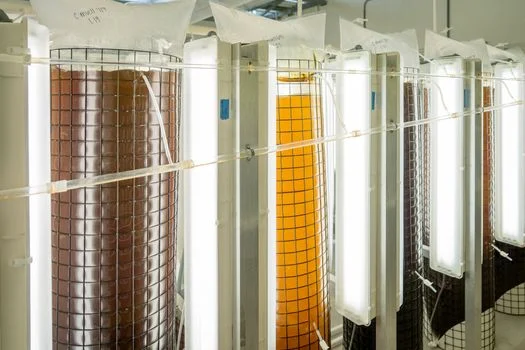
The right biological train is a function of influent strength, discharge limit, flow scale, and whether water reuse or biogas is part of the business case. Three configurations cover the tea-factory landscape:
- MBBR alone (with secondary clarifier) — the default for flow below 300 m³/day where the discharge limit is COD ≤ 150 mg/L and TSS ≤ 50 mg/L, which covers most Indian CPCB tea-industry sites and equivalent Chinese GB 30485-2013 envelopes for similar food sectors. Lowest CAPEX, simplest operation, and the configuration most buyers should benchmark against first.
- MBR polishing module added to MBBR — the right pick when reuse is a target (>70% recovery for garden irrigation or boiler make-up), or when the receiving water requires COD ≤ 50 mg/L. A MBR polishing module with submerged PVDF membranes delivers TSS < 5 mg/L and effectively decouples hydraulic and sludge retention time. Best economics at 100–500 m³/day. For a side-by-side with conventional activated sludge, the MBR vs conventional activated sludge comparison is the right reference.
- UASB + MBBR hybrid — the choice for very large tea extraction plants above 500 m³/day with consistently high-strength influent (COD > 8,000 mg/L) and a biogas credit. A UASB upstream removes 60–75% of the COD anaerobically, drops aeration demand on the MBBR by roughly the same fraction, and produces methane that can offset a meaningful share of plant energy. The build decision is whether the OPEX savings and biogas revenue beat the extra civil cost of a UASB reactor; at 500 m³/day they usually do, and they become more compelling as flow climbs. For the upstream-vs-downstream trade-off, the anaerobic vs aerobic digester comparison covers the decision logic.
Decision rule: if the plant is >500 m³/day, influent COD is consistently above 8,000 mg/L, and the site can use biogas thermally, go UASB+MBBR hybrid. If water reuse or a strict surface-water limit is the binding constraint, go MBBR+MBR. Otherwise, MBBR with a secondary clarifier is the most cost-effective default for tea factories in 2026.
Frequently Asked Questions
What HRT does an MBBR need for tea processing wastewater? 8–14 hours at 30–40% media fill and 2–4 mg/L dissolved oxygen. Shorter HRTs work for BOD removal alone; the longer end of the range is needed to push polyphenol removal above 70%.
Can MBBR remove polyphenols and tannins from tea effluent? Yes. An acclimated biofilm at 20–35°C achieves 70–80% polyphenol reduction; below 20°C, expect 60–70% and plan for longer HRT or a polishing step.
How does MBBR cost compare to SBR or conventional activated sludge for a 100 m³/day tea plant? CAPEX is typically 15–25% lower than SBR because the continuous-flow reactor volume is smaller and the control system simpler. OPEX runs 10–20% below CAS because the sludge yield is lower (0.3–0.5 vs 0.6–0.8 kg MLVSS/kg BOD removed) and aeration targets are tighter.
What discharge standard does MBBR-treated tea wastewater meet? India CPCB tea-industry norms, China GB 30485-2013, and the EU Industrial Emissions Directive are all achievable. A standard MBBR with secondary clarifier typically produces COD 80–120 mg/L, BOD 20–35 mg/L, and TSS 30–60 mg/L; adding an MBR polishing step pushes COD below 50 mg/L and TSS below 5 mg/L.
Does MBBR handle the seasonal flow surge during tea plucking season? Yes, and the biofilm recovers faster than activated sludge — 4–8 hours to regain rated removal after a 3× hydraulic shock, versus 24–48 hours for CAS. Pair the reactor with a 12–24 hour equalization tank and pH correction, and the surge is absorbed without effluent excursions.