Anaerobic vs Aerobic Digester: Process-Level Differences
An anaerobic vs aerobic digester choice turns on oxygen, retention time, and energy balance. Anaerobic digestion yields biogas at 60-70% methane and 40-60% VS reduction over 20-40 days mesophilic or 15-25 days thermophilic. Aerobic digestion reaches 35-50% VS reduction in 10-25 days and uses 10-20 kWh per kg VS destroyed. Thermophilic anaerobic can reach Class A; aerobic suits smaller plants.
The biochemistry of oxygen presence versus absence drives every downstream decision, from tank sizing to revenue line items. Anaerobic digestion runs in a sealed, oxygen-free tank where four microbial consortia — hydrolytic, acidogenic, acetogenic, and methanogenic — convert organics into acetic acid, hydrogen, then biogas. Off-gas stays near 60-70% CH₄ and 30-40% CO₂, with trace H₂S that must be scrubbed before a CHP unit or boiler (per US EPA 2016 digester guidance).
Aerobic digestion is a continuous-aeration tank. Heterotrophic bacteria oxidize organics to CO₂, water, and new cell biomass through endogenous respiration. That is the same metabolic stage that consumes mixed liquor in an activated sludge basin. Operating SRT typically falls between 10-25 days at ambient or mesophilic temperatures (20-40°C). Biological reaction heat dissipates to the atmosphere rather than being captured.
End products create the economic fork. Anaerobic yields biogas plus stabilized biosolids. Aerobic yields only stabilized biosolids plus waste heat, with a continuous blower electricity draw. For biosolids stabilization, EU IED (2010/75/EU) and China GB 18918-2002 set discharge and reuse thresholds that push operators toward one route or the other by influent strength and end-use pathway. Liquid-train choices for aerobic vs anaerobic wastewater treatment sit on a sibling page when the decision is about water, not digesters.
Operating Parameters Side by Side
Anaerobic digestion is energy-positive across municipal and high-strength industrial feeds. Aerobic digestion is energy-negative in nearly every configuration. That energy balance line is where the two technologies diverge economically. The table below consolidates the decision parameters engineers most often need.
| Parameter | Anaerobic Digestion | Aerobic Digestion |
|---|---|---|
| Retention time (SRT/HRT) | 20-40 days mesophilic; 15-25 days thermophilic | 10-25 days (typically ambient) |
| VS reduction efficiency | 40-60% | 35-50% |
| Energy balance | Energy-positive: 8-12 kWh/m³ treated as electricity + heat from CHP | Net-negative: 10-20 kWh per kg VS destroyed for aeration |
| Methane yield | 0.3-0.5 m³ CH₄ per kg VS destroyed (mesophilic standard) | None |
| Operating temperature | 30-38°C mesophilic; 50-60°C thermophilic | 20-40°C, often ambient |
| CAPEX per m³ daily capacity | $200-600/m³ (CSTR, UASB, or EGSB) | $50-150/m³ |
| Footprint | Larger; needs gas holder, mixing, heating | 30-50% smaller tank volume for equivalent VS loading |
| Pathogen kill / biosolids class | Thermophilic → Class A (EPA 40 CFR Part 503); mesophilic → Class B | Class B at best |
| Odor & corrosivity | H₂S 100-3,000 ppm in raw biogas; scrubbing required | Low-H₂S exhaust; minimal gas treatment |
Two numbers carry most of the weight in a stakeholder review: methane yield (0.3-0.5 m³ CH₄/kg VS destroyed) and the CAPEX delta. The CAPEX gap of roughly 3-4× is the largest objection in anaerobic retrofit talks. Methane yield is the strongest counter-argument. For a 20,000 m³/day plant destroying 8,000 kg VS/day, 0.4 m³ CH₄/kg VS yields 3,200 m³ CH₄/day. That is roughly 12.8 MWh thermal at CHP conversion. At $0.08/kWh electricity value, operating cost recovers within 5-8 years under 2026 gas-to-grid pricing.
Biosolids class drives land-application options and hauling cost. Thermophilic anaerobic produces EPA Class A biosolids for unrestricted fertilizer use under 40 CFR Part 503. Mesophilic anaerobic and aerobic both yield Class B, with site-restriction and monitoring obligations. For EU operators, meeting IED BAT-AELs for sludge treatment typically needs the higher VS destruction and Class A output that only thermophilic or TPAD configurations provide. Field reviews of anaerobic vs aerobic digester CAPEX still hinge on that Class A premium more than tank steel cost alone.
Mesophilic vs Thermophilic: The Anaerobic Sub-Decision
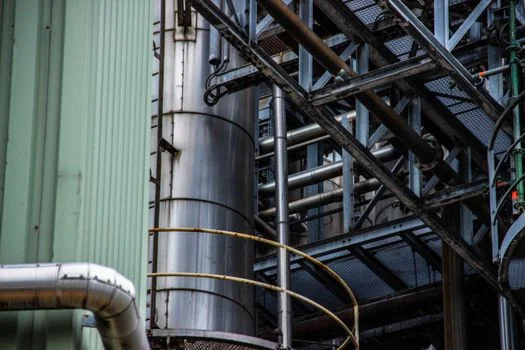
Mesophilic versus thermophilic anaerobic digestion is the next defensible choice after anaerobic is selected. Temperature regime drives biosolids end-use, not just energy balance. The call tracks the plant's biosolids marketing plan and the regulatory class the operator must clear.
| Parameter | Mesophilic (30-38°C) | Thermophilic (50-60°C) |
|---|---|---|
| SRT/HRT | 20-40 days | 15-25 days |
| VS reduction | 40-55% | 50-60% |
| Pathogen kill | Class B (EPA 40 CFR Part 503) | Class A (unrestricted land application) |
| Process stability | Tolerates higher ammonia-N inhibition; forgiving of load swings | Faster kinetics but more sensitive to shock loads and toxicants |
| Heating energy | Baseline (sludge heated to ~35°C) | 20-30% higher heating demand (sludge heated to ~55°C) |
| Foaming risk | Lower | Higher, especially with high-protein WAS |
| CAPEX premium | Baseline | +10-20% for heat exchangers and improved insulation |
Mesophilic operation is the default in most municipal installations because it is forgiving and cheap to run. It does not satisfy the EPA Class A pathogen standard on its own. Thermophilic operation at 50-60°C achieves that standard in roughly half the retention time. That helps when tank volume is constrained by a brownfield retrofit. The trade-off is a heating energy premium of 20-30% and a more sensitive microbial population that needs tighter upstream toxin screening.
Many mid-size plants run temperature-phased (TPAD) digestion: a thermophilic first stage for pathogen kill, then a mesophilic second stage for polishing and methane yield. TPAD typically delivers 65-70% VS reduction with Class A biosolids and cuts thermophilic residence time burden. The configuration is common above 20,000 m³/day when both biogas revenue and unrestricted biosolids marketing matter. Most plants we size in that band still start mesophilic unless Class A marketing is locked into the biosolids plan.
When to Use Anaerobic or Aerobic Digestion?
Municipal plants under 5,000 m³/day usually select aerobic digestion for CAPEX and simplicity. Plants above 20,000 m³/day and high-strength industrial feeds usually select anaerobic digestion because biogas payback lands in 5-8 years. Between those bands, biosolids disposal cost and onsite heat demand decide the call. Use the size matrix below before locking tank volume or gas-handling scope.
| Plant size (influent m³/day) | Typical digester choice | Decision driver |
|---|---|---|
| Under 5,000 | Aerobic | Anaerobic CAPEX payback rarely under 10 years; simplicity favored |
| 5,000-20,000 | Case-by-case (often mesophilic anaerobic CSTR) | Viable if biosolids disposal exceeds ~$80/wet ton or biogas can offset onsite heat |
| Above 20,000 | Anaerobic (mesophilic CSTR or TPAD) | Biogas offsets heating/mixing; CAPEX premium pays back in 5-8 years |
| Industrial high-strength (COD >10,000 mg/L) | Anaerobic UASB or EGSB | 70-85% organics recovery as biogas; aerobic is uneconomical at this loading |
| Low-VS municipal WAS, high inert content | Aerobic can match anaerobic | Avoids gas-plant complexity when VS destruction is the only goal |
For industrial high-strength feeds — food and beverage, brewery, pulp and paper, dairy processing — anaerobic UASB or EGSB reactors routinely recover 70-85% of influent organics as biogas. Hydraulic retention times can fall to 4-12 hours at thermophilic conditions. Aerobic treatment at the same organic loading would need impractically large aeration tanks and continuous blower power in the megawatt range.
Municipal waste activated sludge with a low VS/TS ratio (below 60% VS) or high inert grit often shows VS reduction in the 30-40% range regardless of digester choice. Aerobic digestion then matches anaerobic on solids destruction for dewatering and avoids gas handling, H₂S scrubbing, and CHP investment. The tipping point lives in the OPEX spreadsheet. Broader anaerobic vs aerobic water treatment economics for liquid effluent trains are covered separately from this digester guide.
Selection checklist before you freeze the process:
- Confirm influent flow band and VS/TS ratio on thickened feed, not raw clarifier underflow.
- Price biosolids hauling or land application at current wet-ton rates, including Class A vs Class B restrictions.
- Quantify onsite heat and power loads that biogas could offset at 8-12 kWh/m³ treated from CHP.
- Check whether EPA 40 CFR Part 503 Class A is required for unrestricted land application.
- Include gas holder, H₂S scrubbing, and CHP CAPEX when comparing anaerobic options.
- Verify thickener capacity for 4-6% TS feed if anaerobic CSTR is preferred.
- Run payback at your electricity tariff, not a generic $0.08/kWh assumption alone.
How Do Anaerobic and Aerobic Reactors Compare on Slurry Generation?
Anaerobic reactors typically leave less wet slurry mass to haul because they destroy more volatile solids and release cell-bound water. Aerobic reactors leave wetter cake and higher haul tons at the same dry-solids throughput. Slurry generation is therefore a digester economics issue, not only a tank-volume issue. Operators who ignore cake dryness often understate the true OPEX gap.
Anaerobic biosolids commonly dewater to 22-28% cake dryness after higher VS destruction (40-60%). Aerobic biosolids usually cap at 18-22% cake solids after 35-50% VS reduction. A 4% cake dryness improvement cuts wet tons hauled by 15-20% at a given dry solids throughput. That haul reduction compounds year after year at plants paying above about $80/wet ton for disposal.
Low-VS municipal WAS (below 60% VS) narrows the slurry gap because both reactor types may only reach 30-40% VS reduction. In that feed case, aerobic digestion can match anaerobic on slurry mass while avoiding gas-plant complexity. High-strength industrial feeds reverse the picture: anaerobic UASB or EGSB recovery of 70-85% of influent organics as biogas shrinks residual slurry far more than any aerobic basin sized for the same COD load.
How the Digester Choice Cascades to Upstream and Downstream Equipment
The digester is rarely the largest line item in a sludge-handling CAPEX. Upstream thickeners and downstream dewatering presses typically account for 60-70% of the train's installed cost. Engineers who specify a digester without locking thickener and dewatering choice almost always create a bottleneck or an over-specified press. The cascade works in three steps.
First, feed solids concentration. Anaerobic digesters perform best on thickened sludge at 4-6% TS, which means a gravity belt thickener or rotary drum thickener upstream. Aerobic digesters can accept 1-2% TS directly from secondary clarifiers, which removes the thickener from the CAPEX stack. Skipping pre-thickening on an anaerobic system drops effective SRT and inflates tank volume by 50-100%. That is the most common retrofit mistake engineers report.
Second, cake dryness from dewatering. Anaerobic biosolids lose more cell-bound water and intracellular polymers, so they typically dewater to 22-28% cake dryness. That range suits a plate and frame filter press for biosolids dewatering. Aerobic biosolids usually cap at 18-22% cake solids, where a belt press is adequate and cheaper to operate. Haul cost scales with the moisture gap noted above.
Third, biogas utilization infrastructure. A CHP unit, gas holder, and H₂S scrubber add $300K-2M to anaerobic project CAPEX, but they convert a sludge liability into a revenue line. Plants with large thermal loads — drying beds, building heat, or an adjacent MBR membrane bioreactor wastewater treatment system — can offset site energy with digester gas when aeration heating demand is high. Operators who treat the digester as an isolated vessel miss the cascade; operators who plan the full train capture it.
Who This Is For and Next Step
Plant engineers, EPC contractors, and procurement managers use this comparison to size sludge digesters on energy balance, Class A/B biosolids pathway, and payback. Look elsewhere if you need liquid-train aerobic and anaerobic wastewater treatment layouts rather than digester selection. If your flow, VS loading, and biosolids class targets are already known, send them through the request-a-quote form so the digester, thickener, and dewatering package can be sized as one train.
Frequently Asked Questions
What is the main difference between anaerobic and aerobic digestion?
Anaerobic digestion runs without oxygen, producing biogas (0.3-0.5 m³ CH₄/kg VS destroyed) and 40-60% VS reduction over 20-40 days. Aerobic digestion uses continuous aeration, achieves 35-50% VS reduction in 10-25 days, and consumes 10-20 kWh/kg VS destroyed. Energy-positive biogas revenue is the core economic split between the two trains.
Which digester produces Class A biosolids?
Only thermophilic anaerobic digestion at 50-60°C with sufficient SRT (typically 15-25 days) qualifies for EPA 40 CFR Part 503 Class A designation. Mesophilic anaerobic and aerobic both produce Class B at best, with site-restriction requirements. TPAD can also reach Class A when the thermophilic stage is properly sized and held.
At what plant size does anaerobic digestion become cost-effective?
For municipal plants above 20,000 m³/day, anaerobic CAPEX premium typically pays back in 5-8 years through biogas offset. Below 5,000 m³/day, aerobic digestion is preferred because anaerobic payback rarely drops under 10 years. The 5,000-20,000 m³/day band is case-by-case on hauling cost and heat demand.
How much methane does an anaerobic digester produce?
Standard mesophilic anaerobic digestion of municipal WAS yields 0.3-0.5 m³ CH₄ per kg VS destroyed, equivalent to 8-12 kWh/m³ treated as electricity and heat at a CHP unit. Industrial high-strength feeds (COD >10,000 mg/L) in UASB or EGSB reactors can push recovery to 70-85% of influent organics.
What ongoing costs should I budget for anaerobic digestion?
Anaerobic OPEX includes mixing power, heating (20-30% more under thermophilic operation), H₂S scrubbing, and consumables on gas-handling equipment. For spare-parts and consumable budgets on a related anaerobic reactor, see this UASB reactor spare parts and consumables OPEX breakdown, and for downstream dewatering OPEX, the filter press maintenance cost in 2026 guide.