Why Spare Parts Often Sink UASB OPEX Budgets
UASB reactor spare parts and consumables typically run $0.012–$0.040 per m³ of treated wastewater in 2026, dominated by the three-phase separator, EPDM gaskets, biogas flow meters, and recirculation pump seals. Critical spares cost $8,000–$35,000 to stock upfront, and annual consumables (nutrients, alkalinity agents, probes) add another $4,000–$12,000 per reactor. Yet most published cost references stop at the CAPEX line. A typical two-UASB industrial train carries a $5.0M ± 25% installed price tag (per the U.S. cost-evaluation benchmark for anaerobic wastewater treatment systems), and the standard treatment-cost paper aggregates O&M into a single $/m³ figure with no component-level disclosure.
That gap is the problem. Across standard industrial wastewater treatment lifecycle studies, 60–70% of the 10-year cost-of-ownership is OPEX — parts, consumables, energy, labor — while CAPEX is only 30–40%. For a UASB specifically, the OPEX share skews higher because three failure modes are uniquely punishing: gas-handling components degrade in H₂S-rich service, biological recovery from an upset takes 30–90 days once methanogens wash out, and OEM spares imported from Europe or India run 8–16 weeks of lead time. The result is a reactor that is cheap to buy and expensive to keep alive.
This article publishes what the SERP is missing: a 2026 component-by-component spare-parts and consumables bill of materials, with unit-price bands, replacement intervals, OEM vs. aftermarket guidance, and a 5-year budgeting framework you can paste into a procurement model. The downstream economics also depend on how wasted granular sludge is handled — engineers comparing dewatering options can review sludge disposal cost optimization strategies that cut OPEX 30–60% for the dewatering side of the lifecycle.
Component-by-Component Spare Parts Cost Breakdown
Every wear part in a UASB reactor has a defensible 2026 unit-price band and a realistic service interval. The table below is the procurement anchor; the prose beneath it explains the engineering rationale behind each line.
| Component | 2026 Unit Price Band (USD) | Typical Service Life | Replacement Trigger |
|---|---|---|---|
| Three-phase separator (GSS), stainless or FRP | $4,500–$14,000 per unit | 8–12 years | Deflector or lamella erosion, gas short-circuiting |
| GSS deflector plate / lamella insert set | $1,200–$3,500 | 5–7 years | Visible deflection, carryover of solids into gas line |
| Biogas collection hood + gas piping (EPDM/Viton seals) | $2,800–$9,000 | 10–15 years (hood); 1 year (seals) | Seal hardening, visible gas leak at flanges |
| Annual seal/gasket service kit | $400–$1,200 | 1 year | Scheduled shutdown |
| Influent feed distributor (rotary or spray-ball), 316L nozzles | $1,500–$4,000 rebuild kit | 3–5 years | Nozzle fouling, channeling at bed surface |
| Effluent weir + launder (FRP or SS adjustable) | $900–$2,500 | 5–8 years | Level instability, biomass washout |
| Sludge discharge valve (pneumatic pinch or knife-gate) | $600–$1,800 each (4–8 per reactor) | 3–5 years | Sleeve wear, seal failure, intermittent discharge |
| Recirculation pump mechanical seal | $180–$450 | 12–18 months | Seal weep, visible biofilm on shaft |
| Recirculation pump impeller / wear plate | $350–$1,100 | 3–4 years | Flow drop >10% on curve |
The three-phase separator (GSS — gas–solid–separator) is the single most expensive line item, both at install and at mid-life rebuild. Deflector plates and lamella inserts take the brunt of rising-gas turbulence and sulfide corrosion, which is why mid-life rebuild at 5–7 years is normal even when the vessel itself is sound. Biogas hoods and gas piping follow the same pattern — the SS/FRP shell outlasts its EPDM and Viton seals, which is why a 12-month seal-replacement budget is non-negotiable. Influent distributors and effluent weirs fail slowly and silently: nozzle fouling and level drift degrade treatment before operators notice, so rebuild intervals should be calendar-based, not condition-based.
For the granular wasted sludge, most sites route it to a mechanical dewatering step — a plate and frame filter press for wasted granular UASB sludge is the typical 2026 specification. Sludge discharge valves (4–8 per reactor) are the highest-frequency wear item in the table, and they justify a stocked-spares policy because a stuck-open valve during a sludge-wasting event can collapse bed inventory inside 48 hours.
Cross-checking against the academic UASB total-cost paper, the line items above reconcile to the published $/m³ annual cost band for high-strength industrial influent — a useful sanity check when the CFO asks where the number came from.
Instrumentation and Sensor Replacement Costs
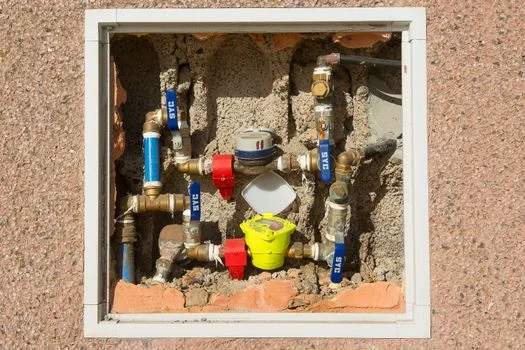
Instrumentation is low-cost line-item by line-item, but it dictates whether the UASB stays online or tips into a 30–90-day recovery event. The 2026 sensor pricing and replacement intervals below apply to high-strength anaerobic service in food, brewery, and pulp/paper applications.
| Instrument | Installed Cost (USD) | Service Life in UASB Service | Maintenance Trigger |
|---|---|---|---|
| pH probe (in-reactor) | $400–$1,100 | 12–18 months | Sulfide fouling, drift >0.2 units |
| ORP probe | $500–$900 | 18–24 months | Reference junction fouling |
| Biogas flow meter (thermal mass or vortex) | $3,200–$7,500 | 5–7 years (calibrated annually) | Drift from reference meter at annual calibration |
| Annual biogas flow meter calibration | $400–$700 | 1 year | Scheduled |
| Biogas composition analyzer (CH₄/CO₂/H₂S) | $8,000–$18,000 | 7–10 years (analyzer); 18–24 months (H₂S cell) | Sensor cell exhaustion, baseline drift |
| H₂S sensor cell replacement | $900–$1,800 | 18–24 months | Scheduled cell swap |
| Level transmitter / gas-line pressure transmitter | $700–$1,500 each | 4–6 years | Diaphragm fouling, zero shift |
pH probes in the reactor body are the highest-frequency casualty — sulfide fouling attacks the reference junction first, and probe life in UASB service is roughly half what the same probe would deliver in aerobic service. ORP probes last a bit longer but still want ultrasonic auto-cleaning heads when solids in the bed exceed 4–6% by mass. Biogas flow meters are the most expensive single instrument: a thermal-mass meter typically pays back its premium through ±2% accuracy that vortex meters cannot match, and the annual calibration line is mandatory if the biogas is sold or used in a CHP unit with a heat-offtake contract.
Biogas composition analyzers are the line item most often under-budgeted. The analyzer itself runs 7–10 years, but the H₂S sensor cell — the consumable that actually protects the CHP engine, the activated carbon bed, and the operator — is a 18–24 month swap at $900–$1,800. For a full instrument complement, see the activated carbon filter maintenance cost OPEX guide, which covers the polishing step that sits downstream of the UASB and shares many of the same sensor-replacement cadence rules.
Consumables: Nutrients, Alkalinity, and Polymers
Consumables are dosed continuously and scale with load — they are not spare parts, and they should sit in a separate budget line so that utilization and price trends can be tracked independently.
Trace nutrients support methanogenic activity in the granular sludge bed. A balanced dose of nitrogen, phosphorus, iron, cobalt, nickel, molybdenum, and selenium typically runs $2,000–$5,500 per reactor per year for high-COD industrial loads, with the lower end covering food-processing lines at 5,000–8,000 mg/L COD and the upper end covering distillery or starch plants above 15,000 mg/L. Methanogens need these micronutrients at trace levels — when the dose is wrong, VFA accumulation shows up within 48–72 hours and biogas yield drops.
Alkalinity agents buffer against acidifying shocks from influent variability. Sodium bicarbonate is the workhorse ($1,800–$4,200 per year for breweries with relatively stable pH), while urea and lime are used at distilleries and citric-acid plants where VFA peaks are sharper ($4,000–$9,000 per year). Anti-foam and sulfide-control agents — typically iron salts (FeCl₃ or FeSO₄) — add $1,200–$3,800 per year depending on influent sulfate, with higher dosing in pulp/paper and molasses-based loads. Sludge dewatering polymer for the wasted granular sludge, when the reactor is coupled to a mechanical dewatering step, runs $600–$1,500 per year. An automatic chemical dosing system for nutrient and alkalinity feed is the standard 2026 specification because it converts these consumables into a controlled, trendable cost line.
The cross-check is biogas yield. A healthy UASB in this service range produces 0.30–0.50 m³ CH₄ per kg COD removed; when yield drifts to the low end of the band, nutrient and alkalinity consumption is usually climbing at the same time. A pair of trend lines (yield vs. $/m³ consumables) is the single most defensible KPI for this budget category.
OEM vs Aftermarket Parts: 2026 Pricing Reality
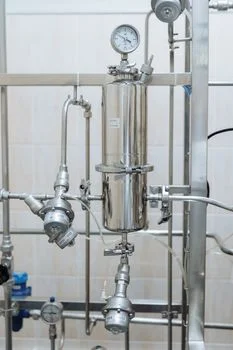
Procurement's recurring question is where OEM matters, where aftermarket is acceptable, and where it is genuinely risky. The wrong call on a UASB gas-handling component is a $15K–$80K-per-day production loss, so the answer is not "buy cheap."
| Component | OEM Required? | Aftermarket Saving | Risk if Wrong Supplier Used |
|---|---|---|---|
| Three-phase separator (GSS) and biogas hood | Yes — OEM strongly recommended | 10–20% (not worth taking) | Gas leakage, short-circuiting, biological upset |
| Mechanical seals, bearings, gaskets | Aftermarket acceptable (John Crane / Burgmann equivalents) | 30–55% | Low — proven industrial equivalents exist |
| pH / ORP probes | OEM preferred for calibration certificates | 20–35% | Aftermarket drift in 4–8 weeks in sulfide-rich gas |
| Biogas flow meter and composition analyzer | OEM required for custody transfer / CHP contract | n/a | Contract invalidation, CHP engine damage |
| Recirculation pump impeller / wear plate | Aftermarket acceptable | 25–45% | Low — match original hydraulic curve ±5% |
| Recirculation pump body | OEM or vetted equivalent | 10–20% | Hydraulic curve shift, energy penalty |
The rule of thumb in 2026: OEM on anything that defines the gas–liquid interface (GSS, biogas hood, flow meter) and on anything tied to a custody-transfer or CHP contract. Aftermarket on wear parts — mechanical seals, bearings, gaskets, pump impellers — is the right call and saves 30–55% with no performance penalty. Aftermarket pH and ORP probes save 20–35% on unit cost, but drift in sulfide-rich biogas service can wipe those savings in a single bad calibration cycle; the call should be OEM if the lab on-site cannot re-trim the probe weekly.
Lead time is the second procurement variable. OEM UASB-specific parts (GSS internals, biogas hoods, OEM flow meters) run 8–16 weeks from Europe or India in 2026; aftermarket industrial equivalents (seals, bearings, gaskets, impellers) run 1–3 weeks from regional distributors. A stocked-spares policy is essentially a hedge against the OEM lead-time curve, which is why the Tier-1 kit in the next section matters as much for cash-flow as for uptime.
Building a 5-Year Spare-Parts and Consumables Budget
The framework below is the article's centerpiece. It is structured as three tiers that map cleanly to a procurement spreadsheet and a CFO conversation, anchored in the $/m³-treated metric that finance already uses for other process lines.
| Tier | What It Covers | 2026 Cost Band (USD) | Cadence |
|---|---|---|---|
| Tier 1 — Critical spares kit (startup) | GSS deflector set, full seal/gasket kit, 2× pump seals, 2× pH/ORP probes, biogas pressure relief, sludge discharge valve rebuild kit | $8,000–$35,000 per reactor (one-time) | Stocked at commissioning |
| Tier 2 — Scheduled replacements (years 1–5) | Annual seal kit, sensor swaps, pump impellers, flow meter calibration, valve rebuilds, distributor nozzle kits | $6,000–$14,000 per reactor per year (averaged); peaks in years 3 and 5 | Calendar-based + condition |
| Tier 3 — Consumables (years 1–5) | Trace nutrients, alkalinity, anti-foam/sulfide control, dewatering polymer | $4,000–$12,000 per reactor per year | Continuous dosing |
| Total OPEX | Tier 2 + Tier 3 (excl. energy and labor) | $0.012–$0.040 per m³ treated | Annual rollup |
To translate the table into a 5-year number a finance team can approve, use the following sequence:
- Add Tier 1 once at year 0 ($8,000–$35,000 per reactor).
- Add Tier 2 averaged across years 1–5 ($6,000–$14,000 per reactor per year), then apply a 1.4× multiplier to years 3 and 5 to capture the natural peak when seals, probes, and gas-meter components turnover together.
- Add Tier 3 as a flat $4,000–$12,000 per reactor per year for years 1–5.
- Divide the resulting annual OPEX total by the metered annual flow in m³ to produce a $/m³ figure that reconciles to the $0.012–$0.040 band.
High-COD loads (>10,000 mg/L) — distillery, starch, pulp/paper — sit at the upper end of every band. Brewery and food-processing lines, with lower influent strength and steadier hydraulics, sit at the lower end. The same framework also covers pretreatment upgrades; engineers sizing a rotary mechanical bar screen for UASB influent protection should fold its consumables into Tier 3 because rags and fibers drive nutrient and alkalinity demand downstream. For longer-horizon planning, the decentralized wastewater treatment market forecast to 2030 provides the macro context for whether 2026 unit prices will hold or compress over the budgeting window.
Cross-check the result against the published UASB total-cost paper's annual cost per unit volume — line-item tiers should reconcile to within ±15% of that aggregate. If the gap is wider, the model is missing a line (typically H₂S sensor cells, anti-foam, or distributor rebuilds).
Frequently Asked Questions
What is the most expensive consumable line on a UASB reactor in 2026?
Alkalinity agents (sodium bicarbonate, urea, or lime) are typically the largest consumables line, running $1,800–$9,000 per reactor per year depending on influent strength and pH stability. Distillery and citric-acid plants sit at the upper end; breweries at the lower end.
How often should UASB three-phase separator internals be replaced?
The GSS vessel runs 8–12 years, but deflector plates and lamella inserts need replacement every 5–7 years at $1,200–$3,500 per set. Plan the rebuild for a scheduled shutdown, not an unplanned one.
What does it cost to calibrate a UASB biogas flow meter annually in 2026?
Annual calibration of a thermal-mass or vortex biogas flow meter runs $400–$700 per visit in 2026. Full meter replacement is $3,200–$7,500 installed, on a 5–7 year cycle.
How long do pH probes last in a UASB reactor?
pH probes in UASB service last 12–18 months, roughly half their aerobic-service life, because sulfide fouling attacks the reference junction. Probes cost $400–$1,100 each; plan two per reactor in the stocked-spares kit.
What is a realistic 5-year spare-parts and consumables budget per UASB reactor?
Plan $8,000–$35,000 in critical spares at startup, then $10,000–$26,000 per reactor per year averaged across years 1–5 (covering scheduled parts plus consumables). This reconciles to $0.012–$0.040 per m³ of treated wastewater, consistent with the aggregate figures in the published UASB cost-evaluation paper.
Are aftermarket UASB parts acceptable in 2026?
Aftermarket seals, bearings, gaskets, and pump impellers are acceptable and save 30–55% with no performance penalty. OEM is still required for three-phase separators, biogas hoods, and any flow meter tied to a custody-transfer or CHP contract, because tolerances in those components directly affect gas-handling integrity.