What Industrial Wastewater Treatment in Virginia Actually Requires in 2026
Industrial wastewater treatment in Virginia is regulated by the Virginia Department of Environmental Quality (VADEQ) under the VPDES Permit Regulation codified at 9VAC25-31, layered on top of EPA categorical effluent standards at 40 CFR Parts 430 (pulp & paper), 433 (metal finishing), 436 (mineral mining), and 467 (metal forming). The Virginia Pollutant Discharge Elimination System (VPDES) is Virginia's delegated National Pollutant Discharge Elimination System (NPDES) program, and where federal categorical limits and state VPDES limits both apply, the stricter of the two governs the discharge (per 40 CFR 403.5 and 9VAC25-31). Industrial stormwater is handled under the general permit VAR05, and construction stormwater under VAR10, both issued under 9VAC25-31. Annual permit fees are set in 9VAC25-740 and range from roughly $1,200 to $25,000 per year depending on design flow, toxicity loading, and outfall type (per VADEQ fee schedule, 2025-07). A typical 2026 Virginia industrial train combines rotary screening, dissolved air flotation, MBR membrane bioreactor, and optional RO polishing, producing effluent under 5 mg/L TSS and under 50 mg/L COD for surface or POTW discharge. Before any equipment is specified, the buyer should confirm SIC code, design flow, and discharge destination against the 9VAC25-31 individual-permit threshold; flows above roughly 10,000 gpd or any discharge to surface water generally require an individual VPDES permit rather than a general coverage.
Which Virginia Discharge Path Applies: Surface Water, POTW, or Zero-Liquid
Discharge destination is the single biggest cost driver in a Virginia industrial project, because it determines the effluent envelope and therefore the train complexity. Direct surface-water discharge requires a VPDES individual permit with technology-based limits drawn from the relevant 40 CFR subchapter N category; discharge to a POTW requires an industrial pretreatment permit from the local authority under 40 CFR 403, with local limits that can be tighter than federal categorical standards. Facilities in the Chesapeake Bay watershed — including the lower James, York, Rappahannock, and Potomac basins — must also meet total nitrogen (TN) and total phosphorus (TP) caps under 9VAC25-580 and the Bay TMDL allocation, which typically pushes designs toward MBR or denitrification filters. Zero-liquid discharge (ZLD) using RO plus evaporation or crystallization is increasingly specified on the New River and Roanoke basins where reuse is the only viable discharge option, and for facilities reusing process water for boiler feed or cooling tower makeup. As a rule of thumb, POTW pretreatment is 30–50% lower CAPEX than full surface-water treatment, because the POTW absorbs the biological polishing step and the permit envelope is narrower.
| Discharge Path | Permit | Typical Effluent Targets | CAPEX Band |
|---|---|---|---|
| Direct to surface water (James, Potomac, Rappahannock) | VPDES individual (9VAC25-31) | TSS < 5 mg/L, COD < 50 mg/L, TN < 8 mg/L, TP < 1 mg/L (per 9VAC25-580) | $0.18–$0.42 per gpd installed |
| To POTW (HRSD, Western Virginia Water Authority, etc.) | Local pretreatment, 40 CFR 403 | Local limits; oil & grease < 100 mg/L typical | $0.08–$0.18 per gpd installed |
| Zero-liquid discharge (ZLD) | VPDES industrial stormwater + reuse permit | TDS < 50 mg/L in reuse loop; no liquid effluent | $0.45–$0.90 per gpd installed |
| On-site reuse (boiler/cooling makeup) | VPDES + reuse permit | TDS, silica, hardness per reuse spec | $0.20–$0.35 per gpd installed |
Matching Treatment Train to Pollutant Profile

The right train is set by the dominant pollutant, not by the industry label. Rotary mechanical bar screens (5–25 mm bar spacing) come first in every train to protect downstream pumps and membranes from rags and fibrous debris. Rotary mechanical bar screens in the GX series handle peak flows up to 3× design and tolerate the surge loads common in batch food and metal finishing operations. Dissolved air flotation (DAF) is the workhorse for food, dairy, metalworking, and pulp & paper streams, delivering 90–95% TSS removal and 80–95% FOG removal at hydraulic retention times of 20–40 minutes with 10–50 µm micro-bubbles. A dissolved air flotation system scales from 4 m³/h pilot units to 300 m³/h production skids, with automatic skimming and PLC-controlled recycle ratios. When footprint is the constraint, lamella clarification with coagulant and flocculant dosing can substitute for DAF at the cost of slightly lower FOG removal (60–75% versus 80–95%). MBR follows DAF for organics and suspended solids, achieving <1 NTU turbidity, <5 mg/L TSS, and <50 mg/L COD at MLSS of 8,000–12,000 mg/L, and the MBR membrane bioreactor system occupies roughly 60% of the footprint of an equivalent conventional activated sludge basin. For Virginia facilities subject to 40 CFR Part 433 metal finishing limits, two-stage precipitation plus MBR plus ion exchange is the standard train for copper, nickel, and zinc below 1 mg/L, and an industrial RO system is added when TDS or specific metals need to drop under 1 mg/L for reuse, typically at 75–95% recovery. For a deeper look at the trade-offs, see the DAF vs oil-water separator comparison and the MBR vs conventional activated sludge engineering notes.
| Pollutant | Primary Stage | Secondary Stage | Typical Removal |
|---|---|---|---|
| Oil & grease, FOG | DAF | MPD or coalescer | 80–95% |
| Suspended solids (TSS) | DAF or lamella | MBR (0.1–0.4 µm) | 90–99% |
| BOD/COD (organic load) | MBR (PVDF, 8,000–12,000 mg/L MLSS) | RO polishing | 95–99% |
| Heavy metals (Cu, Ni, Zn, Cr) | Two-stage precipitation | MBR + ion exchange | 95–99% to <1 mg/L |
| TDS / specific conductance | Two-pass RO | EDI or mixed-bed | 95–99% |
| TN / TP (Chesapeake Bay) | MBR with anoxic zone | Denitrification filter or chemical P removal | TN < 8 mg/L, TP < 1 mg/L |
Real 2026 Equipment Parameters for a Virginia Industrial Train
Equipment parameters for a 2026 Virginia train are well-bounded and can be specified directly into a P&ID. The DAF covers 4–300 m³/h across 13 standard models, generates 10–50 µm micro-bubbles at 0.08–0.15 kW per m³/h, and ships with an automatic skimmer, polymer make-down skid, and PLC panel. MBR integrated units run 10–2,000 m³/day per skid using PVDF hollow-fiber or flat-sheet membranes at 10–20 LMH flux, with backwash and CIP cycles controlled by the same PLC. Chlorine dioxide disinfection is preferred over chlorination in Virginia where residual chlorine limits on the James and Potomac basins are enforced tightly, and the chlorine dioxide generator covers 50 g/h to 20,000 g/h without the on-site gas hazards of bulk chlorine. Sludge is dewatered with a plate-and-frame filter press at 1–500 m² filtration area, producing 25–35% dry solids cake from biological sludge, and the plate-and-frame filter press ships pre-piped to the polymer dosing skid. Continuous monitoring for pH, flow, TSS, and the categorical parameters (COD, metals, TN/TP) is required for facilities subject to EPA categorical limits, and the SCADA layer should archive data at 15-minute intervals to support monthly DMRs.
| Stage | Model / Series | Capacity | Key Parameters | Footprint / Power |
|---|---|---|---|---|
| Bar screen | GX series rotary | 10–3,000 m³/h | 5–25 mm bar spacing | 0.5–4 kW |
| DAF | DAF line | 4–300 m³/h | HRT 20–40 min, bubble 10–50 µm | 0.08–0.15 kW per m³/h |
| MBR | Integrated skid | 10–2,000 m³/day | Flux 10–20 LMH, MLSS 8,000–12,000 mg/L | 0.4–0.8 kWh per m³ treated |
| RO (if added) | Brackish / BWRO | 5–500 m³/h | Recovery 75–95%, feed pressure 10–15 bar | 0.6–1.2 kWh per m³ permeate |
| Disinfection | ClO₂ generator | 50–20,000 g/h | Dose 1–5 mg/L, no chlorinated byproducts | 0.05 kW per kg ClO₂ |
| Sludge dewatering | Plate-frame filter press | 1–500 m² | 25–35% DS cake | 0.3–0.6 kW per m² |
2026 CAPEX and OPEX Benchmarks for Mid-Atlantic Industrial Systems
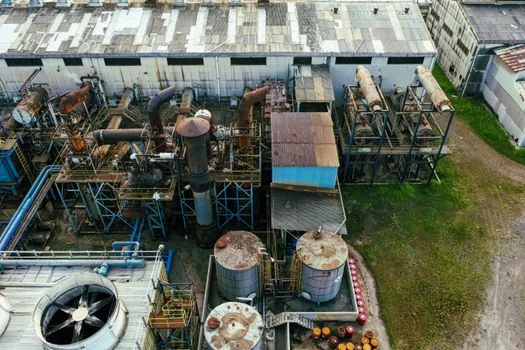
For a 50–200 m³/day DAF plus MBR plus RO skid delivered and commissioned in Virginia, 2026 turnkey CAPEX runs $0.18–$0.42 per gpd installed, or roughly $250,000–$800,000 turnkey (HydropureWater field data, 2026). Above 1,000 m³/day, custom concrete-tank builds drop CAPEX to $0.10–$0.22 per gpd installed because the equipment-to-tank ratio falls. OPEX in 2026 is dominated by electricity at 30–40% and chemicals at 40–50% (coagulant, polymer, CIP chemicals), with sludge hauling at 10–15% of the annual operating cost. MBR membrane replacement every 5–8 years at $15–$25 per m² of membrane area is the dominant long-term OPEX line and should be capitalized as a 7-year reserve. Chemical optimization on the DAF stage and improved dewatering on the filter press routinely deliver 20–45% OPEX savings; the DAF operating cost breakdown walks through the line items in detail. Budget reviewers should also include annual VPDES fees under 9VAC25-740 and quarterly laboratory charges for the categorical parameters in the OPEX line, because those are routinely missed in first-pass estimates.
| Flow Range | Train | CAPEX ($/gpd installed) | OPEX ($/m³ treated) | Dominant OPEX Driver |
|---|---|---|---|---|
| 10–50 m³/day | Containerized DAF + MBR | $0.35–$0.55 | $1.20–$2.50 | CIP chemicals, membrane replacement reserve |
| 50–200 m³/day | Skid DAF + MBR + RO | $0.18–$0.42 | $0.80–$1.80 | Electricity, coagulant/polymer |
| 200–1,000 m³/day | Concrete-tank DAF + MBR | $0.14–$0.30 | $0.55–$1.20 | Electricity, sludge hauling |
| 1,000+ m³/day | Custom concrete + RO polishing | $0.10–$0.22 | $0.40–$0.90 | Electricity, membrane replacement |
Choosing a Virginia-Ready Wastewater Treatment Partner
A Virginia-ready supplier should be able to document compliance with the relevant 40 CFR categorical standard for the buyer's SIC code on day one, and that documentation should travel with the bid. Confirm PLC plus IoT telemetry for continuous monitoring and DMR reporting — relevant to the IoT sensor cost discussion in adjacent articles — and verify CE, ISO 9001, and ASME certification for skidded packages. Factory acceptance testing (FAT) at the supplier site, witnessed by the buyer's engineer, cuts site commissioning time by 30–40% and is worth specifying into the purchase order. For flows above 200 m³/day or any new categorical parameter, insist on a 6–12 week containerized pilot before committing CAPEX; pilot data carries more weight with VADEQ reviewers than theoretical removal calculations and shortens the permit review clock.
Frequently Asked Questions

Does my Virginia facility need an individual VPDES permit or a general permit? Industrial facilities discharging to surface water or with a design flow above roughly 10,000 gpd typically require an individual VPDES permit under 9VAC25-31; smaller flows or non-contact cooling water may qualify for general permit VAR05 (industrial stormwater) or VAR04 (non-contact cooling), with annual fees set under 9VAC25-740 (per VADEQ, 2025-07).
When is MBR plus RO required versus MBR alone? MBR alone is sufficient when the discharge envelope is TSS < 5 mg/L, COD < 50 mg/L, and no TDS or specific metal limit below 1 mg/L. RO is added for TDS-driven reuse, for hitting tight metals limits under 40 CFR Part 433, or for facilities pursuing zero-liquid discharge on the New River and Roanoke basins.
What does a 2026 DAF plus MBR plus RO skid cost in Virginia? For 50–200 m³/day, turnkey CAPEX runs $0.18–$0.42 per gpd installed, with OPEX of $0.80–$1.80 per m³ treated, dominated by electricity and coagulant/polymer chemicals (HydropureWater field data, 2026).
How does the Chesapeake Bay TMDL change my effluent targets? Facilities in tidewater Virginia must meet TN below roughly 8 mg/L and TP below 1 mg/L under 9VAC25-580; the standard way to hit these is an MBR with an anoxic zone plus chemical phosphorus precipitation, with denitrification filtration as a polishing step.