A 2026 data center cooling water treatment plant targets WUE below 0.5 and PUE below 1.2. RO removes ≥99.5% TDS at 0.3–0.5 kWh/m³; MBR holds effluent turbidity below 0.1 NTU. CAPEX runs $1.2M–$8M depending on RO-only versus full MBR plus chemical dosing. Zero-risk design depends on commissioning protocols, continuous TDS monitoring, and redundant trains for mission-critical uptime.
What failure modes shut down AI data center cooling loops?
Cooling water failures remain a primary cause of thermal outages in AI and GPU facilities. Heat loads often exceed 200 kW/rack, so temperature or water-quality excursions leave little operating margin. Scaling typically appears as CaCO₃ precipitation when concentrations exceed 150 ppm and cut heat-transfer efficiency. Biofouling, often flagged when ATP exceeds 1,000 RLU, clogs microchannels and drives microbiologically influenced corrosion. Chloride above 50 ppm, or pH outside 7.0–8.5, accelerates corrosion and leak risk.
| Symptom | Root Cause (Water Quality Issue) | Impact |
|---|---|---|
| GPU Throttling / Overheating | Scaling in heat exchangers and microchannels (e.g., CaCO₃ >150 ppm) | 15-30% performance loss in AI training jobs; increased energy consumption; reduced hardware lifespan. |
| Reduced Cooling Capacity | Biofouling on heat exchange surfaces (e.g., ATP >1,000 RLU) | Decreased heat transfer efficiency; increased risk of system shutdown; potential for Legionella growth. |
| Corrosion of System Components | High chloride levels (>50 ppm) or aggressive pH (outside 7.0-8.5) | Premature failure of piping, pumps, and heat exchangers; costly repairs and unplanned downtime; potential leaks. |
| Unplanned Downtime | Combination of scaling, biofouling, and corrosion leading to system failure | Significant financial losses from idle compute resources; reputational damage; missed deadlines for AI model development and deployment. |
These failure modes set the design envelope: control TDS, biology, chloride, and pH before they compound into unplanned downtime.
What 2026 engineering specs should RO, MBR, and dosing plants meet?
RO trains for cooling makeup typically span 50 to 500 m³/h with ≥99.5% TDS removal and 0.3–0.5 kWh/m³ when energy recovery devices are fitted, consistent with 2026 ASHRAE TC 9.9 thermal-management practice. MBR systems for biological control and reuse operate at 10 to 200 m³/h, hold effluent turbidity below 0.1 NTU, and consume about 0.4–0.6 kWh/m³ per 2024 EPA advanced-treatment benchmarks.
Chemical dosing is usually PLC-integrated under standards such as SEMI S23-0718. Typical setpoints are antiscalants at 3–5 ppm, biocides at 2–4 ppm, and pH held at 7.0–8.5. Blowdown treatment commonly targets 90% recovery via RO, with evaporation ponds or Zero Liquid Discharge (ZLD) used for brine management.
| Technology | Typical Flow Rate (m³/h) | TDS Removal (%) | Energy Consumption (kWh/m³) | Effluent Turbidity (NTU) | Target Footprint (m²) |
|---|---|---|---|---|---|
| High-Efficiency RO | 50 – 500 | ≥ 99.5 | 0.3 – 0.5 (with ERD) | N/A (for RO feed) | 30 – 150 |
| MBR System | 10 – 200 | N/A (biological process) | 0.4 – 0.6 | < 0.1 | 50 – 200 |
| Advanced Chemical Dosing | Integrated with main systems | N/A | Minimal (for pumps) | N/A | 5 – 15 |
For high-purity feed water, high-efficiency RO systems for data center cooling loops address dissolved solids. For near-reuse-quality effluent, MBR systems for near-reuse-quality cooling water provide biological polishing before the cooling loop.
Which cooling-water system fits—RO, MBR, chemical dosing, or a hybrid?
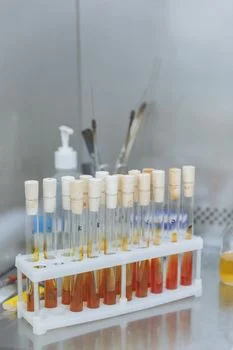
Reverse Osmosis (RO) reaches up to 99.5% TDS removal and suits groundwater or surface sources with TDS >500 ppm. CAPEX for modular RO starts near $1.2M; energy is typically 0.3–0.5 kWh/m³. RO alone does not control biological fouling in the loop.
Membrane Bioreactors (MBR) produce turbidity consistently below 0.1 NTU and cut biofouling potential. Full-scale CAPEX is about $5M–$8M, with energy at 0.4–0.6 kWh/m³. They fit recycled-water or high-reuse targets.
Chemical dosing (antiscalants, biocides, pH adjusters) has lower CAPEX, typically $50K–$200K for automated packages. It needs continuous oversight to avoid over- or under-dosing and is most effective as a supplement to RO or MBR.
| System Type | Estimated CAPEX Range | Estimated OPEX ($/m³) | WUE Impact | Uptime Risk (if poorly managed) | Ideal For |
|---|---|---|---|---|---|
| RO Only | $1.2M - $4M | $0.20 - $0.40 (energy + consumables) | High (reduces blowdown) | Moderate (biofouling risk) | High TDS feedwater (e.g., groundwater) |
| MBR System | $5M - $8M | $0.30 - $0.50 (energy + membrane replacement) | Very High (enables reuse) | Low (excellent biofouling control) | Surface water, recycled water sources; high reuse targets |
| Chemical Dosing (Standalone) | $50K - $200K | $0.05 - $0.15 (chemicals + monitoring) | Low (indirect) | High (requires constant oversight) | Small facilities; supplemental treatment |
| RO + Chemical Dosing | $1.3M - $4.2M | $0.25 - $0.55 | High | Moderate | General purpose, good TDS and biofouling control |
| MBR + Chemical Dosing | $5.1M - $8.2M | $0.35 - $0.65 | Very High | Low | Advanced reuse applications |
Hybrid trains usually balance TDS control, biofouling risk, and cost. PLC-controlled chemical dosing for cooling water corrosion prevention is a common finishing layer on RO- or MBR-based plants.
How do you commission, monitor, and build redundancy for near-100% uptime?
Commissioning starts with system cleaning (often a citric acid flush), then flushing with at least three system volumes. Stainless steel is passivated, typically with nitric acid. Fill water should stay below 10 ppm TDS so scale-forming minerals are not introduced at startup.
Real-time monitoring should cover TDS over a 0–2,000 ppm span, pH at 7.0–8.5, ORP at 200–600 mV for biocide response, and ATP below 1,000 RLU. Deviations must trigger automated alarms and corrective action.
Redundancy for RO usually means dual trains; MBR plants keep standby membranes or modules; dosing skids need backup pumps and supply lines. A practical failure-mode rule: if the primary TDS sensor fails, switch to a secondary sensor within 5 seconds and alert operations.
Where trace contaminants are unacceptable, apply the tighter limits described in high-purity water treatment specs for semiconductor-grade cooling systems. For concentrated cooling-tower waste, evaporation crystallization for cooling tower blowdown treatment supports a zero-liquid-discharge path.
What CAPEX, OPEX, and ROI should you budget for a 500 m³/h plant?
A modular high-efficiency RO-only train at about 500 m³/h can start near $1.2 million. A full MBR + RO + chemical dosing plant around 200 m³/h can reach $8 million. Energy-driven OPEX for advanced RO and MBR is projected at $0.20–$0.40 per m³; chemicals typically add $0.05–$0.15 per m³. Membrane replacement for large plants can run $20,000–$100,000 per year.
At a treated-water cost of $2/m³, a 500 m³/h system can save about $500,000 per year in water purchase, giving a rough payback of 3–5 years before counting avoided downtime. The table below summarizes configuration-level estimates for a 500 m³/h basis.
| System Configuration | Estimated CAPEX | Estimated OPEX ($/m³) | Estimated Annual Water Savings (at $2/m³) | Estimated ROI (Years) |
|---|---|---|---|---|
| RO Only | $1.2M | $0.30 | $700,000 | 2.5 - 4 |
| MBR + RO | $6.5M | $0.45 | $900,000 (with 95% reuse) | 5 - 7 |
| RO + Chemical Dosing | $1.5M | $0.35 | $700,000 | 2.8 - 4.2 |
What water-quality limits and reuse rates do operators ask about most?
Q: What are the primary water quality parameters critical for AI data center cooling?
A: Critical parameters include Total Dissolved Solids (TDS) below 10 ppm for makeup water, pH between 7.0–8.5 to prevent corrosion and scaling, and low levels of biological activity (ATP <1,000 RLU) to prevent biofouling.
Q: How much water can advanced treatment systems help a data center reuse?
A: With systems like MBR and RO, data centers can achieve up to 95% water reuse, significantly reducing freshwater intake and associated costs.
Q: What is the typical energy consumption for RO systems in data center applications?
A: High-efficiency RO systems, incorporating energy recovery devices, consume approximately 0.3–0.5 kWh per cubic meter of purified water.
Q: How does biofouling impact GPU cooling performance?
A: Biofouling on heat exchange surfaces reduces heat transfer efficiency, leading to higher operating temperatures for GPUs, causing throttling and potential hardware damage.
Q: What is the role of chemical dosing in a data center cooling loop?
A: Chemical dosing manages scale formation, microbial growth, and corrosion through precise injection of antiscalants, biocides, and pH adjusters, protecting system components.
Who this is for / Who should look elsewhere / Next step
This brief is for data-center facilities, MEP, and process engineers sizing RO, MBR, or hybrid cooling-water plants against WUE/PUE, TDS, and uptime limits. Operators with once-through non-recirculating cooling and no reuse or blowdown-treatment duty should look elsewhere. Next step: lock feedwater TDS, target recovery, and redundancy requirements, then match CAPEX bands in the comparison table to the duty before issuing an RFQ.