In Maputo, wastewater treatment plant cost in 2026 runs from USD 1.2M for a 50 m³/day DAF package to USD 15M for a 1,000 m³/day MBR plant, with OPEX of USD 0.15–0.40/m³.
Why Wastewater Treatment Plant Cost in Maputo Is Hard to Pin Down
Wastewater treatment plant cost in Maputo averages USD 1,400 per m³/day of capacity on World Bank-funded municipal works (Project P171449), yet industrial quotes range from USD 1,200 to USD 3,500 per m³/day by technology. Discharge limits under Decree 45/2006, the 17% import duty, and port logistics push final budgets 10–20% above equipment quotes.
Municipal wastewater projects in the Maputo metropolitan area average a baseline CAPEX of USD 1,400 per cubic meter of daily capacity according to World Bank Project P171449 data. For a procurement manager at a Matola food processing plant or a municipal engineer in Moamba, that single figure misleads more than it informs. Anecdotal estimates on platforms like Reddit quote figures as high as €70 million for large-scale municipal works. The recently inaugurated SAAS Moamba plant, by contrast, delivered 200 m³/day for approximately USD 3.5 million.
The gap exists because cost behaves as a variable rather than a constant: technology choice, effluent complexity, and the Environmental and Social Risk Classification (ESRC) of the site all move the number. Mozambique imposes a 17% import duty on specialized wastewater equipment. Skilled local operators earn USD 200–400 per month, but logistical delays at the Port of Maputo can inflate project timelines by 15–20%, creating significant indirect costs. The difference between a Dissolved Air Flotation (DAF) system for high-solids industrial waste and a Membrane Bioreactor (MBR) for urban reuse can alone produce a 200% variance in capital expenditure.
Buyers should therefore evaluate budgets through a three-tier framework: CAPEX (equipment and civil works), OPEX (recurring energy and chemical costs), and hidden costs (compliance and financing). Generic international benchmarks ignore Maputo-specific economics, which is why plants sized from foreign spreadsheets routinely overrun. Comparing how Maputo's costs compare with Semarang's industrial wastewater market provides a useful emerging-market baseline. The sections below supply the granular, Maputo-specific data a compliance-ready procurement strategy needs.
Industrial Wastewater CAPEX and OPEX in Mozambique: The Three-Tier Framework
Equipment procurement typically constitutes 60% to 70% of total capital expenditure for industrial wastewater projects in Maputo. The remaining budget splits between civil works (20–30%) and engineering, permitting, and ESRC assessments (10–15%). International benchmarks suggest equipment costs around €13 million for large-scale operations, but smaller Mozambican installations must also absorb the 17% import duty on high-tech membranes and control systems. That duty pushes the equipment share of a Maputo budget above what a comparable buyer in neighboring South Africa pays.
Operational expenditure in Maputo is heavily influenced by local utility rates. Energy costs in Mozambique average approximately USD 0.18/kWh for industrial users, well above the USD 0.12/kWh global industrial average. Energy-intensive technologies such as MBR therefore cost more to run over the long term. Chemical dosing is the other major OPEX driver: polyaluminum chloride (PAC) for coagulation hovers around USD 0.80/kg because of transport costs from regional distribution hubs.
| Cost Component | Percentage of Total | Maputo-Specific Factor |
|---|---|---|
| CAPEX: Equipment | 60–70% | 17% Import duty; 10% logistics/port fees |
| CAPEX: Civil Works | 20–30% | Local concrete/labor (USD 200–400/mo) |
| OPEX: Energy | 30–40% | Industrial rate: USD 0.18/kWh |
| OPEX: Chemicals | 20–30% | Imported PAC/Polymers: USD 0.80–1.20/kg |
| OPEX: Maintenance | 10–15% | Spare parts availability via Port of Maputo |
Hidden costs derail Maputo projects most often at final approval. Environmental and Social Risk Classification (ESRC) assessments, required for World Bank-funded or high-impact industrial projects, add USD 50,000 to USD 200,000 to the pre-construction budget. Financing terms then compound or relieve that burden. World Bank IDA loans offer interest rates as low as 1.25%, while local commercial loans in Mozambique range from 8% to 12%. Over a 10-year period, that spread drastically changes total cost of ownership.
MBR vs DAF Cost Comparison for Mozambique: Which Technology Fits Which Effluent
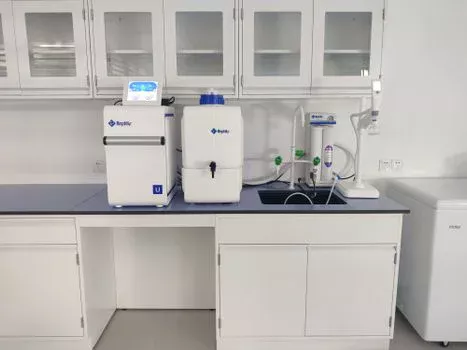
MBR systems carry a CAPEX of USD 2,500–3,500/m³/day in the Maputo market, the most expensive but highest-performing option for space-constrained urban sites. They suit facilities targeting water reuse because they produce effluent with a Chemical Oxygen Demand (COD) below 50 mg/L, well inside the Mozambican discharge standard of 150 mg/L. For industrial buyers, MBR systems for reuse-quality effluent in Maputo are often the only route to zero-liquid discharge goals in the city's dense industrial zones. A detailed MBR vs MBBR cost comparison for Maputo buyers shows that although MBR CAPEX is higher, the smaller footprint saves on land acquisition.
For high-Total Suspended Solids (TSS) industries such as textile manufacturing or food processing in Matola, Dissolved Air Flotation (DAF) is the most cost-effective primary treatment. DAF systems for high-TSS industrial wastewater in Maputo typically cost USD 1,200–1,800 per cubic meter of daily capacity. The CAPEX is lower, but OPEX stays sensitive to chemical prices. Deploying chemical dosing systems for DAF and electrocoagulation in Maputo optimizes PAC usage and cuts chemical waste by up to 20%.
| Technology | CAPEX (USD/m³/day) | OPEX (USD/m³) | Target Effluent Quality |
|---|---|---|---|
| MBR (Membrane Bioreactor) | 2,500–3,500 | 0.30–0.40 | COD < 50 mg/L, TSS < 5 mg/L |
| DAF (Dissolved Air Flotation) | 1,200–1,800 | 0.15–0.25 | TSS Removal > 90% |
| Electrocoagulation | 1,500–2,200 | 0.20–0.35 | Heavy Metal Removal > 98% |
Most food-processing plants we size for Matola land at the lower end of the DAF band because screening and equalization tanks already exist on site. Plating and tannery effluents, by contrast, push toward the top of the electrocoagulation band once conductivity and chrome loads demand larger power supplies. The CAPEX band you are quoted usually reveals how much of that pre-treatment the supplier assumes you already have.
Electrocoagulation Cost in Maputo for Heavy Metal Removal
Electrocoagulation serves Maputo's heavy industry for removing chromium, nickel, and other metals at a CAPEX of USD 1,500–2,200/m³/day. Electrocoagulation for Maputo's industrial heavy metal challenges removes the need for some chemicals, but its electricity consumption of 0.5–1.0 kWh/m³ exposes operators to Mozambique's energy price fluctuations. Many facilities mitigate this with modular, locally assembled systems, which reduce initial CAPEX by 10–15% by avoiding the full cost of imported turnkey plants.
Metal finishers around Matola typically pair a roughing electrocoagulation stage with polishing filtration to hold discharge below the 0.1 mg/L mark inspectors apply to heavy metals. Sacrificial aluminum or iron plate replacement belongs in the OPEX model from day one, because plate consumption tracks directly with metal load. Where grid power is unstable, specify a rectifier that tolerates generator input, since brownouts otherwise halt treatment mid-batch.
Compliance and Financing: How Mozambican Regulations Drive Plant Costs
Decree 45/2006 mandates a Chemical Oxygen Demand (COD) limit below 150 mg/L for all industrial wastewater discharged into Maputo's municipal sewers or the environment. For industries handling heavy metals, requirements tighten further, often demanding concentrations below 0.1 mg/L. Non-compliance brings heavy fines and the potential suspension of operational licenses. Implementing advanced filtration or MBR technology early in the project lifecycle adds 10–20% to initial costs but prevents the far larger expense of retrofitting a non-compliant plant under regulatory pressure.
Suppliers that also build for European buyers design against the EU Urban Wastewater Treatment Directive: Compliance, Deadlines & Tech framework, and equipment built to that specification usually clears Mozambican limits with margin. Export-oriented factories in Maputo increasingly specify this dual-compliance approach. It adds little at design stage and protects market access if discharge rules tighten.
World Bank IDA Financing for a Wastewater Project in Mozambique
Financing remains the largest hurdle for municipal and large-scale industrial projects in Mozambique. The World Bank's Maputo Urban Transformation Project (P171449) demonstrates how International Development Association (IDA) financing works: loans at 1.25% interest with 10-year grace periods. Private industrial buyers can sometimes access African Development Bank (AfDB) grants covering up to 50% of CAPEX for projects that show clear environmental benefits, such as water reclamation for local communities. Commercial financing is more accessible but demands a robust business case to justify the 8–12% interest rates common in the Mozambican banking sector.
Phased deployment is the most effective cost-saving strategy available to private buyers. Instead of a full-scale USD 10M plant, a facility can start with a DAF system for primary treatment (reducing TSS and fats) and add an MBR module for biological treatment two years later. This approach cuts initial CAPEX by 30–40% while meeting basic discharge standards immediately. Selecting equipment with high ESRC compliance also keeps the project eligible for low-interest international green loans, now a primary capital source for Maputo's infrastructure development.
Case Study: The SAAS Moamba Plant and What It Reveals About Maputo Costs
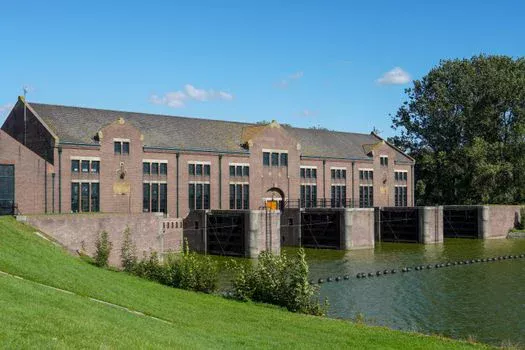
The SAAS Moamba plant, inaugurated by President Filipe Nyusi in 2023, cost approximately USD 17,500 per cubic meter of capacity for its 200 m³/day municipal output, totaling USD 3.5 million. That per-cubic-meter figure runs higher than large industrial plants because it reflects the heavy civil works needed to serve a population of 50,000. The breakdown included USD 2.1 million for specialized equipment, USD 1 million for extensive civil works and site preparation in a remote area, and USD 400,000 for engineering and permitting.
The Moamba facility uses a modular treatment approach to manage operational costs. Integrating underground WSZ series for space-constrained sites in Maputo minimized the visual and environmental footprint while holding OPEX at USD 0.22/m³. Energy accounts for 35% of that OPEX, chemicals for 25%, and labor for 20%. The plant consistently delivers effluent with COD below 100 mg/L and TSS below 20 mg/L, comfortably inside national standards.
The Moamba numbers teach industrial buyers three lessons. Modular systems deploy significantly faster, often cutting site preparation time by 30%. Local partnerships with agencies like SAAS (the Water and Sanitation Company of Maputo) streamline permitting, which is often the largest hidden cost in Mozambique. Automated dosing and monitoring reduce reliance on high-cost skilled labor and keep the plant operational with a minimal onsite team.
Low-Risk Procurement: A Decision Matrix for Maputo Buyers
Performance bonds and a local spare-parts inventory reduce operational risk by 25% in the Mozambican logistics environment, where supply chain delays are common. A structured decision matrix that balances technical requirements against local economic realities replaces guesswork with a repeatable process. The first step is comprehensive wastewater characterization: treating so-called average wastewater routinely produces under-designed systems that fail compliance within their first year.
Step two calculates the True Cost of Ownership (TCO), which includes the 17% import duty and the long-term effect of USD 0.18/kWh energy rates. A technology that is USD 100,000 cheaper at CAPEX but consumes 20% more energy becomes the more expensive option within 36 months of operation in Matola. Buyers must also weigh a supplier's ability to deliver local operator training and certification, because improper maintenance is the leading cause of plant failure in the region.
| Selection Step | Key Action | Risk Mitigation |
|---|---|---|
| 1. Characterization | Test TSS, COD, and metals over 7 days | Prevents under-design and compliance failure |
| 2. Capacity Planning | Scale for 5-year growth (e.g., 100 to 150 m³/day) | Avoids expensive retrofitting costs |
| 3. Tech Selection | Compare MBR vs DAF vs Electrocoagulation | Balances CAPEX against Maputo's energy rates |
| 4. Supplier Audit | Verify local support and duty handling | Eliminates 17% duty surprises and port delays |
| 5. Performance Bond | Require contracted effluent quality warranties | Shifts regulatory risk to the manufacturer |
Risk mitigation must also include a spare-parts inventory strategy. Critical components such as MBR membranes, high-pressure pumps, and PLC modules belong onsite rather than in transit. Just-in-time delivery through the Port of Maputo is a high-exposure strategy that can mean weeks of non-compliance when a critical component fails. Suppliers offering turnkey modular solutions and local operator training give Maputo industrial buyers a compliance-ready installation that meets both budgetary and environmental targets.
Next Steps for Maputo Industrial Buyers
A credible budget for a Maputo plant starts with a seven-day characterization dataset and a technology shortlist screened against the tables above. Send that dataset, the target effluent limits, and a five-year capacity forecast to suppliers who can document duty handling and local support in writing. For sizing support and a budgetary quotation matched to these cost ranges, use the inquiry form for Maputo wastewater projects.
Frequently Asked Questions
What is the average cost per m³/day for a wastewater treatment plant in Maputo?
For industrial plants, CAPEX ranges from USD 1,200–3,500/m³/day depending on technology. DAF systems are the most affordable (USD 1,200–1,800), while MBR systems are the most expensive (USD 2,500–3,500). Municipal plants, such as those funded by World Bank Project P171449, average USD 1,400/m³/day.
How do import duties affect equipment costs in Maputo?
Mozambique imposes a 17% import duty on wastewater treatment equipment. Combined with port fees and inland transport from the Port of Maputo, logistical costs can add 25–30% to the ex-works price of international equipment. Local assembly or modular systems can sometimes reduce these costs by 10–15%.
What are the financing options for wastewater treatment plants in Maputo?
World Bank IDA loans are available for public-sector projects at 1.25% interest. Private industrial buyers can access African Development Bank grants for green projects or use local commercial loans, which typically carry interest rates between 8% and 12%. Phased deployment, DAF first and MBR later, further reduces the initial capital requirement.
How long does it take to build a wastewater treatment plant in Maputo?
Turnkey modular systems like DAF can be operational in 3–6 months. Custom-engineered MBR plants typically take 12–18 months. Permitting and Environmental and Social Risk Classification (ESRC) assessments usually add another 3–6 months to the timeline. Site preparation and utility connections set the lower bound, while imported membrane modules set the upper one.
What are the most common compliance issues for industrial wastewater in Maputo?
The most frequent violations involve exceeding the COD limit of 150 mg/L and high concentrations of heavy metals (chromium, nickel) in industrial zones like Matola. Advanced biological treatment (MBR) or electrocoagulation is usually required to meet these Mozambican standards. Early investment in compliant technology costs 10–20% more upfront and avoids retrofit penalties.
Which is cheaper for industrial wastewater in Mozambique, MBR or DAF?
DAF is cheaper per m³/day of capacity, at USD 1,200–1,800 versus USD 2,500–3,500 for MBR. DAF removes more than 90% of TSS from food and textile effluents in Matola at an OPEX of USD 0.15–0.25/m³. MBR justifies its premium only where reuse-quality effluent (COD below 50 mg/L) or a compact footprint is required.