Why Nickel Removal is a $1.2M/Year Compliance Risk for Industrial Plants
Non-compliance with heavy metal discharge limits carries a federal penalty of up to $37,500 per day under 40 CFR 413.02, a figure that has driven recent 2023 EPA enforcement actions against electroplating facilities in Michigan and Texas. For a mid-sized industrial plant, these fines are only the baseline; the true cost of a compliance failure includes legal fees, mandatory remediation, and the high probability of permit revocation. In the European Union, the Industrial Emissions Directive (2010/75/EU) mandates nickel levels below 0.1 mg/L, a threshold that resulted in a €250,000 fine for a German finishing plant in early 2024 after a single excursion event.
China is following a similar trajectory of tightening regulations. While GB 21900-2008 currently sets the nickel limit for electroplating wastewater at 0.5 mg/L, the Ministry of Ecology and Environment (MEE) 2025 drafts suggest a move toward 0.1 mg/L for environmentally sensitive regions. This regulatory squeeze leaves procurement managers and engineers with a diminishing margin for error. Traditional treatment methods that once sufficed are no longer capable of reaching these "near-zero" targets reliably.
The financial impact of a shutdown is often more catastrophic than the fines themselves. An anonymized case study of a 50 m³/h battery recycling plant in Jiangsu illustrates this risk: after nickel concentrations in the effluent hit 0.7 mg/L, local authorities mandated a 6-month operational suspension. Between lost production capacity, contract penalties, and the cost of emergency system retrofitting, the total loss exceeded $1.2 million. Transitioning to advanced nickel recovery strategies for electronics manufacturing is no longer an elective upgrade but a fundamental requirement for business continuity.
How Ion Exchange Removes Nickel: Mechanism, Resin Types, and Process Parameters
Nickel ions (Ni²⁺) are removed from wastewater through a reversible stoichiometric reaction where they exchange with H⁺ or Na⁺ ions on the functional groups of a solid resin matrix, achieving adsorption capacities as high as 2.18 mmol/g. In a fixed-bed configuration, the wastewater passes through a column of resin beads where the affinity of the resin for divalent cations ensures that nickel is stripped from the liquid phase. This equilibrium reaction is governed by the distribution coefficient (Kd), which determines the selectivity of the resin for nickel over other ions present in the influent.
Selecting the correct resin type is the most critical engineering decision in the design phase. Strong Acid Cation (SAC) resins, such as those utilizing sulfonic acid groups, are effective for general demineralization but lack high selectivity in complex waste streams. Weak Acid Cation (WAC) resins offer better regeneration efficiency but are sensitive to pH fluctuations. For industrial wastewater with high background salts, chelating resins (e.g., those with iminodiacetic acid groups) are the industry standard due to their extreme selectivity for transition metals like nickel, even in the presence of high calcium or magnesium concentrations. These resins typically operate optimally within a pH range of 4.0 to 6.0 and require regeneration with 5–10% H₂SO₄ or HCl to recover the adsorbed nickel.
Engineering a fixed-bed system requires precise adherence to hydraulic parameters to prevent premature breakthrough. Standard designs utilize a bed depth of 0.8 to 1.5 meters to ensure adequate contact time, with flow rates typically maintained between 5 and 20 Bed Volumes per hour (BV/h). A contact time (Empty Bed Contact Time, or EBCT) of 10 to 30 minutes is required to achieve 99.9% removal efficiency. Pretreatment is essential; utilizing a pretreatment for ion exchange systems to remove suspended solids prevents physical fouling of the resin bed, while oxidation may be necessary to break nickel-organic complexes that resin cannot capture.
| Parameter | Standard Value / Range | Impact on Performance |
|---|---|---|
| Resin Adsorption Capacity | 1.8 – 2.18 mmol/g | Determines cycle length between regenerations |
| Optimal pH Range | 4.0 – 6.0 | Prevents precipitation (high pH) or poor exchange (low pH) |
| Flow Rate (Service) | 5 – 20 BV/h | Higher rates increase risk of nickel leakage |
| Bed Depth | 0.8 – 1.5 m | Ensures uniform flow and adequate mass transfer zone |
| Regenerant Concentration | 5 – 10% H₂SO₄ / HCl | Restores 95–98% of original exchange capacity |
| Competing Ions (Ca²⁺/Fe³⁺) | >500 mg/L | Can reduce nickel capacity by 40–60% |
Ion Exchange vs. Chemical Precipitation vs. Membrane Filtration: 2026 Cost and Performance Comparison
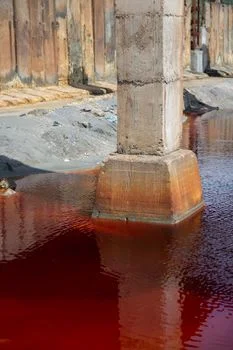
Ion exchange systems consistently achieve effluent nickel concentrations below 0.033 mg/L, whereas standard chemical precipitation often struggles to break the 0.5 mg/L threshold without tertiary polishing. While chemical precipitation is the traditional "low-CapEx" choice, it is increasingly viewed as a liability due to its inability to meet 2026 compliance standards and the massive volume of hazardous sludge it generates. Precipitation produces between 5 and 10 kg of sludge per cubic meter of treated water, incurring disposal costs of $300 to $800 per ton. In contrast, ion exchange produces only 0.1 to 0.5 kg/m³ of residual waste, much of which can be processed for metal recovery.
Membrane filtration, specifically Reverse Osmosis (RO) or Nanofiltration (NF), can reach nickel levels as low as 0.01 mg/L, but the operational complexity is significantly higher. Membranes are prone to irreversible fouling in industrial environments, leading to high replacement costs and energy consumption. Ion exchange occupies the "sweet spot" for many plants, offering higher reliability than precipitation and lower OPEX than membrane systems. ion exchange allows for the metal recovery techniques for PCB wastewater that convert a waste stream into a revenue source by reclaiming 95%+ of the nickel in a concentrated liquid form suitable for reuse in plating baths.
| Metric | Ion Exchange (IX) | Chemical Precipitation | Membrane Filtration (RO/NF) |
|---|---|---|---|
| Effluent Ni Level | <0.033 mg/L | 0.5 – 2.0 mg/L | <0.01 mg/L |
| CapEx ($/m³/h) | $12,000 – $45,000 | $5,000 – $20,000 | $25,000 – $80,000 |
| OPEX ($/m³) | $0.85 | $1.20 | $2.10 |
| Sludge Generation | Minimal (0.1 kg/m³) | High (5–10 kg/m³) | High (Brine reject) |
| Recovery Potential | 95% Nickel Recovery | Zero (Sludge disposal) | Difficult (Requires IX/EW) |
| Footprint | 0.5 – 1.0 m²/m³/h | 1.0 – 2.0 m²/m³/h | 1.5 – 3.0 m²/m³/h |
Step-by-Step Resin Selection Framework for Nickel Removal
Successful resin selection requires a stoichiometric calculation where resin volume (V) equals the product of flow rate (Q), nickel concentration (C), and contact time (t), divided by the operating capacity (q). This framework ensures the system is neither undersized—leading to frequent breakthroughs—nor oversized, which inflates CapEx unnecessarily. The following five steps guide the engineering process:
- Comprehensive Influent Analysis: Beyond measuring nickel (ideally <500 mg/L for IX), you must profile competing ions. Calcium (Ca²⁺) and Iron (Fe³⁺) are the primary competitors for exchange sites. If total hardness exceeds 1000 mg/L, a chelating resin like Lewatit TP 207 or VD-25XT is mandatory to maintain nickel selectivity.
- Resin Chemistry Matching: Match the resin to the specific wastewater profile. Use Strong Acid Cation (SAC) for simple demineralization, but transition to Macroporous Chelating resins for electroplating or battery manufacturing streams where high selectivity for Ni²⁺ over Na⁺ or Ca²⁺ is required.
- System Sizing and Volume Calculation: Calculate required resin volume using the formula V = (Q × C × T) / q. For a flow rate of 1000 m³/day with 100 mg/L nickel, a typical system requires approximately 2.5 m³ of high-capacity resin to maintain a 24-hour cycle between regenerations.
- Regeneration Protocol Design: Design the regeneration cycle for maximum efficiency. This typically involves a PLC-controlled chemical dosing for resin regeneration using 5–10% H₂SO₄ at a slow flow rate of 2–5 BV/h to ensure complete displacement of nickel ions from the resin beads.
- Pilot Validation: Conduct a 1-to-2-week pilot trial using actual site wastewater. This step is critical to confirm the breakthrough curve—the point at which effluent nickel levels begin to rise—and to accurately predict the long-term resin lifespan under real-world fouling conditions.
2026 Cost Breakdown: CapEx, OPEX, and ROI for Ion Exchange Nickel Removal

Total Capital Expenditure for a 10–50 m³/h nickel removal system typically ranges from $120,000 to $450,000, encompassing high-capacity resins, pressure vessels, and automated control logic. Resin costs represent a significant portion of this investment, ranging from $5,000 to $15,000 per cubic meter depending on the level of selectivity required. However, the higher initial investment is offset by the significantly lower operating costs compared to chemical treatment. OPEX for ion exchange is approximately $0.85/m³, with the largest shares going toward regeneration chemicals ($0.30/m³) and resin replacement reserves ($0.15/m³).
The Return on Investment (ROI) for these systems is driven by three factors: the market value of recovered nickel, the elimination of hazardous sludge disposal fees, and the avoidance of regulatory fines. For systems processing more than 20 m³/h, an ROI of 18 to 36 months is standard. Recovered nickel sulfate can often be sold or reused, with a value of approximately $15 to $30 per kilogram of nickel content. In a high-volume electroplating plant, these savings can be substantial.
A real-world example from a 30 m³/h electroplating plant in Zhejiang demonstrates this financial shift. By replacing an aging precipitation system with a dual-column ion exchange unit, the plant reduced its effluent nickel from 0.8 mg/L to a consistent 0.02 mg/L. The transition eliminated $110,000 in annual sludge disposal costs and recovered $70,000 worth of nickel for reuse in their plating lines. The total annual savings of $180,000 resulted in a full project payback in under 24 months, while simultaneously insulating the company from the risk of $50,000+ in annual environmental fines.
| Cost Category | Estimated Cost (30 m³/h System) | Notes |
|---|---|---|
| Total CapEx | $280,000 – $350,000 | Includes vessels, resin, and automation |
| Resin Replacement | $0.15 / m³ | Based on 3–5 year lifespan |
| Chemical Consumables | $0.30 / m³ | H₂SO₄ and NaOH for regeneration |
| Sludge Disposal | $0.20 / m³ | 90% reduction vs. precipitation |
| Total OPEX | $0.85 / m³ | Industry-leading cost efficiency |
| Annual ROI Potential | $120,000 – $200,000 | Fines avoided + nickel recovered |
Frequently Asked Questions
How often should nickel ion exchange resin be regenerated?
Regeneration typically occurs every 1 to 3 days for influent concentrations around 100 mg/L. Using 5–10% H₂SO₄ at a flow rate of 2 BV/h restores over 98% of the resin's capacity, ensuring consistent effluent quality below 0.05 mg/L.
Does ion exchange meet China’s GB 21900-2008 standards?
Yes, ion exchange easily meets the current 0.5 mg/L limit and is one of the few technologies capable of meeting the stricter 0.1 mg/L "special discharge limits" often applied in sensitive watersheds like the Pearl River Delta or Yangtze River regions.
What is the typical lifespan of a chelating resin for nickel?
In a well-maintained system with proper pretreatment to remove suspended solids and oils, a high-quality chelating resin will last between 3 and 5 years. Annual resin loss due to attrition is usually less than 3–5% of the total bed volume.
Can ion exchange handle nickel-EDTA or other complexes?
Standard ion exchange is less effective for nickel that is "masked" by strong chelating agents like EDTA. In these cases, pretreatment with advanced oxidation or pH-adjusted precipitation is required to break the complex before the water enters the resin column.
What is the maximum influent nickel concentration for ion exchange?
While ion exchange can handle up to 1,000 mg/L, it is most cost-effective for streams below 500 mg/L. For higher concentrations, a "roughing" stage like chemical precipitation or electrowinning is recommended to reduce the load on the resin and extend regeneration cycles.