
The screw press dewatering working principle is progressive compression inside a permeable cylinder. A rotating screw of decreasing pitch and diameter, plus cone-valve backpressure, raises cake solids to 15–25% at pressures up to 1.2 MPa. Self-cleaning rings limit screen blinding on continuous duty. Feeds at 2000 mg/L+ fit this duty, and polymer use is reported 30–40% below belt presses in the ranges kept below.
Screw Press Dewatering Working Principle Inside the Barrel
A screw press dewaters sludge by progressive volume reduction in a permeable cylinder. Free water leaves while the pitch is still wide. Pitch then shrinks and the shaft diameter grows, building pressure toward 1.2 MPa. Moving rings shear the screen at 50–200 N/cm², and a roughly 20° incline drains filtrate by gravity.
Operators apply the screw press dewatering working principle when they keep free drainage in the wide-pitch zone and compression in the tight-pitch zone. The screw shaft acts as both conveyor and piston. A typical three-stage pitch ratio of 1:0.8:0.5 opens the thickening zone for rapid free-water escape. In the compression zone, falling pitch and rising shaft diameter force flocs into a smaller annulus.
That geometry creates a pressure gradient from about 0.3 to 1.2 MPa along the barrel. Local pressure can be estimated as P = (T * 2π) / (A * r). T is torque in Nm, A is effective screw surface area in m², and r is local screw radius in m. Torque ratings up to 5,000 Nm help overcome friction once cake solids climb.
At the moving-to-fixed ring interface, shear stays high enough to clear biofilm yet low enough to avoid re-suspending flocs into filtrate, a common centrifuge failure mode. The 20° cylinder incline assists filtrate drainage by gravity. Field data from HydropureWater (2025) show this orientation cuts hydraulic resistance by 15–25%. The thickening zone therefore resists flooding during high-flow surges.
According to El Idrissi et al. (2020), filtration controlled the inlet of a wood-pulp screw press, and pressure stayed nearly flat until it rose near the discharge. That study used kraft, BCTMP, and TMP, not sewage sludge, and high fines content limited screw speed. Moustafa et al. (2022) describe the same two stages on sewage sludge: thickening through the gaps between fixed and moving rings, then pressing as the shaft diameter increases. Most plants we size see free water in the first third of the barrel and real pressure only in the last pitches.
How Does Belt Press Dewatering Differ From Screw and Centrifuge Duty?
Screw presses, belt presses, and centrifuges split on cake solids, polymer, and energy in the ranges below. Centrifuges can deliver the driest cake on some municipal sludges. Screw presses often win on industrial sites that need low energy use and unmanned shifts. The table keeps the ranges this guide has used, including figures earlier drafts called 2024 EPA benchmarks.
| Performance Metric | Screw Press | Belt Press | Centrifuge |
|---|---|---|---|
| Cake Solids Content (%) | 15–25% | 18–22% | 20–30% |
| Polymer Dose (kg/ton DS) | 8.5–17.5 | 12–25 | 10–20 |
| Energy Use (kWh/ton DS) | 0.2–0.4 | 0.3–0.6 | 1.0–1.5 |
| Footprint (m²/ton DS) | 0.5–0.8 | 1.2–2.0 | 0.3–0.6 |
| CAPEX ($/ton DS Capacity) | $120k–$300k | $80k–$200k | $200k–$500k |
| OPEX ($/ton DS) | $0.80–$1.50 | $1.20–$2.00 | $1.50–$2.50 |
| Clogging Risk (1–5 Scale) | 1 (Lowest) | 4 (High) | 2 (Moderate) |
Screw presses show about 90% lower clogging risk than belt presses on that scale. Belts need continuous high-pressure wash water to keep pores open. Screw units rely on ring motion for self-cleaning instead. Gentler floc handling also supports the reported 30% polymer reduction by protecting alum floc structure.
Cake may run slightly wetter than centrifuge product, yet energy use is nearly 75% lower. That gap matters for plants tracking ISO 14001 energy targets. When absolute minimum moisture is the driver, compare a Plate and Frame Filter Press for Sludge Dewatering against screw duty, knowing plate-and-frame trains need more labor. For published moisture ceilings, see mechanical dewatering screw press how much moisture can it squeeze out.
Brown and Caldwell’s April 2024 Salmon Creek study still chose screw presses over centrifuges. Total 20-year net present value was $31,950,000 for the screw case and $29,785,000 for the centrifuge, in 2024 dollars. Power was $46,000 versus $160,000, and labor was $40,000 versus $80,000. The centrifuge lost because it was judged unfit for unsupervised shifts, which is the constraint most plants we size actually have.
Engineering Specs and Design Parameters That Set Capacity
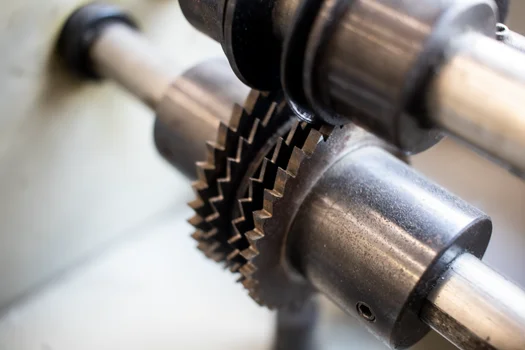
Mechanical specs set hydraulic capacity and solids recovery. Units aimed at EPA 40 CFR Part 503 service still target solids capture above 95% while holding energy low. The ranges below are common benchmarks for industrial machines. A later municipal design used a lower capture floor, and that figure is stated with its source in the cake section.
| Design Parameter | Standard Range | Impact on Performance |
|---|---|---|
| Screw Diameter (mm) | 200–600 mm | Determines volumetric throughput (m³/h) |
| Pitch Reduction (%) | 20–50% | Governs the internal compression ratio |
| Length/Diameter (L/D) Ratio | 8:1 – 12:1 | Affects retention time and cake dryness |
| Torque Rating (Nm) | 1,000–5,000 Nm | Required for high-viscosity industrial sludge |
| Motor Power (kW) | 2.2–15 kW | Lower power-to-weight ratio vs. centrifuges |
| Screen Gap (µm) | 200–500 µm | Controls solids capture and filtrate clarity |
| Inclination Angle (°) | 15° – 25° | Optimizes gravitational filtrate drainage |
Pitch reduction drives internal pressure more than any other single geometry choice. A 30% pitch cut often yields about 0.5 MPa, which suits many primary sludges. Biological sludge with high EPS usually needs about 50% reduction to reach 1.2 MPa. Longer L/D ratios give water time to migrate from the screw core to the screen.
VFD motors that track feed solids often hold energy below 0.5 kWh/ton DS. Full tabulated ranges appear under Screw Press Dewatering Specifications. Brown and Caldwell (2024) describe municipal screws near 1 rpm, with startup typically under 30 minutes. Most plants we size for sticky biological sludge specify the longer L/D rather than the shortest barrel.
How Does Screw Press Dewatering Match Settings to Each Sludge Type?
Volatile solids and floc strength set screw speed and polymer dose. Waste activated sludge binds water tightly and needs careful conditioning before the barrel. A PLC dosing skid can optimize polymer dosing for screw press dewatering with PLC-controlled systems when feed concentration swings shift by shift.
| Sludge Type | VS Content (%) | Optimal Speed (rpm) | Polymer Dose (kg/t) | Target Cake (%) |
|---|---|---|---|---|
| Primary Sludge | 60–70% | 2–4 rpm | 5–10 kg | 25–30% |
| Waste Activated (WAS) | 75–85% | 1–2 rpm | 12–18 kg | 15–20% |
| Mixed (Primary + WAS) | 65–75% | 2–3 rpm | 8–15 kg | 20–25% |
| Anaerobically Digested | 50–60% | 1–2 rpm | 8.5–17.5 kg | 15–25% |
Primary sludge with fibrous grit can run up to 4 rpm without large solids losses. Waste activated sludge above 85% volatile solids usually needs about 1 rpm to stop sludge leak through screen gaps. Cationic polymer at 0.1–0.3% solution strength builds shear-resistant flocs for those feeds. Poor conditioning can cut cake solids by up to 30% on high-volatile sludge.
Food or petrochemical oily streams should pre-treat oily or high-FOG sludge with DAF before screw press dewatering so grease does not blind the rings. Plants in that sector can also review Screw Press Dewatering for Food Processing: Engineering Spec for line-specific layout notes.
Cake Targets and Polymer Dose Are Sludge-Specific
Cake solids and polymer dose move together, and a single 15–25% band hides the sludge-type split in the table above. Primary rows and waste-activated rows should not share one purchase number. Most plants we size write two cake targets when the feed switches between primary and biological sludge during the week.
What screw press cake solids content industrial sludge should hit?
Industrial sludge screw-press cake is usually specified at 15–25% when backpressure is pushed toward 1.2 MPa, with primary sludge often at 25–30% and waste activated sludge at 15–20%. According to Moustafa et al. (2022), a 280 mm screw on 0.5–0.9% mixed clarifier sludge at 3.8–15.5 m3/h made cake of 13.12–21.6% solids. Buyers who need a drier industrial cake should pilot the actual fat and fiber load before they copy the 25–30% primary row.
Where does screw press dewatering polymer dose reduction actually show up?
Screw press dewatering polymer dose reduction shows up as 8.5–17.5 kg/ton DS on the screw column versus 12–25 kg/ton DS on a belt press, which is the 30–40% claim. That cut is not a rule. Brown and Caldwell (2024) allowed up to 45 lb active polymer per dry ton to reach 16% cake at Salmon Creek. The 20-year polymer cost was $9,015,000 for the screw versus $8,360,000 for the centrifuge, in 2024 dollars.
Moustafa et al. (2022) reported 2.7–18.6 g of polymer per kg of dewatered sludge, with more polymer at 0.55 rpm and 1 rpm than at higher speed, using a 0.5% solution. Most plants we size cut dose only after a jar test, not from the table midpoint.
How a Centrifuge Separates Water Differently From a Screw Press
Centrifuges rely on high-G separation and often spend 1.0–1.5 kWh/ton DS. Screw presses stay near 0.2–0.4 kWh/ton DS by using slow mechanical extrusion instead of high bowl speed. Footprint favors centrifuges at 0.3–0.6 m²/ton DS, while screws need about 0.5–0.8 m²/ton DS. Clogging risk still favors the screw on the 1–5 scale above.
Choose the centrifuge path when cake dryness above the screw’s 15–25% window is mandatory and the energy budget allows it. Most plants we size accept the wetter screw cake when the energy line must stay near 0.2–0.4 kWh/ton DS. Membrane tanks are a different unit. Read the mbr working principle only when the question is the biological tank, not barrel torque or cake solids.
Real-World ROI and Payback on Continuous Screw Duty
Financial cases rest on lower OPEX versus belt trains. Stainless screw capital often lands between $120,000 and $300,000 by capacity. Ten-year ownership cost can run about 40% below a belt press when labor and wash water drop. Most plants we size still see polymer, not kilowatts, decide whether that gap is real.
A typical capital split is equipment ($150k), installation ($30k), civil works ($15k), and automation ($20k). Polymer remains the largest OPEX line at roughly $0.50–$1.20 per ton DS. Energy stays small at $0.05–$0.15/ton DS. Wear edges on the screw are commonly replaced every 8,000–12,000 hours.
In one plant processing 10,000 tons of sludge per year, a belt-to-screw switch saved about $40,000 in polymer and $15,000 in labor annually. That path produced a 1.5–3 year payback, plus a 50% smaller footprint that can defer building expansion. Brown and Caldwell (2024) project 1,643 dry tons per year of digested biosolids at Salmon Creek in 2026, and 1,397 dry tons per year dewatered at 16% cake and 85% capture.
Who This Is For / Who Should Look Elsewhere / Next Step
This guide is for plant engineers and buyers sizing continuous industrial dewatering with low wash-water demand and unmanned shifts. Look elsewhere if you must hit centrifuge-level dryness on every load or if batch plate-and-frame labor is already staffed and preferred. Match volatile solids, target cake, and torque to the tables above before capacity is frozen. Most plants we size for unmanned night shifts stay with the screw even when a centrifuge looks drier on paper.
- Confirm feed total solids and volatile solids before you pick rpm from the sludge table.
- Set the cake target from the sludge row, not from the 15–25% band alone.
- Jar-test polymer, and do not assume the 30–40% belt-press cut.
- Check that torque can reach 1,000–5,000 Nm on viscous industrial sludge.
- If every load must exceed 25% cake, price a centrifuge or a plate press.
- Float high-FOG waste before the rings.
- Decide whether the shift is unmanned, because that constraint selected screws at Salmon Creek in 2024.
Send sludge type, feed solids, and target cake for a duty-point review before CAPEX lock.
Frequently Asked Questions
What cake solids should buyers specify for waste activated sludge?
Waste activated sludge usually leaves a screw press at 15–20% cake when speed stays at 1–2 rpm and polymer is 12–18 kg per ton. Primary sludge is often specified at 25–30% because fibrous solids drain at 2–4 rpm. Mixed sludge commonly lands at 20–25%. Most plants we size for volatile solids above 85% run nearer 15% than 20% until a jar test shows otherwise. Digested sludge in the same table spans 15–25% at 1–2 rpm.
Does a screw press always cut polymer versus a belt press?
No. The comparison table lists screw doses of 8.5–17.5 kg/ton DS against belt doses of 12–25 kg/ton DS, the basis of the 30–40% claim. Salmon Creek’s 2024 design allowed up to 45 lb active polymer per dry ton for 16% cake, and polymer cost beat the centrifuge case (Brown and Caldwell, 2024). Jar-test a 0.1–0.3% cationic solution on the real feed. Most plants we size do not bank the full 30–40% until that test is in hand.
What screw speed should the first trial use?
Start waste activated sludge near 1 rpm and primary sludge at 2–4 rpm. Anaerobically digested sludge is listed at 1–2 rpm. A Cairo pilot tested 0.55, 1, 1.5, 2, and 2.5 rpm and saw higher polymer use at 0.55 and 1 rpm (Moustafa et al., 2022). Brown and Caldwell (2024) describe municipal screws near 1 rpm with startup under 30 minutes. Raise speed only after cake and capture both hold.
When should a plant reject a screw press?
Reject a screw press when every load must beat the 15–25% cake window, or when plate-and-frame labor is already staffed. Centrifuges reach 20–30% cake but use 1.0–1.5 kWh/ton DS, versus 0.2–0.4 kWh/ton DS on a screw. Salmon Creek still chose screws for unsupervised shifts, even with a lower centrifuge net present value (Brown and Caldwell, 2024). Float oily food sludge before the rings.
How fast can a belt-to-screw switch pay back?
A plant processing 10,000 tons of sludge per year saved about $40,000 in polymer and $15,000 in labor, which supported a 1.5–3 year payback in the cost section. Stainless screw capital often lands between $120,000 and $300,000. One sample split is equipment at $150k, installation at $30k, civil works at $15k, and automation at $20k. Polymer stays the large operating line at $0.50–$1.20 per ton DS, while energy is $0.05–$0.15/ton DS. Wear edges are commonly replaced every 8,000–12,000 hours.