Best Activated Carbon Filter for Industrial Wastewater: Engineering Specs, Cost Models & Selection Guide
For industrial wastewater, an activated carbon filter typically delivers 90–99% VOC removal and 60–85% COD reduction at influent concentrations of 50–500 mg/L. Empty bed contact times of 10–30 minutes and bed depths of 1–3 meters are the usual design band. Coconut shell carbon targets organics; impregnated grades target metals such as mercury.
EPA Effluent Limitations Guidelines are industry-specific, not one national COD cap. Many U.S. permits still use COD ≤200 mg/L as a polishing target under real flow and load. This guide supports plant engineers, EHS managers, and procurement teams sizing liquid-phase carbon systems.
Why Industrial Wastewater Needs Activated Carbon Filters: Compliance, Cost, and Contaminant Challenges
Permit and regional organic limits drive most industrial carbon projects. Earlier framing treated EPA COD ≤200 mg/L and EU TOC ≤50 mg/L as universal caps. EPA instead publishes industry-specific Effluent Limitations Guidelines. Directive (EU) 2024/3019 Table 1 sets urban wastewater plant TOC at 37 mg/L (or COD 125 mg/L O₂). Many facility permits still cite COD ≤200 mg/L, TOC near ≤50 mg/L, and VOC limits near ≤10 mg/L as design targets.
Industrial streams that defeat conventional physical-chemical or biological trains often carry BTX, chlorinated solvents, mercury, chromium, lead, and pharmaceutical residuals. A Texas petrochemical plant cut effluent COD from 450 mg/L to 80 mg/L with coconut-shell GAC, avoiding an estimated $2.1 million in EPA fines based on 2024 EPA enforcement data.
Liquid-phase adsorption differs from gas-phase air filtration. Contaminants move from water onto the carbon pore surface. Wastewater beds need minutes of contact, not seconds, and larger carbon volumes for low-diffusivity or high-molecular-weight species. That distinction governs vessel volume and media mass when engineers size an industrial wastewater treatment activated carbon train.
Designers who skip that contact-time gap often undersize vessels and see early breakthrough. For a broader train upstream of carbon, an Integrated Water Purification System (JY Series) can be specified.
Activated Carbon Types for Wastewater: Adsorption Capacity, Cost, and Use-Case Matching
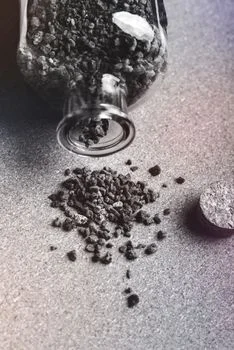
Carbon grade choice sets removal efficiency and unit media cost. Coconut shell carbon at 1,000–1,200 m²/g surface area, mostly microporous, delivers 90–99% VOC removal on BTX, phenols, and pharmaceuticals at about $2,500–$4,000 per ton. Coal-based carbon at 800–1,000 m²/g suits high-volume COD polishing at $1,800–$2,500 per ton with 70–90% COD reduction on municipal pretreatment and similar high-flow duties.
Impregnated carbons handle specific inorganics or hard organics. Sulfur-impregnated grades remove mercury above 95%, from about 10 mg/L influent to below 0.2 mg/L effluent. Silver grades add bacteriostatic control; acid grades aid ammonia. Impregnation can raise CapEx 40–60%, yet it is often required for metal limits. Spec iodine number ≥900 for small organics; use molasses number when mesopores matter for larger molecules.
| Carbon Type | Surface Area (m²/g) | Primary Use-Case | Typical Removal Efficiency | Cost (per ton) |
|---|---|---|---|---|
| Coconut Shell GAC | 1,000–1,200 | Organic VOCs, Pharmaceuticals (e.g., BTX, phenols) | 90-99% VOCs, 70-85% COD | $2,500–$4,000 |
| Coal-Based GAC | 800–1,000 | General organics, high-volume COD reduction (e.g., municipal pretreatment) | 70-90% COD, 50-70% TOC | $1,800–$2,500 |
| Sulfur-Impregnated GAC | Variable | Heavy metals (e.g., mercury, arsenic) | 95%+ Hg removal (e.g., 0.2 mg/L effluent from 10 mg/L influent) | $4,000–$6,500 (40-60% CapEx increase) |
| Silver-Impregnated GAC | Variable | Bacteriostatic applications | Microbial control | $5,000–$8,000 |
| Acid-Impregnated GAC | Variable | Ammonia, basic compounds | 60-80% Ammonia reduction | $4,500–$7,000 |
For bed life, most plants we size pair carbon with a robust pretreatment system for carbon filters, such as a multi-media filter, to strip suspended solids that foul the bed before adsorption begins.
How Does an Activated Carbon Filter Remove Contaminants? Fundamental Operating Principle
An activated carbon filter removes dissolved organics and certain metals by liquid-phase adsorption. Molecules migrate from bulk water into micro- and mesopores, where Van der Waals forces—and chemisorption on impregnated grades—hold them. Water is more viscous than air and competes for sites, so wastewater systems need 10–30 min empty bed contact time—about two orders of magnitude longer than air-phase beds. Most plants we size run at the low end for VOC polishing and at the high end for high-strength COD.
Engineering Specs for Industrial Carbon Filters: Contact Time, Bed Depth, and Flow Rate Calculations
Industrial carbon performance hinges on empty bed contact time (EBCT), bed depth, and hydraulic loading. EBCT typically runs 10–30 minutes for VOC removal and 20–40 minutes for COD reduction. Calculate EBCT (minutes) = (Bed Volume (m³) / Flow Rate (m³/h)) × 60. A 2 m³ bed at 10 m³/h yields 12 minutes EBCT under steady flow.
Bed depth usually sits at 1.5–3 meters. Shallow beds break through early. Excessively deep beds raise CapEx without a matching gain in removal. Design loading is typically 2–10 m³/h per m² of bed area. Higher loading shortens contact. Achieving 99% VOC removal may need about 2 m³/h/m². About 90% removal can often hold at 5 m³/h/m².
Breakthrough curves predict exhaustion when effluent exceeds a set share of influent (e.g., >20%). That curve sets granular activated carbon replacement frequency. Intervals commonly run 6–24 months depending on contaminant load.
Worked Example: Sizing a Carbon Filter for COD Removal Consider a 50 m³/h stream at 300 mg/L COD that must reach ≤200 mg/L to meet a common permit polishing target. 1. Target EBCT: For COD reduction, a 30-minute EBCT is a conservative starting point. 2. Required Bed Volume: Bed Volume = (EBCT / 60) × Flow Rate = (30 min / 60 min/h) × 50 m³/h = 25 m³. 3. Determine Vessel Diameter: Assuming a bed depth of 2.5 meters (within the 1.5–3 m range). Cross-sectional Area = Bed Volume / Bed Depth = 25 m³ / 2.5 m = 10 m². Diameter = 2 × √(Area / π) = 2 × √(10 m² / 3.14159) ≈ 3.57 meters. A single vessel of this diameter may be impractical. Two parallel vessels at 5 m² each (diameter ≈ 2.52 m) can supply the same bed volume and EBCT. 4. Verify Flow Rate per Area: For two vessels, each with 5 m² area, operating at 25 m³/h, the flow rate per m² would be 5 m³/h/m², which is within the acceptable range (2–10 m³/h/m²).
| Parameter | Typical Range for Industrial Wastewater | Key Impact |
|---|---|---|
| Empty Bed Contact Time (EBCT) | 10–30 min (VOCs), 20–40 min (COD) | Adsorption efficiency, contaminant removal percentage |
| Bed Depth | 1.5–3 meters | Breakthrough prevention, CapEx |
| Flow Rate per Cross-Sectional Area | 2–10 m³/h/m² | Contact time, overall system size |
| Carbon Replacement Frequency | 6–24 months (depends on load) | OPEX, compliance risk |
| Influent pH | 6.0–8.0 (optimal for most carbons) | Adsorption kinetics, carbon longevity |
A DAF system for oil/grease removal ahead of carbon cuts fouling and extends media life on oily streams before the adsorption stage.
CapEx and OPEX Breakdown: Carbon Filter Costs for Industrial Wastewater Treatment
Total ownership cost splits into CapEx and recurring OPEX. CapEx for industrial GAC systems typically runs $50,000–$500,000. That figure covers vessels, first carbon fill, piping, valves, and automation controls. A 20 m³/h coconut-shell train with two 2.5-meter vessels and 25 m³ of carbon often lands near $120,000 CapEx on a standard skid layout.
OPEX commonly falls between $0.10–$0.50 per cubic meter treated. Carbon replacement dominates at $2,500–$4,000 per ton for virgin coconut shell GAC. Labor, pumping energy, and backwash water add smaller shares. At 100 m³/day (about 36,500 m³/year), annual OPEX can run $3,650–$18,250.
Carbon replacement frequency tracks contaminant load. High-COD food-processing streams may need change-out every 6–12 months. Lower-COD municipal pretreatment streams often reach 18–24 months between fills. Backwash uses about 5–10% of treated volume. It adds roughly $0.02–$0.05 per cubic meter and usually runs every 24–48 hours to limit channeling.
Spent-carbon disposal can cost $500–$1,500 per ton. It may classify as hazardous waste under EU rules when adsorbed contaminants trigger that status. Reactivation avoids landfill. It still adds transport and processing cost that must sit in the OPEX model.
| Cost Category | Typical Range/Frequency | Notes |
|---|---|---|
| CapEx (GAC System) | $50,000–$500,000 | Vessels, initial carbon fill, controls, installation |
| OPEX (per m³ treated) | $0.10–$0.50/m³ | Driven by carbon replacement, labor, energy, backwash |
| Carbon Replacement Cost | $2,500–$4,000/ton (virgin GAC) | Main driver of OPEX for industrial wastewater treatment activated carbon |
| Carbon Replacement Frequency | 6–12 months (high load), 18–24 months (low load) | Depends on influent quality and EBCT |
| Backwash Water Usage | 5–10% of treated volume | Adds $0.02–$0.05/m³ to OPEX; occurs every 24–48 hours |
| Spent Carbon Disposal | $500–$1,500/ton | Can be classified as hazardous waste; reactivation is an alternative |
How to Select the Best Carbon Filter for Your Industrial Wastewater: A Decision Framework
Selecting an activated carbon filter for continuous industrial service follows six checks that keep compliance and cost aligned.
1. Step 1: Identify Target Contaminants and Influent Concentrations. Characterize the stream. List primary targets (VOCs, COD, TOC, metals, pharmaceuticals) and typical influent ranges (e.g., 500 mg/L COD vs. 50 mg/L). That data drives every later choice. 2. Step 2: Match Carbon Type to Contaminants. Prefer coconut shell for organics. Use impregnated grades for mercury or chromium. Choose coal-based carbon for high-volume, lower-cost COD cut. 3. Step 3: Calculate Required Contact Time and Bed Depth. From flow and removal targets, set EBCT and bed volume. A 30-minute EBCT at 500 mg/L COD fixes carbon volume and vessel size. 4. Step 4: Size the System for Flow Rate and Estimate CapEx/OPEX. Size vessels for the design flow (e.g., 50 m³/h). Price CapEx for vessels, first fill, and controls. Project OPEX from replacement interval and disposal. 5. Step 5: Verify Compliance with Local Discharge Limits. Confirm effluent stays below permit and regional limits. Keep COD ≤200 mg/L where the permit uses that figure. For EU urban plants, Directive (EU) 2024/3019 sets TOC at 37 mg/L (earlier framing used ≤50 mg/L) or COD 125 mg/L O₂, plus site-specific VOC or metal limits. Missed limits trigger fines and downtime. 6. Step 6: Evaluate Vendor Certifications and Support. Score industrial wastewater experience, change-out support, and certifications such as NSF/ANSI 61 or ISO 14001. Lock regeneration or disposal logistics before award.
After carbon, a post-carbon disinfection system, such as a chlorine dioxide generator, may be needed for bacterial limits or reuse.
Common Carbon Filter Problems in Industrial Wastewater and How to Fix Them
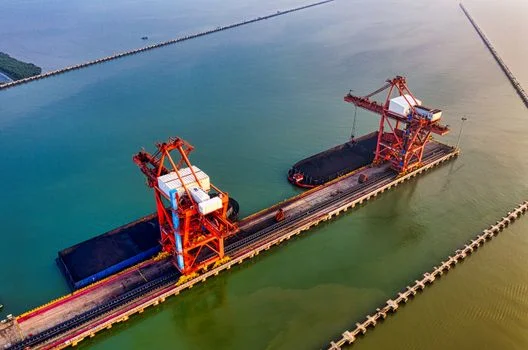
Field failures usually trace to short contact time, fouling, wrong media, or aggressive backwash.
- Problem: Premature Breakthrough. Effluent rises early (e.g., COD >20% of influent).
- Causes: Short EBCT, exhausted carbon, or channeling.
- Fix: Cut flow or add bed volume; replace media; backwash hard or add air scour to relevel the bed.
- Problem: High Backwash Pressure. Sustained pressure above 2 bar (29 psi) signals a clogged bed.
- Causes: Fines, biofilm, or compaction from weak backwash.
- Fix: Lengthen or speed backwash; air scour before water wash; replace media if compacted.
- Problem: Low Adsorption Efficiency. Removal stays below target (e.g., <70% VOC).
- Causes: Wrong carbon grade, pH outside 6–8, or oil/grease fouling.
- Fix: Switch grade (coconut shell for organics); adjust pH; add DAF or other oil pretreatment.
- Problem: Carbon Loss During Backwash. Visible carbon leaves the vessel.
- Causes: Backwash velocity >15 m/h, or undersized support gravel.
- Fix: Reduce velocity; set support gravel about 200–400 mm deep and properly graded.
Who This Guide Is For and What to Do Next
This guide fits plant engineers, EHS managers, and buyers sizing continuous industrial carbon service at roughly 5–500 m³/h. Typical COD loads sit between 50 and 500 mg/L. Discharge targets often align with permit COD ≤200 mg/L or EU urban TOC rules (37 mg/L under Directive (EU) 2024/3019; earlier framing used ≤50 mg/L).
It is a poor fit for ultrapure or drinking-water polishing. Two-stage mixed-bed ion exchange usually wins there. Selection checklist: confirm influent characterization; pick carbon grade by target contaminant (coconut shell for organics, sulfur-impregnated for mercury); size EBCT to 10–30 min for VOCs or 20–40 min for COD; verify 2–10 m³/h/m² hydraulic loading; budget $0.10–$0.50/m³ OPEX plus $500–$1,500/ton spent-carbon disposal; confirm the vendor supplies regeneration or reactivation support. Send your flow rate and target contaminants to our team and Request a free quote for a sized proposal.
Frequently Asked Questions
What's the difference between powdered activated carbon (PAC) and granular activated carbon (GAC) for wastewater?
Powdered activated carbon (PAC) is a fine powder (typically <100 mesh) dosed as slurry, then removed by settling or filtration. Plants use PAC for spikes or short campaigns. Granular activated carbon (GAC) uses larger grains (typically 12x40 to 8x30 mesh) in fixed beds for continuous duty and regeneration. Continuous industrial service usually favors GAC for handling, bed control, and reuse of spent media.
How often should I replace activated carbon in an industrial wastewater filter?
Replacement typically falls between 6 and 24 months. Influent load, flow, and carbon grade set the interval. High COD or VOC streams often exhaust media in 6–12 months. Lower-load pretreatment streams can reach 18–24 months. Daily or weekly COD/TOC checks plus breakthrough curves set the change-out date better than a fixed calendar alone.
Can activated carbon remove heavy metals like mercury or chromium from wastewater?
Virgin carbon alone is weak on heavy metals. Sulfur-impregnated GAC binds mercury, lead, and chromium by chemisorption and can exceed 95% removal on targeted metals. Match the impregnant to the metal and verify with isotherm or pilot data. For high-TDS or broad metal suites, brackish RO may follow carbon as a polishing step.
What's the typical CapEx for a 100 m³/h activated carbon filter system?
CapEx for a 100 m³/h industrial GAC train commonly ranges from $250,000 to $750,000. That band covers multiple large vessels, a 50–100 m³ first carbon fill, piping, valves, instruments, and controls. Carbon steel versus FRP, automation depth, and site install labor move the final number inside that band.
How do I calculate the contact time needed for my wastewater stream?
Empty bed contact time uses EBCT (minutes) = (Bed Volume (m³) / Flow Rate (m³/h)) × 60. At 20 m³/h with 10 m³ of carbon, EBCT = (10 / 20) × 60 = 30 minutes. Typical starts are 10–30 minutes for VOCs and 20–40 minutes for COD. Pilot the final EBCT before freezing vessel diameter and media mass.
Need a customized solution? Request a free quote with your specific flow rate and pollutant parameters.