An industrial brackish water RO system cost breakdown starts with feed TDS of 1,000–10,000 mg/L: trains of 10–2,000 m³/day recover 75–90% of feed at 15–30 bar and reject 95–99% of salts. A 100 m³/day plant lands near $75,000–$165,000 CAPEX and $0.20–$0.40/m³ OPEX.
How Brackish Water RO Systems Work: Process Flow & Critical Parameters
Industrial brackish water RO systems convert 1,000–10,000 mg/L TDS feed into permeate at 75–90% recovery, using membranes that run at 15–30 bar and reject 95–99% of dissolved salts. A 100 m³/day train costs $75,000–$165,000 installed and $0.20–$0.40/m³ to operate. Feed chemistry and concentrate disposal set the final design.
Brackish water reverse osmosis (BWRO) removes 95–99% of dissolved solids from feedwater in the 1,000–10,000 mg/L TDS band through pretreatment, high-pressure pumping, and a membrane array (HydropureWater field data, 2025). Pressurized feed splits into permeate and concentrate. The USGS National Brackish Groundwater Assessment uses the same band, treating water with dissolved solids between 1,000 and 10,000 milligrams per liter as brackish.
Recovery on BWRO trains usually sits at 75–90%, well above the 35–50% typical of seawater RO. Public references put typical brackish recovery at 80–85% of feed as fresh water, inside that design band (Wikipedia). Salt rejection stays at 95–99% when membranes and pretreatment are sized correctly. Operating pressure tracks TDS: about 15 bar near 1,000 mg/L and about 30 bar near 10,000 mg/L, so higher salinity raises pump energy and reshapes the cost model. For membrane and skid layout details, see industrial RO membrane selection and the companion Brackish Water RO System Working Principle: 2026 Engineering Specs, Pressure Physics.
Pretreatment protects flux and membrane life. Multimedia filtration should hold turbidity below 1 NTU. Antiscalant dosing keeps the Langelier Saturation Index (LSI) below 1.8, and feed pH in the 6.5–7.5 band limits carbonate scale. Skip those steps and most plants we size see flux drop, rising differential pressure, and early membrane change-outs within months rather than years.
| Parameter | Typical Range (BWRO) | Description/Impact |
|---|---|---|
| Recovery Rate | 75–90% | Percentage of feedwater converted to permeate; higher for BWRO than SWRO. |
| Salt Rejection | 95–99% | Efficiency of removing dissolved solids (TDS) from feedwater. |
| Operating Pressure | 15–30 bar | Pressure required to overcome osmotic pressure; increases with TDS. |
| Pretreatment Turbidity | <1 NTU | Maximum allowable turbidity to prevent particulate fouling. |
| Pretreatment LSI | <1.8 | Langelier Saturation Index, indicates scaling potential; managed by antiscalant. |
| Pretreatment pH | 6.5–7.5 | Optimal pH range for membrane performance and scale prevention. |
How Much Energy Does Industrial BWRO Use?
Industrial BWRO specific energy commonly falls near 0.8–2.5 kWh/m³ of permeate at 15–30 bar, depending on feed TDS, recovery, and whether an energy-recovery device is fitted (HydropureWater market analysis, 2025). At $0.10/kWh that equals roughly $0.08–$0.25/m³ in power alone. USGS least-work studies show the thermodynamic floor still rises with TDS and recovery, so plants at the high-salinity end of the brackish band should budget toward the upper energy range (USGS, 2018).
Lift and transfer pumping outside the RO skid is separate. Mine and plant transfer loops often add another 0.05–0.20 kWh/m³ when static head and long headers are large, so total site electrical use can exceed the membrane SEC figure alone. Size variable-frequency drives on both the high-pressure RO pump and any large transfer pumps when tariff rates are high.
Brackish Water RO Membrane Types: Specs, Lifespan & Cost Comparison
BWRO membrane choice should follow feed TDS, because salt rejection spans about 95–99.5% and membrane capital typically runs $30–$80/m² (HydropureWater engineering estimates, 2025). Low-pressure elements suit 1,000–3,000 mg/L. Standard elements cover 3,000–7,000 mg/L, and high-rejection elements target 7,000–10,000 mg/L. Flux usually lands at 20–40 LMH once temperature and net driving pressure are set.
With sound pretreatment for brackish water, membrane life is typically 3–5 years. Annual replacement for a mid-size industrial train often sits at $5,000–$20,000. Silica above 150 mg/L, iron above 0.1 mg/L, and TOC above 5 mg/L are the fouling flags we see most often on industrial feeds. Pair filtration with antiscalant before you stretch recovery.
| Membrane Type | TDS Range (mg/L) | Salt Rejection (%) | Flux Rate (LMH) | Lifespan (Years) | Est. Cost ($/m²) |
|---|---|---|---|---|---|
| Low-Pressure BWRO | 1,000–3,000 | 95–98 | 30–40 | 3–5 | 30–50 |
| Standard BWRO | 3,000–7,000 | 98–99 | 25–35 | 3–5 | 40–65 |
| High-Rejection BWRO | 7,000–10,000 | 99–99.5+ | 20–30 | 3–5 | 50–80 |
Top 5 Industrial Brackish Water RO Systems in 2026: Specs & Use Cases
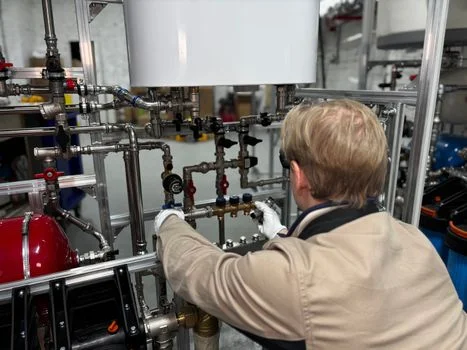
Industrial BWRO packages from Toray, NEWater, Advancees, Aqualitek, and HydropureWater commonly deliver 75–90% recovery across 10–2,000 m³/day trains (HydropureWater market analysis, 2025). Toray units often emphasize high recovery and energy efficiency on large skids. NEWater packages frequently use 316L stainless steel in corrosive service, Advancees focuses on modular fast-deploy frames, and Aqualitek targets high-capacity process water. HydropureWater integrates pretreatment and controls on the same train for reuse duty.
Food and beverage plants usually want permeate below 500 mg/L TDS at high recovery. Pharma duty often needs below 10 mg/L TDS and may add a second pass. Power plants care more about continuous flow and corrosion-resistant metallurgy for boiler make-up or cooling make-up. For a broader process overview beside this equipment shortlist, see Brackish Water RO System Explained: Engineering Specs, Costs & Industrial Selection.
| System/Manufacturer | Flow Rate (m³/day) | TDS Range (mg/L) | Recovery Rate (%) | Energy (kWh/m³) | Materials | Pretreatment Included | CAPEX Range ($) |
|---|---|---|---|---|---|---|---|
| Toray (High-Recovery BWRO) | 100–2,000 | 1,000–10,000 | 80–90 | 0.8–2.0 | FRP, 316L SS | Optional | $150,000–$500,000 |
| NEWater (Corrosion-Resistant) | 50–1,500 | 1,000–10,000 | 75–85 | 1.0–2.5 | 316L SS, FRP | Yes | $100,000–$400,000 |
| Advancees (Modular BWRO) | 10–1,000 | 1,000–7,000 | 75–85 | 1.2–2.8 | FRP, PVC | Optional | $50,000–$300,000 |
| Aqualitek (High-Capacity) | 200–2,000 | 1,000–10,000 | 80–90 | 0.9–2.2 | FRP, 304/316L SS | Yes | $180,000–$500,000 |
| HydropureWater (Integrated Solutions) | 10–2,000 | 1,000–10,000 | 75–90 | 0.8–2.5 | FRP, 304/316L SS | Yes | $80,000–$500,000 |
Industrial Brackish Water RO System Cost Breakdown: CAPEX & OPEX Models
CAPEX for a typical 100 m³/day industrial BWRO plant ranges from about $75,000 to $165,000 when equipment, installation, civil works, and commissioning are included (HydropureWater project data, 2025). According to US EPA (2019), RO/NF cost estimates should separate process equipment, buildings, indirect capital, and annual O&M through a work-breakdown structure rather than a single lump sum. EPA's published unit cost models split treatment, monitoring, and administrative costs, then add permits, pilot studies, land acquisition, and indirect capital such as site work and contingencies (US EPA). Most plants we size for inland reuse see equipment take roughly two-thirds of direct capital.
When bids arrive as one total, ask for the same WBS split EPA uses: process capital, building or skid enclosure, indirects, and first-year O&M. Without that split, a low CAPEX quote often hides missing pretreatment or undersized high-pressure pumps. Installation and civil works absorb the balance once site piping is ordinary.
OPEX for the same 100 m³/day class often lands near $0.20–$0.40/m³. Energy at $0.10/kWh contributes about $0.10–$0.25/m³, while membrane replacement, chemicals, and labor fill the rest. Detailed BWRO system cost analysis should always split those line items. For a price-focused companion page, see brackish water reverse osmosis: system guide, costs & how it works (2026) — commercial water lab.
A worked ROI example: a 500 m³/day plant replacing $1.50/m³ municipal water at $0.30/m³ OPEX saves $1.20/m³. At 330 operating days that is about $198,000 per year. Against roughly $300,000 CAPEX, payback is near 1.5 years. Trains held above 75% recovery usually fall in a 2–5 year payback band when avoided water purchases are real.
| Cost Category | CAPEX Range (100 m³/day) | OPEX Annual Range (100 m³/day) |
|---|---|---|
| Equipment | $60,000–$120,000 | — |
| Installation | $10,000–$20,000 | — |
| Civil Works | $5,000–$15,000 | — |
| Commissioning | $5,000–$10,000 | — |
| Energy (at $0.10/kWh) | — | $3,300–$8,250 |
| Membrane Replacement | — | $5,000–$20,000 |
| Antiscalant/Chemicals | — | $2,000–$8,000 |
| Labor | — | $10,000–$30,000 |
What Does a 500,000 gpd Recycle Plant Cost?
A 500,000 gpd (about 1,890 m³/day) onsite recycle plant for data-center or industrial cooling make-up sits at the top of the 10–2,000 m³/day BWRO envelope shown above, with packaged CAPEX often near $180,000–$500,000 when feed is true brackish water rather than seawater. That figure covers the RO train and integrated pretreatment, not full campus piping, cooling-tower chemistry, or thermal brine treatment.
If the duty is cooling-tower blowdown reuse, design for permeate in the low hundreds of mg/L TDS and recovery near 75–90%. Budget OPEX near $0.20–$0.40/m³ for the membrane step alone. Add transfer pumping, storage, and any ZLD brine step as separate line items before you lock the business case.
How to Select a Brackish Water RO System for Your Facility
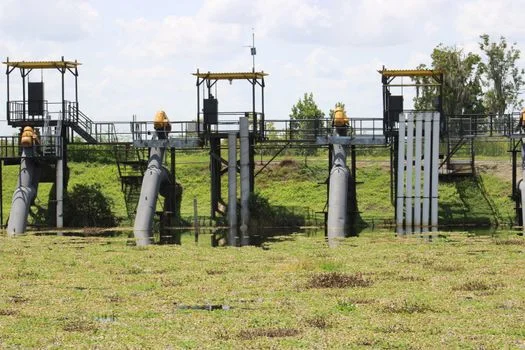
Selecting an industrial BWRO train works best as a seven-step engineering gate, starting with a full feedwater analysis (HydropureWater engineering methodology, 2025). Use the checklist below before you compare vendor datasheets.
- Step 1: Test Feedwater Quality. Measure TDS, turbidity, silica, iron, pH, hardness, and TOC. Those values set pretreatment and membrane class.
- Step 2: Define Permeate Quality Requirements. Food processing may need <500 mg/L TDS. Pharma often needs <10 mg/L TDS or a second pass.
- Step 3: Calculate Required Flow Rate. Size for peak m³/day demand, then add about 20% spare for swings, growth, and CIP downtime.
- Step 4: Match Membrane Type to TDS Range. Use low-pressure elements at 1,000–3,000 mg/L, standard at 3,000–7,000 mg/L, and high-rejection at 7,000–10,000 mg/L when specifying an Industrial Reverse Osmosis (RO) Water Treatment System.
- Step 5: Evaluate Pretreatment Needs. Plan multimedia filtration, antiscalant, and pH control as the baseline. Add oxidation, carbon, or ultrafiltration when iron or organics are high.
- Step 6: Compare Systems by CAPEX, OPEX, and Energy Efficiency. Review modular BWRO systems for rapid deployment against conventional skids. Ask for kWh/m³ at your design TDS.
- IF feedwater TDS is high (>7,000 mg/L) THEN prioritize high-rejection membranes and robust pretreatment.
- IF energy costs are high THEN prioritize energy recovery and lower net driving pressure.
- IF space is limited THEN favor compact integrated or containerized frames.
- Step 7: Check Compliance with Local Discharge Limits. Confirm concentrate disposal against local TDS and chloride limits, including cases where buyers reference EPA's 500 mg/L TDS reuse threshold, and weigh ZLD only when no brine path exists.
Concentrate disposal deserves equal weight with permeate specs at this gate. Deep wells, evaporation ponds, sanitary sewer agreements, and brine blending each carry different permitting cost and timeline. Decide the brine path before the membrane bid, because a train sized for 90% recovery cannot easily back down to 75% once concentrate rules tighten.
Common BWRO System Problems & How to Prevent Them
About 70% of industrial BWRO failures traced in service work stem from scaling, fouling, or membrane damage that pretreatment and operating discipline can prevent (HydropureWater service records, 2025). Fix the cause, not only the symptom. Weekly normalized-flux and differential-pressure checks catch most of these issues before a forced shutdown.
- Scaling: Calcium carbonate, calcium sulfate, or silica deposits when hardness or silica is high and antiscalant or pH control slips.
Prevention: Use automated antiscalant and pH dosing for BWRO pretreatment to hold LSI below 1.8 and pH near 6.5–7.5. Soften only when hardness is extreme. - Fouling: Suspended solids, organics, or microbes accumulate when turbidity exceeds 1 NTU or iron/TOC stay high.
Prevention: Keep multimedia and carbon filtration in specification, then run scheduled CIP with the right chemistry. - Membrane Degradation: Chlorine or out-of-range pH raises permeate TDS and cuts rejection.
Prevention: Dechlorinate with bisulfite or carbon and stay inside the manufacturer pH window, typically 6.5–7.5 for continuous feed. - Energy Inefficiency: Fouling, scaling, or a worn high-pressure pump push SEC above design.
Prevention: Trend differential pressure and normalized flux weekly. Correct fouling early and keep recovery at the design set point.
Who This Is For and Next Steps
Plant engineers, EPC contractors, and procurement teams use this guide when sizing inland brackish or reuse duty between 1,000 and 10,000 mg/L TDS. Look elsewhere if your feed is true seawater above about 30,000 mg/L TDS or if you already need full thermal ZLD as the primary process. When you have a recent water analysis and target permeate spec, request a brackish RO sizing and CAPEX/OPEX quote with those numbers attached.
Frequently Asked Questions
What's the difference between brackish water RO and seawater RO?
Brackish water RO treats about 1,000–10,000 mg/L TDS at roughly 15–30 bar and 75–90% recovery. Seawater RO handles feeds near 35,000–45,000 mg/L TDS, needs about 55–80 bar, and usually recovers only 35–50%. The lower osmotic pressure of brackish feed is why BWRO energy and brine volume are both smaller for the same permeate flow.
How much does a brackish water RO system cost?
Industrial CAPEX commonly runs from about $50,000–$80,000 near 10 m³/day up to about $500,000 near 2,000 m³/day, depending on metallurgy and pretreatment scope. A 100 m³/day plant often lands at $75,000–$165,000 installed. OPEX is typically $0.20–$0.40/m³ when energy, membranes, chemicals, and labor are combined.
What pretreatment is needed for brackish water RO?
Baseline pretreatment is multimedia filtration to <1 NTU, antiscalant to keep LSI below 1.8, and pH control near 6.5–7.5. Add carbon or specialized silica control when TOC or silica is high, and remove chlorine before the membranes. Plants that skip these steps usually see the fastest flux loss and the shortest membrane life.
How long do BWRO membranes last in industrial service?
Most industrial BWRO membranes last 3–5 years when turbidity, iron, silica, and oxidant controls stay inside design limits. Shorter life usually traces to fouling or chlorine attack, not to normal compaction alone. Weekly trending of normalized flux and differential pressure is the cheapest early-warning habit.
What does BWRO membrane replacement cost industrial plants each year?
BWRO membrane replacement costs industrial plants about $5,000–$20,000 per year on a mid-size 100 m³/day class train, driven by element count and $30–$80/m² pricing. Budget it as a sinking fund set by the 3–5 year life curve rather than a surprise. High silica or iron feeds push replacement toward the top of that range.
Can BWRO permeate meet cooling-tower or process reuse targets?
Yes for many industrial reuse duties. Food and cooling make-up often target permeate below 500 mg/L TDS, while pharma or high-pressure boiler feed may need below 10 mg/L TDS with a second pass. Confirm local concentrate discharge rules before you set recovery, because brine compliance — not permeate quality — is often the binding constraint.