Why Pretoria Hospitals Need Specialized Wastewater Treatment
Pretoria hospitals face unique wastewater challenges: influent with 10–50x higher pathogen loads (e.g., E. coli >10⁶ CFU/mL) and pharmaceutical residues (e.g., 10–100 µg/L antibiotics) than municipal sewage. NEMA 2025 mandates COD <75 mg/L and TSS <30 mg/L, but hospital effluent often exceeds these by 200–400%. Hybrid DAF-MBR systems achieve 99.9% pathogen removal and COD <30 mg/L, with CAPEX ranging from R1.2M (10 m³/h) to R9.8M (100 m³/h) for Pretoria’s water reuse standards.
The urgency for specialized treatment in the City of Tshwane is driven by the divergence between hospital effluent and standard municipal sewage. While municipal plants are designed for organic matter and basic nutrient removal, hospital streams carry high concentrations of Pseudomonas aeruginosa, Staphylococcus aureus, and multi-drug resistant (MDR) bacteria. According to WHO 2024 guidelines, these pathogens persist through standard aerobic treatment, requiring advanced oxidation or membrane filtration to prevent environmental contamination. In Pretoria, the Department of Forestry, Fisheries and the Environment (DFFE) has signaled that NEMA 2025 discharge limits will be strictly enforced via automated telemetry monitoring.
A high-profile case in 2025 saw a major Pretoria hospital fined R850,000 for repeated compliance failures. The facility’s influent profile showed a COD of 500 mg/L and TSS of 300 mg/L, but their legacy activated sludge system could only reduce COD to 180 mg/L—well above the 75 mg/L limit. This failure resulted not only in financial penalties but also in a mandatory 90-day remediation order. By implementing a compact hospital wastewater treatment system with ozone disinfection, such risks are mitigated through multi-stage barrier technology.
Tshwane Metro’s water reuse guidelines are among the most stringent in South Africa, particularly for facilities seeking to use treated effluent for landscape irrigation. Standards require <1 CFU/100 mL E. coli, a level unattainable with simple chlorination due to the high ammonia and organic interference typical of medical waste. Advanced disinfection, such as ozone or Chlorine Dioxide (ClO₂), provides a 99.99% kill rate without the harmful residual trihalomethanes (THMs) associated with bulk chlorine dosing.
| Parameter | Municipal Sewage (Avg) | Hospital Effluent (Pretoria) | NEMA 2025 Limit |
|---|---|---|---|
| COD (mg/L) | 250–450 | 600–1,500 | <75 |
| TSS (mg/L) | 150–300 | 200–1,000 | <30 |
| E. coli (CFU/100mL) | 10⁴–10⁵ | 10⁶–10⁸ | <1,000 (Discharge) / <1 (Reuse) |
| Pharmaceuticals (µg/L) | <1.0 | 10–100 | Monitoring Required |
Hospital Wastewater Influent: What Pretoria Facilities Must Remove
Accurate characterization of hospital influent is the first step in engineering a compliant system. Unlike industrial sites, hospitals produce a fluctuating stream of highly toxic contaminants that vary by department (e.g., oncology vs. radiology). Pathogens are the primary concern; data from the CDC (2024) indicates that hospital wastewater contains antibiotic-resistant bacteria (AMR) at levels 100x higher than municipal influent. These include Carbapenem-resistant Enterobacteriaceae (CRE), which require robust disinfection protocols to prevent local groundwater contamination.
Pharmaceutical residues represent a significant technical hurdle for Pretoria facility managers. Antibiotics (10–100 µg/L), hormones (1–10 µg/L), and iodinated contrast agents (50–200 µg/L) used in imaging are largely recalcitrant to biological treatment. These compounds are endocrine disruptors and contribute to the rise of AMR in the Apies and Pienaars River catchments. Specialized MBR systems for hospital effluent reuse in Pretoria utilize long sludge retention times (SRT) to enhance the biodegradation of these complex molecules.
Heavy metals and chemical reagents also enter the waste stream through laboratory and dental operations. Mercury (0.5–5 µg/L) from legacy amalgams and silver (1–10 µg/L) from X-ray processing must be managed. While concentrations are low, their cumulative effect on biological treatment biomass can lead to "upset" conditions where the bacteria responsible for COD removal are inhibited. the use of heavy disinfectants in wards increases the chloride and sulfate load, which can corrode standard concrete tanks if not properly lined with epoxy or HDPE.
| Contaminant Category | Specific Compounds | Typical Concentration | Removal Difficulty |
|---|---|---|---|
| Pathogens | Pseudomonas, E. coli, AMR Bacteria | 10⁵–10⁷ CFU/mL | High (Requires 4-log kill) |
| Pharmaceuticals | Antibiotics, Cytostatic drugs | 50–150 µg/L | Very High (Requires AOP/MBR) |
| Heavy Metals | Hg, Ag, Cr, Pb | 5–50 µg/L | Moderate (Precipitation/DAF) |
| Organic Load | Blood, Proteins, Detergents | COD 800+ mg/L | Moderate (Biological) |
Disinfection byproducts (DBPs) are an often-overlooked compliance risk. When hospitals use high doses of chlorine to treat effluent with high organic loads, they inadvertently form THMs (50–200 µg/L) and Haloacetic Acids (HAAs). These are regulated under Tshwane Metro bylaws due to their carcinogenic nature. Transitioning to a ClO₂ generator for hospital wastewater disinfection eliminates THM formation while maintaining a stable residual that prevents biofilm regrowth in reuse piping.
Treatment Technologies Compared: DAF vs. MBR vs. Hybrid Systems for Pretoria Hospitals
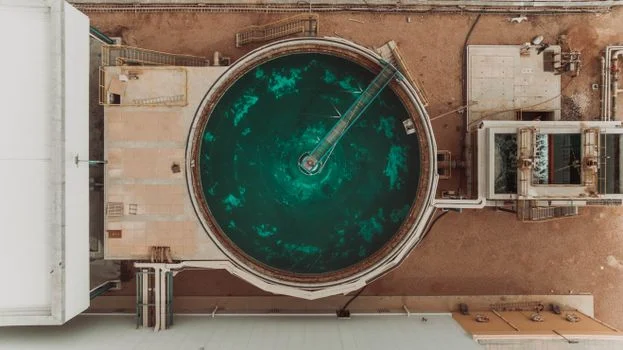
Selecting the correct technology depends on the influent profile and the desired end-use of the water. Dissolved Air Flotation (DAF) is highly effective for primary solids removal, especially in hospitals with high Fats, Oils, and Grease (FOG) from kitchen facilities and high TSS from laundry. A DAF unit can achieve 92–97% TSS removal (per EPA 2024) by introducing micro-bubbles that attach to particles and float them to the surface. However, DAF alone provides negligible pathogen removal and must be paired with downstream biological treatment and disinfection.
For hospitals targeting water reuse or strict NEMA compliance, the Membrane Bioreactor (MBR) is the gold standard. MBR combines activated sludge treatment with ultrafiltration membranes (typically 0.03 to 0.4 μm pore size). This physical barrier ensures that TSS is virtually zero and 99.9% of pathogens are removed (HydropureWater field data, 2025). While MBR offers a 60% smaller footprint than conventional plants, it requires careful management of membrane fouling. In Pretoria’s hard water conditions, flux rates typically range from 15–25 L/m²h, with a 10–20% flux decline observed annually if chemical cleaning (CIP) is not performed quarterly.
The Hybrid DAF-MBR system is an emerging preference for Pretoria facilities with space constraints and high-strength influent. By placing a DAF machine for pre-treatment, the organic load on the MBR is reduced by 30–40%. This synergy extends membrane life and reduces the cleaning frequency by half. This approach is similar to how UK hospitals achieve 99.9% pathogen removal in effluent while maintaining low operational costs.
| Technology | COD Removal | Pathogen Log Kill | Footprint | Energy Use (kWh/m³) |
|---|---|---|---|---|
| DAF (Primary) | 30–50% | <1.0 | Medium | 0.2–0.4 |
| MBR (Secondary) | 90–98% | 3.0–4.0 | Small | 0.8–1.2 |
| Hybrid DAF-MBR | 95–99% | 4.0+ | Compact | 1.0–1.4 |
| Conventional AS | 70–85% | <1.0 | Large | 0.5–0.7 |
Disinfection technology choice is critical for final compliance. While chlorine gas or hypochlorite is the lowest CAPEX option (R0.50/m³), it fails to neutralize certain protozoa and creates toxic residuals. Ozone (O₃) provides the highest kill rate (99.99%) and actively breaks down pharmaceutical residues but has a higher CAPEX. Ultraviolet (UV) is effective but requires very low turbidity (<1 NTU) to function, making it a poor choice unless preceded by MBR. Chlorine Dioxide (ClO₂) offers a middle ground, providing superior penetration of biofilms without the DBP risks of standard chlorine.
CAPEX and OPEX Breakdown: What Pretoria Hospitals Can Expect to Pay
Budgeting for a hospital wastewater system in Pretoria requires a clear distinction between initial capital expenditure and the long-term cost of ownership. For a standard 50 m³/h system, CAPEX can range significantly based on the level of automation and the disinfection technology chosen. A basic DAF system with chlorination may start at R2.5M, whereas a fully integrated MBR system with ozone and remote telemetry can reach R8.5M. These figures include the equipment, control systems, and internal piping but typically exclude major civil works.
Operational expenditure (OPEX) is driven by four primary factors: energy, chemicals, membrane replacement, and labor. MBR systems are more energy-intensive (0.8–1.2 kWh/m³) due to the air scouring required to keep membranes clean. Membrane replacement is a significant "hidden" cost, typically occurring every 5–8 years, with costs for a 50 m³/h plant reaching approximately R350,000. However, when compared to the risk of R1.5M/year in environmental fines and the rising cost of municipal water (averaging R30–R45/m³ in Pretoria), the ROI for reuse-capable systems is often achieved within 3 to 5 years.
| System Capacity | Technology Type | Est. CAPEX (ZAR) | Est. OPEX (ZAR/m³) |
|---|---|---|---|
| 10 m³/h | DAF + ClO₂ | R1.2M – R1.8M | R8.50 |
| 25 m³/h | MBR + UV | R3.5M – R4.8M | R12.00 |
| 50 m³/h | Hybrid DAF-MBR + O₃ | R6.5M – R8.2M | R15.50 |
| 100 m³/h | MBR + Ozone | R9.2M – R11.5M | R14.00 |
Hidden costs often derail project budgets. Pretoria hospitals must account for NEMA permitting (R50K–R200K), civil foundations (R200K–R800K), and mandatory Tshwane Metro telemetry integration (R100K–R300K). To manage these costs, many facilities are exploring ESCO (Energy Service Company) models or pay-per-m³ leasing arrangements, which shift the CAPEX burden to the technology provider while ensuring guaranteed effluent quality.
Pretoria-Specific Compliance: NEMA 2025, Tshwane Metro Bylaws, and Water Reuse Standards
Navigating the regulatory environment in Pretoria requires an understanding of both national mandates and local municipal bylaws. The National Environmental Management Act (NEMA) 2025 standards are the baseline, requiring COD <75 mg/L and TSS <30 mg/L. However, hospital effluent in Pretoria often reaches COD levels of 1,500 mg/L during peak surgical hours. This means a treatment system must achieve over 95% removal efficiency consistently—a feat impossible for outdated septic or basic aerobic systems. This is particularly relevant when considering how Kampala facilities meet NEMA 2025 discharge limits, as the core engineering principles for high-load medical waste remain similar across the continent.
Tshwane Metro's 2025 bylaws introduce additional layers of complexity, specifically targeting heavy metals and pharmaceutical concentrations. Limits for Mercury (Hg <1 µg/L) and Silver (Ag <5 µg/L) are strictly enforced for hospitals located near sensitive catchment areas. the city now mandates continuous monitoring of pH, flow, and COD with direct telemetry links to the municipal water board. Any deviation from these limits for more than 24 hours can trigger automatic fines or the suspension of discharge permits.
For hospitals pursuing "Green Building" certifications or water independence, the South African Water Reuse Standards provide the framework. To use treated water for toilet flushing or cooling towers, turbidity must be <0.1 NTU and E. coli must be undetectable. Achieving this requires the "barrier" approach of an MBR followed by a secondary disinfection step. Lessons from case studies of MBR systems in arid climates like Pretoria show that high-quality reuse can reduce a hospital's municipal water bill by up to 40%.
Supplier Selection Checklist: How to Choose a Pretoria Hospital Wastewater Treatment Partner
Choosing a supplier in the Pretoria market requires more than a simple price comparison. Given the technical complexity of medical effluent, facility managers should use the following framework to evaluate potential partners:
- Local Project History: Can the supplier provide 3+ references for hospital-specific projects within Gauteng? Local knowledge of Tshwane Metro's permitting process is essential to avoid 6–12 month delays in NEMA approval.
- Performance Guarantees: Does the contract specify effluent limits (e.g., COD <50 mg/L) rather than just "equipment capacity"? Ensure the supplier provides NEMA 2025 and Tshwane Metro test reports from existing installations.
- Maintenance Infrastructure: Is there a local service team in Pretoria or Johannesburg? Hospital systems cannot afford more than 24 hours of downtime. Verify the inventory of critical spare parts and membrane modules held in South Africa.
- Technology Appropriateness: Avoid suppliers pushing a "one size fits all" solution. A hospital with high laundry volume needs DAF pre-treatment; a hospital focused on reuse needs MBR. Ensure the proposed disinfection (Ozone/ClO₂) matches the pathogen risk.
- Total Cost Transparency: Request an itemized breakdown that includes civil works, permitting, and 5-year OPEX projections. Beware of low CAPEX quotes that hide high chemical or energy costs.
Frequently Asked Questions
What is the best disinfection method for hospital wastewater in Pretoria?Ozone (O₃) or Chlorine Dioxide (ClO₂) are the most effective methods. Ozone provides a 99.99% kill rate and destroys pharmaceutical residues, though it has a higher CAPEX. ClO₂ is a robust alternative that prevents biofilm and THM formation. Standard chlorine is often insufficient for hospital-grade pathogens and risks non-compliance with Tshwane's DBPs bylaws.
How long does it take to install a containerized treatment plant?Containerized systems can be deployed in under 30 days once on-site. However, the total project timeline—including influent testing, engineering design, and NEMA/Tshwane Metro permitting—typically ranges from 6 to 10 months. Modular systems allow for rapid scalability if the hospital expands its bed capacity.
Can hospital wastewater be safely reused for irrigation?Yes, provided it is treated via MBR and advanced disinfection. Pretoria’s reuse standards require E. coli <1 CFU/100 mL and Turbidity <0.1 NTU. MBR systems act as a physical barrier to bacteria and viruses, making the water safe for landscape irrigation and cooling tower make-up water.
What is the typical ROI for a hospital wastewater treatment plant?Most Pretoria hospitals see a return on investment within 3 to 7 years. This is calculated by totaling the savings from reduced municipal water purchases, the elimination of environmental fines (which can exceed R1M), and the reduction in sewage disposal surcharges.