Why Hospital Wastewater Is Different in Las Vegas
Hospital wastewater in Las Vegas presents unique treatment challenges due to the arid environment, stringent regulations, and the specific nature of medical effluent. Unlike typical municipal wastewater, hospital effluent carries a complex cocktail of pharmaceuticals, antibiotics, disinfectants, and trace chemicals that are often resistant to conventional biological treatment processes. These compounds can persist in the environment, posing risks to aquatic ecosystems and potentially contributing to issues like antibiotic resistance. Las Vegas operates within a closed basin and faces significant water scarcity. This reality not only necessitates efficient water management but also incentivizes water reuse, which demands exceptionally high-quality treated effluent. To manage these risks, the Nevada Division of Environmental Protection (NDEP) enforces pretreatment standards, aligning with federal EPA regulations under 40 CFR Part 403. Hospitals and medical facilities are therefore responsible for controlling pollutants at their source before discharging to the municipal sewer system, ensuring that their wastewater does not disrupt the public treatment infrastructure or violate discharge permits.
Core Treatment Technologies for Medical Facilities
Effective treatment of medical wastewater in Las Vegas requires robust technologies capable of handling complex contaminants and meeting strict discharge standards, particularly in a water-scarce region. Membrane Bioreactor (MBR) systems, such as HydropureWater's DF Series, integrate advanced biological treatment with 0.1 μm PVDF membrane filtration. This combination achieves effluent quality with turbidity consistently below 1 NTU, making it suitable for water reuse applications. For disinfection, ozone technology offers a powerful solution, achieving over 99% pathogen inactivation without generating harmful disinfection byproducts like trihalomethanes (THMs) often associated with chlorination. This aligns with stringent international standards, such as those found in the EU Urban Waste Water Directive 91/271/EEC. Alternatively, on-site chlorine dioxide generators provide a potent disinfection method, capable of a 99.9% kill rate and producing fewer THMs compared to traditional sodium hypochlorite. In scenarios with high levels of fats, oils, and grease (FOG) or suspended solids, Dissolved Air Flotation (DAF) systems are crucial. They efficiently remove these contaminants, typically achieving 92–98% efficiency, thereby protecting downstream MBR membranes from fouling and extending their operational life.
| Technology | Primary Function | Typical Removal Efficiency | Key Benefits for Hospitals | HydropureWater Series |
|---|---|---|---|---|
| MBR (Membrane Bioreactor) | Biological treatment & ultrafiltration | BOD/COD removal: >95% TSS: <1 NTU |
High-quality effluent for reuse; compact footprint | DF Series |
| Ozone Disinfection | Pathogen inactivation | Pathogen inactivation: >99% | No chemical byproducts; effective against resistant organisms | Compact medical wastewater system |
| Chlorine Dioxide Generation | Pathogen inactivation | Pathogen inactivation: >99.9% | Effective disinfection; lower THM formation than chlorine | ClO₂ generator |
| DAF (Dissolved Air Flotation) | FOG & suspended solids removal | FOG: 92-98% TSS: 90-98% |
Protects downstream processes; reduces load on biological treatment | DAF line |
How Las Vegas Municipal Systems Handle Medical Waste
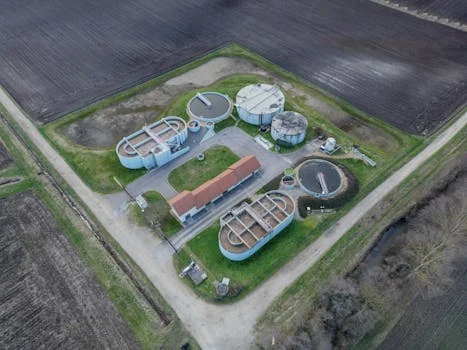
Las Vegas municipal wastewater treatment facilities, such as the Las Vegas Water Resource Recovery Facility, are primarily designed to handle large volumes of domestic sewage using processes like activated sludge with biological nutrient removal. While effective for general municipal waste, these systems are not optimized to remove the specific pharmaceutical and chemical contaminants often found in hospital effluent. Consequently, hospitals and medical centers are mandated by the NDEP to implement on-site pretreatment before discharging into the public sewer. This pretreatment is essential to prevent the introduction of pollutants that could interfere with the municipal treatment process, damage infrastructure, or violate discharge limits. Typical pretreatment trains for medical facilities in the region often include preliminary screening to remove gross solids, followed by DAF to remove FOG and suspended solids. An equalization tank may be used to buffer flow and concentration variations before the wastewater enters an MBR for advanced biological treatment and membrane filtration, concluding with a disinfection stage to ensure microbial safety. This multi-barrier approach is critical for meeting NDEP Industrial User Permit requirements and protecting the integrity of the Las Vegas Valley's water resources.
Choosing the Right System for Your Facility
Selecting the appropriate wastewater treatment system for a healthcare facility in Las Vegas hinges on factors like facility size, daily wastewater flow, available space, and specific regulatory compliance goals, including potential water reuse objectives. For smaller clinics with fewer than 10 beds and wastewater flows typically ranging from 1 to 5 m³/day, compact, automated solutions are ideal. These systems, with a footprint as small as 0.5 m², utilize ozone disinfection and can be installed in under-floor or rooftop spaces, minimizing disruption. Mid-sized hospitals, serving between 10 and 100 beds with flows from 1 to 80 m³/h, may benefit from integrated underground systems like the WSZ Series. These units combine anoxic digestion and sedimentation, offering a robust biological treatment solution that conserves valuable above-ground space. For facilities prioritizing water reuse for irrigation, cooling tower makeup, or toilet flushing, a combination of an advanced MBR system, such as the /product/2-mbr-integrated-wastewater-treatment.html, coupled with Reverse Osmosis (RO) treatment (/product/6-reverse-osmosis-ro-water-purification.html), is essential to achieve the high purity required by organizations like the Southern Nevada Water Authority (SNWA). A structured decision framework involves mapping your facility's flow rate, available installation footprint, target discharge or reuse quality standards, and desired level of automation against the capabilities of different system types.
Compliance and Operational Costs in Nevada

Ensuring compliance with the Nevada Division of Environmental Protection (NDEP) wastewater discharge standards is paramount for healthcare facilities, as non-compliance can result in substantial penalties, often exceeding $10,000 per day. NDEP mandates monthly monitoring of key parameters including Biochemical Oxygen Demand (BOD5), Total Suspended Solids (TSS), pH, and specific organic compounds. Investing in automated wastewater treatment systems can significantly reduce operational expenditures. For instance, the compact medical wastewater system, requiring minimal operator intervention, can lower labor costs by 30–50% compared to manually managed treatment processes. Energy consumption is a key operational cost; MBR systems typically consume between 1.2–1.8 kWh/m³, while ozone systems require approximately 8–12 kWh per kilogram of ozone produced. Capital expenditure (CAPEX) for compact hospital wastewater treatment systems in Las Vegas generally ranges from $150 to $300 per cubic meter per day of treatment capacity. However, the return on investment (ROI) is often realized within 3–5 years, driven by reduced operational fees, avoidance of non-compliance fines, and potential cost savings from water reuse initiatives. Detailed cost breakdowns for underground and buried wastewater treatment systems can provide further insight into long-term economic benefits (/blog/827-buried-wastewater-treatment-system-cost-price-2025-b2b-breakdown.html, /blog/819-underground-sewage-treatment-system-cost-price-2025-b2b-breakdown.html).
Frequently Asked Questions
What is an effluent treatment plant for hospitals?
An effluent treatment plant (ETP) for hospitals is a specialized wastewater treatment system designed to remove pathogens, pharmaceuticals, residual chemicals, and other hazardous contaminants from medical wastewater before it is discharged to a municipal sewer or reused. These systems are critical for protecting public health and the environment from the unique waste streams generated by healthcare facilities.
How is hospital wastewater treated in Las Vegas?
In Las Vegas, hospital wastewater is treated through a combination of on-site pretreatment processes. This typically involves physical separation methods like screening and Dissolved Air Flotation (DAF) to remove solids and oils, followed by advanced biological treatment using Membrane Bioreactors (MBRs) to break down organic pollutants. Finally, disinfection, often using ozone or chlorine dioxide, is applied to inactivate pathogens, ensuring compliance with NDEP standards.
What is waste management in a hospital?
Hospital waste management encompasses the comprehensive handling of all waste streams generated within a healthcare facility. This includes both liquid waste, such as wastewater requiring specialized treatment, and solid waste, which can range from general refuse to biohazardous materials, sharps, and pharmaceutical waste. Each category demands specific collection, treatment, and disposal protocols to ensure regulatory compliance and safety.
Can hospital wastewater be reused in Las Vegas?
Yes, hospital wastewater can be reused in Las Vegas, but it requires advanced treatment technologies. By pairing high-efficiency systems like MBRs with subsequent purification steps such as Reverse Osmosis (RO), the treated effluent can meet the stringent quality standards set by the SNWA for applications like landscape irrigation, toilet flushing, or cooling tower makeup water.
Are there grants for hospital wastewater upgrades in Nevada?
Nevada offers incentives and potential grants to encourage water conservation and pollution prevention. Organizations like the Southern Nevada Water Authority (SNWA) and the NDEP often provide rebates or financial assistance programs for projects that focus on water reuse and the implementation of upgraded wastewater treatment technologies that reduce environmental impact.
Related Equipment
The following HydropureWater products are engineered for the wastewater challenges discussed above:
- compact ozone-based hospital wastewater system — view specifications, capacity range, and technical data
Need a customized solution? Request a free quote with your specific flow rate and pollutant parameters.