Kansas City hospitals must treat wastewater to meet EPA and KDHE standards, with effluent limits of <200 CFU/100mL fecal coliform and <30 mg/L BOD (KDHE 2024). The Blue River Wastewater Treatment Plant processes 75 million gallons/day, but hospital-specific systems (e.g., MBR or ozone/UV) are required to handle pharmaceutical residues and pathogens like E. coli and norovirus. This guide provides 2026 engineering specs, cost models, and a zero-risk equipment selection framework for healthcare facilities.
Why Hospital Wastewater in Kansas City Requires Specialized Treatment
Hospital wastewater in the Kansas City metropolitan area contains pathogen loads 10 to 100 times higher than standard municipal sewage, according to 2023 WHO data. While facilities like the Blue River Biosolids Facility are advancing regional waste processing, they are designed for domestic waste, not the concentrated biological and chemical cocktails generated by surgical centers, oncology departments, and diagnostic labs. E. coli, norovirus, and antibiotic-resistant bacteria (ARB) present a significant public health risk if not neutralized at the source.
Pharmaceutical residues, including antibiotics like ciprofloxacin and various hormonal compounds, frequently bypass conventional secondary treatment. The Kansas Department of Health and Environment (KDHE) is increasingly scrutinizing these "contaminants of emerging concern." Meeting KDHE limits for specific pharmaceutical markers—often requiring concentrations below 1 µg/L—necessitates advanced oxidation processes (AOP) or high-flux membrane filtration that municipal plants simply cannot provide for individual institutional contributors.
Regulatory compliance is governed by KDHE Chapter 28, which mandates strict effluent standards: fecal coliform must remain below 200 CFU/100mL and Biological Oxygen Demand (BOD) must not exceed 30 mg/L. While the Blue River Plant achieves a 92% BOD removal rate, the initial concentrations in hospital effluent are often so high that the remaining 8% still violates local discharge permits. Without on-site pretreatment, hospitals face significant surcharges from KC Water for high-strength waste.
A technical audit of the Larned State Hospital’s Sequencing Batch Reactor (SBR) system in 2023 highlighted a critical vulnerability: while the system met baseline KDHE standards for organic loading, it lacked the redundancy required to handle sudden pharmaceutical spikes or viral outbreaks. This lack of specialized "barrier" technology (like membranes or ozone) leaves Kansas City healthcare facilities exposed to both environmental audits and the risk of localized pathogen transmission within the municipal sewer network.
2026 Engineering Specs for Hospital Wastewater Treatment in Kansas City
Engineering hospital-specific systems requires a transition from "dilution and discharge" to "targeted removal." For 2026, Kansas City facilities must design systems based on a fluctuating influent profile that accounts for peak surgical hours and laundry cycles. Influent BOD typically ranges from 200 to 800 mg/L, while Chemical Oxygen Demand (COD) can spike to 1,500 mg/L due to the presence of laboratory reagents and disinfectants. These parameters are significantly more aggressive than Kansas municipal wastewater treatment standards.
Disinfection benchmarks are the most critical engineering hurdle. To comply with EPA 40 CFR Part 503 and KDHE Chapter 28, systems must demonstrate a 4-log removal for viruses and a 6-log removal for bacteria. This is typically achieved through a multi-stage process: primary clarification, biological treatment, and tertiary disinfection. For hospitals utilizing land application for solids, KDHE requires Class A biosolids, necessitating advanced stabilization techniques such as thermophilic digestion or lime stabilization.
The process flow for a modern Kansas City healthcare facility often involves Dissolved Air Flotation (DAF) for kitchen and laundry fats, oils, and grease (FOG), followed by a Membrane Bioreactor (MBR) for biological nutrient removal, and finishing with an ozone or UV system for pharmaceutical oxidation. This follows global best practices, including Singapore’s NEA standards for hospital wastewater.
| Parameter | Typical Influent (KC Hospital) | KDHE/EPA Effluent Limit (2026) | Required Removal Efficiency |
|---|---|---|---|
| BOD5 (mg/L) | 200 – 800 | < 30 | 96.2% |
| TSS (mg/L) | 150 – 400 | < 30 | 92.5% |
| Fecal Coliform (CFU/100mL) | 10^5 – 10^7 | < 200 | 99.99% (4-log) |
| Total Nitrogen (mg/L) | 40 – 80 | < 10 | 87.5% |
| Pharmaceutical Residues | 10 – 100 µg/L | < 1 µg/L (Target) | 99% |
Treatment Technology Comparison: MBR vs. DAF vs. Ozone/UV for Hospitals
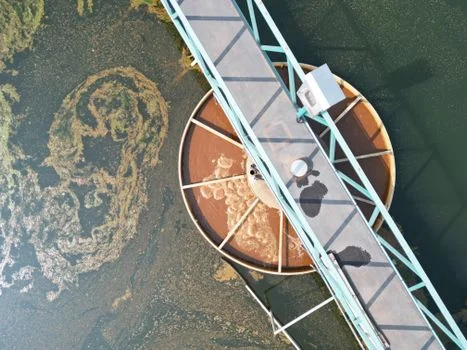
Selecting the correct technology depends on the hospital’s specific waste stream and footprint constraints. MBR systems for hospital wastewater treatment are currently the gold standard for high-performance biological treatment. By combining activated sludge with membrane filtration, MBRs eliminate the need for secondary clarifiers and provide a physical barrier against pathogens, achieving 99% removal of bacteria and many viruses without chemical additives.
For facilities with significant dietary services, DAF systems for FOG and TSS removal in hospital wastewater are essential as a pretreatment step. DAF uses micro-bubbles to float suspended solids and grease to the surface for mechanical skimming. Without DAF, high grease concentrations from hospital kitchens can lead to rapid membrane fouling in MBR systems or reduced transmittance in UV reactors, significantly increasing maintenance costs.
Tertiary disinfection is where pharmaceutical neutralization occurs. While UV is effective for DNA-based pathogen inactivation, it does not break down complex drug molecules as effectively as ozone or on-site chlorine dioxide generators for hospital effluent disinfection. Ozone provides advanced oxidation that cleaves the chemical bonds of antibiotics and hormones, ensuring the effluent meets the most stringent environmental safety profiles.
| Technology | Pathogen Removal | BOD Removal | CAPEX (Relative) | OPEX ($/m³) | Footprint |
|---|---|---|---|---|---|
| MBR | 99.9% (6-log) | > 98% | High | $0.30 – $0.50 | Compact |
| DAF (Pretreat) | 20 – 40% | 30 – 50% | Medium | $0.15 – $0.30 | Moderate |
| Ozone/UV | 99.99% (4-log) | N/A | Medium | $0.20 – $0.40 | Small |
| Hybrid (MBR+O3) | > 99.999% | > 99% | Very High | $0.50 – $0.85 | Moderate |
Cost Models for Hospital Wastewater Treatment in Kansas City: CAPEX, OPEX & ROI
Budgeting for a 100 m³/day hospital wastewater system requires a comprehensive view of lifecycle costs. Initial Capital Expenditure (CAPEX) is often the primary focus for procurement teams, but Operational Expenditure (OPEX) determines the long-term viability of the facility’s compliance strategy. For a mid-sized Kansas City facility, a compact hospital wastewater treatment system with ozone disinfection typically involves a CAPEX breakdown of $200,000 for DAF pretreatment, $800,000 for the MBR core, and $300,000 for the tertiary ozone/UV stage.
OPEX is driven by three factors: energy consumption, chemical dosing, and membrane replacement. MBR systems consume between 0.8 and 1.5 kWh/m³ of treated water, primarily for aeration and membrane scouring. In Kansas City, where industrial electricity rates are competitive, this remains manageable. However, the true ROI of these systems is found in the avoidance of KDHE non-compliance fines, which can range from $10,000 to $50,000 per violation day, and the reduction of municipal sewer surcharges.
| Cost Component | Estimated Annual Cost (100 m³/day) | Impact on ROI |
|---|---|---|
| Energy Consumption | $12,000 – $18,000 | Fixed Operating Cost |
| Chemicals (Coagulants/O3) | $8,000 – $12,000 | Variable based on load |
| Maintenance & Labor | $50,000 – $75,000 | Critical for system life |
| Surcharge Savings | ($45,000 – $90,000) | Direct payback from KC Water |
| Fine Avoidance | ($50,000+) | Risk mitigation value |
A 200-bed hospital in the Kansas City area recently documented a $120,000 annual saving after replacing an aging SBR system with an integrated MBR and ozone system. By reducing BOD and TSS below the KC Water surcharge threshold, the facility achieved a total payback on the upgrade in under five years (2025 data).
Zero-Risk Selection Framework for Hospital Wastewater Equipment

To ensure long-term compliance and operational stability, facility managers should follow a structured selection framework. This minimizes the risk of purchasing equipment that looks good on a spec sheet but fails under the unique biological stresses of medical effluent. This framework is consistent with zero-risk equipment selection for hospital wastewater used in high-regulatory environments.
- Step 1: Regulatory Validation. Ensure the vendor provides written guarantees that the equipment meets EPA 40 CFR Part 503 for biosolids and KDHE Chapter 28 for disinfection. Ask for specific performance data regarding 4-log virus removal.
- Step 2: Wastewater Characterization. Do not rely on synthetic wastewater data. Demand third-party performance reports using actual hospital effluent, which includes high concentrations of detergents, antibiotics, and blood-borne pathogens.
- Step 3: Redundancy Audit. Hospital wastewater flows do not stop. Ensure the system includes dual-train MBR membranes, redundant ozone generators, and automated backup power protocols to handle peak loads during norovirus or seasonal flu outbreaks.
- Step 4: Lifecycle Cost Analysis. Compare vendors based on a 10-year Total Cost of Ownership (TCO). A lower CAPEX often masks high OPEX through frequent membrane cleanings (CIP) or excessive chemical consumption.
- Step 5: Pilot Testing. For systems exceeding 200 m³/day, insist on a 3-month on-site pilot test. This allows engineers to calibrate chemical dosing and flux rates to the specific "fingerprint" of the hospital's waste stream.
Frequently Asked Questions
What are the KDHE effluent limits for hospital wastewater in Kansas City?
As of 2024, KDHE mandates effluent limits of <30 mg/L for BOD and TSS, and <200 CFU/100mL for fecal coliform. Hospitals must also comply with local KC Water limits for heavy metals and specific pharmaceutical markers if discharging to the municipal sewer.
How much does a hospital wastewater treatment system cost in Kansas City?
For a standard 100 m³/day facility, a complete system including pretreatment and disinfection ranges from $1.2 million to $1.8 million in CAPEX. Annual OPEX typically falls between $0.30 and $0.60 per cubic meter treated.
What’s the best technology for removing pharmaceuticals from hospital wastewater?
Advanced Oxidation Processes (AOP), specifically ozone or ozone combined with UV, are the most effective at breaking down complex pharmaceutical compounds. MBR systems provide excellent biological removal but require ozone for the final chemical oxidation step.
Can hospitals discharge wastewater directly to the Blue River Plant, or is pretreatment required?
While direct discharge is technically possible, KC Water imposes significant surcharges for high-strength waste (high BOD/TSS). Pretreatment is almost always economically superior to paying long-term municipal surcharges and avoids potential KDHE environmental violations.
What are the penalties for non-compliance with KDHE wastewater standards?
Fines for violating KDHE Chapter 28 or EPA discharge permits can range from $10,000 to $50,000 per day per violation. Persistent non-compliance can lead to the revocation of discharge permits and mandatory facility shutdowns.