Kansas Wastewater Infrastructure: Regulatory Drivers and 2026 Compliance Deadlines
Kansas is at a critical juncture in wastewater management, with over 800 permitted facilities treating approximately 450 MGD. The state’s ambitious Nutrient Reduction Strategy mandates stringent effluent limits for nitrogen (N) at ≤10 mg/L and phosphorus (P) at ≤1 mg/L in sensitive watersheds like the Kansas and Arkansas Rivers. This regulatory push has catalyzed over $800 million in capital upgrades since 2023, including more than 30 Biological Nutrient Removal (BNR) retrofits and five new Membrane Bioreactor (MBR) systems. The Infrastructure Investment and Jobs Act (IIJA) offers substantial financial support, covering up to 75% of eligible costs for projects that achieve KDHE’s 2026 compliance deadlines. Priority is given to lagoon-to-mechanical conversions in rural communities, recognizing the unique challenges faced by smaller municipalities. Non-compliance carries significant financial penalties, with fines of $10,000 per day and mandatory repayment of State Revolving Fund (SRF) loans, as evidenced by KDHE’s 2024 enforcement actions. To qualify for IIJA and SRF funding, projects must demonstrate a minimum 30% nutrient reduction or a 50% improvement in energy efficiency, aligning with KDHE’s 2026 guidelines. The City of Wichita’s recent $120 million BNR retrofit, a project designed to meet a P limit of ≤0.5 mg/L and funded 60% by IIJA, exemplifies the scale and scope of these necessary upgrades.
| Regulatory Driver | Target Effluent Limits (Sensitive Watersheds) | Compliance Deadlines (KDHE) | IIJA/SRF Funding Criteria | Case Study Example |
|---|---|---|---|---|
| Kansas Nutrient Reduction Strategy | N ≤10 mg/L, P ≤1 mg/L | Large Facilities: 2025 Medium Facilities: 2026 Small Facilities: 2027 |
>30% Nutrient Reduction OR >50% Energy Efficiency Gain | City of Wichita BNR Retrofit ($120M, 60% IIJA funded) |
| Permit Renewal Cycle (5-year terms) | Interim Milestones (e.g., 50% N reduction by 2025 for plants >1 MGD) | N/A | N/A | N/A |
| Penalties for Non-Compliance | N/A | N/A | N/A | $10,000/day fines + Mandatory SRF Repayment (per KDHE 2024 actions) |
Engineering Specs for Kansas Municipal Sewage Treatment: BNR, MBR, and DAF Systems Compared
Selecting the appropriate technology for municipal sewage treatment plant upgrades in Kansas requires a deep understanding of system performance, footprint, and operational demands. Biological Nutrient Removal (BNR) systems are a proven method for achieving significant nutrient reduction, offering COD removal rates of 92–97%, N removal of 85–95%, and P removal of 80–90% according to EPA 2024 benchmarks. While BNR systems typically require 2–4 times the footprint of MBRs, their capital expenditure (CapEx) is approximately 30% lower, ranging from $2.5 million to $8 million for plants treating 1–10 MGD. Membrane Bioreactor (MBR) systems, conversely, deliver superior effluent quality, consistently achieving Total Suspended Solids (TSS) below 5 mg/L, COD below 30 mg/L, N below 8 mg/L, and P below 0.5 mg/L. Their primary advantage is a significantly smaller footprint, up to 60% less than conventional systems, but this comes with higher operational and maintenance (O&M) costs, estimated at $0.15–$0.30/m³ primarily for membrane replacement. Dissolved Air Flotation (DAF) systems are highly effective for pre-treatment, particularly in plants receiving industrial wastewater. They achieve 95–98% TSS removal and 90–99% Fats, Oils, and Grease (FOG) removal, making them ideal for facilities like Garden City’s 2 MGD plant. For communities with existing lagoon systems, upgrades to aerated lagoons can achieve 70–85% N removal with a CapEx of $1.2 million to $3.5 million, substantially less than the $5 million to $12 million required for full mechanical conversion. However, lagoon performance is significantly impacted by cold weather, with Kansas winter temperatures potentially reducing efficiency by up to 40%. Hybrid systems, such as combining DAF with MBR technology, have shown remarkable improvements, reducing membrane fouling by 50% and aeration energy consumption by 40%, according to Johnson County Wastewater (JCW) 2024 pilot data. Implementing advanced MBR systems for Kansas municipal sewage treatment can meet stringent phosphorus limits.
| Technology | Typical Effluent Quality (N/P/TSS/COD) | Footprint Relative to Conventional | Estimated CapEx (1-10 MGD) | Estimated O&M Costs (/m³) | Kansas Application Notes |
|---|---|---|---|---|---|
| BNR (Biological Nutrient Removal) | N: 85-95% removal P: 80-90% removal COD: 92-97% removal |
2-4x Larger | $2.5M - $8M | Lower than MBR | Proven nutrient reduction, higher land requirement. |
| MBR (Membrane Bioreactor) | N: <8 mg/L P: <0.5 mg/L TSS: <5 mg/L COD: <30 mg/L |
60% Smaller | $5M - $12M (for full conversion) | $0.15 - $0.30 (membrane replacement) | Superior effluent quality, compact footprint, higher O&M. Ideal for meeting stringent P limits. (MBR systems for Kansas municipal sewage treatment) |
| DAF (Dissolved Air Flotation) | TSS: 95-98% removal FOG: 90-99% removal |
Varies | Site-specific | Moderate | Effective pre-treatment for industrial influent. (DAF pre-treatment for Kansas plants with industrial influent) |
| Aerated Lagoons | N: 70-85% removal | Significantly Larger | $1.2M - $3.5M (upgrade) | $0.05 - $0.10 | Cost-effective for N reduction, but highly susceptible to cold weather. |
| Hybrid (DAF+MBR) | Enhanced MBR performance | Potentially smaller than stand-alone MBR | Site-specific | Optimized O&M | Reduces membrane fouling and energy use. |
Mechanical Plants vs. Lagoons: Cost, Compliance, and Footprint Trade-offs for Kansas Municipalities
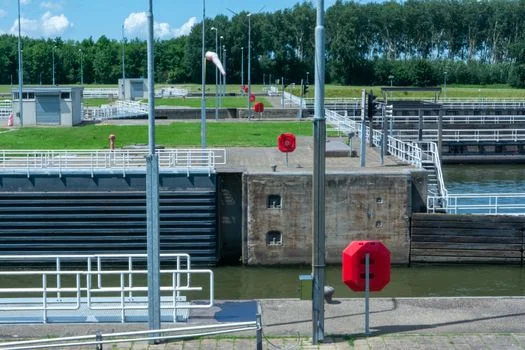
For rural Kansas communities, the decision between upgrading existing lagoon systems or converting to mechanical wastewater treatment plants presents a critical balance of cost, compliance, and operational considerations. Lagoon upgrades, typically involving the addition of aeration and diffusers, can range from $1.2 million to $3.5 million in CapEx with O&M costs between $0.05 to $0.10/m³. However, their compliance capabilities are often limited, generally achieving N ≤15 mg/L and P ≤2 mg/L, which falls short of the stringent requirements for sensitive watersheds under the Kansas Nutrient Reduction Strategy. Mechanical conversion, on the other hand, offers full KDHE compliance for N ≤10 mg/L and P ≤1 mg/L. The CapEx for converting a lagoon to a mechanical plant for a 1–5 MGD facility can range from $5 million to $12 million, with corresponding O&M costs of $0.20–$0.40/m³. Footprint is a significant differentiating factor: lagoons typically require 5–10 acres, whereas mechanical plants can operate within 0.5–2 acres. This is particularly relevant for urban plants, as demonstrated by Bonner Springs’ 1.5 MGD MBR system, which saved approximately 3 acres of land. Cold-weather performance is a critical consideration for Kansas, where average winter temperatures can drop to -2°C. Lagoons can lose up to 40% of their efficiency at temperatures below 5°C, while insulated mechanical plants can maintain over 90% efficiency, albeit with an additional CapEx of $200,000–$500,000 for enclosures. State and federal funding incentives are substantial; SRF loans can cover 100% of design costs for lagoon-to-mechanical conversions, and IIJA grants specifically prioritize projects demonstrating over 50% energy efficiency gains. Compact underground systems for rural Kansas communities offer a space-saving alternative when land is a constraint.
| System Type | Estimated CapEx (1-5 MGD) | Estimated O&M Costs (/m³) | Typical Nutrient Compliance (N/P) | Typical Footprint (Acres) | Cold Weather Performance | Funding Focus |
|---|---|---|---|---|---|---|
| Lagoon Upgrade (Aeration) | $1.2M - $3.5M | $0.05 - $0.10 | N ≤15 mg/L, P ≤2 mg/L | 5-10 | 40% efficiency loss at <5°C | Cost-effective for basic upgrades. |
| Mechanical Conversion | $5M - $12M | $0.20 - $0.40 | N ≤10 mg/L, P ≤1 mg/L | 0.5 - 2 | 90%+ efficiency with enclosures | Eligible for full SRF funding, IIJA priority for efficiency. |
Step-by-Step Guide to Securing IIJA/SRF Funding for Kansas Wastewater Upgrades
Navigating the application process for Infrastructure Investment and Jobs Act (IIJA) and State Revolving Fund (SRF) funding requires a structured approach. To be eligible, projects must demonstrate a minimum 30% reduction in nutrient discharge or a 50% improvement in energy efficiency, as per KDHE’s 2026 guidelines. Priority is given to projects serving disadvantaged communities, typically those with populations under 10,000. The typical funding award timeline spans 12–18 months from initial concept to fund disbursement. Key KDHE application deadlines include March 1 for pre-applications and June 1 for full applications. Essential documentation includes a comprehensive engineering feasibility study detailing CapEx and O&M estimates, an environmental impact assessment (especially critical for lagoon conversion projects), and a robust 20-year financial plan. For SRF loans, a ratepayer affordability analysis is also required. IIJA grants are particularly advantageous for projects with significant energy savings, covering up to 75% of costs for those achieving over 50% energy reduction, such as MBR systems equipped with variable-frequency drives. The City of Lansing successfully secured $4.2 million in IIJA funding, representing 60% of their total project cost, for a $7 million BNR retrofit. Their project’s success was attributed to demonstrating a 65% energy reduction through the implementation of a hybrid DAF-MBR system.
- Eligibility Verification: Confirm project meets KDHE’s >30% nutrient reduction or >50% energy efficiency criteria. Prioritize projects serving disadvantaged communities (<10,000 population).
- Develop Project Concept & Scope: Define upgrade goals, select appropriate technologies (BNR, MBR, DAF, etc.), and establish preliminary system sizing.
- Conduct Engineering Feasibility Study: Obtain detailed CapEx and O&M cost estimates, assess site suitability, and develop preliminary designs.
- Prepare Environmental Impact Assessment: Document potential environmental effects, particularly for lagoon conversions or new construction.
- Develop 20-Year Financial Plan: Outline project financing, including SRF loan repayment schedules and, if applicable, ratepayer affordability analysis.
- Submit Pre-Application to KDHE: Adhere to the March 1 deadline to secure early consideration.
- Address KDHE Feedback & Refine Application: Incorporate reviewer comments and finalize all supporting documentation.
- Submit Full Application to KDHE: Meet the June 1 deadline with all required components.
- Secure Funding Award & Begin Project Implementation: Work with KDHE and funding agencies to finalize agreements and commence construction.
Frequently Asked Questions
How does KDHE process permit modifications for upgrades to BNR/MBR systems? KDHE typically requires a formal permit modification application when upgrading to advanced treatment technologies like BNR or MBR. This process involves a public comment period, usually lasting 30 days, and can take 6–9 months from submission to final approval, depending on the complexity of the upgrade and the completeness of the application. It’s crucial to initiate this process early in the project planning phase.
How is CapEx calculated for a lagoon-to-mechanical conversion, and what are typical SRF loan terms? CapEx for a lagoon-to-mechanical conversion includes the cost of new mechanical equipment (e.g., aeration basins, clarifiers, MBR modules), piping, electrical infrastructure, control systems, and potentially land acquisition if the existing footprint is insufficient. SRF loans for such projects in Kansas typically offer terms of 20–30 years at low interest rates, often between 1–2%, making them a financially attractive option for municipalities.
What are the O&M cost differences between MBR and conventional activated sludge (CAS) systems? MBR systems generally have higher O&M costs primarily due to membrane replacement, which occurs every 5–7 years. Energy consumption for MBRs is also higher, typically ranging from 0.6–1.2 kWh/m³, compared to 0.3–0.5 kWh/m³ for CAS. However, MBRs offer superior effluent quality and a significantly smaller footprint, which can offset some of these costs through reduced land requirements and simpler post-treatment needs.
Can you provide examples of Kansas plants that successfully met KDHE’s 2025 nutrient limits and their technology choices? The Johnson County Wastewater (JCW) system has implemented an MBR system that consistently meets P ≤0.5 mg/L, utilizing a combination of IIJA and SRF funding. Several other municipalities have retrofitted existing plants with BNR technologies, achieving significant nutrient reductions and securing funding through similar state and federal programs. For instance, the City of Lansing’s successful BNR retrofit utilized a hybrid DAF-MBR system.
Can Kansas municipalities use private operators for wastewater treatment? Yes, Kansas municipalities can engage private operators for their wastewater treatment facilities. However, KDHE mandates that a 5-year performance bond be in place to ensure operational reliability and compliance. Additionally, annual compliance reporting by the private operator to KDHE is required to maintain oversight and ensure adherence to permit conditions. This approach can offer operational efficiencies but requires careful contract management and oversight.
Related Equipment
- compact underground systems for rural Kansas communities — view specifications, capacity range, and technical data
Need a customized solution? Request a free quote with your specific flow rate and pollutant parameters.
Further Reading
Explore these in-depth articles on related wastewater treatment topics: