Why Gallium Nitride Wastewater Treatment Is a 2025 Priority for Semiconductor Fabs
The global gallium nitride (GaN) market is projected to reach $2.5 billion by 2027 (Yole Développement), significantly increasing the volume and concentration of GaN-laden wastewater requiring advanced treatment. This expansion creates an urgent priority for semiconductor fab managers facing both substantial economic losses from unrecovered gallium and escalating compliance risks from tightening environmental regulations. Untreated waste GaN contains a remarkable 83.17% gallium by weight (ICP data, Wang et al., 2025), making its recovery not just an environmental mandate but a significant economic opportunity. At 2025 spot prices, this represents $120–$180 per kilogram of recoverable metal, highlighting the direct financial impact of inefficient wastewater management.
Regulatory pressures are intensifying, particularly with China's GB8978-2025 standard, which has lowered the gallium discharge limit to a stringent 0.5 mg/L from its previous 1.0 mg/L in 2020. This revised standard effectively necessitates the adoption of Zero Liquid Discharge (ZLD) systems for most semiconductor fabs to avoid severe penalties. For instance, a typical 200 mm GaN fab generating 150 m³/day of wastewater with gallium concentrations ranging from 200–500 mg/L faces immense challenges. However, with a properly engineered hybrid system, over 90% of this gallium can be recovered, transforming a waste stream into a valuable resource.
Beyond economic and regulatory drivers, untreated GaN wastewater poses significant environmental and operational risks. The acidic nature and heavy metal content can lead to groundwater contamination, soil degradation, and harm to aquatic ecosystems if discharged without adequate treatment. Operationally, high concentrations of suspended solids and corrosive elements can cause equipment fouling, premature wear, and increased maintenance costs within the fab's internal water systems and external discharge infrastructure. Implementing advanced gallium nitride wastewater treatment projects is therefore a critical strategic imperative for maintaining operational efficiency, ensuring environmental stewardship, and securing long-term economic viability in the semiconductor industry.
Gallium Nitride Wastewater Characteristics: Contaminant Profile and Treatment Challenges
Gallium nitride wastewater from semiconductor fabrication processes presents a complex contaminant profile characterized by low pH, high suspended solids, and toxic metal concentrations that challenge conventional treatment methods. Typical GaN wastewater composition includes a pH range of 2–4, total suspended solids (TSS) between 300–1,200 mg/L, gallium concentrations from 200–500 mg/L, and ammonia-nitrogen (NH₃-N) levels from 50–150 mg/L (per semiconductor fab data). A significant challenge arises from the particle size distribution of colloidal GaN, which typically ranges from 0.1–10 μm, necessitating advanced pre-treatment technologies like ultrafiltration or a DAF system for colloidal GaN removal to effectively separate these fine particles before subsequent treatment stages.
Co-contaminants further complicate treatment efficiency. These often include tetramethylammonium hydroxide (TMAH), arsenic (from dopants or substrate materials), and various organic solvents such as acetone and isopropanol (IPA) used in cleaning processes. TMAH, a strong base, contributes to the high pH fluctuations and can interfere with metal precipitation, while arsenic is a highly toxic heavy metal requiring specialized removal. Organic solvents increase the chemical oxygen demand (COD) and biological oxygen demand (BOD), but their presence often inhibits conventional biological treatment due to toxicity to microbial populations and the typically low BOD/COD ratio in GaN wastewater.
Conventional biological treatment systems are largely ineffective for GaN wastewater because the high concentrations of gallium, arsenic, and other compounds are toxic to the microbes essential for biological degradation. the low BOD/COD ratio indicates a high proportion of non-biodegradable organic matter, rendering biological processes inefficient for primary contaminant removal. Therefore, a multi-stage physical-chemical approach is essential. The following table outlines critical contaminant thresholds for various discharge scenarios:
| Parameter | China GB8978-2025 (Direct Discharge) | EU Industrial Emissions Directive (IED) | EPA 40 CFR Part 469 (Electronic Crystals) | ZLD Target (Permeate) |
|---|---|---|---|---|
| pH | 6–9 | 6–9 | 6–9 | 6–9 |
| TSS (mg/L) | 30 | 20–35 | 30 | <1 |
| Gallium (mg/L) | 0.5 | 0.1 | 1.0 | <0.05 |
| Ammonia-N (mg/L) | 5 | 10–20 | — | <0.1 |
| COD (mg/L) | 50 | 30–120 | — | <5 |
| Arsenic (mg/L) | 0.1 | 0.05 | 0.1 | <0.01 |
Hybrid Treatment Process Design: Gallium Recovery + Zero Liquid Discharge (ZLD)
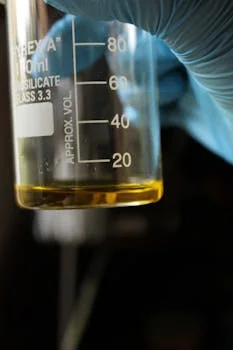
An effective gallium nitride wastewater treatment project integrates a multi-stage hybrid process, combining robust gallium recovery with a comprehensive zero liquid discharge (ZLD) system to meet stringent environmental standards and maximize resource utilization. This engineering blueprint focuses on a modular, scalable design, capable of treating typical GaN fab wastewater volumes while achieving up to 99.8% gallium recovery and ensuring full compliance with ZLD requirements.
Step 1: Pre-treatment for Suspended Solids Removal
The initial stage involves efficient removal of total suspended solids (TSS) and colloidal GaN particles. This is critical to protect downstream membranes and optimize recovery processes. Options include dissolved air flotation (DAF) or ultrafiltration (UF). A DAF system can achieve over 95% TSS removal, typically sized for 30–50 m³/h capacity per unit, effectively handling the 0.1–10 μm colloidal GaN particles. For finer removal, UF membranes (e.g., 0.01–0.1 μm pore size) can be employed, providing a high-quality permeate suitable for subsequent recovery stages.
Step 2: Gallium Recovery through Leaching
Once pre-treated, the wastewater enters the gallium recovery phase. Two primary leaching methods are considered for extracting gallium from the GaN solids:
- Mechanochemical Leaching: This method leverages mechanical activation combined with chemical reagents. For 1 kg of waste GaN, it typically requires 0.5 kg of Na₂O₂ and 3.36 kW•h of electricity (Wang et al., 2025). This process has demonstrated a gallium recovery rate of 74.3984% from GaN solids, producing Ga₂O₃. It is known for its lower energy consumption and reduced chemical use compared to other methods, making it economically attractive. A PLC-controlled chemical dosing system is essential for precise reagent addition in this step.
- Acidic Leaching: This traditional method uses strong acids like HCl. For 1 kg of waste GaN, it requires approximately 2.92 kg of HCl and 3.6 kW•h of electricity (Wang et al., 2025). While simpler in concept, it typically yields a lower recovery rate (around 68%) and produces a more corrosive waste stream requiring extensive neutralization.
Achieving recovery rates up to 99.8% often involves further purification and concentration steps on the leachate, such as solvent extraction or ion exchange, following the initial leaching.
Step 3: Advanced Oxidation for Organic and Ammonia-Nitrogen Removal
Following gallium recovery, the wastewater, now significantly depleted of gallium but potentially containing residual organics and ammonia-nitrogen, is treated via advanced oxidation. Photoelectrocatalytic oxidation, utilizing wafer-scale GaN membranes, has shown promising results for COD and BOD removal. These membranes, when exposed to UV light or even natural sunlight, can achieve over 90% efficiency in degrading persistent organic pollutants (per Top 3 page research). This step is crucial for reducing the organic load, protecting subsequent membrane systems, and preparing the water for ZLD.
Step 4: Zero Liquid Discharge (ZLD) Crystallization
The final stage is ZLD, ensuring no liquid waste is discharged. This typically involves a combination of membrane filtration and thermal processes. Reverse osmosis (RO) systems are often used for ZLD permeate polishing, concentrating the remaining dissolved solids. The highly concentrated brine from RO is then directed to an evaporator/crystallizer unit. This thermal process evaporates the remaining water, leaving behind solid salts (including residual gallium if not fully recovered) that can be safely landfilled or further processed. ZLD crystallization systems are designed to achieve gallium discharge levels below 0.5 mg/L, often reaching non-detectable levels. The CAPEX for ZLD crystallization components typically ranges from $800K–$2M for systems treating 50–200 m³/day.
The entire process forms a modular system, with side streams for acid/alkaline neutralization (e.g., using caustic soda or sulfuric acid, precisely managed by an automatic chemical dosing system) to maintain optimal pH conditions throughout the various stages. This integrated approach ensures both maximum resource recovery and complete environmental compliance.
| Gallium Recovery Method | Reagent/Input per 1 kg Waste GaN | Energy (kW•h/kg GaN) | Recovery Efficiency | Pros | Cons |
|---|---|---|---|---|---|
| Mechanochemical Leaching | 0.5 kg Na₂O₂ | 3.36 | 74.3984% (Ga₂O₃) | Lower energy, less chemical use, higher recovery than acidic | Requires specific mechanical activation equipment |
| Acidic Leaching | 2.92 kg HCl | 3.6 | 68% (Ga₂O₃) | Simpler chemistry, common reagents | Higher acid consumption, lower recovery, corrosive waste |
| Oxidation + Alkaline Leaching | 0.8 kg NaOH | 5.4 | Not specified (lower than mech.) | Effective for certain GaN forms | Higher energy, higher NaOH consumption |
Cost Breakdown: CAPEX, OPEX, and ROI for Gallium Nitride Wastewater Treatment Projects
Evaluating the financial viability of a gallium nitride wastewater treatment project requires a detailed analysis of capital expenditures (CAPEX), operational expenditures (OPEX), and the return on investment (ROI) derived from gallium recovery and compliance. HydropureWater’s integrated hybrid systems offer a clear path to both regulatory adherence and significant economic returns, particularly through valuable gallium recovery.
Capital Expenditures (CAPEX)
CAPEX for a complete hybrid gallium recovery and ZLD system for GaN wastewater varies significantly based on treatment capacity, technology selection, and site-specific requirements. The following table provides estimated CAPEX ranges for different system scales:
| System Capacity (m³/day) | Equipment Costs ($M) | Installation & Commissioning ($M) | Permitting & Engineering ($M) | Total Estimated CAPEX ($M) |
|---|---|---|---|---|
| 50 | 0.8 – 1.5 | 0.2 – 0.5 | 0.1 – 0.2 | 1.2 – 2.2 |
| 100 | 1.2 – 2.0 | 0.3 – 0.6 | 0.15 – 0.25 | 1.65 – 2.85 |
| 200 | 1.8 – 3.0 | 0.4 – 0.7 | 0.2 – 0.3 | 2.4 – 4.0 |
These figures include costs for pre-treatment (DAF or UF), gallium leaching and recovery units, advanced oxidation (e.g., photoelectrocatalytic reactors), membrane filtration (RO systems), and ZLD evaporators/crystallizers, along with necessary chemical dosing systems, tanks, pumps, and control infrastructure.
Operational Expenditures (OPEX)
OPEX is primarily driven by energy consumption, chemical reagents, labor, and maintenance. For gallium recovery, electricity consumption varies significantly by method: mechanochemical leaching requires approximately 3.36 kW•h/kg GaN, while oxidation + alkaline leaching demands 5.4 kW•h/kg GaN, and acidic leaching uses 3.6 kW•h/kg GaN (Wang et al., 2025). ZLD systems, particularly thermal crystallizers, are energy-intensive, typically requiring 5–10 kW•h/m³ of treated water, depending on the concentration factor and specific technology (e.g., mechanical vapor recompression vs. multi-effect distillation).
- Electricity: Dominant OPEX component, ranging from $0.15–$0.35/m³ (HydropureWater field data, 2025).
- Chemicals: Na₂O₂, HCl, NaOH, coagulants for pre-treatment, pH adjusters. Costs typically $0.10–$0.25/m³ (HydropureWater field data, 2025).
- Labor: Monitoring, maintenance, and operational staff. Approximately $0.05–$0.10/m³.
- Maintenance & Consumables: Membrane replacement, spare parts, routine servicing. Approximately $0.05–$0.15/m³.
Total OPEX for a hybrid recovery + ZLD system typically ranges from $0.45–$0.85/m³ treated, aligning with the initial project scope.
Gallium Recovery Value and Return on Investment (ROI)
The economic viability of these projects is significantly enhanced by gallium recovery. With 2025 spot prices for gallium ranging from $120–$180/kg, the value of recovered material directly offsets OPEX. For a system achieving 74.3984% recovery via mechanochemical leaching versus a target of 99.8% with enhanced purification, the differential in recovered value is substantial.
To calculate the payback period, consider the following formula:
Payback Period (months) = Total CAPEX / ((Gallium Recovered (kg/month) * Gallium Price ($/kg)) + (Avoided Discharge Costs ($/month)) - (Monthly OPEX ($/month)))
For a 200 mm GaN fab generating 150 m³/day of wastewater with 300 mg/L gallium, approximately 13.5 kg of gallium can be recovered daily at 90% efficiency. This translates to roughly 405 kg/month, generating $48,600–$72,900/month in revenue from gallium alone. When factoring in avoided discharge fines and environmental compliance, the payback period for such a system typically falls between 18–36 months, depending on initial gallium concentration and overall recovery efficiency.
ZLD Cost Comparison: Crystallization vs. Spray Drying
Within the ZLD component, crystallization is generally favored for gallium nitride wastewater due to its ability to produce a highly purified water stream and a solid, manageable waste product. While spray drying can also achieve ZLD, it typically has higher energy consumption for evaporating large volumes of water into a powder form, and the resulting solid may require further processing if it contains valuable metals or hazardous components. Crystallization offers better control over the final solid’s purity and physical form. The CAPEX for crystallization is often higher than spray drying for initial investment, but OPEX can be competitive, especially when considering energy recovery options and the value of a high-purity water output from RO systems.
Compliance and Permitting: Navigating China GB8978-2025 and Global Standards
Adhering to the evolving regulatory landscape for gallium nitride wastewater discharge, particularly China's GB8978-2025 standard, is non-negotiable for semiconductor fabs and requires meticulous planning for compliance and permitting. The GB8978-2025 standard has significantly tightened the gallium discharge limit to 0.5 mg/L, a reduction from the 1.0 mg/L limit set in 2020, compelling most fabs to adopt ZLD or near-ZLD strategies to avoid non-compliance. Enforcement trends in key semiconductor manufacturing hubs within China, such as Jiangsu, Guangdong, and Zhejiang provinces, indicate a strict application of these new limits, often accompanied by substantial fines and production curtailments for violators.
Globally, other advanced manufacturing regions also impose rigorous standards. The EU Industrial Emissions Directive (IED) 2010/75/EU sets an even lower gallium limit of 0.1 mg/L for semiconductor fabrication facilities, reflecting a commitment to best available techniques (BAT) for pollution prevention and control. This contrasts with the U.S. EPA 40 CFR Part 469, which specifies a gallium limit of 1.0 mg/L for electronic crystal manufacturing. However, facilities pursuing ZLD systems in the U.S. may qualify for variances or alternative discharge limits, recognizing their commitment to eliminating liquid effluent.
A comprehensive permitting checklist for GaN wastewater projects must address several critical components:
- Pre-treatment Requirements: Detailed plans for TSS, heavy metal, and organic removal prior to discharge or recovery, often involving dissolved air flotation (DAF) or ultrafiltration.
- Discharge Limits: Demonstrating capacity to consistently meet the most stringent local, national, and international discharge limits (e.g., 0.5 mg/L Ga for China GB8978-2025).
- Monitoring Frequency: Establishing continuous or frequent monitoring protocols for key parameters (pH, TSS, heavy metals, COD, ammonia-N) in both influent and effluent streams.
- Reporting Obligations: Regular submission of detailed operational data, compliance reports, and incident reports to relevant environmental authorities.
- Sludge and Solid Waste Management: Protocols for the safe handling, treatment, and disposal of recovered gallium sludge, ZLD crystallizer solids, and other byproducts.
For example, a major Shanghai GaN fab successfully achieved compliance with GB8978-2025 by implementing a hybrid recovery + ZLD system designed by HydropureWater. This system not only reduced gallium discharge to below 0.05 mg/L but also enabled the fab to recover significant quantities of high-purity gallium, turning a compliance burden into a sustainable resource management strategy, as detailed in our case study on ZLD process design for third-generation semiconductor wastewater.
Selecting the Right Gallium Nitride Wastewater Treatment System: A Decision Framework
Choosing the optimal gallium nitride wastewater treatment system requires a structured decision framework that balances operational scale, budget constraints, and specific compliance objectives. HydropureWater’s approach emphasizes a tailored solution, moving beyond one-size-fits-all models to address the unique demands of each semiconductor fab. The decision process typically involves evaluating wastewater volume, gallium concentration, existing infrastructure, and the economic value placed on recovered materials.
A practical decision tree for system selection begins with an assessment of regulatory stringency and gallium concentration:
- High Gallium Concentration (>300 mg/L) & Moderate Discharge Limits (e.g., 1.0 mg/L): Prioritize a recovery-focused system with robust pre-treatment and efficient leaching (e.g., mechanochemical leaching). ZLD may be integrated as a final polishing step or for specific waste streams.
- Low Gallium Concentration (<100 mg/L) & Strict Discharge Limits (e.g., 0.1-0.5 mg/L): Prioritize a ZLD-focused system, where gallium recovery, while still valuable, may not be the primary driver. Advanced membrane filtration (like RO systems) followed by evaporation/crystallization becomes central.
- High Gallium Concentration & Strict Discharge Limits (e.g., China GB8978-2025 at 0.5 mg/L): A hybrid recovery + ZLD system is essential. This combines the economic benefits of gallium recovery with the absolute compliance of ZLD, as outlined in our engineering blueprint for microelectronics wastewater ZLD.
Use-Case Matching: When gallium content consistently exceeds 300 mg/L, the economic return from recovery often justifies the investment in dedicated leaching and purification stages. Conversely, for facilities with lower gallium concentrations but facing zero discharge mandates, the primary driver shifts to minimizing liquid effluent and ensuring compliant solid waste disposal. For managing various process streams, a hybrid process design for chip fab acid-alkaline wastewater provides a versatile model.
Vendor Evaluation Criteria: Selecting the right technology partner is paramount. Key criteria include:
- Process Guarantees: Verifiable guarantees on recovery rates (e.g., 99.8% gallium recovery), effluent quality, and system uptime.
- Pilot Testing Requirements: A willingness and capability to conduct pilot-scale trials (e.g., 3–6 month trials) to validate recovery rates, optimize process parameters, and confirm compliance under actual fab conditions.
- Post-Installation Support: Comprehensive training, maintenance contracts, and validation services (e.g., gallium purity analysis for recovered material).
- Experience: Proven track record in industrial-scale semiconductor wastewater treatment and ZLD projects.
The choice of specific recovery and treatment technologies within the hybrid system also requires careful consideration:
| Technology | Pros | Cons | Best Suited For |
|---|---|---|---|
| Mechanochemical Leaching | High recovery (up to 74.4%), lower energy/chemical use, environmentally friendlier | Requires specialized equipment and process control | High gallium concentration, strong economic recovery focus |
| Acidic Leaching | Simpler chemistry, widely understood | Lower recovery (around 68%), higher acid consumption, corrosive waste | Lower initial CAPEX, less stringent recovery targets |
| Photoelectrocatalytic Oxidation | Effective for COD/BOD removal, utilizes UV/sunlight, reduces chemical consumption | Requires pre-treatment for TSS, potential for membrane fouling | Post-recovery organic removal, ZLD pre-treatment |
| ZLD Crystallization | Achieves zero liquid discharge, high-purity water, solid waste for disposal | High energy consumption, significant CAPEX | Strict discharge limits, resource scarcity regions |
Pilot testing plays a crucial role in mitigating risks and validating performance before full-scale implementation. These trials allow for fine-tuning of chemical dosages, residence times, and operational parameters, ensuring the selected system meets both technical specifications and economic expectations.
Frequently Asked Questions
Addressing common technical and operational questions regarding gallium nitride wastewater treatment is crucial for engineers and managers evaluating new projects.
What is the most cost-effective method for gallium recovery from GaN wastewater?
The most cost-effective method for primary gallium recovery from GaN solids is generally mechanochemical leaching with Na₂O₂. This process achieves a recovery efficiency of 74.3984% (producing Ga₂O₃) with a relatively low energy consumption of 3.36 kW•h/kg GaN, offering a strong balance of recovery performance and operational cost compared to acidic or alkaline leaching methods.
Can gallium nitride wastewater be treated with conventional biological systems?
No, gallium nitride wastewater cannot be effectively treated with conventional biological systems. The high concentrations of gallium, arsenic, TMAH, and other compounds present in GaN wastewater are toxic to most microbial populations, inhibiting their activity. Additionally, the low BOD/COD ratio indicates a high proportion of non-biodegradable organics. Pre-treatment with physical-chemical methods like dissolved air flotation (DAF) or ultrafiltration is always required to remove suspended solids and reduce toxicity before any potential downstream biological polishing (which is rarely the primary treatment).
What are the energy requirements for a ZLD system treating GaN wastewater?
The energy requirements for a Zero Liquid Discharge (ZLD) system treating GaN wastewater typically range from 5–10 kW•h/m³ of treated water. This range depends heavily on the specific ZLD technology employed (e.g., multi-effect evaporation vs. mechanical vapor recompression crystallizers or spray drying), the concentration factor required, and the initial wastewater characteristics. Thermal ZLD processes are generally the most energy-intensive components of the overall treatment train.
How does China GB8978-2025 affect GaN wastewater discharge limits?
China GB8978-2025 significantly impacts GaN wastewater discharge limits by reducing the permissible gallium concentration to 0.5 mg/L, down from 1.0 mg/L in 2020. This stricter limit effectively necessitates the implementation of ZLD or near-ZLD systems for most semiconductor fabrication facilities to achieve compliance and avoid severe environmental penalties.
What is the payback period for a gallium recovery system in a 200 mm GaN fab?
The payback period for a gallium recovery system in a 200 mm GaN fab typically ranges from 18–36 months. This period is highly dependent on factors such as the initial gallium concentration in the wastewater, the system's recovery efficiency (e.g., 74% vs. 99.8%), the market price of recovered gallium ($120–$180/kg in 2025), and the specific CAPEX and OPEX of the installed system.
Related Equipment
- DAF system for colloidal GaN removal — view specifications, capacity range, and technical data
- PLC-controlled chemical dosing for mechanochemical leaching — view specifications, capacity range, and technical data
- RO systems for ZLD permeate polishing — view specifications, capacity range, and technical data
Need a customized solution? Request a free quote with your specific flow rate and pollutant parameters.