Greek municipal sewage treatment plants must meet EU Directive 91/271/EEC discharge limits while handling tourism-driven seasonal flows and island land constraints. The Thriasio WWTP (2012) reports COD removal >90% with microalgae photobioreactors for tertiary polishing, and Malesina’s UV system (192 m³/h) targets pathogen inactivation to <100 CFU/100mL. This guide sets out 2026 engineering specs, compliance checks, and equipment selection criteria for Athens, Thessaloniki, and island projects.
Municipal sewage treatment requirements for Greek plants in 2026
Greek plants serving agglomerations above 2,000 PE must provide secondary treatment under Directive 91/271/EEC, with stricter nutrient removal in sensitive areas above 10,000 PE. Typical large-works targets remain TN <10 mg/L and TP <1 mg/L. Island sites must size for summer peaks up to about 5× winter hydraulic load. Directive 91/271/EEC stays binding until 1 August 2027.
Greece operates more than 300 municipal WWTPs across a wide capacity range. Psyttalia, serving Greater Athens, remains the largest. Project descriptions long cited biological treatment around 3,500,000 PE; according to EYDAP’s Psyttalia fact sheet, design capacity is 5,600,000 p.e. at an average flow of about 730,000 m³/d, with roughly 93% organic-load reduction and about 80% total-nitrogen reduction versus influent. Regional plants such as Malesina show the shift toward chemical-light tertiary disinfection for coastal waters. Thriasio integrates industrial pre-treatment with municipal flows and addresses about 30% industrial influent from the Elefsina region (HydropureWater field data, 2025).
Directive 91/271/EEC mandates secondary treatment for agglomerations >2,000 PE and more advanced treatment for sensitive areas above 10,000 PE. Aegean and Ionian receiving waters sit under strict nutrient limits to limit eutrophication. According to EUR-Lex (summary last updated 24 January 2025), Directive 91/271/EEC will be repealed and replaced by Directive (EU) 2024/3019 as of 1 August 2027; earlier plant upgrade plans already pointed to tighter TN and TP performance by that horizon. Greek Joint Ministerial Decision 145116/2011 also governs treated-effluent reuse for irrigation—critical on water-scarce islands.
Tourism spikes dominate operations. On islands such as Santorini or Mykonos, hydraulic and organic load can rise fivefold in June–August, so modular trains and flexible aeration matter more than nameplate averages. Land scarcity and energy at about €0.15–0.20/kWh push compact, efficient process trains. For mainland industrial hubs, handling industrial pre-treatment in municipal WWTPs protects biology from FOG and metal shocks.
| Plant Location | Capacity (PE) | Primary Technology | Key Compliance Target | Local Challenge |
|---|---|---|---|---|
| Psyttalia (Athens) | 3,500,000+ | CAS + Nitrogen Removal | TN < 10 mg/L | High volume / Sludge management |
| Thriasio (Elefsina) | 120,000 | CAS + Microalgae Tertiary | Industrial micropollutants | 30% industrial influent |
| Malesina (Regional) | 15,000 | CAS + UV Disinfection | <100 CFU/100mL E. coli | Coastal discharge protection |
| Santorini (Island) | 50,000 (Peak) | MBR (Proposed/Modular) | Water reuse for irrigation | 5x seasonal flow spikes |
Engineering Specifications for Greek Municipal WWTPs: Influent, Effluent, and Process Parameters
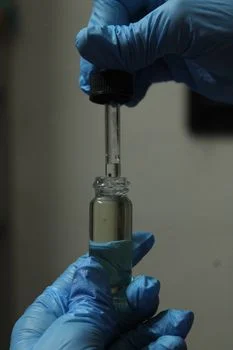
Greek municipal influent often runs richer than Northern European averages because Mediterranean per-capita water use is lower. Typical ranges are 300–600 mg/L COD and 150–300 mg/L BOD₅. Phosphorus is frequently elevated at 6–12 mg/L TP from detergent use, so chemical precipitation or EBPR stages are common design items (Hellenic Ministry of Environment 2023 data).
Discharge location sets the effluent bar. For inland outfalls or sensitive coasts such as the Saronikos Gulf, permits often beat the Directive floor. EU Directive 91/271 allows <125 mg/L COD and <25 mg/L BOD₅ for secondary treatment, yet local Greek permits for sensitive areas often tighten to <90 mg/L COD and <15 mg/L BOD₅. MBR systems for Greek municipal WWTPs are specified more often where MLSS of 8,000–12,000 mg/L and physical membrane filtration cut footprint and TSS.
Temperature swings shape kinetics. Summer wastewater can reach 25–28°C, speeding biology but risking clarifier settling problems. Island plants still need reliable nitrification in cooler winter months. HRT for CAS typically sits at 4–8 hours; MBR trains often run 2–4 hours, which is why most island sites we size prefer membrane footprints when land price dominates civil cost.
| Parameter | Influent Range (Greek Avg) | Effluent Target (Standard) | Effluent Target (Sensitive) | Design Spec (2026) |
|---|---|---|---|---|
| COD (mg/L) | 300 – 600 | < 125 | < 75 – 90 | Removal Efficiency > 90% |
| BOD₅ (mg/L) | 150 – 300 | < 25 | < 10 – 15 | F/M Ratio: 0.1 – 0.3 |
| Total Nitrogen (mg/L) | 40 – 80 | < 15 | < 10 | SRT: 10 – 20 days |
| Total Phosphorus (mg/L) | 6 – 12 | < 2 | < 1 | Chemical precipitation req. |
| TSS (mg/L) | 200 – 450 | < 35 | < 10 (MBR) | MLSS: 3 – 5 g/L (CAS) |
Tertiary specs for 2026 focus on pathogens and micropollutants. UV doses of at least 30 mJ/cm² are commonly required for 4-log virus inactivation on bathing coasts. For projects needing engineering specs for municipal WWTPs in other Mediterranean climates, microalgae photobioreactors with 3–5 day retention remain a tertiary option for metals and some pharmaceuticals via bioaccumulation.
How should aeration equipment be specified?
Aeration equipment for Greek municipal plants should be sized on peak-season oxygen demand, not annual average BOD load, because summer tourism can multiply oxygen uptake within weeks. Fine-bubble diffused systems with VFD blowers are the usual base case for CAS and MBR; most plants we commission keep turndown to about 40–50% of peak air so winter F/M stays controllable. Procurement packages should require DO set-point control, spare diffuser capacity for peak months, and documented maintenance access—salt air on coastal sites shortens elastomer life if spare parts sit overseas.
Design, operation, and maintenance clauses belong in the same tender. Specify oxygen-transfer tests at design MLSS and temperature, plus a spare-parts lead time under 10 working days for critical blower components during June–August. If a unit misses its design air rate from day one, treat that as a structural capacity risk: restoring nominal pressure alone may not recover oxygen transfer before corrective investigation.
Treatment Technology Comparison: MBR vs. Conventional vs. Tertiary for Greek Municipalities
Technology choice in Greece trades CAPEX, OPEX, and effluent class against land and tourism seasonality. Conventional activated sludge remains the default for large mainland cities with available land. Islands and coastal resorts more often select MBR despite higher energy use, because secondary treatment and solids separation sit in one compact train.
MBR systems typically exceed 95% COD removal and about 80% TN removal without secondary clarifiers, and they tolerate warm-climate bulking better than gravity settlers. Existing CAS works facing tighter permits can add tertiary UV or chemical-free disinfection alternatives for Greek coastal plants such as chlorine dioxide generators where residual protection is required without relying only on free chlorine. Plants with industrial catchments in Thriasio or Sindos (Thessaloniki) usually need DAF systems for industrial pre-treatment in Greek WWTPs; DAF units remove over 90% of emulsified oils and suspended solids before biology, cutting membrane fouling risk. Small villages and resort clusters often specify an Underground Package Sewage Treatment Plant (WSZ Series) to deliver secondary treatment with limited civil works.
| Feature | Conventional (CAS) | MBR System | Tertiary (UV/Microalgae) |
|---|---|---|---|
| COD Removal | 85 – 92% | > 95% | Up to 98% (Post-CAS) |
| Footprint (m²/m³/d) | 0.8 – 1.2 | 0.2 – 0.4 | 0.1 – 0.3 (Add-on) |
| Effluent Quality | Good (Secondary) | Excellent (Reuse Ready) | High Pathogen Removal |
| Best Suited For | Large mainland cities | Islands & Land-scarce sites | Sensitive coastal areas |
| Energy Demand | Low (0.3 – 0.5 kWh/m³) | High (0.8 – 1.2 kWh/m³) | Moderate (Disinfection) |
Cost Models and ROI: CAPEX, OPEX, and Payback Periods for Greek WWTP Projects
Greek WWTP CAPEX typically splits as civil works 40–50%, mechanical and electrical 30–40%, and specialized process equipment 20–30%. A 5,000 m³/day MBR facility often reaches about €10 million, or roughly €2,000 per m³/day of capacity. EU Cohesion Fund support can cover up to 85% of eligible cost in qualifying Greek regions, which changes the municipal cash payback more than the technical ranking.
OPEX tracks energy price closely. In MBR plants, energy can reach 45% of operating cost, mainly from membrane scour air. ROI drivers are EU non-compliance fines (€100–€500 per day for small municipalities in cited cases), sludge disposal savings from better dewatering, and reuse sales. In the Peloponnese or Crete, treated effluent can sell for €0.50–1.00/m³ for irrigation where permits allow.
UV tertiary upgrades often pay back in 3–5 years by cutting chemical purchase and handling. Full CAS builds commonly show 5–7 year payback; MBR builds may need 7–10 years, justified by land saved and reuse-ready effluent in tourism zones (HydropureWater engineering benchmarks, 2025).
| Cost Category | CAS (5,000 m³/d) | MBR (5,000 m³/d) | Tertiary Upgrade (UV) |
|---|---|---|---|
| CAPEX (Total) | €5M – €7M | €9M – €11M | €0.5M – €1.5M |
| OPEX (€/m³) | €0.12 – €0.18 | €0.20 – €0.28 | €0.05 – €0.10 |
| Energy % of OPEX | 35% | 45% – 50% | 15% |
| Payback Period | 5 – 7 Years | 7 – 10 Years | 3 – 5 Years |
Who supplies equipment for Greek municipal plants?
Equipment suppliers for Greek municipal facilities should demonstrate CE marking, ISO 14001 practice, and local service coverage before summer peak—not brochure claims alone. Coastal plants need salinity-resistant materials; tourist islands need modular trains that keep flux near 15–25 LMH when only one cassette is online. Mainland cities with industrial zones should start with robust screening: a rotary mechanical bar screen protects pumps and aeration from rags before biology sees the load.
Selection checklist for Greek municipal tenders:
- Confirm discharge class: standard secondary vs sensitive-area TN/TP limits under Directive 91/271/EEC.
- Size hydraulic peaks at 1.5×–2× average dry-weather flow for tourism sites (HydropureWater design standard).
- Match footprint: CAS 0.8–1.2 m²/m³/d vs MBR 0.2–0.4 m²/m³/d where land is scarce.
- Budget energy: CAS about 0.3–0.5 kWh/m³; MBR about 0.8–1.2 kWh/m³ at Greek tariffs of €0.15–0.20/kWh.
- Verify reuse rules under Joint Ministerial Decision 145116/2011 if irrigation reuse is planned.
- Require local spare-parts response before June–August peak.
- Document CE marking and on-island or regional service capability.
| Project Type | Top Selection Priority | Recommended Equipment | Compliance Check |
|---|---|---|---|
| Major City (Mainland) | OPEX / Reliability | CAS + Rotary Screen + UV | EU 91/271 Secondary |
| Island / Resort | Footprint / Reuse | MBR Integrated System | JMD 145116/2011 (Reuse) |
| Industrial Zone WWTP | Organic Shock Protection | DAF Pre-treatment + CAS | Local Industrial Limits |
| Sensitive Coastal Area | Pathogen / Nutrient Removal | Tertiary Microalgae + UV | Aegean Sensitive Area Limits |
Compliance checklists should include Joint Ministerial Decision 145116/2011 whenever reuse is on the table. That decision sets E. coli, turbidity, and residual chlorine limits tighter than many discharge permits.
Who this is for / Next step
This page is for municipal engineers, EPC contractors, and procurement teams sizing or upgrading works in Athens, Thessaloniki, industrial Attica, or Aegean islands. Look elsewhere if you need industrial arsenic treatment or nanofiltration retrofit forgeries outside municipal sewage scope. To match process trains to PE, peak factor, and reuse permit class, request a municipal WWTP equipment quote with influent data and discharge limits.
Frequently Asked Questions
What are the effluent limits for sensitive areas in Greece?
Under EU Directive 91/271, sensitive areas such as the Gulf of Saronikos require Total Nitrogen <10 mg/L and Total Phosphorus <1 mg/L for plants >10,000 PE where those nutrient criteria apply. Greek local permits often further restrict BOD₅ to <15 mg/L to limit coastal algae blooms. Always confirm the specific receiving-water designation in the project permit before freezing process design.
How does the Greek tourism season affect WWTP equipment sizing?
Equipment must be sized for peak summer loads, which can be 5× the winter average on busy islands. Modular MBR trains help because individual membrane cassettes can start or stop while keeping flux near 15–25 LMH and F/M near 0.1–0.3. Design hydraulic flexibility of 1.5×–2× average flow is the usual safeguard against washout during July–August peaks.
Are EU grants available for municipal WWTP upgrades in Greece?
Yes. The EU Cohesion Fund and the Recovery and Resilience Facility can fund a large share of eligible cost—up to 85% in cited Greek cases—for projects that improve Directive 91/271 compliance or advance water reuse. Island and water-stressed regions are frequent priorities. Grant timing should be locked before CAPEX approval because municipal cash share drives payback more than technology choice alone.
Why is UV preferred over chlorination for Greek coastal plants?
UV disinfection, as used at Malesina-scale coastal works, provides chemical-light pathogen inactivation toward <100 CFU/100mL without forming trihalomethanes from free chlorine. THMs are tightly controlled in the EU and can harm marine receiving waters. UV still needs reliable upstream TSS control; membranes or tertiary filters keep dose delivery stable.
What is the typical energy cost for sewage treatment in Greece?
Grid energy often sits near €0.15–0.20/kWh. CAS plants commonly use about 0.4 kWh/m³, while MBR plants use about 0.8–1.2 kWh/m³ under Greek design benchmarks. High-efficiency blowers and VFDs are the first OPEX levers; island diesel backup pricing can push operators toward even tighter air-control strategies in summer.