Acidic industrial wastewater treatment specifications start with neutralization from pH <2–6 up to pH 6–9, using NaOH or lime dosing, 316ss-to-Hastelloy materials, and DAF-MBR-RO hybrids reaching COD <50 mg/L and TSS <10 mg/L.
Acidic Industrial Wastewater Treatment Specifications: From Neutralization to Zero Discharge
Acidic wastewater at pH below 7 needs neutralization to pH 6–9 before discharge or reuse, and streams at pH ≤2 count as RCRA D002 corrosive hazardous waste in the US. Hybrid pH-adjustment, DAF, MBR, and RO trains reach COD <50 mg/L and TSS <10 mg/L.
Industrial effluents from metal plating, chemical manufacturing, and food processing often contain sulfuric, hydrochloric, or organic acids, demanding corrosion-resistant equipment and precise reagent dosing. For a metal plating plant facing RCRA violations from pH 1.8 effluent, moving from basic neutralization to an integrated hybrid system protects both legal standing and equipment life. The sections below give the specifications engineers need for that move.
pH Adjustment Troubleshooting for Industrial Effluent: 5 Hidden Pitfalls
Poor mixing alone drives 68% of discharge violations (EPA 2024 data), making pH adjustment troubleshooting for industrial effluent a mixing problem before a chemistry problem. Five pitfalls account for most failed neutralization plants we audit: mixing, dosing control, metallurgy, foam, and biology. Each one shows up in the OPEX line before it appears in a violation notice.
Incomplete mixing in neutralization tanks causes pH gradients, localized corrosion, and effluent swings outside the 6–9 range. EPA 2024 data attributes 68% of discharge violations directly to poor mixing dynamics. When reagent enters a high-flow stream without turbulence or retention time, slugs of unreacted acid bypass the sensors and damage downstream equipment. High-shear impellers are necessary so the reagent-wastewater interface reaches equilibrium within the first 30% of tank volume.
Reagent overdosing above 2 kg/m³ of NaOH raises OPEX by roughly 22% and often pushes effluent pH above 9. The cause is usually hunting in automated systems, where the PID (Proportional-Integral-Derivative) loop is not tuned to the logarithmic pH scale. Moving from pH 2 to 3 takes ten times the reagent of moving from pH 3 to 4, yet standard dosing pumps fail to scale output accordingly, wasting reagent and breaching limits.
Standard 316ss evaporators fail within 12–18 months on pH 3 wastewater with chlorides above 500 mg/L, through chloride-induced pitting and stress corrosion cracking (SCC). Marketed as acid-resistant, 316ss remains susceptible to low pH combined with temperatures above 60°C. The passive chromium oxide layer strips faster than it reforms, forcing a shift to Hastelloy C-276 or Fiber Reinforced Plastic (FRP).
Foaming in evaporators and reaction tanks at pH 5–7 cuts heat transfer efficiency by 35%, forcing heavy antifoam dosing or pH shifts below 5 or above 8 to destabilize surfactants. The problem is prevalent in solvent wastewater treatment for mixed acidic/organic streams, where organics foam as the solution approaches neutrality. Unmanaged foam causes carryover, contaminating distillate or exhaust stacks with acidic droplets.
Biological systems such as Membrane Bioreactors (MBR) suffer catastrophic biomass loss when influent pH fluctuates below 4 or above 10. Nitrifying bacteria lose 50% of their activity for every 0.5 pH unit away from the optimal 7.2–8.0 range. Hybrid designs therefore include a buffering stage with bicarbonate or phosphate to shield the microbial population from acidic volatility.
Neutralization Reagent Dosing for Acidic Wastewater: Selection and Kinetics
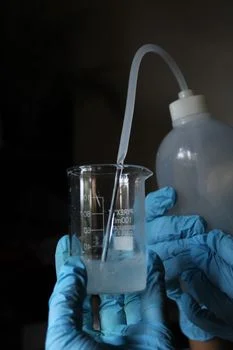
Neutralization reagent dosing for acidic wastewater swings total cost between $150–$250 per ton for lime and $450–$600 per ton for 50% NaOH. The choice of neutralizing agent drives both operating cost and sludge strategy in acidic wastewater treatment. Sodium hydroxide (NaOH) offers the fastest kinetics and easiest automation, but its cost and soluble by-products make it less attractive for high-volume streams than calcium-based reagents. Engineers balance reaction stoichiometry against the physical properties of the resulting effluent.
| Reagent | Dosing Rate (kg/m³ per pH unit) | Avg. Cost ($/ton) | Reaction Time (min) | Sludge Gen. (kg/m³) |
|---|---|---|---|---|
| NaOH (50%) | 0.8 - 1.2 | $450 - $600 | 5 - 10 | Low (<0.5) |
| Lime (Ca(OH)&sub2;) | 1.5 - 2.5 | $150 - $250 | 20 - 30 | High (2.0 - 5.0) |
| Soda Ash (Na&sub2;CO&sub3;) | 1.2 - 1.8 | $300 - $400 | 10 - 15 | Moderate (0.5 - 1.0) |
| Mg(OH)&sub2; | 0.6 - 1.0 | $500 - $700 | 30 - 45 | Low (0.2 - 0.4) |
Stoichiometric calculations are vital for precise sizing. Neutralizing 1 m³ of pH 2 sulfuric acid (H&sub2;SO&sub4;) wastewater requires 0.98 kg of pure NaOH, or 1.96 kg of 50% solution, following H&sub2;SO&sub4; + 2NaOH → Na&sub2;SO&sub4; + 2H&sub2;O. Lime instead generates calcium sulfate (gypsum), which precipitates as heavy sludge, raising disposal cost while aiding heavy metal and fluoride removal. Kinetics differ too: lime needs 20–30 minutes of retention against 5–10 minutes for NaOH, per EPA 2023 benchmarks.
To stabilize pH between 6 and 8 for downstream biology, engineers dose bicarbonate or phosphate buffers at 0.1–0.3 kg/m³ as a chemical cushion against dosing lag. Modern PLC-controlled chemical dosing systems for precise pH adjustment use dual-stage neutralization — coarse tank then fine-tuning tank — to cut reagent use by up to 15% and eliminate overshoot. Teams comparing broader industrial wastewater treatment methods for mixed streams apply the same two-stage logic before biology.
Corrosion Resistant Materials for Low pH Wastewater (pH 0–6)
Corrosion resistant materials for low pH wastewater split into three cost bands. 316ss at 1.0x baseline suits pH 4–6; FRP vinyl ester at 1.2x covers pH 1–10; Hastelloy C-276 at 4.5x handles pH 0–4 with chlorides above 5,000 mg/L. Material selection therefore trades initial CapEx against long-term maintenance cost.
Where pH sits consistently below 3 and chlorides exceed 1,000 mg/L, standard stainless steels are insufficient. Engineers consult ASTM G31-72 data for corrosion rate (mm/year) by alloy-effluent pair to secure a minimum 10-year equipment lifespan.
| Material | pH Range | Chloride Limit (mg/L) | Corrosion Rate (mm/yr) | Relative Cost |
|---|---|---|---|---|
| 316ss | 4.0 - 6.0 | <500 | 0.1 - 0.5 | 1.0x |
| Hastelloy C-276 | 0.0 - 4.0 | >5,000 | <0.02 | 4.5x |
| FRP (Vinyl Ester) | 1.0 - 10.0 | Unlimited | Negligible | 1.2x |
| Polypropylene | 0.0 - 14.0 | Unlimited | Negligible | 0.8x |
| Titanium (Gr. 2) | 1.0 - 6.0 | >10,000 | <0.01 | 3.5x |
A metal finishing plant switching from 316ss to Hastelloy C-276 for a pH 1.5, 1,200 mg/L-chloride evaporator cut annual replacement and repair costs by 70%. Non-metallic FRP has limits: delamination risk above pH 10 or 60°C, with repairs at $50–$150/m². For existing steel infrastructure, epoxy or ceramic coatings extend life 3–5 years at $80–$120/m² on a white-metal blasted surface. From field experience, the 4.5x Hastelloy premium pays for itself once a 316ss evaporator has been replaced twice.
Gasket and seal selection is equally critical. Viton or PTFE (Teflon) are the industry standards for pH <2 streams, while EPDM suits many acids but fails with trace oils or solvents. When designing DAF systems for TSS and FOG removal in acidic wastewater, specify high-grade polymers or acid-resistant alloys for scrapers and aeration manifolds to prevent first-year structural failure.
Hybrid Treatment Systems for Zero-Discharge Compliance: DAF, MBR, and RO Flow Diagrams
To meet 2026 discharge targets of COD <50 mg/L and TSS <10 mg/L, single-stage treatment no longer suffices for most industrial plants. The hybrid flow — pH adjustment → DAF → MBR → RO — is the working standard for zero-liquid discharge (ZLD). Each stage protects the next: DAF removes bulk solids that would foul the MBR, and MBR removes organics that would scale RO membranes.
In this hybrid model, DAF systems for TSS and FOG removal in acidic wastewater run microbubble sizes of 30–50 μm at hydraulic loading rates of 4–8 m/h. On pH 5–7 streams, Polyaluminum Chloride (PAC) dosed at 50–200 mg/L secures 90–95% TSS removal. That protects the MBR systems for COD/BOD removal in pH-buffered wastewater, which reach 95% COD removal but foul quickly when influent TSS exceeds 100 mg/L. Cleaning protocols use citric acid for inorganic scaling (pH <3) and NaOH for organic fouling (pH >10).
The final stage, reverse osmosis (RO) for salt removal, reaches 75–90% water recovery on buffered pH 6–8 streams. Antiscalant dosing at 1–5 mg/L prevents calcium sulfate or carbonate scaling when pH drifts above 7.5 in hard water. A HydropureWater 2025 field report confirmed a semiconductor plant running this DAF-MBR-RO configuration at 98% water recovery and effluent COD <30 mg/L, ending its municipal discharge permits.
CapEx vs. OPEX: Cost Comparison of Acidic Wastewater Treatment Methods
Procurement teams must evaluate systems on Total Cost of Ownership (TCO) rather than purchase price. Simple neutralization has the lowest CapEx but the highest OPEX through chemical spend and hazardous waste disposal, often losing to hybrid systems over a 5-year horizon. The stakes are highest in electroplating wastewater treatment methods for pH <2 streams, where failing one compliance audit can exceed $50,000.
| System Type | CapEx ($/m³/day) | OPEX ($/m³) | Lifespan (Years) | Compliance Level |
|---|---|---|---|---|
| Neutralization Only | $500 - $1,200 | $0.50 - $1.20 | 10 - 15 | Local Discharge |
| DAF + Neutralization | $1,500 - $2,200 | $0.70 - $1.40 | 12 - 18 | Strict Discharge |
| DAF-MBR Hybrid | $2,500 - $4,000 | $0.90 - $1.60 | 15 - 20 | High-Quality Reuse |
| DAF-MBR-RO (ZLD) | $3,500 - $5,500 | $1.50 - $2.50 | 15 - 20 | Zero-Discharge |
Neutralization OPEX varies by reagent: NaOH runs $0.50–$1.20/m³ processed while lime runs $0.30–$0.80/m³. Lime generates 3–5 times more sludge, and with disposal at $150–$300/ton the cheaper reagent often nets higher OPEX. RO membrane replacement adds $0.05–$0.15/m³ on pH-stable streams, jumping toward $0.40/m³ when pH control is poor. DAF-MBR ROI typically shows a 3–5 year payback on water recovery savings and eliminated high-COD surcharges alone.
Reagent math decides the budget. At 0.8–1.2 kg/m³ per pH unit, a 100 m³/day line consumes 80–120 kg of NaOH for each pH unit of lift, which is why dual-stage dosing control pays back quickly.
What Do EPA 2026 Acidic Wastewater Discharge Limits Require?
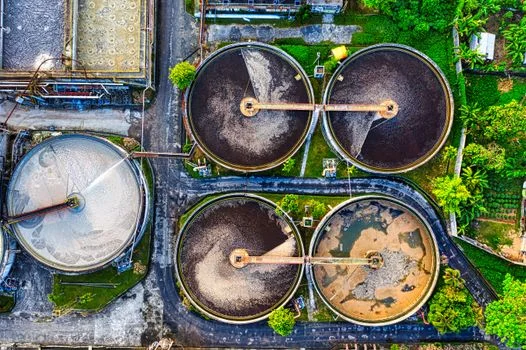
EPA 2026 acidic wastewater discharge limits require COD <50 mg/L and TSS <10 mg/L after treatment, with pH held in the 6.0–9.0 band under the Clean Water Act. The primary US threshold is the RCRA designation: wastewater at pH ≤2 or ≥12.5 counts as D002 corrosive hazardous waste.
D002 status triggers manifesting, 90-day storage limits, and disposal costs reaching $1,500 per ton. Pre-neutralizing inside a totally enclosed treatment facility (TETF) can avoid the designation when the process is documented and permitted correctly.
| Region | Standard pH Limit | Key Regulation | Monitoring Requirement |
|---|---|---|---|
| USA | 6.0 - 9.0 | EPA Clean Water Act | Continuous pH + Daily Flow |
| European Union | 6.5 - 9.5 | IED 2010/75/EU | Monthly Audit + Logs |
| China | 6.0 - 9.0 | GB 8978-1996 | Real-time Online Data |
| India | 5.5 - 9.0 | CPCB Standards | Weekly Grab Samples |
| Saudi Arabia | 6.0 - 8.5 | MODON Regulations | Continuous for Large Plants |
According to Wikipedia's summary of the Industrial Emissions Directive, the IED (2010/75/EU) establishes rules for preventing or reducing emissions into air, water and land and for limiting waste generation, through an integrated permitting system based on Best Available Techniques. Facilities must maintain detailed pH adjustment logs for at least five years. Zero-discharge compliance is then measured by reuse fitness for cooling tower makeup or process wash water, which needs disinfection methods for post-neutralization effluent to prevent biofouling. pH logs plus TSS and COD reduction data from the hybrid train form the backbone of any audit.
Regional bands set the control target. Saudi MODON sites hold 6.0–8.5, tighter than the US 6.0–9.0 band at the top end, so neutralization loops there trim toward the middle of the range. Our Wastewater Treatment in Khobar 2026: Specs, Costs & Compliance Guide maps those Gulf limits to equipment cost models for the same acid streams.
These acidic industrial wastewater treatment specifications suit plant engineers and EPC contractors designing neutralization, hybrid, or ZLD trains for acidic effluent. Sites with steady pH 4–6 flows can often stop at DAF plus neutralization; pH <2 plating streams justify the full DAF-MBR-RO stack. For duty-point sizing and reagent budgeting on your stream, request a technical quote with your pH profile.
Frequently Asked Questions
How much NaOH is needed to neutralize pH 2 wastewater to pH 7?
On average, 0.9–1.2 kg of 50% NaOH per m³ is required, depending on the specific acid (sulfuric vs nitric) and the presence of buffering salts. Reaction time should run 5–10 minutes with high-shear mixing to ensure stability (EPA 2024 benchmarks). Dosing pumps must scale output to the logarithmic pH curve to avoid overshoot and reagent waste.
What is the best material for pH 1 wastewater with 2,000 mg/L chlorides?
Hastelloy C-276 or titanium are the only viable options for long-term service. Standard 316ss experiences pitting at 0.5–1.0 mm/year under these conditions, per ASTM G31-72 data. FRP works for tanks and piping where temperature stays below 60°C, but metallic heat-transfer surfaces need the high-nickel alloy.
Can acidic wastewater be treated biologically?
Yes, but only after neutralization and buffering. MBR systems are highly effective, achieving 95% COD removal, provided pH is maintained between 6.5 and 7.5 using bicarbonate buffers (HydropureWater 2025 case data). Below pH 4, nitrifiers lose half their activity per 0.5 unit, so the buffering stage is not optional.
What is the CapEx for a DAF-MBR system for 50 m³/day of pH 3 wastewater?
A fully automated system typically costs between $125,000 and $200,000. That includes pH adjustment tanks, the DAF unit, an MBR skid, and the integrated PLC control system (HydropureWater 2026 pricing). Add RO when reuse justifies moving from the $2,500–$4,000/m³/day hybrid band to the $3,500–$5,500/m³/day ZLD band.
How do I avoid RCRA hazardous waste designation for pH 1.8 wastewater?
Perform elementary neutralization in an onsite treatment unit. Raising the pH above 2.0 before the stream leaves its generation point often reclassifies the waste as non-hazardous, significantly reducing disposal and manifesting costs. Keep the neutralization records, because auditors treat them as the designation evidence.
What pH range do discharge permits usually allow?
Most permits allow pH 6.0–9.0, with the EU running 6.5–9.5, India 5.5–9.0, and Saudi MODON sites 6.0–8.5. Design the neutralization train to hold 6.5–8.0 so daily drift never clips a boundary. Continuous pH monitoring with daily flow records forms the standard evidence package for inspectors.