Industrial wastewater treatment in Makassar, Indonesia works to PermenLHK No. 68/2016 benchmarks of COD ≤100 mg/L and BOD ≤30 mg/L, beside a 16,000 m³/day municipal plant now processing about 1,200 m³/day, using DAF+MBR hybrids that remove 90–98% COD.
Why Industrial Wastewater Treatment in Makassar, Indonesia Starts On Site
PermenLHK No. 68/2016 sets COD ≤100 mg/L and BOD ≤30 mg/L. Hybrid DAF+MBR trains deliver 90–98% COD removal on 500–5,000 mg/L influent.
Makassar's municipal wastewater infrastructure centres on the 16,000 m³/day treatment plant; earlier planning documents treated the facility as under construction. According to Kompas, by July 2025 the completed plant was processing around 1,200 m³/day against that design capacity. Wikipedia puts urban sewerage coverage in Indonesia near 2%, one of the lowest levels in Asia. Most industrial facilities therefore stay reliant on localized, decentralized systems.
One scoping note matters when reading that limit. According to the regulation's own text on JDIH, air limbah domestik covers wastewater from daily human activity connected with water use, so PermenLHK No. 68/2016 is formally the domestic effluent standard. Industrial estates such as KIMA still reference these numbers as design benchmarks, and industrial permits can add stricter sector-specific values where cited.
Makassar's coastal setting complicates both discharge logistics and process biology. High salinity in local groundwater can interfere with traditional biological processes, favouring membrane-based and hybrid trains. The industrial waste discharge time of water — the travel and mixing window for effluent reaching receiving waters — also shapes outfall siting along the shoreline.
The industrial sectors driving Makassar's economy—primarily food processing, textiles, and metalworking—generate high-strength wastewater with COD levels ranging from 500 to 5,000 mg/L. Standard anaerobic systems or gravity-based DEWATS are insufficient for these loads. Food processing facilities in the Makassar Industrial Estate (KIMA) produce Fats, Oils, and Grease (FOG) that peaks into slug loads during high-production shifts, coating biological media and killing microbial populations in activated sludge plants. To achieve compliance, facilities transition toward hybrid DAF-MBR systems to treat organic wastewater, with pretreatment removing solids before biological polishing.
Beyond technical limits, socio-economic pressure is growing on Makassar industries. Urban sprawl now surrounds previously isolated industrial zones, making odour control and noise pollution critical compliance factors. Open-air lagoons are no longer acceptable because they release hydrogen sulfide (H2S) and methane. The government's focus on Green Industry certification means non-compliant facilities risk losing operational permits or facing heavy fines under the Job Creation Law (UU Cipta Kerja).
Land availability presents a secondary but critical challenge in Makassar's urban and industrial zones. Even a small-scale DEWATS for 50 households requires approximately 21 m², and a conventional activated sludge footprint for a 500 m³/day facility could exceed 1,000 m². Engineers therefore specify modular WSZ series systems for land-constrained industrial projects in Makassar, using underground configurations to preserve surface area while meeting the BOD ≤30 mg/L limit. Deep-tank aeration and stacked clarifiers let these modular systems scale vertically, maximizing throughput per square meter.
What Caused the DEWATS Capacity Gap in Makassar Industrial Estate?
The DEWATS capacity gap in Makassar industrial estate zones leaves systems running at 10–20% of design flow, with effluent COD of 148.06 mg/L against a 100 mg/L benchmark. Data from decentralized wastewater treatment systems (DEWATS) near Abbulo Sibatang reveal the shortfall directly. The systems were designed for 2,500 m³/day but often operate at only 250–500 m³/day. Their effluent still carries a COD of 148.06 mg/L, which exceeds the 100 mg/L limit referenced from PermenLHK No. 68/2016 and creates immediate legal and environmental risk for facility managers.
The Tallo River and the Losari Beach area carry the environmental cost, since uncontrolled discharge drives eutrophication and the degradation of local marine ecosystems. Facilities inside the Makassar Industrial Estate (KIMA) cannot assume the municipal network will absorb their loads either. Connection capacity for new industrial users stays scarce until utilization of the city plant rises.
Engineering Specs for Industrial Wastewater Treatment in Makassar: Influent, Effluent, and System Sizing
Engineering design for Makassar industrial effluent must carry an alpha factor of 0.4–0.6 for oxygen transfer and hold dissolved oxygen at 2.0 mg/L. In tropical environments the alpha factor for oxygen transfer typically sits at 0.4 to 0.6, requiring larger blowers and finer bubble diffusers to hold Dissolved Oxygen (DO) at 2.0 mg/L. The alpha factor compares oxygen transfer in wastewater against clean water. Food processing facilities in the region report TSS between 300 and 1,200 mg/L and FOG up to 800 mg/L, and without high-efficiency pretreatment those parameters cause rapid membrane fouling and sludge bulking in secondary stages.
System sizing follows hydraulic and organic loading calculations. Plant designers keep asking the same question at this stage: is HRT needed for MBR wastewater treatment? The short answer is yes — a Hydraulic Residence Time (HRT) of 6–12 hours is standard for COD concentrations up to 2,000 mg/L.
High-strength streams above 3,000 mg/L from textile or concentrated food sectors need longer HRT or a DAF system for high-efficiency TSS/FOG removal to cut the organic load before the bioreactor. Peak Hourly Flow during wash-down can reach 3 to 4 times the average daily rate. Equalization tanks sized for at least 25–30% of daily volume prevent hydraulic washout.
The table below outlines the design targets required to bridge the gap between raw industrial influent and legal discharge limits, reflecting Makassar's key sectors.
| Parameter | Food Processing Influent | Textile Influent | PermenLHK 68/2016 Limit |
|---|---|---|---|
| pH | 4.5 – 8.5 | 9.0 – 12.0 | 6.0 – 9.0 |
| COD (mg/L) | 1,500 – 5,000 | 800 – 3,000 | ≤ 100 |
| BOD (mg/L) | 800 – 2,500 | 400 – 1,200 | ≤ 30 |
| TSS (mg/L) | 300 – 1,200 | 200 – 600 | ≤ 30 |
| FOG / Oil (mg/L) | 200 – 800 | 50 – 150 | ≤ 5 (Industry specific) |
| Total Nitrogen (mg/L) | 50 – 150 | 20 – 60 | ≤ 30 |
To ensure system stability in Makassar's high-humidity environment (75–85%), aeration systems must be oversized by 15–20% to compensate for reduced oxygen transfer efficiency. Sludge management is a critical spec, because tropical sludge stabilizes quickly but goes septic rapidly if not handled. Engineers must specify Mean Cell Residence Times (MCRT) of 15 to 25 days for MBR systems to ensure complete nitrification.
For Reverse Osmosis (RO) units intended for zero-discharge, a membrane flux of 15–25 LMH (liters per square meter per hour) manages the high scaling potential of Makassar's groundwater, which is often used as process water. Recovery should be calculated at 70–85%, keeping the brine stream manageable for evaporation or specialized disposal. Antiscalant dosing and periodic Acid/Alkali Clean-in-Place (CIP) cycles are mandatory to hold those flux rates long term.
Hybrid System Designs for Makassar: DAF + MBR vs. MBR + RO for Zero-Discharge Compliance
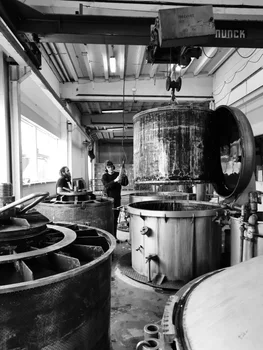
A DAF + MBR configuration is the primary recommendation for Makassar's food and textile sectors, removing 90–95% of TSS and FOG before the membrane stage. In this setup the Dissolved Air Flotation (DAF) unit removes 90–95% of TSS and FOG, protecting the subsequent integrated MBR systems for PermenLHK No. 68/2016 compliance in Makassar. The MBR stage runs a high Mixed Liquor Suspended Solids (MLSS) concentration of 6,000–10,000 mg/L to degrade dissolved organics, consistently producing effluent with BOD <10 mg/L. That concentration lets the system absorb organic shocks that would cause a conventional clarifier to fail through sludge bulking.
For facilities pursuing zero-liquid discharge (ZLD) or significant water reuse, the MBR + RO stack is the technical benchmark. The MBR acts as advanced pretreatment for the RO membranes, removing virtually all suspended solids and most organic carbon, which reduces RO fouling. Metalworking facilities in Makassar use this route to remove heavy metals and dissolved salts for process water recycling. The RO stage typically runs a two-pass system or a high-pressure single pass to reach Total Dissolved Solids (TDS) below 50 mg/L, suiting boiler feed or high-precision cooling towers.
Implementing these hybrid systems requires a disciplined control strategy. Programmable Logic Controllers (PLCs) synchronize DAF chemical dosing with influent flow rate so the MBR is never overloaded. Where power stability is an issue in Makassar's industrial pockets, systems need auto-restart capability and emergency bypasses to prevent untreated discharge during outages. Remote monitoring is becoming standard, letting plant managers track effluent quality in real time and adjust aeration or sludge wasting from a mobile device for 24/7 compliance.
The choice between DAF+MBR and MBR+RO depends on the facility's goal. Discharge to a water body or the KIMA sewer line is cheapest with DAF+MBR. Water scarcity or high municipal water costs during the dry season make MBR+RO the better investment, cutting raw water procurement by up to 80%. Textile sites with pH 9.0–12.0 influent also review How to Treat Acid-Alkaline Wastewater: 2026 Engineering Specs before finalizing neutralization stages.
Supporting Equipment: Dewatering, Aeration, and Dosing
- Sludge dewatering solutions for PermenLHK No. 68/2016 compliance in Makassar — High-pressure filtration designed to reduce sludge volume by 70-80%, critical for facilities with high disposal costs.
- Submersible Aeration Units — Specifically designed for high-temperature tropical wastewater to maximize oxygen transfer.
- Chemical Dosing Skids — Automated systems for pH adjustment and coagulant delivery, optimized for textile and food processing influent.
How Does Zero Discharge Wastewater Design Meet PermenLHK 68/2016?
Zero discharge wastewater design under PermenLHK 68/2016-era benchmarks stacks MBR pretreatment ahead of RO at 15–25 LMH flux and 70–85% recovery, then routes brine to evaporation, lifting total water recovery to 99%+. Industrial wastewater treatment in Makassar, Indonesia therefore splits into two tracks: discharge-grade hybrid trains and closed-loop zero-discharge stacks. Facilities that discharge nothing sidestep effluent-limit sampling, since permit monitoring shifts to reuse quality and brine handling. The MBR stage protects RO membranes from the FOG and TSS that dominate KIMA food loads, while antiscalant dosing and scheduled CIP cycles decide whether the 70–85% recovery band holds.
Need a customized solution? Request a quote with your specific flow rate and pollutant parameters. Our engineering team can provide a full site assessment to determine the optimal hybrid configuration for your facility.
Frequently Asked Questions
What are the PermenLHK No. 68/2016 limits for COD and BOD?
PermenLHK No. 68/2016 sets COD ≤100 mg/L, BOD ≤30 mg/L, and TSS ≤30 mg/L as domestic effluent quality standards. Industrial permits often reference the same numbers as design benchmarks, and food or textile plants should confirm sector-specific values with the environment office. The sampling frequency written into the permit usually drives the compliance calendar.
How much of the Makassar municipal plant capacity is actually used?
The 16,000 m³/day municipal plant processed roughly 1,200 m³/day as of July 2025, according to Kompas. DEWATS units in the region similarly run at 250–500 m³/day against 2,500 m³/day designs. Industrial planners should therefore assume on-site treatment is their only reliable route.
Which hybrid system fits a Makassar food processing plant?
A DAF + MBR train fits best: DAF removes 90–95% of TSS and FOG, then MBR running 6,000–10,000 mg/L MLSS delivers BOD <10 mg/L. Add RO only if reuse or zero discharge is a stated goal. Land-constrained sites can take the train underground with modular WSZ package systems.
What does zero-discharge design add to operations?
Zero-discharge design adds an RO stage at 15–25 LMH flux and 70–85% recovery, plus evaporation or specialized disposal for the brine stream. It removes discharge exposure and cuts raw water purchases by up to 80%. Dry-season scarcity in Makassar strengthens the case, since reuse water replaces municipal supply.
Further Reading
Explore these in-depth articles on related wastewater treatment topics:
- Compare Makassar’s WWTP costs with Bandung’s 2026 benchmarks
- See how Jubail’s zero-discharge projects compare to Makassar’s compliance challenges
- Advanced Membrane Cleaning Protocols — A technical guide on extending the life of MBR and RO units in high-salinity coastal environments.
- PermenLHK No. 68/2016 Compliance Checklist — A step-by-step guide for facility managers to ensure all discharge parameters are monitored correctly.