Why Italian Hospitals Are Failing Wastewater Compliance in 2025
Hospitals in Italy face escalating pressure to comply with stringent wastewater discharge limits, a challenge amplified by the unique and complex nature of medical effluent. The EU Directive 91/271/EEC sets baseline parameters such as Chemical Oxygen Demand (COD) ≤125 mg/L and fecal coliforms ≤100 CFU/100 mL, but regional variations and the growing threat of antimicrobial resistance (AMR) necessitate a more specialized approach. Lombardy Region, for instance, issued 12 enforcement notices in 2024 to hospitals for exceeding COD/BOD limits, as reported by ARPA Lombardia. This highlights a critical gap: municipal wastewater treatment plants, like the Milan San Rocco facility, are ill-equipped to handle the 3–5 times higher pathogen loads and significant pharmaceutical concentrations (50–200 µg/L of carbamazepine) found in hospital wastewater. Niguarda Hospital’s 2026 PCR data underscores this, indicating pathogen levels of 10⁵–10⁷ CFU/100 mL for fecal coliforms. AMR risks are a significant concern; a 2022–2023 study in Sicily detected 12–18 different antibiotic resistance genes (ARGs) per sample, with the alarming prevalence of blaKPC genes in 68% of pre-treatment samples. Regional discharge limits also vary, with Lombardy enforcing fecal coliforms ≤100 CFU/100 mL, Sicily ≤160 mg/L COD, and Emilia-Romagna specific pharmaceutical residue limits for larger facilities. These disparities mean that local enforcement interpretations of EU Directive 91/271/EEC can differ significantly, leading to a complex compliance landscape for hospitals across Italy.
| Region | Key Parameters & Limits | Enforcement Focus/Example |
|---|---|---|
| Lombardy | COD ≤125 mg/L; Fecal Coliforms ≤100 CFU/100 mL | 12 enforcement notices issued in 2024 for COD/BOD exceedances (ARPA Lombardia 2024) |
| Sicily | COD ≤160 mg/L | Mandatory AMR monitoring; 2022-2023 study detected 12-18 ARG types/sample, blaKPC in 68% of pre-treatment samples (Sicily 2023 study) |
| Emilia-Romagna | Pharmaceutical residue limits for hospitals >500 beds | Focus on pharmaceutical contaminants in effluent |
| National (EU Directive 91/271/EEC) | COD ≤125 mg/L; BOD ≤25 mg/L; TSS ≤35 mg/L; Fecal Coliforms ≤100 CFU/100 mL | General compliance across all member states |
EU Directive 91/271 vs. Italian Regional Standards: What Hospitals Must Meet
Navigating Italy's wastewater treatment regulations requires understanding both the overarching EU Directive 91/271/EEC and the specific mandates imposed by individual regions. The EU Directive establishes a foundational set of discharge limits, including COD ≤125 mg/L, BOD ≤25 mg/L, Total Suspended Solids (TSS) ≤35 mg/L, and fecal coliforms ≤100 CFU/100 mL. However, Italian regions have the authority to implement more stringent requirements tailored to local environmental conditions and concerns. For instance, Lombardy maintains the strict fecal coliform limit of ≤100 CFU/100 mL, while Sicily places a significant emphasis on mandatory AMR monitoring, reflecting the region's research findings on gene prevalence. Emilia-Romagna, recognizing the impact of pharmaceutical residues, has introduced specific limits for hospitals exceeding 500 beds. Regional environmental protection agencies (ARPAs) are tasked with enforcing these standards through various audit mechanisms, including unannounced sampling and 24-hour composite tests. Penalties for non-compliance can be substantial, with fines potentially reaching up to €500,000 annually for repeat violations. The case of Ferrara's 900-bed hospital, which incurred €250,000 in fines before upgrading its system, exemplifies the financial implications of failing to meet these evolving regulatory demands.
| Parameter | EU Directive 91/271/EEC (Baseline) | Lombardy Region | Sicily Region | Emilia-Romagna Region |
|---|---|---|---|---|
| COD (mg/L) | ≤125 | ≤125 | ≤160 | Not specified (general) |
| BOD (mg/L) | ≤25 | Not specified (general) | Not specified (general) | Not specified (general) |
| TSS (mg/L) | ≤35 | Not specified (general) | Not specified (general) | Not specified (general) |
| Fecal Coliforms (CFU/100 mL) | ≤100 | ≤100 | Not specified (general) | Not specified (general) |
| AMR Monitoring | Not specified | Not specified | Mandatory | Not specified |
| Pharmaceutical Residues | Not specified | Not specified | Not specified | Specific limits for hospitals >500 beds |
MBR vs. ClO₂ vs. DAF: Which System Meets Italy’s Hospital Wastewater Standards?
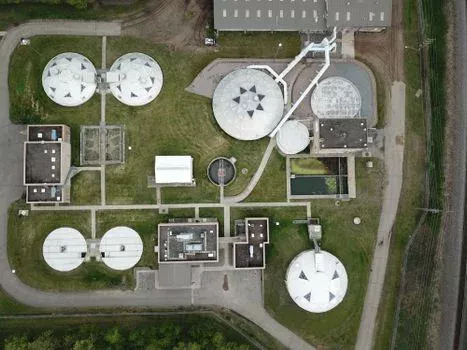
Selecting the appropriate wastewater treatment technology is paramount for Italian hospitals aiming to achieve compliance and mitigate AMR risks by 2025. Membrane Bioreactor (MBR) systems offer superior performance, achieving 99.9% pathogen removal and an impressive 90% reduction in ARGs, along with effluent quality consistently below COD ≤50 mg/L and TSS ≤5 mg/L. However, their high capital expenditure (CAPEX) of €3M–€5M and energy consumption (1.2–1.5 kWh/m³) present a significant investment. Chlorine Dioxide (ClO₂) disinfection, while offering 99.99% pathogen kill with a 4–6 mg/L residual, has a lower CAPEX range of €200K–€800K. Its operational expenditure (OPEX) includes chemical costs of €0.50–€1.20/m³, and it provides only 70–80% ARG removal, with residual management posing potential challenges. Dissolved Air Flotation (DAF) systems are effective for pre-treatment, removing 92–97% of TSS, making them ideal for tackling fats, oils, and greases (FOG) and microplastics. Their CAPEX is between €500K–€1.5M, but DAF alone requires tertiary disinfection to meet discharge limits and offers only 30–50% ARG removal. For comprehensive AMR mitigation, hybrid systems are increasingly favored. For instance, the 900-bed Ferrara hospital successfully implemented a DAF-MBR combination, achieving COD levels below 45 mg/L and significant ARG reduction.
| Technology | Pathogen Removal | ARG Removal | Typical Effluent Quality (COD) | CAPEX Range (€) | OPEX Range (€/m³) | Energy Use (kWh/m³) |
|---|---|---|---|---|---|---|
| MBR | 99.9% | 90% | ≤50 mg/L | 3,000,000 – 5,000,000 | 0.70 – 1.50 | 1.2 – 1.5 |
| ClO₂ Disinfection | 99.99% | 70-80% | N/A (Disinfection only) | 200,000 – 800,000 | 0.50 – 1.20 (chemicals) | 0.1 – 0.3 |
| DAF | Low (TSS focused) | 30-50% | N/A (Pre-treatment only) | 500,000 – 1,500,000 | 0.20 – 0.40 | 0.3 – 0.5 |
| Hybrid (e.g., DAF + MBR) | 99.9%+ | 85-95% | ≤45 mg/L (Ferrara case) | 2,000,000 – 3,500,000 | 0.60 – 1.00 | 1.0 – 1.3 |
How to Design a Hospital Wastewater System for AMR Removal: Step-by-Step
Addressing the critical issue of antimicrobial resistance in hospital wastewater requires a systematic design approach that goes beyond conventional disinfection. The first step involves comprehensive influent characterization, including detailed testing for specific ARG types such as blaKPC and mecA, alongside quantifying pharmaceutical residues, which can range from 50–200 µg/L of carbamazepine. Sicily’s 2023 study highlights the complexity, finding 12–18 ARG types per sample. Effective pre-treatment is essential; utilizing DAF systems or rotary screens (like the /product/13-rotary-mechanical-bar-screen-gx.html) can remove microplastics from PPE and FOG, which often interfere with subsequent treatment stages and ensuring TSS is below 100 mg/L before biological processes. For biological treatment, MBR systems or activated sludge with an extended retention time (15–20 days) are recommended to effectively degrade pharmaceuticals and reduce ARGs by 60–90%. Tertiary disinfection plays a crucial role in further ARG reduction; ozone (0.5–1.0 mg/L) or UV (40–60 mJ/cm²) can achieve over 95% ARG removal. While ClO₂ disinfection (4–6 mg/L) is highly effective against pathogens, its ARG removal is lower, typically 70–80%. Continuous monitoring is non-negotiable, involving quarterly PCR testing for ARGs and monthly analysis for pharmaceutical residues. Hospitals with over 300 beds, as recommended by Sicily’s 2023 protocol, should consider weekly sampling to ensure ongoing compliance and effective AMR mitigation.
CAPEX and OPEX Breakdown: How Much Does Hospital Wastewater Treatment Cost in Italy?
Budgeting for hospital wastewater treatment upgrades in Italy involves understanding the significant variation in capital expenditure (CAPEX) and operational expenditure (OPEX) across different technologies. Compact Chlorine Dioxide (ClO₂) disinfection systems can have a CAPEX as low as €200,000–€800,000, while Dissolved Air Flotation (DAF) systems fall in the €500,000–€1.5M range. Advanced Membrane Bioreactor (MBR) plants represent the highest CAPEX, typically ranging from €3M–€5M, with hybrid DAF-MBR systems costing between €2M–€3.5M. OPEX is driven by several factors: energy consumption, which can range from 0.8–1.5 kWh/m³ for MBR systems; chemical costs, averaging €0.50–€1.20/m³ for ClO₂; and maintenance, including membrane replacement for MBR systems at approximately €50,000 per year. Labor costs also differ, with MBR plants often requiring one full-time equivalent (FTE) operator, compared to about 0.5 FTE for ClO₂ systems. The 900-bed Ferrara hospital’s DAF-MBR system, with a CAPEX of €2.8M, achieved an OPEX of €0.90/m³, which was 30% lower than the cost of discharging to municipal co-treatment. Return on Investment (ROI) for MBR systems is often realized within 5–7 years, primarily through avoided fines (potentially €250,000/year) and reduced municipal discharge fees. hospitals can leverage various financing options, including EU Cohesion Fund grants, which can cover up to 80% of CAPEX for AMR-compliant systems, and subsidies from the Italian Ministry of Health, offering 30–50% for facilities under 500 beds.
| System Type | Estimated CAPEX (€) | Estimated OPEX (€/m³) | Key OPEX Drivers |
|---|---|---|---|
| ClO₂ Generator | 200,000 – 800,000 | 0.50 – 1.20 | Chemicals, electricity |
| DAF System | 500,000 – 1,500,000 | 0.20 – 0.40 | Energy, chemicals, sludge disposal |
| MBR System | 3,000,000 – 5,000,000 | 0.70 – 1.50 | Energy, membrane replacement, maintenance |
| Hybrid DAF-MBR | 2,000,000 – 3,500,000 | 0.60 – 1.00 | Energy, membrane maintenance, chemicals |
Case Study: How Ferrara’s 900-Bed Hospital Achieved Zero-Risk Compliance
The 900-bed hospital in Ferrara faced a critical compliance challenge in 2022, with effluent consistently exceeding COD levels of 450 mg/L and fecal coliform counts reaching 10⁶ CFU/100 mL. This resulted in annual fines of €250,000, prompting an urgent need for system upgrade. The hospital implemented a comprehensive hybrid DAF-MBR system, coupled with ozone disinfection, at a CAPEX of €2.8 million. This investment yielded significant results: effluent COD was reduced to a compliant 45 mg/L, fecal coliforms dropped to 10 CFU/100 mL, and an impressive 95% of ARGs were removed, effectively mitigating AMR risks. the operational costs were reduced by 30% compared to their previous reliance on municipal co-treatment, with an OPEX of €0.90/m³. Key lessons learned from this project include the critical importance of effective pre-treatment with DAF for managing FOG and solids, and the need for precise aeration control to prevent MBR membrane fouling, observed at 1.2 m³/h/m². The hospital's ongoing monitoring protocol, which includes quarterly ARG testing via PCR, monthly pharmaceutical residue analysis, and 24-hour composite sampling for compliance verification, serves as a model for achieving and maintaining zero-risk wastewater discharge.
Frequently Asked Questions
What are the discharge limits for hospital wastewater in Italy?
The EU Directive 91/271/EEC mandates limits such as COD ≤125 mg/L, BOD ≤25 mg/L, and fecal coliforms ≤100 CFU/100 mL. However, Italian regions impose their own stricter standards; for example, Lombardy requires fecal coliforms ≤100 CFU/100 mL, while Sicily’s COD limit is ≤160 mg/L. Specific pharmaceutical residue limits also apply in regions like Emilia-Romagna for larger facilities.
How do MBR and ClO₂ systems compare for AMR removal?
MBR systems are significantly more effective at removing antibiotic resistance genes (ARGs), achieving up to 90% reduction, whereas ClO₂ disinfection offers 70–80% removal. While MBR provides superior AMR mitigation, its CAPEX (€3M–€5M) is substantially higher than ClO₂ systems (€200K–€800K), as per the Sicily 2023 study and general industry data.
What’s the CAPEX for a hospital wastewater treatment system in Italy?
CAPEX varies widely: compact ClO₂ systems start around €200,000, DAF systems begin at €500,000, and MBR systems can cost upwards of €3 million. Hybrid DAF-MBR solutions typically range from €2 million to €3.5 million. The 900-bed Ferrara hospital invested €2.8 million for its DAF-MBR upgrade.
How can hospitals reduce OPEX for wastewater treatment?
Implementing hybrid systems, such as DAF combined with MBR, can lead to OPEX reductions of up to 30% compared to discharging to municipal co-treatment. For instance, Ferrara's system achieved an OPEX of €0.90/m³, significantly lower than the €1.50/m³ often associated with co-treatment.
Are there EU grants for hospital wastewater treatment upgrades?
Yes, the EU Cohesion Fund offers substantial support, potentially covering up to 80% of CAPEX for systems designed to meet AMR compliance. Additionally, the Italian Ministry of Health provides subsidies ranging from 30% to 50% for hospitals with fewer than 500 beds undertaking such upgrades.
Related Equipment
- MBR systems for hospital wastewater treatment — view specifications, capacity range, and technical data
- ClO₂ generators for hospital wastewater disinfection — view specifications, capacity range, and technical data
- compact hospital wastewater treatment systems — view specifications, capacity range, and technical data
- DAF systems for hospital wastewater pre-treatment — view specifications, capacity range, and technical data
Need a customized solution? Request a free quote with your specific flow rate and pollutant parameters.