Industrial wastewater treatment in Lisbon is governed by EU Directive 2020/2184 and Portugal’s DPE 2020, requiring effluent COD ≤125 mg/L, BOD ≤25 mg/L, and TSS ≤35 mg/L for discharges into the Tagus estuary. The AgIR project mandates pre-treatment for industrial facilities in Greater Lisbon, with 68% of local WWTPs (e.g., Alcântara) currently non-operational. Suppliers must provide systems with ≤50 mg/L COD removal efficiency to meet ERSAR’s 2025 compliance deadlines, driving demand for compact MBR and DAF systems with footprints under 20 m² for urban installations.
Why Lisbon’s Industrial Facilities Face 2025 Wastewater Compliance Deadlines
Lisbon’s industrial facilities are under increasing pressure to upgrade their wastewater treatment infrastructure, primarily driven by strict 2025 compliance deadlines. EU Directive 2020/2184 and Portugal’s DPE 2020 impose stringent limits on industrial discharges into the sensitive Tagus estuary, with non-compliance carrying significant financial penalties, including fines up to €50,000 per day as enforced by ERSAR (ERSAR 2024). This regulatory push is amplified by the critical state of existing municipal infrastructure. Data from the AgIR project reveals that 68% of Lisbon’s municipal Wastewater Treatment Plants (WWTPs), such as the Alcântara facility, are currently non-operational or operating below capacity, effectively forcing industrial facilities to implement robust on-site pre-treatment systems by Q4 2025 (AgIR project, Top 1 scraped content). This urgent need for how Lisbon’s compliance deadlines compare to other EU industrial hubs highlights a regional challenge.
Beyond general compliance, specific industries in Lisbon face unique wastewater challenges. Food processing facilities, for example, must achieve FOG (Fats, Oils, and Grease) levels of ≤15 mg/L in their effluent, while pharmaceutical manufacturers are tasked with the complex removal of AMR (Antimicrobial Resistance) genes to mitigate public health risks (EU WW4Environment project, Top 3). The textile sector, with its high color and chemical oxygen demand (COD) loads, often requires solutions capable of reducing dye COD to ≤200 mg/L. Lisbon’s industrial zones, including Parque das Nações and the Barreiro area, exhibit diverse wastewater characteristics. Facilities in Barreiro, particularly those involved in petrochemical operations, often discharge wastewater with COD levels ranging from 800–1,200 mg/L, necessitating specialized and robust treatment solutions to meet the impending deadlines.
EU and Portugal’s Industrial Wastewater Standards: What Lisbon Facilities Must Meet
Industrial facilities discharging into the Tagus estuary in Lisbon must adhere to specific, legally mandated effluent limits to comply with EU Directive 2020/2184 (Annex I) and Portugal’s DPE 2020. Key parameters include Chemical Oxygen Demand (COD) at ≤125 mg/L, Biological Oxygen Demand (BOD) at ≤25 mg/L, and Total Suspended Solids (TSS) at ≤35 mg/L. Additionally, pH levels must remain within a range of 6–9, and heavy metals, such as lead (Pb), must not exceed ≤0.5 mg/L. Portugal’s DPE 2020 further stipulates that any industrial facility with a wastewater flow exceeding 10 m³ per day or a COD concentration greater than 500 mg/L is legally required to implement a pre-treatment system before discharge into public sewers or natural water bodies (ERSAR 2024).
Compliance extends beyond effluent limits to rigorous monitoring protocols. Facilities are mandated to conduct continuous pH and flow logging, quarterly sampling for COD, BOD, and TSS, and annual ecotoxicological testing to assess the overall impact of their discharge (EU WW4Environment project, Top 3). ERSAR, the Portuguese Water and Waste Services Regulation Authority, actively enforces these regulations through unannounced inspections and a structured penalty system. Repeat violations can result in substantial fines ranging from €10,000 to €50,000, underscoring the critical need for proactive and effective wastewater management. Ensuring adherence to these standards is paramount for avoiding penalties and maintaining operational licenses in Lisbon.
The table below summarizes the key effluent discharge limits for industrial facilities in Lisbon:
| Parameter | Effluent Limit (Tagus Estuary) | Regulatory Basis |
|---|---|---|
| Chemical Oxygen Demand (COD) | ≤125 mg/L | EU Directive 2020/2184, Portugal DPE 2020 |
| Biological Oxygen Demand (BOD) | ≤25 mg/L | EU Directive 2020/2184, Portugal DPE 2020 |
| Total Suspended Solids (TSS) | ≤35 mg/L | EU Directive 2020/2184, Portugal DPE 2020 |
| pH | 6–9 | EU Directive 2020/2184, Portugal DPE 2020 |
| Lead (Pb) | ≤0.5 mg/L | EU Directive 2020/2184 (Annex I) |
| Fats, Oils, and Grease (FOG) | ≤15 mg/L | Portugal DPE 2020 (industry-specific) |
Engineering Specs for Lisbon’s Top 3 Industrial Sectors: Food Processing, Pharmaceuticals, and Textiles
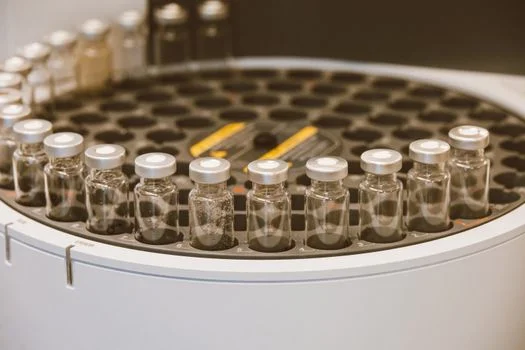
Designing effective wastewater treatment systems in Lisbon requires precise engineering specifications tailored to the unique characteristics of each industrial sector's effluent. For food processing facilities, including canneries and slaughterhouses, typical influent characteristics include COD ranging from 1,500–3,000 mg/L, BOD 800–1,500 mg/L, TSS 300–800 mg/L, and FOG 100–300 mg/L. The effluent targets for these sectors are stringent: COD ≤125 mg/L and FOG ≤15 mg/L (AgIR 2023), often necessitating robust DAF systems for Lisbon’s food processing and textile industries to achieve the required FOG reduction. For more detailed insights, consider engineering specs for food processing wastewater in high-FOG environments.
Pharmaceutical manufacturing, particularly Active Pharmaceutical Ingredient (API) production, presents a distinct challenge with influent COD concentrations typically between 2,000–5,000 mg/L, TSS 200–500 mg/L, and the critical presence of Antimicrobial Resistance (AMR) genes (e.g., blaTEM, sul1). Effluent targets mandate COD ≤125 mg/L and an AMR gene removal efficiency of ≥99% (EU WW4Environment project, Top 3). This often requires advanced oxidation processes followed by MBR systems for Lisbon’s pharmaceutical and water reuse projects.
The textile industry, encompassing dyeing and printing operations, discharges wastewater with influent COD between 500–2,000 mg/L, TSS 100–400 mg/L, and significant color (ADMI 500–1,500). Compliance requires effluent COD ≤125 mg/L and color ≤50 ADMI (ERSAR 2024), often achieved through coagulation-flocculation and biological treatment.
Hydraulic loading rates are critical design parameters: Dissolved Air Flotation (DAF) systems typically operate at 4–8 m/h, Membrane Bioreactors (MBR) at 10–20 L/m²/h, and conventional sedimentation tanks at 0.5–1.5 m/h (EPA 2024 benchmarks). Given Lisbon's urban density, footprint requirements are a major consideration; MBR systems offer a compact solution at 0.2–0.4 m²/m³/day, while DAF systems typically require 0.1–0.3 m²/m³/day for urban installations (AgIR 2023).
Below are detailed engineering specifications for Lisbon's key industrial sectors:
| Sector | Key Influent Parameters | Effluent Targets | Typical Hydraulic Loading (m³/h) | Footprint (m²/m³/day) |
|---|---|---|---|---|
| Food Processing | COD: 1,500–3,000 mg/L BOD: 800–1,500 mg/L TSS: 300–800 mg/L FOG: 100–300 mg/L |
COD: ≤125 mg/L FOG: ≤15 mg/L |
DAF: 4-8 m/h Sedimentation: 0.5-1.5 m/h |
DAF: 0.1-0.3 |
| Pharmaceuticals | COD: 2,000–5,000 mg/L TSS: 200–500 mg/L AMR Genes: Present |
COD: ≤125 mg/L AMR Gene Removal: ≥99% |
MBR: 10-20 L/m²/h | MBR: 0.2-0.4 |
| Textiles | COD: 500–2,000 mg/L TSS: 100–400 mg/L Color (ADMI): 500–1,500 |
COD: ≤125 mg/L Color: ≤50 ADMI |
DAF: 4-8 m/h Sedimentation: 0.5-1.5 m/h |
DAF: 0.1-0.3 |
Lisbon’s Industrial Wastewater Treatment Systems: Technology Comparison and Selection Framework
Selecting the optimal wastewater treatment technology for industrial facilities in Lisbon requires a careful evaluation of influent characteristics, desired effluent quality, footprint constraints, and cost-effectiveness. Dissolved Air Flotation (DAF) systems are highly effective for removing suspended solids and FOG, achieving 92–97% TSS removal and 60–80% COD removal. They are particularly well-suited for industries like food processing and textiles, where high concentrations of these pollutants are common. The typical CAPEX for a DAF system designed for 10–100 m³/h capacity ranges from €50,000–€200,000 (ERSAR 2024).
Membrane Bioreactor (MBR) systems represent a more advanced solution, offering superior effluent quality with 95–98% COD removal and over 99% pathogen removal. MBRs are ideal for pharmaceutical wastewater treatment, where high removal efficiencies for complex organics and potential contaminants like AMR genes are crucial, and also for applications requiring water reuse. The CAPEX for MBR systems in the 10–100 m³/h range is generally higher, between €150,000–€450,000 (AgIR 2023). For situations requiring hybrid DAF-RO systems for Lisbon’s pharmaceutical rinse water, MBR often forms a key part of the pre-treatment.
Conventional sedimentation combined with chemical dosing for Lisbon’s sedimentation and DAF pre-treatment offers a lower-cost initial investment, with CAPEX typically between €30,000–€100,000. It achieves 70–85% TSS removal and 50–70% COD removal. However, sedimentation alone often requires additional post-treatment stages to meet the strict Tagus estuary discharge limits, making it more suitable for primary treatment or low-COD pre-treatment applications like cooling water.
A pragmatic decision matrix for technology selection in Lisbon dictates using DAF for FOG-heavy industrial wastewater (e.g., food processing) and textile effluent. MBR systems are the preferred choice for pharmaceutical wastewater, high-purity effluent requirements, and water reuse initiatives. Sedimentation is best reserved for pre-treatment of relatively low-strength wastewater or as an initial step in a multi-stage system. For high-strength wastewater with COD exceeding 3,000 mg/L, common in Lisbon’s petrochemical sector (e.g., Barreiro industrial zone), hybrid systems combining DAF with MBR offer a robust solution to achieve compliance.
A comparative overview of key wastewater treatment technologies:
| Technology | Primary Use Case | TSS Removal Efficiency | COD Removal Efficiency | Typical CAPEX (10–100 m³/h) |
|---|---|---|---|---|
| Dissolved Air Flotation (DAF) | FOG, suspended solids, light industrial (food, textiles) | 92–97% | 60–80% | €50,000–€200,000 |
| Membrane Bioreactor (MBR) | High-purity effluent, pharmaceuticals, water reuse | >99% | 95–98% | €150,000–€450,000 |
| Sedimentation (+ Chemical Dosing) | Primary treatment, low-COD pre-treatment (requires post-treatment for compliance) | 70–85% | 50–70% | €30,000–€100,000 |
CAPEX and OPEX for Industrial WWTPs in Lisbon: 2025 Cost Models and ROI Calculations
Understanding the full financial implications of industrial wastewater treatment in Lisbon involves a detailed analysis of both Capital Expenditure (CAPEX) and Operational Expenditure (OPEX). For a typical 50 m³/h industrial wastewater treatment system in Lisbon, CAPEX can vary significantly based on the chosen technology. A combined DAF and sedimentation system generally ranges from €180,000–€250,000. Implementing an MBR system, due to its advanced membrane technology and higher treatment efficacy, typically incurs a CAPEX of €350,000–€450,000. For facilities with extremely complex or high-strength wastewater, a hybrid DAF + MBR system can cost between €400,000–€550,000 (ERSAR 2024).
Beyond the initial investment, OPEX is a continuous consideration for wastewater treatment CAPEX Lisbon. For DAF systems, OPEX typically falls between €0.80–€1.50/m³, while MBR systems, with their higher energy and membrane replacement costs, range from €1.20–€2.00/m³. These figures include energy consumption (0.5–1.2 kWh/m³), chemical costs (€0.10–€0.30/m³ for coagulation/flocculation), and labor (approximately 1 full-time equivalent for a 50 m³/h system for routine operations and maintenance) (AgIR 2023).
The Return on Investment (ROI) for these compliance-driven investments is often realized through a combination of avoided penalties and potential cost savings. MBR systems, for instance, often demonstrate a 3–5 year payback period. This ROI is primarily driven by significant water reuse potential, which can generate savings of approximately €0.50/m³ by reducing reliance on fresh water supplies. Additionally, avoiding ERSAR fines, which can range from €10,000–€50,000 per year for non-compliance, substantially contributes to the payback (EU WW4Environment project, Top 3). Lisbon-based industries can leverage various financing options, including EU Cohesion Fund grants (offering up to 80% funding for SMEs), Portugal 2020 incentives, and ERSAR’s low-interest loans specifically designed for compliance-oriented wastewater projects.
A cost model for a 50 m³/h industrial WWTP in Lisbon:
| Cost Category | DAF + Sedimentation | MBR System | Hybrid DAF + MBR |
|---|---|---|---|
| CAPEX (Initial Investment) | €180,000–€250,000 | €350,000–€450,000 | €400,000–€550,000 |
| OPEX (per m³) | €0.80–€1.50 | €1.20–€2.00 | €1.50–€2.50 |
| - Energy Cost (kWh/m³) | 0.5–0.8 kWh/m³ | 0.8–1.2 kWh/m³ | 1.0–1.5 kWh/m³ |
| - Chemical Cost (per m³) | €0.10–€0.20 | €0.05–€0.15 | €0.10–€0.25 |
| - Labor (FTE for 50 m³/h) | ~1 FTE | ~1 FTE | ~1.2 FTE |
| Typical ROI (Payback Period) | 5–7 years (via avoided fines) | 3–5 years (via water reuse & avoided fines) | 4–6 years (via water reuse & avoided fines) |
Frequently Asked Questions
What are the main compliance deadlines for industrial wastewater in Lisbon?
Industrial facilities in Lisbon must meet EU Directive 2020/2184 and Portugal’s DPE 2020 compliance deadlines by Q4 2025, with ERSAR imposing fines up to €50,000/day for non-compliance (ERSAR 2024).
What are the key effluent discharge limits for the Tagus estuary?
For discharges into the Tagus estuary, key effluent limits are COD ≤125 mg/L, BOD ≤25 mg/L, and TSS ≤35 mg/L, along with pH 6–9 and heavy metal restrictions like Pb ≤0.5 mg/L (EU Directive 2020/2184).
Which wastewater treatment technology is best for food processing in Lisbon?
DAF (Dissolved Air Flotation) systems are highly effective for food processing wastewater in Lisbon, achieving 92–97% TSS and 60–80% COD removal, specifically targeting FOG levels of ≤15 mg/L (AgIR 2023).
How can I finance a new industrial WWTP in Lisbon?
Financing options for industrial WWTPs in Lisbon include EU Cohesion Fund grants (up to 80% for SMEs), Portugal 2020 incentives, and ERSAR’s low-interest loans, specifically supporting compliance projects (EU WW4Environment project, Top 3).
What are the typical space requirements for a WWTP in urban Lisbon?
For urban Lisbon installations, MBR systems typically require 0.2–0.4 m²/m³/day, while DAF systems need 0.1–0.3 m²/m³/day, making them compact solutions for limited industrial footprints (AgIR 2023).