Food processing wastewater in Australia necessitates specialized treatment to comply with stringent EPA discharge limits, which typically mandate biochemical oxygen demand (BOD) at ≤20 mg/L, chemical oxygen demand (COD) at ≤150 mg/L, and fats, oils, and grease (FOG) at ≤10 mg/L. For instance, meat processing plants commonly generate wastewater with BOD loads reaching 3,000 mg/L and FOG concentrations up to 1,500 mg/L, while dairy facilities contend with elevated lactose (BOD 500–1,200 mg/L) and protein (COD 800–2,000 mg/L) concentrations. Efficient treatment solutions like Dissolved Air Flotation (DAF) systems are capable of removing 90–95% of FOG and 60–80% of suspended solids, whereas advanced Biological Nutrient Removal (BNR) systems achieve over 95% nitrogen and phosphorus removal—a critical capability for effective water recycling and adherence to the Australian Government’s National Water Initiative.
Why Food Processing Wastewater Treatment in Australia Is a Regulatory and Cost Challenge
The food processing sector faces significant regulatory and financial pressures in Australia.Food processing contributes 12% of Australia’s industrial water use, incurring annual costs up to $2.4 billion for the sector (ABS 2023 data, extrapolated from industry reports). This significant water consumption, coupled with the complex nature of food processing wastewater, places immense pressure on facilities to implement effective treatment solutions that meet stringent environmental regulations and optimize operational expenditures. Non-compliance with environmental protection agency (EPA) discharge limits for food processing wastewater can lead to severe financial penalties and operational disruptions, directly impacting profitability and brand reputation. Beyond direct fines, non-compliance can result in mandatory environmental improvement notices, increased monitoring requirements, and even legal action from affected communities, all of which add significant indirect costs and damage public perception.
Australian EPA regulations are rigorous and vary by state, demanding tailored wastewater treatment strategies. In New South Wales (NSW), typical discharge limits require BOD ≤20 mg/L and FOG ≤10 mg/L, often with additional requirements for pH, temperature, and heavy metals. Victoria sets limits for COD ≤150 mg/L and total suspended solids (TSS) ≤30 mg/L, alongside specific limits for nutrient loads into sensitive waterways like Port Phillip Bay. Queensland emphasizes nutrient removal with total nitrogen (TN) ≤10 mg/L and total phosphorus (TP) ≤2 mg/L, particularly for discharges into the Great Barrier Reef catchment areas. Penalties for non-compliance are substantial, with fines for corporations reaching up to $1.1 million under the Environment Protection Act 2017 in Victoria. Repeated violations can result in mandatory plant shutdowns, as exemplified by a 2023 NSW abattoir closure due to persistent effluent breaches. The escalating water scarcity in Australia, with 2024 water prices in the Murray-Darling Basin rising 18% year-over-year (Water Services Association of Australia 2024), makes wastewater recycling a compelling economic imperative beyond mere compliance. This "polluter pays" principle embedded in Australian environmental law ensures that the financial burden of environmental damage or non-compliance is borne by the responsible party, further incentivizing robust treatment. Ongoing operational costs such as trade waste charges are directly tied to the volume and pollutant load discharged, making source reduction and effective pre-treatment economically beneficial.
Proactive investment in robust wastewater treatment systems mitigates these risks, transforming a regulatory burden into a strategic advantage through water reuse and reduced trade waste charges. Facilities engaging in NSW EPA compliance guide for food processors often find that the long-term savings from water recycling and avoided penalties far outweigh the initial capital investment. For example, a medium-sized food processor could save hundreds of thousands of dollars annually by reducing potable water consumption and avoiding trade waste surcharges, with payback periods for advanced treatment systems often falling within 3-5 years.
| State/Territory | Key Parameter | Typical Discharge Limit | Relevant Legislation/Authority |
|---|---|---|---|
| New South Wales (NSW) | BOD | ≤20 mg/L | NSW EPA, Protection of the Environment Operations Act 1997 |
| New South Wales (NSW) | FOG | ≤10 mg/L | NSW EPA, Protection of the Environment Operations Act 1997 |
| Victoria | COD | ≤150 mg/L | Environment Protection Authority Victoria (EPA Vic), Environment Protection Act 2017 |
| Victoria | TSS | ≤30 mg/L | Environment Protection Authority Victoria (EPA Vic), Environment Protection Act 2017 |
| Queensland | TN | ≤10 mg/L | Department of Environment and Science (DES), Environmental Protection Act 1994 |
| Queensland | TP | ≤2 mg/L | Department of Environment and Science (DES), Environmental Protection Act 1994 |
| South Australia | BOD | ≤20 mg/L | EPA South Australia, Environment Protection Act 1993 |
| South Australia | FOG | ≤10 mg/L | EPA South Australia, Environment Protection Act 1993 |
Food-Specific Wastewater Characteristics: Engineering Specs by Sector
Food processing wastewater exhibits distinct characteristics based on the specific sector.Meat and poultry processing wastewater typically presents extremely high organic loads, with biochemical oxygen demand (BOD) ranging from 1,500–3,000 mg/L and fats, oils, and grease (FOG) up to 1,500 mg/L (EPA 2023 benchmarks). This stream also contains high concentrations of chemical oxygen demand (COD) between 2,500–5,000 mg/L and total suspended solids (TSS) from 800–2,000 mg/L, primarily from blood, fat, protein, and cleaning agents. Effective FOG removal in meat processing is paramount for preventing blockages and ensuring downstream treatment efficiency, especially given the potential for rapid putrefaction and odor generation. Wastewater from rendering plants, for instance, can have even higher pollutant concentrations due to the processing of animal by-products.
Dairy wastewater is characterized by high concentrations of lactose (contributing to BOD 500–1,200 mg/L) and proteins (contributing to COD 800–2,000 mg/L). Its pH can fluctuate wildly, ranging from 4.5 during acidic cleaning cycles to 11 during alkaline washdowns, requiring robust equalization. TSS levels typically fall between 300–1,000 mg/L, composed of milk solids, detergents, and sanitizers. These fluctuations in pH and organic load, often occurring in batch discharges, demand sophisticated control systems to maintain stable biological treatment processes. Addressing these specific characteristics is key to successful dairy wastewater treatment systems.
Breweries and wineries generate wastewater with significant organic loads, predominantly from sugars and yeast, resulting in BOD levels of 1,000–3,000 mg/L and COD ranging from 2,000–6,000 mg/L. TSS can be 200–1,500 mg/L, comprising spent grains, yeast, hop residue, and diatomaceous earth from filtration. pH variations from 3 to 12 are common due to caustic and acidic cleaning-in-place (CIP) operations, demanding careful pH neutralization for brewery wastewater compliance Australia. Moreover, the presence of alcohol residues can inhibit certain biological treatment processes, necessitating specific acclimatization strategies for microorganisms.
Ready-meals manufacturing wastewater is highly variable but generally features BOD between 800–2,000 mg/L, COD from 1,500–4,000 mg/L, FOG 200–1,000 mg/L, and TSS 500–1,500 mg/L (Aerofloat case study data). These streams often contain diverse food particles, oils, and cleaning chemicals, necessitating flexible treatment strategies. The mix of carbohydrates, proteins, and fats, along with varying temperatures from cooking and cooling processes, makes designing a robust and adaptable treatment system particularly challenging for this sector. Understanding these distinct influent profiles is the foundational step in designing an effective food industry wastewater treatment Australia solution, often requiring extensive wastewater characterization studies to account for seasonal variations and product changes. These studies are crucial for anticipating the impact of daily operational variability, such as intensive cleaning-in-place (CIP) cycles or rapid product changeovers, on the overall wastewater composition and volume.
| Food Sector | Key Contaminants | BOD (mg/L) | COD (mg/L) | FOG (mg/L) | TSS (mg/L) | pH Range |
|---|---|---|---|---|---|---|
| Meat & Poultry | Blood, fat, protein | 1,500–3,000 | 2,500–5,000 | 500–1,500 | 800–2,000 | 6–9 |
| Dairy | Lactose, proteins | 500–1,200 | 800–2,000 | 50–200 | 300–1,000 | 4.5–11 |
| Breweries & Wineries | Sugars, yeast, alcohol | 1,000–3,000 | 2,000–6,000 | 20–100 | 200–1,500 | 3–12 |
| Ready-Meals | Diverse food particles, oils | 800–2,000 | 1,500–4,000 | 200–1,000 | 500–1,500 | 6–9 |
Treatment Technology Deep Dive: DAF vs. BNR vs. MBR for Food Processing
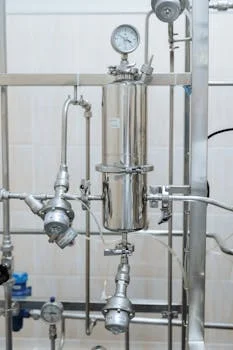
Dissolved Air Flotation (DAF) systems are a cornerstone in primary treatment for food processing wastewater, efficiently removing 90–95% of fats, oils, and grease (FOG) and 60–80% of total suspended solids (TSS) at hydraulic loading rates of 5–15 m³/m²/h (HydropureWater DAF systems for high-efficiency FOG and TSS removal). DAF operates by introducing fine air bubbles into the wastewater, which attach to suspended particles, causing them to float to the surface where they are skimmed off as sludge. This process often involves chemical pre-treatment with coagulants and flocculants to enhance particle aggregation, significantly improving removal efficiency. Advantages of DAF include its robust performance for high FOG and TSS loads, relatively small footprint compared to sedimentation tanks, and its ability to handle fluctuating influent quality. However, DAF systems generate a significant volume of DAF sludge, which requires further dewatering and disposal, and they are not designed to remove dissolved organic matter or nutrients.
Biological Nutrient Removal (BNR) systems represent a more advanced secondary treatment stage, specifically engineered to remove nitrogen and phosphorus from wastewater. These systems typically employ a series of anaerobic, anoxic, and aerobic zones where specialized microorganisms convert complex organic compounds into simpler forms while also facilitating nitrification (ammonia to nitrate) and denitrification (nitrate to nitrogen gas), as well as biological phosphorus uptake. BNR systems achieve over 95% nitrogen and phosphorus removal, critical for preventing eutrophication in receiving waters and meeting increasingly strict EPA limits, particularly in states like Queensland. Common BNR configurations include the Modified Ludzack-Ettinger (MLE) and Bardenpho processes, which optimize the sequencing of aerobic and anoxic conditions. While highly effective for nutrient removal, BNR systems generally require larger footprints, are sensitive to shock loads and significant pH fluctuations, necessitating robust upstream equal