Semiconductor TMAH wastewater treatment pairs reverse osmosis or membrane capacitive deionization with hydrolysis-aerobic biology to cut 50–5,000 mg/L developer and rinse streams by more than 90%. Long bench runs report >95% TMAH removal and >91% TOC reduction for fabs.
TMAH Wastewater Treatment for Semiconductor Fabs: The 2026 Baseline
TMAH wastewater treatment for semiconductor fabs concentrates or biodegrades tetramethylammonium ions before discharge or reuse. Hydrolysis-acidification plus aerobic stages held TOC removal above 91% over 380 days at 50–500 mg/L influent, while RO and MCDI each removed about 92% TMAH from real fab wastewater near 40 mg/L. Design turns on influent strength, permit language, and discharge versus zero liquid discharge.
One search string deserves a note. Search logs still return "adr 2026 tmah 25%" from buyers tracking dangerous-goods rules for TMAH shipments: bulk concentrate most commonly ships as an aqueous solution at roughly 2–25% (Wikipedia), and its road movement falls under ADR, formally the Agreement of 30 September 1957 concerning the International Carriage of Dangerous Goods by Road. Transport classification sits upstream of treatment design, but the specs below are what the fab EHS team controls.
Why Conventional TMAH Trains Miss Permit Limits
TMAH is a quaternary ammonium developer used in photolithography, where it serves as a basic solvent for acidic photoresists and as a silicon etchant (Wikipedia). It is corrosive and neurotoxic; Wikipedia's toxicology summary notes the tetramethylammonium ion affects nerves and muscles, and that deaths have followed skin contact even with low-concentration solutions. PubChem acute-toxicity tables compiled in Lee et al. (2023) list a guinea pig dermal LD50 of 25 mg/kg, not a rat oral value. Earlier plant briefs often repeated a 25 mg/kg rat figure; keep the dermal datum for PPE and spill design.
Standalone RO fouls quickly from organic scaling and silica at high pH. Activated sludge often stalls because TMAH inhibits nitrifiers. Uncontrolled pH swings then cut both biology and membrane flux. Many legacy lines stay below 80% TMAH removal and cannot hold a sub-mg/L effluent target. Choosing among membrane, biological, and hybrid options is a CAPEX, OPEX, footprint, and compliance trade-off—not a single product swap.
TMAH Influent Specs Your Train Must Absorb
Semiconductor rinse water typically carries 50–500 mg/L TMAH. TFT-LCD developer waste is often 1,000–5,000 mg/L. Photoresist manufacturing sits between those bands. Co-contaminants commonly include fluoride at 50–200 mg/L, phosphates at 10–50 mg/L, and TOC at 300–1,500 mg/L. Influent pH usually sits at 10–12, so every biological stage and many membranes need upstream acid dosing.
TMAH also drives organic fouling on RO elements and slows nitrification once organics break to ammonium. Most plants we size for rinse-dominated fabs run at the lower end of the semiconductor rinse band; developer dumps push the high end and force hydrolysis pretreatment. Related chip-fab design notes appear in our TMAH Wastewater Treatment for Chip Fabs: 2026 Engineering Specs blueprint.
| Parameter | Semiconductor Rinse | TFT-LCD Developer | Photoresist Manufacturing |
|---|---|---|---|
| TMAH (mg/L) | 50–500 | 1,000–5,000 | 200–1,000 |
| TOC (mg/L) | 300–800 | 800–1,500 | 400–1,000 |
| Fluoride (mg/L) | 50–150 | <10 | 20–100 |
| Phosphates (mg/L) | 10–30 | <5 | 5–20 |
| pH | 10–11.5 | 11–12.5 | 10.5–12 |
| Conductivity (µS/cm) | 1,000–5,000 | 5,000–15,000 | 2,000–8,000 |
Membrane Options for TMAH Wastewater Treatment
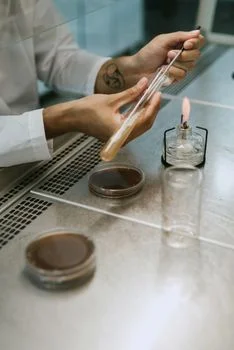
Reverse osmosis remains the workhorse for concentrating TMAH and reclaiming water. Bench work on real semiconductor wastewater near 40 mg/L TMAH cut TMAH to about 3.0 mg/L (~92% removal) with TDS near 23.9 mg/L when recovery was pushed high (Lee et al., Membranes, 2023). Earlier summaries often quote >90% TMAH removal at ~75% recovery in the pH 8–10 window; keep both figures when you size flux and CIP. HydropureWater supplies RO systems for TMAH concentration and zero-discharge compliance for industrial duty.
Membrane capacitive deionization matched RO on that same matrix, finishing near 3.1 mg/L TMAH (~92% removal) at low recovery and holding similar rejection near 90% recovery. Earlier marketing sheets often claim >95% TMA+ removal under basic conditions; Lee et al. saw stronger TMAH rejection at pH 10 than at pH 3–7, so pH set-points matter as much as stack design. Nanofiltration left about 9.1 mg/L TMAH on the same feed—well below a <70% removal claim in older notes, and still too open for monovalent TMA+.
Fouling mechanisms are consistent across membrane types: organic scaling from TMAH and co-organics, silica precipitation above neutral pH, and biofouling on wet surfaces. Pretreat with solids removal and pH trim before you chase higher recovery. Etching lines share many of the same membrane risks; see How to Treat Etching Wastewater: 2026 Engineering Specs when fluoride dominates the matrix.
| Technology | TMAH Removal (%) | Water Recovery (%) | Energy Use (kWh/m³) | Primary Fouling Risk | Typical CAPEX (per m³/hr) |
|---|---|---|---|---|---|
| Reverse Osmosis (RO) | >90 | 70–85 | 0.8–2.0 | Organic scaling, silica, biofouling | $3,000–$8,000 |
| Membrane Capacitive Deionization (MCDI) | >95 (TMA+) | 80–90 | 0.5–1.5 | Scaling, electrode degradation | $4,000–$9,000 |
| Nanofiltration (NF) | <70 | 60–75 | 0.6–1.2 | Organic fouling, particulate blocking | $2,500–$6,000 |
Biological Paths: Hydrolysis Acidification–Aerobic vs Anaerobic
Hydrolysis acidification converts TMAH to trimethylamine and dimethylamine before the aerobic stage sees a toxic spike. That step protects nitrifiers that otherwise stall on raw TMAH. Integrated hydrolysis–aerobic and anaerobic trains held TOC removal above 91% across 380 days at 50–500 mg/L influent TMAH, with TMA, DMA, and MMA as the main intermediates.
Target aerobic pH at 7–8 after neutralizing the alkaline dump. Acclimate sludge before you raise load; most plants we commission hold HRT in the multi-hour range at ~20 °C rather than racing the reactor. HydropureWater MBR systems for biological polishing of TMAH wastewater keep solids and residual organics in check after the main reactors.
Typical biological sequence:
- Hydrolysis Acidification: Initial conversion of TMAH to TMA/DMA under controlled acidic conditions.
- Aerobic Treatment: Degradation of TMA, DMA, MMA, and other organics in activated sludge or MBR.
- Anaerobic Treatment (Optional): Further organics and nitrogen management in an anoxic or anaerobic zone.
- Polishing: Membrane filtration or advanced oxidation for residual solids and organics.
Zero Liquid Discharge TMAH Wastewater Treatment: What Limits Reclaim Recovery?
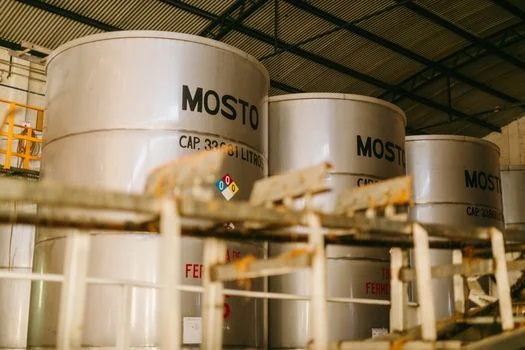
Semiconductor zero liquid discharge reclaim recovery is usually capped by RO brine salinity, silica scaling, and evaporator energy—not by permeate quality alone. A practical hybrid is DAF–RO–MBR: DAF systems for TMAH wastewater pretreatment and solids removal protect membranes, RO concentrates TMAH and salts, and MBR polishes permeate for utility reuse.
Hybrid RO-MBR TMAH Wastewater Treatment Layouts
| System Design | Key Components | TMAH Removal (%) | Typical CAPEX ($M) | Typical OPEX ($/m³) | Footprint (m²/m³/hr) |
|---|---|---|---|---|---|
| DAF-RO-MBR | DAF, RO, MBR, Chemical Dosing | >98 | 0.8–2.5 | 1.5–3.0 | 0.5–1.0 |
| Biological-RO-Evaporation | Hydrolysis, Aerobic, RO, Evaporator/Crystallizer | >99 (Zero Liquid Discharge) | 1.5–3.5 | 3.0–6.0 | 0.8–1.5 |
| Ion Exchange-RO | Ion Exchange, RO, Regeneration System | >95 | 0.7–2.0 | 2.0–4.0 | 0.4–0.8 |
LFoundry-style ion-exchange plus off-site polishing has reported effluent TMAH below 0.5 mg/L in published case notes. True ZLD still needs evaporation or crystallization of RO brine, then solids disposal. Permeate reuse for cooling-tower makeup or scrubbers cuts freshwater demand. The same hybrid logic applies to wafer cleaning wastewater treatment strategies and CMP wastewater treatment for semiconductor fabs.
What Challenges Scale Semiconductor ZLD Recovery?
Scaling semiconductor ZLD recovery fails most often on silica precipitation, organic fouling of RO, and evaporator steam cost—not on first-pass TMAH rejection. Brine conductivity climbs as recovery rises, so antiscalant dose, softener or IX pretreatment, and CIP frequency become the real OPEX drivers. Electronic-panel organic wastewater with high TMAH needs hydrolysis before membranes if biology is in the train; skipping that step is a common scale-up miss.
Data-center condensate RO is a different water chemistry and should not be copy-pasted onto fab developer waste. Keep panel-organic ZLD design on TMAH, fluoride, and TOC envelopes, then size evaporation only for the final brine fraction.
TMAH Wastewater Treatment Cost: CAPEX and OPEX Drivers (2025)
Membrane-centric RO/MCDI packages for a 50–100 m³/day block often land near $500K–$2M CAPEX. Standalone MBR biology is typically $300K–$1.5M. Hybrid DAF–RO–MBR trains for tighter limits sit around $800K–$3M. These 2025 planning bands move with site labor, materials of construction, and how much brine evaporation you add.
OPEX is dominated by membrane replacement at roughly $50–$100/m²/year for 3–5 year RO life, energy at 0.5–2 kWh/m³ for membranes plus aeration power for biology, and chemicals for pH, antiscalant, and CIP. Extend CIP intervals carefully, cut sludge mass where biology allows, and reuse permeate to offset intake and discharge fees. Payback bands run 2–5 years for standalone biology, 3–6 years for membrane packages, and 5–10+ years for full ZLD, so reclaimed-water value must carry the ZLD case. Compare adjacent etching wastewater treatment systems only after you normalize for fluoride load and recovery target.
| Technology Type | Typical CAPEX (for 50 m³/day system) | Typical OPEX ($/m³ treated) | Primary OPEX Drivers | Estimated Payback Period (Years) |
|---|---|---|---|---|
| Standalone Membrane (RO/MCDI) | $500,000–$1,200,000 | $1.50–$3.00 | Energy, membrane replacement, chemicals | 3–6 |
| Standalone Biological (MBR) | $300,000–$900,000 | $1.00–$2.50 | Energy (aeration), sludge disposal, chemicals | 2–5 |
| Hybrid (DAF-RO-MBR) | $800,000–$2,500,000 | $2.50–$5.00 | Energy, membrane replacement, sludge, chemicals | 4–8 |
| Zero Liquid Discharge (ZLD) | $1,500,000–$4,000,000+ | $5.00–$10.00+ | Evaporation energy, solids disposal, maintenance | 5–10+ |
How to Select the Right TMAH Treatment Train
Match TMAH wastewater treatment to influent strength, flow, permit text, plot space, and budget. Use this decision path:
- If influent TMAH concentration is <500 mg/L and discharge limits are moderate (e.g., >5 mg/L): Consider a standalone biological system (e.g., MBR) with robust pH control.
- If influent TMAH concentration is <500 mg/L but discharge limits are strict (e.g., <1 mg/L): A membrane-focused system (RO/MCDI) with appropriate pretreatment, or a biological-membrane hybrid (MBR-RO), is generally recommended.
- If influent TMAH concentration is >500 mg/L: Biological pretreatment via hydrolysis acidification is crucial, followed by aerobic/anaerobic processes and subsequent membrane polishing (e.g., hydrolysis-aerobic-RO).
- If zero-liquid discharge (ZLD) is required: A comprehensive hybrid system incorporating DAF, RO, MBR, and a final evaporation/crystallization step for brine management is necessary.
Earlier vendor notes often cited TMAH <1 mg/L as an EPA 40 CFR Part 469 limit. The current semiconductor subcategory instead sets total toxic organics (TTO) at 1.37 mg/L maximum for any 1 day, fluoride at 32.0 mg/L (1-day) and 17.4 mg/L (30-day average) under BAT, and pH 6.0–9.0 where listed—without a standalone TMAH number (eCFR 40 CFR Part 469 Subpart A). Local permits and EU site licenses may still write TMAH-specific caps near 0.5 mg/L; read the permit, not the brochure.
Selection checklist:
- Confirm peak and average TMAH, TOC, fluoride, and pH from composite samples.
- Map discharge vs reclaim vs full ZLD against the written permit.
- Pilot RO or MCDI on site water before freezing recovery.
- Budget CIP chemicals, membrane replacement, and brine disposal—not only skid CAPEX.
- Require membrane warranties and contracted biological performance tied to your matrix.
- Reserve plot space for future evaporator modules if reclaim targets will tighten.
Who This Is For / Next Step
This page is for fab EHS leads, process engineers, and EPC teams sizing developer and rinse treatment. Look elsewhere if you only need municipal sewage biology or data-center condensate RO. If you have composite assays and a target recovery, request a scoped design review through our TMAH treatment inquiry form and we will map a train to your permit.
Frequently Asked Questions
What are the primary challenges in treating high-concentration TMAH wastewater?
High-concentration TMAH is hard because the dump is both alkaline and toxic. Influent pH of 10–12 stalls many aerobic cultures and accelerates membrane scaling. TMAH also inhibits nitrifiers, so conventional activated sludge often underperforms without hydrolysis pretreatment. Small molecular size lets monovalent TMA+ leak through NF. Use hydrolysis acidification plus RO or MCDI when influent exceeds roughly 500 mg/L TMAH.
How can membrane fouling be mitigated in TMAH treatment systems?
Cut fouling with solids and oil removal ahead of membranes, then hold feed pH in the membrane's rated window. DAF pretreatment lowers particulate and organic load before RO. Schedule CIP against the actual foulant—organic, silica, or bio—rather than a generic calendar. Conservative flux and antiscalant control usually extend RO life beyond the 3–5 year planning band used in cost models.
What are the key considerations for achieving zero-discharge with TMAH wastewater?
ZLD succeeds or fails on brine handling after RO or MCDI. Evaporation or crystallization recovers water and leaves a solid salt cake for disposal. Energy for evaporation and solids logistics dominate OPEX at $5–$10+/m³ in planning models. Reuse high-quality permeate for cooling or utilities so the evaporator only sees the true reject fraction.
How do pH fluctuations affect biological TMAH degradation?
Biological TMAH removal needs stable near-neutral pH even though raw dumps sit at pH 10–12. Aerobic communities typically work best around pH 7–8 after neutralization. Swings outside that band slow enzymes and can crash nitrification. Acidification pretreatment plus online pH control keeps hydrolysis and aerobic stages online when developer dumps arrive in pulses.
Does EPA 40 CFR Part 469 set a TMAH numeric limit?
No standalone TMAH limit appears in 40 CFR Part 469 Subpart A. The semiconductor subcategory limits TTO to 1.37 mg/L maximum for any 1 day and sets fluoride BAT limits at 32.0 mg/L (1-day) and 17.4 mg/L (30-day average). Plants still face local TMAH permit language and EU site caps, so design to the strictest applicable number on your discharge permit.
What TMAH removal efficiency can semiconductor wastewater trains reach?
Hydrolysis-aerobic biology holds TOC removal above 91% over 380 days at 50–500 mg/L influent. Match the target to your permit: TTO at 1.37 mg/L 1-day max, or local TMAH caps near 0.5 mg/L.