How to Treat Ammonia Wastewater
Industrial sites that treat ammonia use biological nitrification-denitrification for 95–99% NH3-N removal at 12–24 h HRT and 20–30°C, electrochemical recovery for 90–95% at 2–5 kWh/kg NH3-N, or air stripping for 70–90% below 50 mg/L. Hybrid DAF-RO-MBR trains reach 99.5%+ removal at about $0.40–$2.10/m³ OPEX.
Most industrial NPDES permits still set ammonia-nitrogen near 0.5–2 mg/L NH3-N. According to US EPA (2013), the recommended freshwater chronic criterion is 1.9 mg/L total ammonia nitrogen (TAN) at pH 7.0 and 20°C, with an acute criterion of 17 mg/L TAN under the same conditions. Fertilizer ammonia manufacturing follows mass-based effluent guidelines in 40 CFR Part 418 Subpart B rather than one universal mg/L limit. CapEx planning bands for full trains still span about $500–$6,000 per m³/day across the methods below.
Why Ammonia Wastewater Treatment Fails on the Plant Floor
A Midwest meat processor faced a $250,000 EPA fine in 2025 after discharging 8.2 mg/L NH3-N above its permit limit. That case shows how fast an ammonia exceedance becomes a cash and compliance problem. Sensitive aquatic life can be harmed at very low ammonia levels, so industrial permits commonly land between 0.5–2 mg/L NH3-N, while zero-discharge programs often target below 0.1 mg/L.
The three failures we see most often are pH inhibition below 7.5, sustained temperature below 15°C, and hydraulic overload that cuts HRT under about 12 hours. Municipal plants may get by with 60–80% ammonia removal. Fertilizer, petrochemical, and food plants usually need 95% or higher removal to stay inside permit and aquatic-life criteria.
Operators who chase airflow or chemical dose alone rarely fix the root cause. Most plants we size for start with a temperature and alkalinity audit, then check peak-to-average flow before they buy another blower or membrane skid.
Ammonia Treatment Methods Compared: Removal Efficiency, CapEx, OPEX, and Footprint
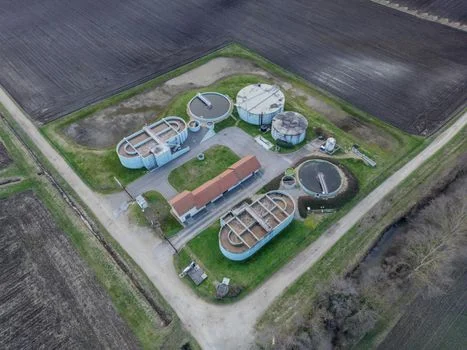
Method selection for industrial ammonia wastewater turns on removal efficiency, CapEx, OPEX, and footprint. The table below keeps the 2026 planning ranges used for buyer shortlists.
| Method | Removal Efficiency (NH3-N) | CapEx per m³/day (2026) | OPEX per m³ (2026) | Footprint m²/100 m³/h |
|---|---|---|---|---|
| Biological Nitrification-Denitrification | 95–99% | $800–$1,500 | $0.85–$1.20 | 200–400 |
| Electrochemical Recovery | 90–95% | $1,200–$2,500 | $0.60–$1.00 | 50–100 |
| Air Stripping | 70–90% | $500–$1,000 | $0.40–$0.80 | 100–200 |
| Ion Exchange | 80–95% | $1,000–$2,000 | $0.90–$1.50 | 70–150 |
| Breakpoint Chlorination | 90–99% | $600–$1,100 | $1.00–$1.80 | 50–100 |
Biological nitrification-denitrification remains the workhorse for high-flow industrial streams that need 95–99% NH3-N removal, even with a larger footprint and longer HRT. Electrochemical recovery fits sites that want 90–95% removal plus fertilizer product. Air stripping suits low-concentration ammonia streams (<50 mg/L) with lower CapEx and OPEX, but typically tops out at 70–90% removal. Ion exchange handles variable loads if regeneration chemicals and brine disposal are planned. Breakpoint chlorination can hit high removal, yet chemical demand and chlorinated byproducts limit use on many modern sites.
Biological Nitrification-Denitrification: 2026 Engineering Specs for Industrial Systems
Biological nitrification-denitrification converts ammonia to nitrogen gas through anoxic denitrification, aerobic nitrification, and solids separation. Space-constrained plants often couple the biology with MBR systems for ammonia wastewater treatment to raise sludge retention and tighten effluent quality.
Key design and operating setpoints most plants we size for still use:
- pH: Hold 7.5–8.5; nitrifiers stall when the basin turns acidic.
- Temperature: Target 20–30°C; rates fall sharply below 15°C.
- Dissolved Oxygen (DO): Keep 2–4 mg/L in the aerobic zone and <0.5 mg/L in the anoxic zone.
- Hydraulic Retention Time (HRT): Plan 12–24 hours for complete nitrification on industrial loads.
- Solids Retention Time (SRT): Maintain 10–20 days so slow-growing nitrifiers stay in the system.
Sludge yield typically lands at 0.3–0.5 kg TSS per kg NH3-N removed, so dewatering capacity must match the biology. Field fixes are straightforward: dose alkalinity such as NaHCO3 with an automatic chemical dosing system when pH drifts; add heat exchange when winter water cools; install equalization when peaks cut HRT; and pretreat toxins with GAC or equivalent before they wipe out the culture. Hybrid MBR-nitrification packages are the usual pick when footprint is tight and permit limits sit near 0.5 mg/L NH3-N or lower.
Electrochemical Ammonia Recovery: How It Works, Costs, and Resource-Recovery Potential
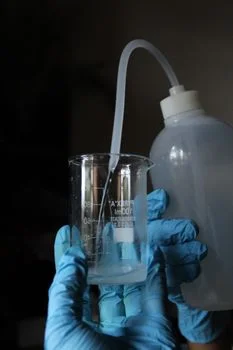
Electrochemical ammonia recovery removes NH4+ while converting it to a salable ammonium salt. Current drives ammonium toward a high-pH cathode zone, where NH3 gas is stripped and absorbed into acid to form a 10–20% liquid fertilizer such as ammonium sulfate.
Operating windows that usually hold:
- Current Density: 10–50 A/m² for stable recovery.
- pH: 9–11 in the recovery zone to shift NH4+ to NH3.
- Temperature: 20–40°C to keep kinetics and stripping rates up.
- Energy Use: About 2–5 kWh per kg NH3-N recovered.
Removal commonly reaches 90–95%. Recovered ammonia has been valued near $200–$400 per ton NH3 as liquid fertilizer in recent project models. For a 100 m³/h train, CapEx is about $1.2M–$4.5M and OPEX about $0.60–$1.00/m³—often up to 30% below biology on high-strength ammonia when fertilizer credit is counted. Membrane fouling and chloride interference remain the main limits; CIP washes and RO or ion-exchange pretreatment keep those risks in check.
Air Stripping for Low-Concentration Ammonia: When It Works and When It Fails
Air stripping converts NH4+ to NH3 at high pH, then transfers the gas into an air stream inside a packed tower. It works best below 50 mg/L ammonia, at pH above 11, and at temperatures above 20°C. Under those conditions municipal plants often see 70–90% removal. Industrial streams with higher ammonia, unstable pH, or cold water more often land at 50–70%.
Design levers that decide success:
- Air-to-Water Ratio: 2000–4000:1 for adequate mass transfer.
- Packing Depth: 3–6 m of packing to extend contact time.
- pH Adjustment: NaOH or lime to hold pH above 11, which drives a large share of OPEX.
Watch for VOC carryover that needs acid scrubbing, hardness scaling that needs periodic acid wash, and cold weather that kills stripping efficiency. CapEx of $500–$1,000/m³/day and OPEX of $0.40–$0.80/m³ keep the method attractive on low-strength streams. DAF pretreatment for ammonia wastewater removes solids and oil/grease so packing and downstream units stay clean.
Zero-Discharge Hybrid DAF-RO-MBR for Strict Ammonia Limits
Zero-discharge programs for ammonia-laden industrial wastewater often require effluent below 0.1 mg/L NH3-N. A common high-strength train uses DAF pretreatment for ammonia wastewater, reverse osmosis, an MBR system for ammonia wastewater treatment, and electrochemical recovery on the concentrate.
That hybrid package can deliver 99.5%+ NH3-N removal, COD below 10 mg/L, and TSS below 1 mg/L when pretreatment and CIP are disciplined. CapEx for a 100 m³/h DAF-RO-MBR hybrid typically runs $2.5M–$6M, with OPEX $1.20–$2.10/m³. Fertilizer recovery and water reuse shorten payback toward the same 3–5 year band as simpler trains.
A petrochemical plant in Jiangsu, China, started a hybrid system in 2025 that cut influent NH3-N from 120 mg/L to below 0.1 mg/L and recovered about 18% of influent ammonia as liquid fertilizer, with CapEx payback near 3.5 years. Oil/grease control and pH conditioning before membranes remain non-negotiable, much like the discipline used in zero-discharge systems for industrial wastewater in other sectors.
How much does meat-plant wastewater treatment cost?
Meat-plant ammonia treatment usually falls in the biological CapEx band of $800–$1,500 per m³/day and OPEX of $0.85–$1.20/m³ when nitrification-denitrification is the core process. High solids and blood-protein loads raise equalization, DAF, and sludge-handling costs above a clean chemical plant of the same flow. Plants chasing sub-0.5 mg/L NH3-N permits should budget for alkalinity control, winter temperature protection, and spare aeration capacity before they chase membrane add-ons.
What drives ammonia treatment cost and capacity?
Ammonia treatment cost and capacity are set first by influent NH3-N, temperature, and required effluent limit, not by brochure horsepower. Capacity is limited by HRT/SRT for biology, packing volume and air rate for stripping, or current density and membrane area for electrochemical recovery. Quality targets below 0.1 mg/L NH3-N push CapEx into the hybrid $2,500–$6,000 per m³/day band. Qualification time is usually weeks for stripping or chlorination and months for full nitrifier establishment after a washout.
Ammonia Wastewater Treatment Costs 2026: CapEx, OPEX, and ROI by Method
Procurement teams comparing 2026 ammonia projects should read CapEx, OPEX, energy, and payback together. The ranges below match the method table and keep fertilizer credit visible where it changes ROI.
| Method | CapEx per m³/day (2026) | OPEX per m³ (2026) | Energy Use kWh/m³ (2026) | ROI Years (Estimate) |
|---|---|---|---|---|
| Biological Nitrification-Denitrification | $800–$1,500 | $0.85–$1.20 | 0.5–1.0 | 3–5 |
| Electrochemical Recovery | $1,200–$2,500 | $0.60–$1.00 | 2–5 (for recovery) | 2–4 (with fertilizer revenue) |
| Air Stripping | $500–$1,000 | $0.40–$0.80 | 0.3–0.6 | 4–6 (for low-strength streams) |
| Hybrid DAF-RO-MBR | $2,500–$6,000 | $1.20–$2.10 | 1.5–3.0 | 3–5 (with fertilizer revenue) |
Biological systems typically return in 3–5 years at $800–$1,500/m³/day CapEx and $0.85–$1.20/m³ OPEX. Electrochemical trains at $1,200–$2,500/m³/day CapEx and $0.60–$1.00/m³ OPEX can pay back in 2–4 years when fertilizer revenue of $200–$400/ton NH3 holds. Air stripping remains cheapest on low-strength water, yet 4–6 year ROI is common because recovery value is limited and caustic use is high. Hybrid DAF-RO-MBR packages cost more up front but reclaim water and ammonia, which is why many buyers still land in a 3–5 year ROI window.
Avoided fines of $10,000–$500,000 per year and lower intake water fees often matter as much as equipment price, a pattern also covered in regional compliance guides for industrial wastewater. When teams need to treat ammonia beyond a single unit process, they should price sludge or brine disposal in the same model as power and chemicals.
Who This Is For and Next Step
This guide is for plant engineers, EPC contractors, and procurement managers sizing ammonia removal for food, fertilizer, petrochemical, or municipal-industrial discharges. Look elsewhere if you only need domestic septic polishing or a single cartridge filter for potable water.
Selection checklist before you lock CapEx:
- Confirm permit limit, seasonal temperature, and receiving-water class.
- Measure peak and average NH3-N, COD, TSS, and chloride.
- Decide destroy versus recover based on fertilizer logistics.
- Reserve footprint for HRT, packing height, or membrane trains.
- Price sludge, spent brine, or scrubber blowdown disposal.
- Stress-test winter nitrification or cold stripping efficiency.
- Define CIP chemicals, downtime, and spare critical equipment.
Share your flow, NH3-N, temperature, and permit limit through our request a quote form for a sized process and CapEx/OPEX band.
Frequently Asked Questions
What is the most cost-effective ammonia wastewater treatment method?
Air stripping is usually most cost-effective below 50 mg/L ammonia, with CapEx around $500–$1,000/m³/day and OPEX $0.40–$0.80/m³. Biological nitrification-denitrification fits 50–500 mg/L loads when 95–99% removal is required. Electrochemical recovery wins when fertilizer revenue offsets energy use of 2–5 kWh/kg NH3-N and product logistics are clear.
How much does an ammonia wastewater treatment system cost?
CapEx for ammonia wastewater treatment systems ranges from $500–$6,000 per m³/day of treated water. Air stripping sits at $500–$1,000/m³/day, biological systems at $800–$1,500/m³/day, and hybrid DAF-RO-MBR trains at $2,500–$6,000/m³/day. OPEX typically spans $0.40–$2.10 per m³ depending on chemicals, energy, and sludge handling.
Can ammonia be recovered from wastewater?
Yes. Electrochemical systems recover about 90–95% of ammonia as a 10–20% liquid fertilizer stream. Project models often value that product near $200–$400 per ton of NH3. Recovery works best on high-strength, low-chloride feeds after solids and oil are controlled upstream.
What are the EPA discharge limits for ammonia?
Most industrial NPDES permits still require about 0.5–2 mg/L NH3-N, while zero-discharge targets often sit below 0.1 mg/L. According to US EPA (2013), the freshwater chronic aquatic-life criterion is 1.9 mg/L TAN at pH 7.0 and 20°C. Fertilizer ammonia plants also follow 40 CFR 418 Subpart B mass limits, including BAT at 0.05 kg ammonia as N per 1,000 kg product.
How do I troubleshoot nitrification failure?
Check pH 7.5–8.5, temperature 20–30°C, aerobic DO 2–4 mg/L, and HRT of 12–24 hours first. Add alkalinity such as NaHCO3 through an automatic chemical dosing system if pH drifts. Use heat exchangers for cold influent and equalization tanks when peaks cut retention time.