Hospital Wastewater Treatment in Entebbe: 2025 Engineering Specs, Compliance & Zero-Risk Equipment Guide
Entebbe General Hospital’s 2021 water shortage and medical waste concerns highlight the urgent need for on-site wastewater treatment. Uganda’s NEMA mandates hospital effluent meet BOD ≤ 50 mg/L, COD ≤ 100 mg/L, and TSS ≤ 30 mg/L—standards achievable with compact, automated systems like MBR or electrocoagulation (EC). For Entebbe’s typical 50–300 m³/day flow, CAPEX ranges from $80K–$400K depending on technology, with OPEX as low as $0.15/m³ for modular systems. This guide provides engineering specs, compliance benchmarks, and zero-risk equipment selection criteria tailored to Entebbe’s regulatory and operational context.
Why Entebbe Hospitals Need On-Site Wastewater Treatment Now
Entebbe General Hospital suspended major surgeries in June 2021 due to acute water shortages and infrastructure failures, illustrating the vulnerability of healthcare facilities relying solely on municipal water and sewage networks. When municipal systems fail or reach capacity, hospitals without on-site treatment cannot manage the continuous generation of infectious liquid waste. This creates a bottleneck that halts clinical operations and endangers patient safety. residents in the Entebbe municipality have historically raised alarms regarding untreated medical waste entering Lake Victoria, a primary water source for the region. Discharging untreated effluent into the lake basin risks catastrophic public health outcomes and triggers immediate intervention from the National Environment Management Authority (NEMA).
The National Water and Sewerage Corporation (NWSC) has tightened its oversight, requiring that Entebbe-based hospitals pre-treat their wastewater to specific standards before it enters the public sewer line. This is particularly critical because hospital effluent is significantly more complex than standard municipal sewage. In Entebbe, hospital wastewater typically exhibits a high Biological Oxygen Demand (BOD) of 300–800 mg/L and Chemical Oxygen Demand (COD) ranging from 500–1,200 mg/L. Beyond organic load, these streams contain high concentrations of pathogens (E. coli often exceeds 10⁶ CFU/100mL) and pharmaceutical residuals, including antibiotics and hormones, which municipal plants are not designed to neutralize.
On-site treatment serves as a critical buffer, ensuring that even during municipal infrastructure downtime, the hospital remains compliant and operational. By implementing a WSZ series underground integrated system, facilities can reclaim water for non-potable uses like irrigation or cooling, reducing their reliance on the NWSC grid by up to 30%. This transition from a liability-based waste model to a resource-recovery model is essential for the long-term sustainability of Entebbe’s healthcare infrastructure.
Uganda’s Regulatory Landscape: NEMA, HCWMP, and Hospital Effluent Standards

NEMA’s 2025 effluent standards for healthcare facilities are enforceable under the National Environment Act, 1995, and dictate strict limits on the chemical and biological composition of discharged water. For hospitals in Entebbe, compliance is not a suggestion but a legal mandate. The Uganda Healthcare Waste Management Plan (HCWMP) mandates that all healthcare facilities, ranging from Health Center IVs to General Hospitals, must possess functional on-site treatment capabilities. Failure to meet these standards can result in fines of up to UGX 10 million ($2,700) per violation and potential closure of the facility.
NEMA’s enforcement process involves unannounced site inspections and effluent sampling. If a facility’s discharge exceeds the maximum permissible limits, the hospital administrator is issued an improvement notice. Continued non-compliance leads to prosecution. These standards are notably more stringent than general municipal requirements due to the high risk of environmental contamination in the Lake Victoria basin. The following table outlines the specific parameters required for compliance in Entebbe compared to international benchmarks.
| Parameter | NEMA 2025 Limit (Uganda) | WHO Guidelines | Typical Untreated Hospital Effluent |
|---|---|---|---|
| BOD₅ (mg/L) | ≤ 50 | ≤ 30 | 300 – 800 |
| COD (mg/L) | ≤ 100 | ≤ 250 | 500 – 1,200 |
| TSS (mg/L) | ≤ 30 | ≤ 50 | 200 – 500 |
| Fecal Coliform (CFU/100mL) | ≤ 1,000 | ≤ 1,000 | 10⁶ – 10⁸ |
| pH | 6.0 – 9.0 | 6.5 – 8.5 | 5.5 – 9.5 |
While Uganda’s COD limits are more restrictive than some WHO guidelines, they are aligned with regional efforts in the East African Community (EAC) to protect shared water bodies. For engineers, this means that primary treatment (sedimentation) is insufficient; secondary and tertiary treatment stages are mandatory to reach the required BOD and pathogen reduction levels. Understanding how Dodoma hospitals solved similar wastewater challenges can provide a roadmap for Entebbe administrators looking to harmonize their operations with regional best practices.
Engineering Specs for Hospital Wastewater Treatment in Entebbe
Engineering design for Entebbe hospital systems must account for average flow rates between 50 and 300 m³/day for general hospitals, while smaller clinics typically generate between 10 and 50 m³/day. The design must be robust enough to handle "peak flow" periods, usually occurring during morning ward rounds and cleaning cycles. Accurate sizing prevents system bypass, which is a common cause of NEMA violations. For a 100 m³/day facility, the following technical specifications are recommended to ensure consistent effluent quality.
The treatment process must address three distinct phases: primary removal of solids, secondary biological oxidation, and tertiary disinfection. Membrane Bioreactor (MBR) technology is frequently selected for Entebbe’s hospitals due to its high Mixed Liquor Suspended Solids (MLSS) concentration, which allows for a smaller physical footprint. Alternatively, for facilities with high grease and suspended solids from hospital kitchens and laundries, a cost-effective DAF system for pre-treatment in Entebbe clinics is advisable before the biological stage.
| System Component | Technical Parameter | Design Specification |
|---|---|---|
| MBR Unit | MLSS Concentration | 8,000 – 12,000 mg/L |
| MBR Unit | Membrane Flux | 15 – 25 LMH |
| DAF Unit | Air-to-Solids Ratio | 0.02 – 0.06 |
| Electrocoagulation | Current Density | 10 – 50 A/m² |
| Disinfection | ClO₂ Dosage / UV Dose | 2–5 mg/L / 40 mJ/cm² |
Disinfection is the most critical stage for hospital compliance. Standard chlorination is often insufficient for neutralizing pharmaceutical-resistant bacteria. An on-site ClO₂ generator for hospital effluent disinfection provides superior oxidizing power compared to liquid bleach, with a contact time of only 30 minutes. For hospitals near Lake Victoria, UV disinfection is an excellent chemical-free alternative that prevents the formation of harmful disinfection by-products (DBPs) in the lake water.
Technology Comparison: MBR vs. DAF vs. Electrocoagulation for Entebbe Hospitals
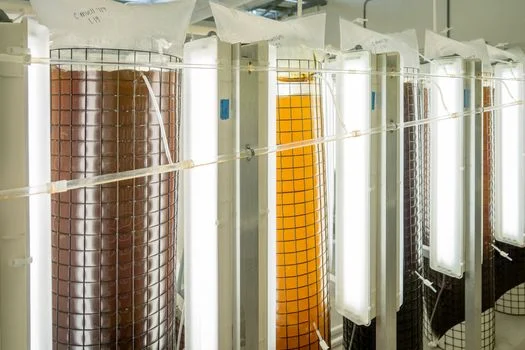
Membrane Bioreactor (MBR) technology achieves 95-99% removal of organic pollutants and pathogens, making it the gold standard for Entebbe’s healthcare sector. A compact MBR system for hospital wastewater in Entebbe eliminates the need for a secondary clarifier, reducing the total footprint by approximately 60% compared to conventional activated sludge systems. This is a significant advantage for hospitals like Entebbe General, where available land for infrastructure expansion is limited. While the CAPEX is higher, the effluent is often of high enough quality for toilet flushing and irrigation, providing a direct offset to water utility costs.
Dissolved Air Flotation (DAF) is primarily utilized as a pre-treatment or primary treatment technology. It is exceptionally effective at removing fats, oils, and grease (FOG) and Total Suspended Solids (TSS) that can clog downstream membranes. In a typical Entebbe hospital setup, a DAF unit might be installed upstream of an MBR if the facility has a high-volume canteen or laundry service. Electrocoagulation (EC) is a newer alternative that uses electrical currents to destabilize contaminants. EC is particularly effective at removing heavy metals and complex pharmaceutical molecules that biological systems might miss, though it requires higher energy input (0.5–1.5 kWh/m³).
| Feature | MBR (Integrated) | DAF | Electrocoagulation |
|---|---|---|---|
| Effluent Quality | Superior (BOD < 10) | Moderate (Needs Post-Bio) | High (Pathogen Removal) |
| Footprint | Very Small | Moderate | Small / Modular |
| Automation Level | High (Full PLC) | Medium | High |
| Pharmaceutical Removal | Good | Low | Excellent |
| Maintenance | Membrane cleaning | Sludge scraping | Electrode replacement |
A real-world example of successful implementation is the Entebbe Children’s Surgical Hospital. Their 50 m³/day MBR system consistently achieves NEMA compliance, effectively protecting the local ecosystem while providing the hospital with a reliable waste management solution. For many facilities, a hybrid approach—using DAF for primary solids removal followed by MBR—provides the most resilient defense against variable influent quality.
Cost Breakdown: CAPEX, OPEX, and ROI for Entebbe Hospital Systems
Capital expenditure for a 100 m³/day wastewater treatment plant in Entebbe ranges from $80,000 for DAF-based systems to $400,000 for high-end MBR units. While the initial investment for MBR is higher, the operational expenditure (OPEX) is often lower due to reduced chemical requirements and automated sludge management. MBR systems typically cost between $0.15 and $0.30 per cubic meter to operate, primarily covering electricity and periodic membrane replacement every 5 to 8 years. In contrast, DAF systems have lower CAPEX ($80K–$150K) but higher chemical costs for coagulants and flocculants, bringing OPEX to $0.20–$0.40/m³.
The Return on Investment (ROI) for these systems is driven by three primary factors: penalty avoidance, utility savings, and grant eligibility. A single NEMA violation fine of UGX 10 million, combined with the legal fees and reputational damage of a public health crisis, can exceed the annual operating cost of a treatment plant. by recycling treated effluent for landscaping, hospitals can save millions of Shillings on their monthly NWSC bills. Many projects in Uganda are also eligible for World Bank or International Development Association (IDA) grants specifically earmarked for environmental health and safety (EHS) upgrades.
| Technology | CAPEX (100 m³/day) | OPEX (per m³) | Major ROI Driver |
|---|---|---|---|
| Dissolved Air Flotation | $80,000 – $120,000 | $0.20 – $0.40 | Low initial investment |
| MBR Integrated System | $250,000 – $400,000 | $0.15 – $0.30 | Water reuse & space savings |
| Electrocoagulation | $100,000 – $200,000 | $0.30 – $0.60 | Pharma/Pathogen removal |
For procurement managers, evaluating Uganda’s top wastewater equipment suppliers for 2025 is a vital step in ensuring that the quoted CAPEX includes installation, commissioning, and staff training, which are often hidden costs in international tenders.
Zero-Risk Equipment Selection Framework for Entebbe Hospitals

Procurement risk in Entebbe’s healthcare sector is mitigated by a five-step evaluation framework that prioritizes long-term operational stability over the lowest initial bid. Hospital administrators must ensure that the selected technology is not only compliant today but adaptable to future regulatory shifts and hospital expansions.
- Verify NEMA Compliance: Request certified effluent test reports from existing installations in Uganda. A reputable supplier should be able to show data from facilities like Mulago Hospital or regional referral centers where their equipment is currently meeting NEMA standards.
- Assess Footprint and Installation: Given the space constraints in Entebbe, prioritize underground or containerized modular systems. The WSZ series underground integrated system is ideal for hospitals looking to preserve surface area for parking or clinical wards.
- Evaluate Automation and Staffing: Hospital staff are clinicians, not wastewater engineers. Systems must feature an automatic chemical dosing system and PLC-based remote monitoring to minimize manual intervention and human error.
- Demand Local Technical Support: Ensure the supplier has a presence in Uganda, preferably with Kampala-based technicians who can reach Entebbe within two hours. Availability of spare parts like membranes and sensors is non-negotiable.
- Pilot Testing: For large-scale investments, request a 3-month pilot using a containerized compact MBR system for hospital wastewater in Entebbe. This validates the technology’s performance against the hospital’s specific wastewater chemistry before full-scale CAPEX commitment.
Frequently Asked Questions
Does NEMA require separate treatment for infectious vs. non-infectious wastewater?While NEMA allows for the co-treatment of all hospital wastewater streams, the HCWMP highly recommends pre-treating highly infectious waste (e.g., from isolation wards or laboratories) with onsite autoclaving or chemical disinfection before it enters the main wastewater treatment plant. This reduces the biological load and ensures the safety of the maintenance staff.
How often does an MBR system in Entebbe require membrane replacement?With proper pre-screening and automated backwashing, high-quality PVDF membranes typically last between 5 and 8 years. In Entebbe, the lifespan is heavily influenced by the consistency of the power supply and the effectiveness of the pre-treatment stage in removing grit and grease.
Can treated hospital wastewater be safely used for irrigation in Uganda?Yes, provided the system meets NEMA’s "Category A" reuse standards, which include a fecal coliform count of < 1,000 CFU/100mL. Systems utilizing MBR followed by UV or ClO₂ disinfection easily exceed these requirements, making the water safe for landscaping and dust suppression.
What is the typical lead time for installing a 100 m³/day system in Entebbe?For modular, skid-mounted systems, the lead time from order to commissioning is usually 12 to 16 weeks. This includes 8 weeks for manufacturing and shipping, and 4 to 6 weeks for on-site civil works, installation, and NEMA-validated performance testing.