New Mexico’s municipal sewage treatment plants must meet EPA and NMED standards under the Clean Water Act, with unique challenges like arid-climate water reuse and rural colonias funding. For example, Albuquerque’s Southside Water Reclamation Plant (SWRP) treats 55 million gallons daily (MGD) for 600,000+ residents, while Anthony’s USDA-funded plant serves just 10,000. Key specs: influent BOD5 ≤ 300 mg/L, effluent BOD5 ≤ 30 mg/L (EPA 2024), and tertiary treatment for irrigation reuse. This guide provides 2025 engineering specs, cost models ($1.2M–$120M CAPEX), and zero-risk equipment selection criteria for NM municipalities.
New Mexico’s Sewage Treatment Landscape: Regulatory, Hydrological, and Demographic Challenges
New Mexico’s regulatory environment is dictated by the intersection of federal EPA mandates and the New Mexico Environment Department (NMED) 2024 Water Quality Standards. A critical differentiator for NM engineers is the pH compliance range; while the EPA national baseline allows for 6.0–9.0, NMED often enforces a stricter range of 6.5–9.0 to protect sensitive high-desert aquatic ecosystems. For municipal planners, this requires more precise chemical dosing and buffering capacity in the treatment train.
Hydrological constraints in the state necessitate a "water as a resource" rather than "waste" mindset. In Roswell, the municipal wastewater treatment plant (WWTP) provides treated effluent to irrigate over 2,000 acres of crops during the growing season. This dual-purpose utility model reduces the strain on the Pecos River and provides a revenue stream or cost-offset for the city. Conversely, Albuquerque’s SWRP must manage massive discharge volumes into the Rio Grande, requiring high-level nutrient removal to prevent downstream eutrophication. These varying discharge goals—irrigation reuse vs. river discharge—dictate whether a plant utilizes simple biological processes or advanced tertiary filtration.
Demographic extremes also define NM’s infrastructure needs. The state contains numerous "colonias"—rural communities within 150 miles of the Mexico border that often lack basic sanitation. For these areas, such as Anthony, NM, the 2024 USDA Rural Development grant programs are vital, covering 75–90% of CAPEX for plants serving populations under 10,000. These projects typically favor WSZ series underground sewage treatment plants for NM colonias because they minimize land use and operational complexity for small-town utility crews. Smaller municipalities must balance these grants against long-term OPEX, as rural labor markets for certified Class IV operators remain tight.
Engineering Specs for NM Municipal Sewage Treatment Plants: Influent, Effluent, and Process Parameters
Engineering design for New Mexico plants begins with characterizing the influent, which typically exhibits higher concentrations of biological oxygen demand (BOD) and total suspended solids (TSS) due to lower per-capita water usage compared to the national average. Typical NM municipal influent ranges include BOD5 of 150–300 mg/L and TSS of 200–400 mg/L. Ammonia levels often peak at 20–40 mg/L, requiring robust nitrification cycles, especially during cold winter months in high-altitude regions like Santa Fe or Taos.
NMED’s 2025 standards for effluent are increasingly stringent, particularly for plants discharging into "impaired" water bodies. While the standard secondary treatment limit is ≤ 30 mg/L for both BOD5 and TSS, many NM permits now require tertiary treatment to achieve turbidity levels ≤ 2 NTU and no detectable E. coli for Type I reclaimed water reuse. This level of treatment is essential for municipal parks, golf courses, and agricultural irrigation. Engineers must also account for EPA compliance for specialized wastewater streams if the municipality handles significant industrial or medical waste loads.
| Parameter | Typical NM Influent | NMED 2025 Effluent Limit | Tertiary Reuse Standard |
|---|---|---|---|
| BOD5 (mg/L) | 150 – 350 | ≤ 30 | ≤ 5 |
| TSS (mg/L) | 200 – 450 | ≤ 30 | ≤ 5 |
| Ammonia (mg/L) | 20 – 45 | ≤ 2.0 (Summer) | N/A |
| E. coli (CFU/100mL) | 10^6 – 10^7 | ≤ 126 | Non-detectable |
| Turbidity (NTU) | N/A | N/A | ≤ 2 |
The process flow for a typical NM plant follows a standardized sequence but must be customized for climate. Pre-treatment starts with mechanical screening and grit removal to protect downstream pumps from New Mexico’s high sand and silt content. Primary clarifiers are followed by biological treatment—either Conventional Activated Sludge (CAS) or Membrane Bioreactors (MBR). For cities like Roswell, biological treatment is coupled with seasonal disinfection. Albuquerque’s SWRP utilizes a more complex BNR (Biological Nutrient Removal) process to manage nitrogen and phosphorus before Rio Grande discharge. Disinfection is increasingly moving away from chlorine gas toward UV or liquid sodium hypochlorite to simplify safety compliance, often involving chlorine dioxide generators for NM’s disinfection compliance to handle high-strength odors and pathogens.
Treatment Technologies Compared: MBR vs. Conventional Activated Sludge vs. DAF for NM’s Climate
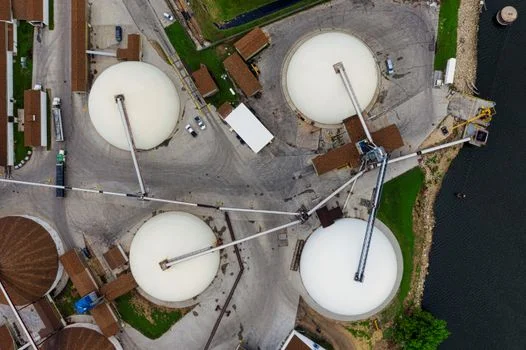
Selecting the right technology depends on the municipality's footprint, budget, and water reuse goals. Conventional Activated Sludge (CAS) remains the standard for large-scale plants with available land. It offers the lowest CAPEX ($1.2M–$5M for 1–5 MGD) but requires a large footprint (2–3 acres per MGD). CAS is highly effective for basic NMED compliance but often requires additional sand filtration to meet tertiary reuse standards.
Membrane Bioreactors (MBR) represent the high-performance alternative, ideal for urban NM sites with space constraints or strict reuse requirements. MBR systems for Albuquerque-scale NM plants (10–50 MGD) produce effluent with BOD5 ≤ 5 mg/L and TSS ≤ 1 mg/L, essentially eliminating the need for secondary clarifiers and sand filters. While MBR CAPEX is higher ($3.5M–$12M for 1–5 MGD), the 60% reduction in footprint and superior water quality make it the preferred choice for cities targeting indirect potable reuse or high-value irrigation.
Dissolved Air Flotation (DAF) is typically utilized as a pre-treatment or sludge thickening step. In NM municipalities with significant food processing industries (e.g., dairy or meatpacking), DAF systems for NM’s food processing and industrial pre-treatment are critical. DAF can remove 90–95% of Fats, Oils, and Grease (FOG) and TSS before the wastewater enters the biological stage, preventing "bulking" in aeration basins and reducing chemical costs in the long run.
| Feature | Conventional (CAS) | MBR | DAF (Pre-treatment) |
|---|---|---|---|
| Effluent Quality | Moderate (BOD <30) | Superior (BOD <5) | High TSS/FOG Removal |
| Footprint | Large (2-3 acres/MGD) | Small (0.5-1 acre/MGD) | Compact |
| CAPEX | $1.2M – $5M (1-5 MGD) | $3.5M – $12M (1-5 MGD) | $150K – $500K |
| NM Climate Suitability | Good for large rural sites | Best for water reuse | Essential for FOG loads |
CAPEX and OPEX Breakdown: 2025 Cost Models for NM Municipal Plants
Budgeting for a New Mexico sewage treatment plant requires a clear distinction between initial investment (CAPEX) and long-term operational costs (OPEX). For a small community plant (0.1 MGD), a package system might cost $1.2M, whereas a major expansion for a city like Albuquerque can exceed $120M. Anthony’s recent $3.2M plant, funded largely by USDA grants, serves as a benchmark for mid-sized rural installations. These costs are influenced by New Mexico’s remote geography, which can increase freight costs for heavy equipment and specialized media.
OPEX for NM plants typically ranges from $0.30 to $1.50 per 1,000 gallons treated. CAS plants sit at the lower end ($0.30–$0.60) due to lower energy requirements, while MBR plants range from $1.00–$1.50 due to the energy needed for membrane scouring and higher-pressure pumping. Labor is the most significant OPEX variable; a 1–5 MGD plant requires 2–4 certified operators with salaries ranging from $50,000 to $150,000 depending on certification level. Energy costs in NM ($0.08–$0.15/kWh) and chemical costs for phosphorus removal or disinfection ($0.10–$0.30/1K gal) must also be factored into the annual budget.
| Plant Scale (MGD) | Estimated CAPEX (2025) | Estimated OPEX ($/1K gal) | Primary Funding Source |
|---|---|---|---|
| 0.1 (Rural/Colonia) | $1.2M – $2.5M | $1.20 – $1.80 | USDA / NMED Grants |
| 1.0 (Small City) | $6M – $12M | $0.60 – $0.90 | Clean Water SRF / Loans |
| 10.0 (Urban Hub) | $45M – $75M | $0.40 – $0.70 | Municipal Bonds / SRF |
| 50.0 (Metro) | $120M+ | $0.35 – $0.55 | Revenue Bonds |
Funding is often the deciding factor for NM projects. The EPA Clean Water State Revolving Fund (SRF) provides low-interest loans, while the NMED offers 2% interest loans for water quality improvements. For many NM towns, the ROI is driven by water reuse; treated effluent can be sold to industrial users or used to offset potable water costs for municipal landscaping, saving $0.50–$2.00 per 1,000 gallons. avoiding NMED non-compliance fines, which can reach $25,000 per day, makes modern equipment a necessary risk-mitigation strategy.
Step-by-Step Compliance: NMED Permitting and EPA Discharge Limits for NM Plants

Navigating the NMED permitting process is a multi-year commitment that requires rigorous technical documentation. The process begins with a pre-application meeting with NMED’s Ground Water Quality Bureau or Surface Water Quality Bureau to determine the discharge permit type (e.g., NPDES for surface water). Following this, an engineering report must be submitted, detailing the process flow, expected effluent quality, and environmental impact. This is followed by a mandatory public comment period before final permit issuance, a timeline that typically spans 6 to 12 months.
Compliance testing is the most intensive part of daily operations. Daily tests for pH, dissolved oxygen (DO), and chlorine residual are mandatory. Weekly requirements usually include BOD5 and TSS sampling, while E. coli and heavy metals are tested monthly. Quarterly, plants must report on "priority pollutants" including arsenic and lead, which can be naturally occurring in New Mexico’s geology. For technical comparison, see how Czech municipalities handle EPA-equivalent compliance to understand global benchmarks for nutrient limits.
Common pitfalls in NM compliance include inadequate pre-treatment for industrial FOG, leading to secondary process failure, and insufficient disinfection. NMED inspectors frequently cite plants for "missed reporting deadlines" or "improper sampling technique," which can result in fines of $1,000 to $10,000 per violation. Implementing automated monitoring and SCADA systems is the most effective way to ensure 24/7 compliance and provide the data logs required for annual NMED audits.
Equipment Selection Framework: Matching Tech to NM’s Scale, Budget, and Reuse Goals
Choosing the right equipment requires a decision framework that balances CAPEX, OPEX, and the specific hydrological goals of the New Mexico municipality. For rural colonias with limited budgets and part-time operators, the focus should be on "passive" or highly automated systems. For growing urban centers like Las Cruces or Rio Rancho, the focus shifts to scalability and effluent purity for aquifer recharge or irrigation.
The decision tree begins with scale: if the plant treats less than 1 MGD, WSZ series underground sewage treatment plants for NM colonias offer a "plug-and-play" solution that minimizes surface construction and odor issues. For plants in the 1–10 MGD range, the choice between CAS and MBR depends on land availability. If the city owns 50+ acres, CAS is the cost-effective path. If the city is land-locked, MBR is the only viable expansion route. For regional insights on similar regulatory environments, consider how coastal cities like New Orleans adapt to EPA standards, though NM engineers must prioritize evaporation control over flood proofing.
| Selection Criteria | Recommended Tech | NM Use Case |
|---|---|---|
| Scale < 0.5 MGD; Low Budget | WSZ Underground Package Plant | Rural Colonias / Small Subdivisions |
| Scale 1-5 MGD; High Reuse Goal | MBR (Membrane Bioreactor) | Urban Water Reclamation / Parks |
| Scale > 5 MGD; Land Available | Conventional Activated Sludge | Large Municipal Hubs (e.g., Roswell) |
| High Industrial/Dairy Influent | DAF Pre-treatment | Dairy-heavy regions (Chaves County) |
Finally, consider the long-term reliability of the supplier. In New Mexico’s arid environment, equipment is subjected to high UV exposure and temperature swings. Selecting equipment with stainless steel or high-density polymer construction and ensuring local or regional availability of spare parts is critical to avoiding extended downtime during the critical summer irrigation months.
Frequently Asked Questions
What are the primary NMED effluent limits for 2025?
Most NM municipal permits require BOD5 and TSS to be ≤ 30 mg/L for secondary discharge. However, for Type I water reuse (irrigation), limits tighten to ≤ 5 mg/L BOD5 and turbidity ≤ 2 NTU. E. coli must remain below 126 CFU/100mL for surface discharge and be non-detectable for reclaimed water.
How much does a 1 MGD sewage plant cost in New Mexico?
A 1 MGD plant in New Mexico typically requires a CAPEX of $6M to $12M, depending on whether CAS or MBR technology is used. OPEX for such a plant ranges from $0.60 to $0.90 per 1,000 gallons, covering labor, electricity, and chemical dosing for NMED compliance.
Are there specific grants for NM colonias wastewater projects?
Yes, the USDA Rural Development Colonias Grant program provides funding that can cover up to 75–90% of the CAPEX for wastewater infrastructure. Communities with populations under 25,000 located within 150 miles of the border are eligible, as seen in the recent Anthony, NM plant upgrade.
Why is MBR preferred over CAS for urban New Mexico plants?
MBR is preferred in urban NM because it produces high-quality effluent (BOD < 5 mg/L) suitable for immediate irrigation reuse and requires 60% less land than CAS. This is critical for land-locked cities like Albuquerque or Santa Fe where expansion space is limited and water conservation is a priority.
What is the NMED permitting timeline for a new plant?
The NMED permitting process generally takes 6 to 12 months. This includes a pre-application meeting, the submission of a detailed engineering report, a 30-day public comment period, and final technical review. Delays often occur due to incomplete environmental impact data or public opposition during the hearing phase.