Industrial wastewater treatment in El Paso operates under a dual framework. Texas Commission on Environmental Quality (TCEQ) authorizes discharges to waters of the state, while El Paso Water’s Industrial Pretreatment Program (IPP) governs sewer discharge. Facilities that send an average of 25,000 gallons/day or more of process wastewater to the POTW are Significant Industrial Users and must hold a discharge permit. Arid-climate influent often carries TDS of 1,200–1,800 mg/L, food-process COD commonly runs 3,000–8,000 mg/L (2024 TCEQ-cited ranges in plant data), and elevation near 3,700 ft cuts oxygen solubility versus coastal plants. Equipment selection, sizing, and CAPEX/OPEX must reflect those local conditions—not generic catalog curves.
Industrial Wastewater Treatment in El Paso: What Specs Decide First
El Paso plants typically choose DAF for FOG and TSS, MBR for reuse-grade BOD and TSS, or chemical precipitation for metals. Sewer discharge must meet El Paso Water local limits; direct discharge needs a facility-specific TCEQ TPDES permit. CAPEX spans about $250,000 for a 50 m³/day DAF unit to about $12 million for a 2,000 m³/day MBR-RO train.
Package OPEX for DAF, MBR, and precipitation commonly falls between $0.80 and $3.50 per cubic meter under El Paso power and chemical pricing. Zero-discharge MBR-RO trains sit higher, often $3.00–$5.00/m³, when membrane replacement and reduced RO recovery on high-TDS feed are included.
Why El Paso Conditions Force Custom Engineering
El Paso’s arid climate raises industrial influent TDS to 1,200–1,800 mg/L, roughly 2–3 times a frequently cited national average near 500 mg/L (2024 AWWA-cited range). High TDS adds osmotic stress on biomass and reduces oxygen transfer efficiency. At about 3,700 ft elevation, dissolved-oxygen solubility drops further, so biological trains sized for humid lowlands often under-aerate once installed on site.
Most plants we size for food or light manufacturing in the Border region run aeration airflow and coagulant dose at the upper end of the catalog band for that reason. Off-the-shelf packages designed for temperate, low-TDS water frequently miss local limits until hydraulic retention, chemical dose, and equalization volume are reworked against peak production shifts.
Regulatory control splits by discharge path. TCEQ authorizes industrial discharges to water in the state through individual or general permits; limits are permit-specific rather than a single statewide BOD/TSS number. For sewer discharge, El Paso Water’s IPP applies federal categorical standards plus locally developed limits. Earlier guidance in this article used <200 mg/L BOD, <200 mg/L TSS, and <10 mg/L ammonia. It also used a blanket <1 mg/L metals narrative for “TCEQ 2025 direct discharge.” TCEQ instead sets industrial effluent limits case-by-case in TPDES permits (TCEQ Industrial Wastewater program). El Paso Water’s published technically based local limits for POTW discharge list BOD at 300 mg/L, copper at 1.75 mg/L, and lead at 0.66 mg/L. Additional metal and BTEX values appear on the utility pretreatment page (El Paso Water, Pretreatment).
Earlier IPP summaries also used pH 6–9 and FOG <100 mg/L as the working window. El Paso Water still bars vegetable-origin FOG above 100 mg/L and petroleum oils above 100 mg/L. Current sewer rules prohibit wastewater with pH less than 5.5 or greater than 10.5 (El Paso Water, Pretreatment). Temperature limits and other special conditions remain permit-specific. Older plant notes often cite a 140°F sewer temperature ceiling. Confirm the active permit language before design freeze. Wastewaters with BOD and/or TSS above 300 mg/L may also trigger surcharge. That surcharge follows Public Service Board Rules and Regulations No. 6, even when the sewer still accepts the flow.
Non-compliance is expensive. A tortilla plant in El Paso faced a $48,000/month TCEQ-related fine pattern in 2023. Repeated FOG exceedances traced to an undersized pretreatment train. Installing an El Paso-tuned dissolved air flotation (DAF) system for high-FOG wastewater restored compliance within about four months. Automated polymer and coagulant dosing completed the fix (HydropureWater field data, 2025). Equalization ahead of flotation remains the first fix most FOG-heavy kitchens need. Peaks often run 1.5–2× average flow for several hours each shift.
3 Treatment Pathways: Engineering Specs and Trade-offs
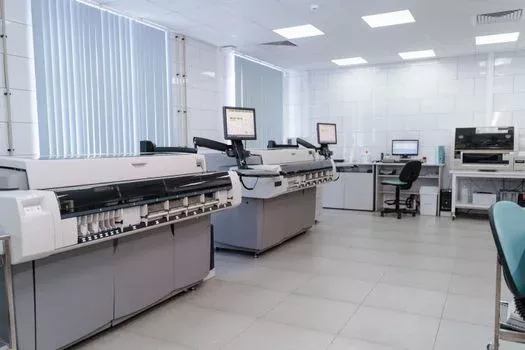
Technology choice follows influent chemistry and the effluent goal—pretreatment to sewer, direct discharge to waters of the state, or reuse and zero liquid discharge. Dissolved air flotation, membrane bioreactors, and chemical precipitation cover most El Paso industrial loads. Hydraulic loading, aeration, and reagent dose still need adjustment for high TDS and elevation. Selecting the wrong primary unit usually shows up first as FOG, BOD, or metals violations. Those failures appear during the first production ramp, not during clean-water commissioning.
DAF Systems
Dissolved air flotation removes suspended solids and FOG before biological polishing or sewer discharge. El Paso-optimized DAF trains commonly treat influent COD of 3,000–8,000 mg/L. Typical TSS is 500–2,000 mg/L, with FOG at 300–1,500 mg/L. Typical effluent targets are COD below 500 mg/L, TSS below 50 mg/L, and FOG below 100 mg/L. Those targets align with El Paso Water FOG rules when the unit is sized for peak, not average, flow.
Hydraulic loading usually sits at 4–8 m³/m²/h. Footprint runs about 0.5–1.0 m² per m³/day of capacity. Energy use is typically 0.3–0.5 kWh/m³ at the saturator and recycle pumps. Chemical dosing often needs 50–100 ppm polymer plus 200–400 ppm coagulant. High-TDS El Paso water frequently pushes coagulant toward the upper end because ionic strength interferes with flocculation. DAF fits food processors, metalworking shops, and textile lines. Those sites usually see FOG and TSS dominate while organics stay moderate. Removal of FOG and free oil often reaches 90–95% when air saturation, recycle ratio, and floc dose are tuned together. Tune on real production water rather than jar-test water alone.
MBR Systems (Integrated MBR Series)
Membrane bioreactors combine activated sludge with membrane solid-liquid separation for reuse-quality effluent. Integrated MBR systems for zero-discharge and water reuse are typically specified for influent COD 1,000–5,000 mg/L. BOD often runs 500–3,000 mg/L, with TSS at 200–1,000 mg/L. Effluent commonly reaches BOD below 10 mg/L, TSS below 1 mg/L, and turbidity below 0.5 NTU. That quality suits cooling towers, irrigation, or reverse-osmosis feed when hardness and silica are managed downstream.
Membrane flux is usually 15–25 LMH under stable mixed-liquor conditions. Footprint is about 0.3–0.6 m² per m³/day, roughly 60% smaller than conventional activated sludge at the same rating. Energy use runs 0.8–1.2 kWh/m³, about 30% higher than DAF. Process aeration and membrane scour air drive most of that load. Membrane cleaning often uses 3–5 ppm NaOCl on a maintenance schedule. Periodic citric or other acid cleans follow when inorganic scaling appears. At El Paso elevation, designers increase aeration airflow to offset lower oxygen solubility. Most plants we commission here run blowers near the high end of the nameplate band during summer peaks. MBR suits semiconductor, pharmaceutical, and hospital loads. Those sites need stable low BOD/TSS or a documented path to on-site reuse.
Chemical Precipitation (Automatic Dosing Systems)
Chemical precipitation targets dissolved metals and extreme pH rather than bulk organics. PLC-controlled chemical dosing for high-TDS wastewater commonly handles metal concentrations of 10–100 mg/L. Copper, lead, zinc, and related ions are typical, with influent pH from 2–12. Design goals are metals low enough for the applicable limit and a discharge pH inside the utility’s allowed window of roughly 5.5–10.5. Earlier blanket language used <1 mg/L; El Paso Water sewer TBLL now lists copper at 1.75 mg/L and lead at 0.66 mg/L.
Footprint is small at about 0.2–0.4 m² per m³/day. Energy use is low, about 0.1–0.2 kWh/m³ for mixers and feed pumps. Typical reagents include 200–500 ppm lime for pH adjustment and hydroxide precipitation. Operators often add 50–100 ppm sulfide when polishing residual metals that do not drop cleanly as hydroxides. Sludge volume can reach 5–10% of influent flow. It needs dewatering plus compliant disposal under applicable hazardous or industrial-waste rules. This pathway fits plating, mining support, and battery manufacturing. Metals dominate there, and COD stays relatively low compared with food plants.
| Feature | DAF Systems | MBR Systems (Integrated MBR Series) | Chemical Precipitation (Automatic Dosing) |
|---|---|---|---|
| Primary Target Pollutants | FOG, TSS, moderate COD | BOD, COD, TSS (for high-quality effluent) | Heavy Metals, pH adjustment |
| Influent Characteristics (Typical) | COD 3,000–8,000 mg/L, TSS 500–2,000 mg/L, FOG 300–1,500 mg/L | COD 1,000–5,000 mg/L, BOD 500–3,000 mg/L, TSS 200–1,000 mg/L | Heavy Metals 10–100 mg/L, pH 2–12 |
| Effluent Quality (Typical) | COD <500 mg/L, TSS <50 mg/L, FOG <100 mg/L | BOD <10 mg/L, TSS <1 mg/L, Turbidity <0.5 NTU | Metals <1 mg/L, pH 6–9 |
| El Paso-Specific Adjustments | Higher coagulant doses due to high TDS | Increased aeration to offset reduced oxygen solubility at 3,700 ft | Careful pH control for metal precipitation in high-TDS water |
| Hydraulic Loading / Membrane Flux | 4–8 m³/m²/h | 15–25 LMH | N/A (batch or continuous flow) |
| Footprint (per m³/day capacity) | 0.5–1.0 m² | 0.3–0.6 m² (60% smaller than conventional) | 0.2–0.4 m² |
| Energy Use (kWh/m³) | 0.3–0.5 | 0.8–1.2 (30% higher than DAF) | 0.1–0.2 |
| Chemical Dosing (Typical) | 50–100 ppm polymer + 200–400 ppm coagulant | 3–5 ppm NaOCl (for membrane cleaning) | 200–500 ppm lime + 50–100 ppm sulfide |
| Ideal Applications | Food processing, metalworking, textile mills (high FOG/TSS) | Semiconductor fabs, pharmaceuticals, hospitals (reuse/zero-discharge) | Metal plating, mining, battery manufacturing (high metals) |
Use the table as a first screen, then confirm kinetics and sludge handling on site water. A food plant with FOG above 500 mg/L and modest metals almost always starts with DAF plus equalization. A plating line with copper near 20 mg/L and low FOG starts with pH/precipitation. A fab chasing cooling-tower reuse usually needs MBR and often RO polishing for TDS control.
El Paso Water IPP: Step-by-Step Compliance Path
El Paso Water’s Industrial Pretreatment Program protects the POTW from pass-through and interference. It combines local limits, permits, inspection, sampling, and enforcement. Any facility discharging process wastewater should confirm whether it is a Significant Industrial User. Do that before construction drawings lock and before chemical contracts are signed.
Permit Application Process
Earlier internal checklists referred to “Form IPP-100.” El Paso Water currently publishes an Application for Industrial Wastewater Discharge Permit. The application packet on the utility site was revised in October 2025. Expect to provide SIC or NAICS activity and wastewater volume in gallons/day. Also include influent and projected effluent analyses (BOD, TSS, FOG, pH, metals), a process flow diagram, and treatment-system specifications such as DAF model or MBR membrane type.
Application fees in recent El Paso projects have ranged about $500–$2,500 by discharge volume; confirm the current fee schedule with the utility before submitting. Approval commonly takes 60–90 days when the packet is complete. Temporary coverage for commissioning windows of about six months is sometimes available for new builds. That window lets the plant prove performance before the final permit language freezes. El Paso Water’s pretreatment team has been reachable at (915) 594-5500 for program questions. Verify the current contact on the utility site before relying on it for a hard submittal deadline.
Sampling and Reporting Requirements
Self-monitoring schedules are written into each permit. Many SIU permits still call for weekly grab samples for pH, FOG, and TSS. Monthly composites for BOD, COD, and metals follow as listed on the permit schedule. Samples must go to an accredited laboratory using the approved methods named in the permit. Earlier practice notes described quarterly unannounced audits. El Paso Water states facilities are inspected at least annually, with regular compliance sampling (El Paso Water, Pretreatment). Fines cited in prior enforcement summaries have reached about $10,000 per day for significant non-compliance. Treat that figure as a planning ceiling for risk registers, not a published tariff table. Discharge Monitoring Reports are typically due through the utility portal by the 15th of each month. That timing applies when the permit requires monthly DMRs.
Common Compliance Pitfalls
Late DMR filing still drives a large share of administrative violations. 2024 utility feedback summarized in plant audits pointed to roughly 30% of fined sites missing reporting deadlines rather than failing a lab result. FOG grabs belong in glass, not plastic, because polymers adsorb oils and bias the laboratory result low. pH probes need weekly calibration if the permit relies on continuous or frequent field readings. That matters most where caustic or acid clean-in-place dumps enter the equalization tank.
About 40% of food processors that miss FOG limits do so because DAF hydraulic loading was set on average flow. Peak shift discharge is the correct sizing basis. A 2023 brewery case in El Paso drew a $120,000 fine pattern after BOD spikes without upstream equalization. The corrective train added a 500 m³ equalization tank ahead of an MBR. That step stabilized organic load and brought BOD inside permit limits. Equalization volume is a design variable, not an optional accessory. Use it when COD swings more than about 2:1 across a production day, or when CIP dumps arrive as short, high-strength slugs.
Cost Breakdown: CAPEX, OPEX, and ROI in El Paso
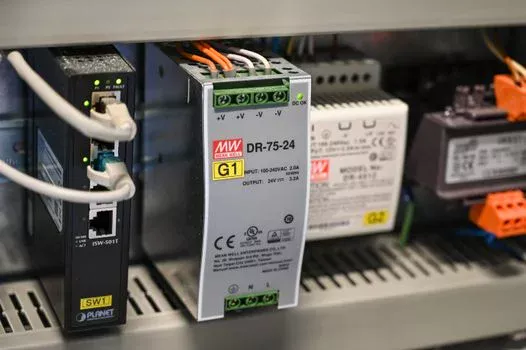
Procurement teams need installed cost, unit operating cost, and payback under El Paso power and water tariffs. National averages alone are not enough. Figures below exclude land purchase and major civil works unless noted. Soft costs for engineering, permitting, and startup usually add 10–20% on top of equipment CAPEX. That uplift is common for mid-size industrial packages in this market.
CAPEX Benchmarks (2025)
- DAF System: $5,000–$10,000 per m³/day capacity. A 50 m³/day system for a smaller food processor is often near $250,000.
- MBR System: $12,000–$20,000 per m³/day. A 200 m³/day reuse-oriented MBR is often near $2.4 million.
- Chemical Precipitation: $3,000–$7,000 per m³/day. A 50 m³/day metals package can land near $150,000.
- Zero-Discharge (MBR + RO): $20,000–$60,000 per m³/day. A 2,000 m³/day MBR-RO plant using RO systems for zero-discharge wastewater treatment can approach $12 million installed. That total assumes concentrate handling is included.
OPEX Benchmarks (2025)
El Paso industrial power near $0.12/kWh compares with a cited national average near $0.08/kWh. That gap raises OPEX on MBR and RO trains by roughly 20% versus humid-region peers at the same kWh/m³. Chemical freight into the Border region can also move polymer and coagulant unit costs above coastal quotes for the same dose.
- DAF: $1.20–$1.80/m³ total—chemicals about $0.50/m³, energy about $0.30/m³, labor about $0.40/m³.
- MBR: $2.50–$3.50/m³ total—membrane care about $0.80/m³, energy about $1.00/m³, labor about $0.70/m³.
- Chemical Precipitation: $0.80–$1.50/m³ total—chemicals about $0.60/m³, sludge disposal about $0.40/m³.
- Zero-Discharge (MBR + RO): $3.00–$5.00/m³ total—RO membrane replacement about $1.20/m³, energy about $1.50/m³. High feed TDS often holds RO recovery near 70% versus about 80% in lower-TDS climates. That drop raises concentrate handling cost per cubic meter of product water.
| System Type | Typical CAPEX (per m³/day capacity) | Typical OPEX (per m³) | Key OPEX Drivers |
|---|---|---|---|
| DAF System | $5,000–$10,000 | $1.20–$1.80 | Chemicals, energy, labor |
| MBR System | $12,000–$20,000 | $2.50–$3.50 | Membrane replacement, energy, labor |
| Chemical Precipitation | $3,000–$7,000 | $0.80–$1.50 | Chemicals, sludge disposal |
| Zero-Discharge (MBR + RO) | $20,000–$60,000 | $3.00–$5.00 | RO membrane replacement, energy |
ROI Framework for Zero-Discharge Systems
- Water Savings: Industrial water near $2.50 per 1,000 gallons (2025 planning rate) supports a clear reuse case. A 200 m³/day (about 53,000 GPD) MBR-RO train can avoid roughly $180,000/year in raw-water purchases when permeate displaces fresh makeup.
- Discharge Fees: Sewer charges near $0.50 per 1,000 gallons add further savings. At 200 m³/day, avoided sewer cost is about $36,000/year if discharge goes to zero.
- Fines and Admin Load: Avoiding repeated TCEQ or El Paso Water enforcement is a real but site-specific line item. The FOG and BOD cases above show fines in the tens of thousands per month.
- Payback: Combined water and sewer savings often yield 5–7 year payback on MBR-RO. Simpler DAF compliance packages in food plants more often pay back in 3–5 years. That payback assumes they stop recurring FOG fines. El Paso Water has offered rebates or incentives for reuse and zero-discharge projects. Confirm current programs before locking the financial model used for board approval.
Selection Checklist for El Paso Buyers
- Map discharge path: sewer IPP versus TCEQ direct discharge or land application.
- Measure peak FOG, BOD, metals, and TDS—not only 24-hour averages.
- Size equalization for at least the largest production swing (often 1.5–2× average flow).
- Raise coagulant and aeration allowances for TDS 1,200–1,800 mg/L and 3,700 ft elevation.
- Match technology to goal: DAF for FOG/TSS, precipitation for metals, MBR/RO for reuse.
- Budget OPEX at El Paso power rates (~$0.12/kWh) and RO recovery near 70% if feed TDS is high.
- Build the monitoring plan (glass FOG grabs, probe calibration, DMR calendar) into the O&M package before startup.
Who This Is For / Who Should Look Elsewhere / Next Step
This guide is for plant engineers, EPC leads, and procurement managers specifying pretreatment or reuse trains. It fits El Paso food, metals, textile, semiconductor, or hospital facilities that discharge to El Paso Water or hold TCEQ industrial permits. Municipal-only designers without industrial categorical standards should look elsewhere. Projects outside El Paso Water’s collection system with no Texas discharge should use the applicable local POTW ordinance or out-of-state rules instead. If you already have flow, COD/FOG/metals, and a target effluent quality (sewer, reuse, or ZLD), request a sized quote with those parameters. CAPEX and OPEX can then be checked against the El Paso benchmarks above.
Frequently Asked Questions
What are the TCEQ and El Paso Water limits for industrial wastewater?
TCEQ sets industrial direct-discharge limits in facility-specific TPDES permits, not one citywide BOD/TSS table. El Paso Water sewer local limits include BOD at 300 mg/L, copper at 1.75 mg/L, lead at 0.66 mg/L, and FOG at 100 mg/L for vegetable-origin and petroleum oils. Earlier summaries used <200 mg/L BOD/TSS and a blanket <1 mg/L metals line; design to the active permit and TBLL table.
How much does an industrial wastewater treatment system cost in El Paso?
CAPEX typically ranges from about $250,000 for a 50 m³/day DAF system to about $12 million for a 2,000 m³/day MBR-RO zero-discharge plant. OPEX usually falls between $0.80 and $3.50/m³ for DAF, MBR, and precipitation packages, while full MBR-RO trains often run $3.00–$5.00/m³ when membrane replacement and El Paso power rates are included.
What is the difference between DAF and MBR for food-processing wastewater?
DAF removes about 90–95% of FOG and TSS at hydraulic loadings of 4–8 m³/m²/h and CAPEX of $5,000–$10,000 per m³/day, which is usually enough for IPP FOG compliance when peak-sized. MBR reaches BOD below 10 mg/L and TSS below 1 mg/L at $12,000–$20,000 per m³/day but uses about 30% more energy. High-TDS El Paso feeds often make DAF the first compliance step and MBR the reuse step.
How do I apply for an El Paso Water Industrial Pretreatment permit?
Submit El Paso Water’s Application for Industrial Wastewater Discharge Permit with activity codes, flow, influent/effluent data, and treatment specs. Fees commonly run $500–$2,500 and review often takes 60–90 days. Significant Industrial Users include plants averaging 25,000 gallons/day or more of process wastewater to the sewer. Contact El Paso Water pretreatment at (915) 594-5500 to confirm current forms and fees.
Can treated industrial wastewater be reused in El Paso?
Yes. MBR effluent with BOD below 10 mg/L and TSS below 1 mg/L supports many non-potable uses such as cooling towers and irrigation. MBR-RO permeate below about 500 ppm TDS can feed higher-purity uses such as boiler makeup when the polishing train is designed for that duty. Texas industrial reuse authorizations under 30 TAC Chapter 210 apply in parallel with discharge permits; confirm TCEQ Level I/II pathways before claiming reuse credits.