Solar Cell Wastewater Treatment System: 2025 Engineering Specs, Zero-Fouling Design & $200K–$10M CAPEX Breakdown
A solar cell wastewater treatment system for a 1 GW crystalline silicon fab must handle 50–100 m³/h of wastewater containing 500–1,500 mg/L fluoride, 100–300 mg/L COD, and 50–200 mg/L suspended solids. Hybrid systems combining dissolved air flotation (DAF) for TSS removal, reverse osmosis (RO) for fluoride reduction, and membrane bioreactors (MBR) for organics achieve 95–99% contaminant removal, meeting China’s GB 8978-1996 discharge limits (fluoride ≤10 mg/L, COD ≤100 mg/L). CAPEX ranges from $2M–$10M depending on fab scale and zero liquid discharge (ZLD) requirements.Why Solar Cell Wastewater Treatment Fails: A 500 MW Fab’s $2M Compliance Nightmare
A 500 MW crystalline silicon fab in Penang, Malaysia, faced a $1.2M fine for exceeding fluoride discharge limits (15 mg/L vs. 10 mg/L limit under Malaysia’s Environmental Quality Act 1974), highlighting critical failures in wastewater management. The root cause was identified as inadequate pretreatment, specifically the absence of a robust dissolved air flotation (DAF) system, which led to severe fouling of the downstream reverse osmosis (RO) membranes. This resulted in a 30% reduction in system uptime, increased operational costs due to frequent chemical cleaning, and ultimately, non-compliance penalties and significant reputational damage. Solar cell manufacturing generates two primary wastewater streams: high-concentration and low-concentration. High-concentration streams originate from texturing and etching baths, typically containing fluoride at 1,000–3,000 mg/L, alongside high COD and TSS. Low-concentration streams, primarily from rinsing and cleaning processes, have lower but still significant contaminant loads, with fluoride often ranging from 50–200 mg/L. For thin-film photovoltaic (PV) fabs, such as those producing cadmium telluride (CdTe) or copper indium gallium selenide (CIGS) cells, additional challenges arise from heavy metals. CdTe fabs, for instance, can discharge cadmium at 10–500 ppm and tellurium, requiring dedicated precipitation circuits to prevent cross-contamination and ensure effective removal before mixing with other wastewater streams.Solar Cell Wastewater Streams: Contaminant Loads by PV Technology

Table: Contaminant Concentrations in Solar Cell Wastewater by PV Type
| Contaminant | Crystalline Silicon (mg/L) | CdTe (mg/L) | CIGS (mg/L) | a-Si (mg/L) |
|---|---|---|---|---|
| Fluoride | 500–1,500 | 50–200 | 50–150 | 20–100 |
| COD | 100–300 | 50–250 | 80–200 | 30–150 |
| TSS | 50–200 | 20–100 | 30–120 | 10–80 |
| Cadmium | <0.1 | 10–500 | <0.1 | <0.1 |
| Tellurium | <0.1 | 5–100 | <0.1 | <0.1 |
| Copper | <0.1 | <0.1 | 50–200 | <0.1 |
| Indium | <0.1 | <0.1 | 10–50 | <0.1 |
| Gallium | <0.1 | <0.1 | 5–20 | <0.1 |
| Selenium | <0.1 | <0.1 | 1–10 | <0.1 |
| pH | 2–12 | 3–11 | 3–10 | 4–9 |
Treatment Technologies: How to Remove Fluoride, Metals, and Organics from PV Wastewater
Dissolved Air Flotation (DAF) systems achieve 90–95% TSS removal for solar cell wastewater pretreatment, while Reverse Osmosis (RO) systems can reduce fluoride concentrations by 95–99%. Selecting the appropriate treatment technologies for photovoltaic wastewater depends on the specific contaminant profile, influent flow rates, and stringent discharge limits.Table: Performance of Solar Cell Wastewater Treatment Technologies
| Technology | Contaminants Removed | Removal Efficiency (%) | Flow Rate Range (m³/h) | CAPEX ($/m³/h) | OPEX ($/m³) | Limitations |
|---|---|---|---|---|---|---|
| DAF | TSS, Oil & Grease, Colloids | 90–95% (TSS) | 10–500 | 500–1,500 | 0.10–0.30 | Limited dissolved solids removal; sludge handling |
| Chemical Precipitation (Ca(OH)₂) | Fluoride, Heavy Metals | 85–95% (Fluoride); 95–99% (Metals) | 5–200 | 800–2,000 | 0.20–0.50 | High sludge volume; secondary fluoride limit >10 mg/L |
| RO | Fluoride, Dissolved Salts, Heavy Metals, Organics | 95–99% (Fluoride); 98–99% (Metals) | 5–100 | 2,000–5,000 | 0.50–1.20 | Membrane fouling; concentrated brine disposal |
| NF | Divalent Ions (Ca²⁺, Mg²⁺), Some Organics, Partial Fluoride | 70–90% (Fluoride); 90–98% (Hardness) | 5–100 | 1,500–4,000 | 0.40–0.90 | Less rejection than RO; fouling potential |
| MBR | COD, BOD, TSS, Ammonia | 90–98% (COD); 99% (TSS) | 10–300 | 1,500–3,500 | 0.30–0.70 | Higher energy for aeration; membrane fouling |
| Ion Exchange | Specific Metals (e.g., Cu, Cd), Fluoride (limited) | 95–99% (Specific Metals) | 1–50 | 1,000–3,000 | 0.60–1.50 | Regenerant chemicals; limited capacity; sensitive to TSS |
| Electrodialysis | Dissolved Salts, Fluoride | 50–90% (Dissolved Salts) | 1–20 | 3,000–6,000 | 0.80–1.80 | Sensitive to suspended solids; specialized application |
Dissolved Air Flotation (DAF): DAF systems, such as HydropureWater's DAF systems for TSS and oil removal in PV wastewater, utilize microbubbles (30–50 µm) generated under pressure to adhere to suspended solids, oils, and greases, floating them to the surface for skimming. This is a critical pretreatment step, achieving 90-95% TSS removal (Wastech, Top 3 research), preventing downstream membrane fouling.
Reverse Osmosis (RO) & Nanofiltration (NF): RO systems for fluoride and metal removal in PV wastewater rely on semi-permeable membranes (0.0001 µm pores) to reject dissolved salts, heavy metals, and fluoride ions. RO can achieve 95–99% fluoride removal (Saltworks, Top 4 research) and produce high-quality permeate suitable for reuse. Nanofiltration (NF) membranes have larger pores (0.001 µm), primarily rejecting divalent ions and larger organic molecules, offering partial fluoride removal and often serving as a pretreatment for RO or for specific water softening needs.
Membrane Bioreactors (MBR): Integrated MBR systems for organics and heavy metal removal combine activated sludge biological treatment with membrane filtration (microfiltration or ultrafiltration). MBRs are highly effective for removing COD, BOD, and TSS, producing a high-quality effluent with low turbidity, often suitable for direct reuse or further polishing.
Chemical Precipitation: This involves adding chemical reagents (e.g., calcium hydroxide Ca(OH)₂, ferric chloride) to alter pH and form insoluble precipitates of contaminants like fluoride (as CaF₂) or heavy metals (as hydroxides). It’s a foundational step, especially for high-concentration streams or thin-film wastewater containing cadmium and tellurium.
Hybrid Approaches: For crystalline silicon fabs with high fluoride loads, a DAF + RO system is often employed, achieving over 98% fluoride removal. For thin-film fabs managing heavy metals, a combination of chemical precipitation followed by an MBR for organic removal and heavy metal polishing is common, delivering over 99% cadmium removal.
Zero-Fouling Design Requirements: RO systems handling high-fluoride wastewater demand specific design considerations to prevent calcium fluoride scaling. This includes precise PLC-controlled chemical dosing for pH adjustment and antiscalant addition (e.g., 5–10 mg/L polyphosphate) to maintain pH in the range of 6.5–7.5. Effective pretreatment (like DAF) to remove TSS and colloids is paramount. Regular chemical cleaning protocols (e.g., citric acid washes every 3–6 months) are also essential to sustain membrane performance and longevity.
Hybrid System Design: DAF + RO vs. MBR + Chemical Precipitation for Solar Fabs
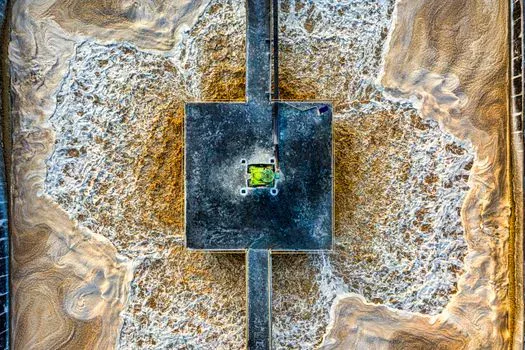
Table: Hybrid System Performance for Solar Cell Wastewater
| System | Fluoride Removal (%) | Heavy Metal Removal (%) | COD Removal (%) | Footprint (m²/100 m³/h) | CAPEX ($M/100 m³/h) | OPEX ($/m³) | Best For |
|---|---|---|---|---|---|---|---|
| DAF + RO | 98% | 98% | 80–90% | 150–200 | 1.2–1.8 | 1.20–1.80 | Crystalline Silicon (high fluoride, low organics) |
| MBR + Chemical Precipitation | 85–95% | 99% (Cd, Cu, In) | 95–98% | 200–300 | 1.8–2.5 | 0.90–1.50 | Thin-Film (heavy metals, moderate organics) |
DAF + RO Hybrid System: This combination is ideal for crystalline silicon fabs primarily dealing with high fluoride loads and suspended solids. The DAF unit provides robust pretreatment, removing up to 95% of TSS and colloids, which protects the downstream RO systems for fluoride and metal removal in PV wastewater from fouling. The RO stage then effectively reduces fluoride concentrations by up to 98% (Saltworks, Top 4 research) and removes other dissolved salts, meeting strict discharge limits. CAPEX for a DAF + RO system is generally lower (e.g., $1.2M per 100 m³/h capacity) compared to MBR-based systems, but OPEX can be higher ($1.20–$1.80/m³) primarily due to membrane replacement costs, antiscalant dosing, and energy consumption for high-pressure pumps.
MBR + Chemical Precipitation Hybrid System: This configuration is best suited for thin-film fabs with complex wastewater containing heavy metals (cadmium, copper, indium) and moderate organic loads. Initial chemical precipitation effectively removes up to 99% of heavy metals (Saltworks, Top 4 research) by pH adjustment and flocculation. The subsequent integrated MBR systems for organics and heavy metal removal then provide advanced biological treatment, achieving 95–98% COD removal and producing a highly polished effluent. While MBR + chemical precipitation systems typically have a higher CAPEX ($1.8M–$2.5M per 100 m³/h) due to the membrane components and larger footprint, their OPEX can be slightly lower ($0.90–$1.50/m³) due to reduced chemical consumption for polishing and longer membrane lifespan with proper pretreatment.
Compliance Advantages: MBR systems produce near-reuse-quality effluent (COD often <50 mg/L), making them highly advantageous for facilities aiming for water recycling and reducing overall ZLD (Zero Liquid Discharge) costs. The high effluent quality from MBRs often requires less extensive post-treatment for industrial reuse applications, contributing to a quicker return on investment through water conservation.
Compliance Standards: Discharge Limits for Solar Cell Wastewater by Region
China’s GB 8978-1996 sets a fluoride discharge limit of 10 mg/L for industrial wastewater, while the EU’s Industrial Emissions Directive 2010/75/EU specifies a stricter cadmium limit of 0.2 mg/L for PV manufacturing effluents. Adhering to regional and national discharge limits is paramount for solar cell manufacturers to avoid fines, operational shutdowns, and environmental damage. These standards vary significantly across global markets.Table: Solar Cell Wastewater Discharge Limits by Region
| Region | Fluoride (mg/L) | Cadmium (mg/L) | Copper (mg/L) | COD (mg/L) | TSS (mg/L) | pH | Standard |
|---|---|---|---|---|---|---|---|
| China | ≤10 | ≤1 | ≤0.5 | ≤100 | ≤70 | 6–9 | GB 8978-1996 |
| EU | ≤15 | ≤0.2 | ≤0.5 | ≤125 | ≤35 | 6.5–9 | IED 2010/75/EU |
| US (EPA) | ≤20 | ≤0.1 | ≤0.2 | ≤150 | ≤50 | 6–9 | Effluent Guidelines (varies by state) |
| India (CPCB) | ≤15 | ≤0.2 | ≤3 | ≤250 | ≤100 | 6.5–8.5 | CPCB Guidelines (varies by state) |
| Malaysia | ≤10 | ≤0.01 | ≤0.2 | ≤50 | ≤50 | 6–9 | EQA 1974 (Standard A) |
Zero Liquid Discharge (ZLD) Requirements: In certain regions, ZLD is becoming a mandatory requirement, particularly for new industrial facilities. China’s GB 31573-2015, for example, mandates ZLD for new PV fabs, significantly increasing CAPEX by 30–50% due to the need for advanced evaporation and crystallization technologies. While ZLD eliminates discharge risks, it requires careful planning to manage concentrated brine and maximize water recovery.
Regional Differences: Compliance requirements vary substantially. For instance, the EU’s Industrial Emissions Directive (IED) 2010/75/EU sets a cadmium limit of 0.2 mg/L, which is five times stricter than China’s GB 8978-1996 limit of 1 mg/L. Such disparities necessitate tailored treatment approaches; EU-bound fabs might require additional ion exchange or advanced precipitation steps for heavy metals. Similarly, Malaysia’s Environmental Quality Act 1974 (Standard A) imposes very strict limits for cadmium (≤0.01 mg/L) and COD (≤50 mg/L), demanding high-efficiency treatment systems.
Emerging Contaminants: Regulatory landscapes are constantly evolving. Emerging contaminants, such as selenium in thin-film wastewater, are gaining attention. California’s Proposition 65, for example, may soon regulate selenium, requiring advanced treatment technologies like electrodialysis or specialized adsorption to meet future discharge limits.
CAPEX and OPEX Breakdown: How Much Does a Solar Cell Wastewater System Cost?
Table: CAPEX for Solar Cell Wastewater Treatment Systems by Fab Scale
| Fab Scale (MW) | Flow Rate (m³/h) | System Type | CAPEX ($M) | OPEX ($/m³) | Payback Period (years) |
|---|---|---|---|---|---|
| 100 MW | 10–20 | DAF + RO | 1.0–2.5 | 1.20–2.00 | 4–6 |
| 500 MW | 50–100 | DAF + RO + MBR | 3.5–6.0 | 0.80–1.50 | 3–5 |
| 1 GW | 100–200 | ZLD: DAF + RO + Evaporation | 8.0–12.0 | 1.50–2.50 | 5–7 |
Cost Drivers: Several factors significantly influence both CAPEX and OPEX. Key OPEX drivers include:
- Membrane Replacement: For a 500 MW fab, RO membrane replacement can cost approximately $50,000 per year.
- Chemical Consumption: Antiscalants, coagulants, flocculants, and pH adjustment chemicals are ongoing expenses.
- Sludge Disposal: Handling and disposing of hazardous sludge (e.g., calcium fluoride sludge, heavy metal precipitates) can cost $200–$500 per ton, depending on local regulations and disposal sites.
- Energy Consumption: MBR systems, for example, require 0.8–1.2 kWh/m³ for aeration and pumping, while high-pressure pumps in RO systems also contribute significantly to energy costs.
- Labor: Staffing for operation, maintenance, and monitoring.
Cost Calculator: A simplified estimation for CAPEX can be derived based on fab scale and ZLD requirements:
CAPEX = (Fab Scale in MW × $10,000) + (ZLD Premium × 30%)
For example, a 500 MW fab implementing a ZLD system would calculate its CAPEX as: (500 × $10,000) + (30% × $5,000,000) = $5,000,000 + $1,500,000 = $6.5M. Note that the ZLD Premium is applied to the base CAPEX for a non-ZLD system of similar scale ($5M in this example). This calculator provides a preliminary estimate; detailed engineering is always required for precise budgeting.
Return on Investment (ROI): Investing in an efficient solar cell wastewater treatment system offers substantial long-term ROI. A 500 MW fab, by implementing an MBR system and achieving high-quality effluent, can save an estimated $1M/year in water recycling costs, reducing reliance on fresh water intake and minimizing discharge fees. This often leads to a payback period of 3–5 years, making advanced wastewater treatment not just a compliance necessity but a strategic financial decision.
Frequently Asked Questions
Understanding common challenges in solar cell wastewater treatment, such as RO membrane fouling and regional compliance variations, is crucial for effective system procurement and operation. These FAQs address key technical and procurement concerns for process engineers and EHS managers.Q: What’s the best wastewater treatment system for a crystalline silicon fab?
A: A DAF + RO hybrid system is highly effective for crystalline silicon fabs, removing 98% of fluoride and 95% of TSS to meet stringent limits like China’s GB 8978-1996. For zero liquid discharge (ZLD) requirements, an evaporator and crystallizer should be added, which typically increases CAPEX by 30-50%.
Q: How do I prevent RO membrane fouling in high-fluoride wastewater?
A: To prevent calcium fluoride scaling in RO systems treating high-fluoride wastewater, implement robust pretreatment (e.g., DAF) to remove suspended solids. Crucially, maintain pH between 6.5–7.5 and apply precise antiscalant dosing (5–10 mg/L polyphosphate). Regular chemical cleaning, typically with citric acid every 3–6 months, is also essential for membrane longevity and performance.
Q: What’s the CAPEX for a 1 GW thin-film fab’s wastewater system?
A: For a 1 GW thin-film fab requiring a ZLD system, the CAPEX typically ranges from $8M–$12M. This would include a comprehensive system comprising DAF, chemical precipitation for heavy metals, MBR for organics, and advanced evaporation/crystallization for ZLD. The estimated OPEX for such a system is around $1.20–$2.00/m³ of treated water.
Q: Can I mix crystalline silicon and thin-film wastewater streams?
A: No, it is generally not recommended to mix crystalline silicon and thin-film wastewater streams without prior treatment. Thin-film wastewater often contains heavy metals like cadmium and tellurium, which can precipitate at different pH levels (e.g., pH >8) than the fluoride in crystalline silicon streams. Mixing them prematurely can lead to severe clogging of pipes and membranes, complicating treatment and increasing operational costs. Treat heavy metal streams separately first, then combine after primary metal removal.
Q: What compliance standards apply to solar cell wastewater in the EU?
A: In the EU, solar cell wastewater treatment systems must comply with the Industrial Emissions Directive (IED) 2010/75/EU. This directive sets specific limits for pollutants such as fluoride (typically ≤15 mg/L), cadmium (≤0.2 mg/L), and COD (≤125 mg/L). While ZLD is encouraged as a best available technique (BAT), it is not universally mandatory and depends on local permitting and specific industrial activities. For more detailed information on 2027 engineering specs for photovoltaic wastewater systems and OPCB compliance and cost benchmarks for solar fabs in India, refer to our latest articles.