Why Industrial Wastewater Treatment is Critical for Jalisco’s Factories
Industrial wastewater treatment in Jalisco, Mexico, is governed by NOM-001-SEMARNAT-1996, which sets effluent limits for BOD (≤150 mg/L), TSS (≤125 mg/L), and heavy metals (e.g., arsenic ≤0.2 mg/L). Jalisco treats only 15,369 l/s of municipal wastewater (CEA 2015), and industrial facilities face water scarcity and regulatory pressure to reuse treated effluent. Technologies like dissolved air flotation (DAF) and membrane bioreactors (MBR) achieve 95%+ reuse rates, but selection depends on influent quality, footprint, and budget—DAF systems cost $50–$200 USD/m³/day (CAPEX), while MBR systems range from $200–$500 USD/m³/day and deliver near-potable water quality (<1 μm filtration).
Jalisco’s industrial sector—dominated by automotive, food processing, and textile sectors—currently faces a water demand that outpaces supply by approximately 40%. This deficit is particularly acute in the Guadalajara Metropolitan Area and the El Salto industrial corridor. According to 2023 PROFEPA data, non-compliance with NOM-001-SEMARNAT-1996 results in administrative fines ranging from $10,000 to $50,000 USD per year, with the added risk of 30-day facility shutdowns for repeat offenders. Beyond avoiding penalties, the economic incentive for onsite treatment is significant; industrial facilities in Jalisco save between $0.50 and $2.00 USD/m³ by transitioning from municipal freshwater reliance to the reuse of treated effluent.
A technical evaluation of a Guadalajara-based automotive plant demonstrates the viability of these systems. By implementing a hybrid DAF-MBR configuration, the facility reduced its freshwater intake by 45%. This engineering shift allowed the plant to bypass rising municipal water tariffs and reduced overall operational expenditure by $120,000 USD annually. For managers in Jalisco, the transition to advanced treatment is no longer a matter of corporate social responsibility but a core requirement for operational continuity and financial hedging against water scarcity.
Jalisco’s Effluent Standards: What Your Facility Must Achieve
Compliance in Jalisco requires a precise understanding of the NOM-001-SEMARNAT-1996 standards, which are enforced by PROFEPA at the federal level and monitored by the State Water Commission (CEA) at the local level. While the federal standard provides the baseline, specific industrial zones in Jalisco, particularly those discharging into the Santiago River or Lake Chapala, may face stricter local mandates regarding phosphorus and nitrogen levels to prevent eutrophication.
Standard industrial discharge limits focus on organic load (BOD/COD), suspended solids, and fats. For electronics and metalworking plants, heavy metal thresholds are the primary compliance hurdle. Arsenic limits are strictly set at ≤0.2 mg/L, while cadmium and chromium are capped at ≤0.1 mg/L and ≤0.5 mg/L, respectively. Failure to meet these specific ion concentrations often triggers immediate PROFEPA inspections. The food processing sector in Jalisco must often achieve BOD levels as low as ≤60 mg/L if discharging into sensitive municipal sewers, significantly lower than the general industrial limit of 150 mg/L.
| Parameter | NOM-001 General Limit | Sensitive Zone (e.g., Lake Chapala) | Sector Specific (Food/Textile) |
|---|---|---|---|
| Biochemical Oxygen Demand (BOD5) | ≤150 mg/L | ≤30 mg/L | ≤60 mg/L |
| Total Suspended Solids (TSS) | ≤125 mg/L | ≤40 mg/L | ≤50 mg/L |
| Chemical Oxygen Demand (COD) | ≤400 mg/L | ≤100 mg/L | ≤150 mg/L |
| Oil & Grease | ≤15 mg/L | ≤5 mg/L | ≤10 mg/L |
| Total Phosphorus (P) | ≤20 mg/L | ≤1 mg/L | ≤5 mg/L |
| pH Range | 5.5 – 9.0 | 6.5 – 8.5 | 6.0 – 9.0 |
Enforcement mechanisms in Jalisco have intensified. PROFEPA conducts quarterly inspections, and the CEA Jalisco now requires monthly effluent quality reports for facilities exceeding a discharge volume of 300 m³/month. In the textile industry, color intensity is also monitored, with a limit of ≤100 Pt-Co units often enforced to prevent visible pollution in local waterways. Engineering a system that meets these multi-layered requirements necessitates a technology-specific approach based on the facility’s specific waste stream.
Industrial Wastewater Treatment Technologies for Jalisco: DAF vs. MBR vs. RO
Selecting the correct technology requires balancing influent characteristics with the desired end-use of the water. For most Jalisco industries, the choice falls between Dissolved Air Flotation (DAF), Membrane Bioreactors (MBR), and Reverse Osmosis (RO), or a combination thereof. Each technology offers distinct removal efficiencies and energy profiles tailored to specific industrial sectors.
Dissolved Air Flotation (DAF) is the industry standard for removing non-soluble contaminants. In food processing and textile plants, DAF systems for industrial wastewater treatment in Jalisco provide 92–97% TSS removal and 60–80% BOD removal. These systems operate by introducing micro-bubbles that attach to particles, floating them to the surface for mechanical skimming. With a CAPEX of $50–$200 USD/m³/day, DAF is the most cost-effective solution for high-fat and high-solids streams.
Membrane Bioreactors (MBR) combine biological treatment with ultrafiltration. MBR systems for high-strength industrial wastewater in Jalisco are ideal for the automotive and electronics sectors, where high-strength organic loads and space constraints are common. MBRs eliminate the need for secondary clarifiers, reducing the system footprint by 60% compared to conventional activated sludge. They produce high-quality effluent with <1 μm filtration, making the water immediately suitable for cooling towers or irrigation.
Reverse Osmosis (RO) is utilized when zero liquid discharge (ZLD) or high-purity process water is required. RO systems for zero liquid discharge in Jalisco remove 99%+ of dissolved salts and heavy metals. While RO has the highest energy demand (1.5–3.0 kWh/m³), it is the only technology that allows for complete closed-loop water cycles, effectively insulating a factory from municipal water shortages.
| Feature | DAF Systems | MBR Systems | RO Systems |
|---|---|---|---|
| TSS Removal | 92–97% | >99% | >99.9% |
| BOD Removal | 60–80% | 95–98% | N/A (Post-treatment) |
| Footprint | Medium | Small (Modular) | Small |
| Energy Use | 0.2–0.5 kWh/m³ | 0.8–1.5 kWh/m³ | 1.5–3.0 kWh/m³ |
| Water Reuse Quality | Process/Irrigation | Cooling/Boiler Feed | Potable/Ultra-pure |
A critical consideration for Jalisco facilities is the integration of renewable energy. Given Jalisco’s average solar irradiance of 5.5 kWh/m²/day, solar-powered wastewater treatment systems for Jalisco’s industrial sector can reduce OPEX by up to 30%. This is particularly beneficial for MBR and RO systems, where energy costs typically represent the largest share of operational expenses.
Cost Breakdown: CAPEX and OPEX for Industrial Wastewater Treatment in Jalisco
Budgeting for a wastewater treatment system in Jalisco requires a dual focus on initial capital expenditure (CAPEX) and long-term operational expenditure (OPEX). For a facility processing 500 m³/day, the choice of technology will dictate a CAPEX range between $25,000 and $400,000 USD. In Mexican Pesos (MXN), these figures fluctuate based on exchange rates, but local modular designs often provide a 20% cost reduction by minimizing onsite civil works.
OPEX is driven by energy consumption, chemical dosing (coagulants/flocculants), and membrane replacement cycles. DAF systems have the lowest OPEX, typically $0.10–$0.30 USD/m³, primarily due to low power requirements. MBR systems range from $0.30–$0.80 USD/m³, with membrane cleaning and aeration being the primary costs. RO systems are the most expensive to operate at $0.50–$1.50 USD/m³, but they offer the highest ROI when freshwater costs exceed $2.50 USD/m³.
| System Type | CAPEX (USD/m³/day) | OPEX (USD/m³) | ROI Timeline (Years) |
|---|---|---|---|
| DAF (Dissolved Air Flotation) | $50 – $200 | $0.10 – $0.30 | 1.5 – 3.0 |
| MBR (Membrane Bioreactor) | $200 – $500 | $0.30 – $0.80 | 3.0 – 5.0 |
| RO (Reverse Osmosis) | $300 – $800 | $0.50 – $1.50 | 5.0 – 7.0 |
| Hybrid (DAF + MBR) | $250 – $600 | $0.40 – $0.90 | 2.5 – 4.5 |
Financing these projects in Mexico is supported by CONAGUA, which offers up to 50% subsidies for water reuse projects under its 2025 funding initiatives (totaling $20M USD). Additionally, Jalisco-based industrial parks often provide shared infrastructure incentives. Leveraging these subsidies can reduce the ROI timeline for an MBR system from 5 years to under 3 years. When compared to international benchmarks, such as how Oman’s industrial wastewater regulations compare to Jalisco’s, Mexico’s subsidy landscape is currently one of the most favorable for industrial water independence.
Step-by-Step Guide to Implementing Wastewater Treatment in Jalisco
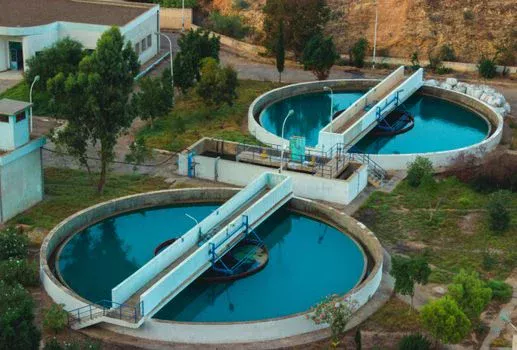
Implementation of an industrial wastewater system in Jalisco is a multi-phase process that requires coordination between engineering teams and regulatory bodies. The standard timeline from audit