Why GaN Wastewater Differs from Standard Semiconductor Effluent
Gallium nitride (GaN) wastewater treatment requires specialized systems to remove colloidal GaN particles (0.1–10 µm), dissolved gallium ions (1–50 mg/L), and trace arsenic (5–50 µg/L) from semiconductor fabrication effluent. Unlike silicon-based effluents, GaN wastewater's unique properties, particularly its solubility profile and particle characteristics, necessitate tailored solutions. GaN particles exhibit a density of 1.2–1.5 g/cm³, which is lower than silicon (2.3 g/cm³), impacting settling and separation dynamics. This lower density means GaN particles tend to remain suspended longer, making gravity-based separation methods less effective without significant pre-treatment. Crucially, GaN dissolves at pH levels below 4 or above 9 but forms stable, abrasive colloids within the typical industrial operating range of pH 6–8. This characteristic is a primary driver of frequent membrane fouling and increased pump wear in conventional wastewater treatment systems designed for less challenging effluents (IJRESM PDF). The inherent stability of these colloids, often due to their zeta potential, makes them resistant to simple coagulation and flocculation without precise chemical dosing and pH control. The abrasive nature of GaN, which has a Mohs hardness of approximately 9, further exacerbates equipment wear, leading to higher maintenance costs and shorter lifespan for pumps, valves, and membrane modules.
Furthermore, the presence of trace arsenic, often in concentrations of 5–50 µg/L, demands advanced treatment methods to meet stringent EPA limits of 0.1 mg/L, a concern less pronounced in silicon-based wastewater. Arsenic in GaN processes can originate from source materials or specific etching steps, and its speciation (trivalent As(III) versus pentavalent As(V)) significantly impacts removal efficiency, with As(III) being more challenging to remove due to its lower reactivity. The etching processes common in GaN fabrication also contribute to a unique contaminant profile, including ammonium ions (NH₄⁺), chloride ions (Cl⁻), and various organic solvents, which must be effectively managed. Ammonium ions, for instance, can lead to eutrophication if discharged without proper treatment, while high chloride concentrations can be corrosive to equipment and interfere with downstream biological processes or membrane performance. Organic solvents, often used in cleaning and stripping steps, contribute to Chemical Oxygen Demand (COD) and can be toxic to aquatic life, requiring advanced oxidation or biological degradation. The increasing demand for GaN semiconductors in power electronics, RF devices, and LEDs means that the volume and complexity of this wastewater stream are projected to grow, necessitating robust, scalable, and environmentally compliant treatment solutions.
GaN Wastewater Treatment Technologies: MBR vs. DAF vs. RO
Selecting the appropriate technology for GaN wastewater treatment hinges on a balance of removal efficiency, capital expenditure (CAPEX), operational expenditure (OPEX), and specific plant compliance needs. Membrane Bioreactor (MBR) systems offer high performance, achieving over 95% Total Suspended Solids (TSS) removal and reducing Chemical Oxygen Demand (COD) to below 50 mg/L. MBRs integrate biological treatment with membrane filtration, effectively removing organic pollutants and suspended solids. However, standard MBRs, typically employing polymeric membranes, are susceptible to fouling in the pH 6–8 range where GaN forms stable colloids, leading to reduced flux, increased cleaning frequency, and shorter membrane lifespan. Advanced zero-fouling MBR designs, leveraging GaN's intrinsic properties, can operate effectively across a broad pH spectrum of 2–12, mitigating this risk and enhancing reliability (Top 2 page). These specialized MBRs often feature robust membrane materials or surface modifications that resist adhesion and abrasion from GaN particles, ensuring stable operation even under challenging conditions. The biological component of MBRs is also highly effective at nitrifying ammonium ions (NH₄⁺) into nitrates, which can then be denitrified, addressing another key contaminant.
Dissolved Air Flotation (DAF) systems are proficient at removing suspended GaN particles, demonstrating 92–97% removal efficiency, particularly when operated at a pH of 4.5–5.5. DAF works by introducing fine air bubbles into the wastewater, which attach to the suspended particles, causing them to float to the surface for skimming. This process requires precise pH adjustment and often the addition of coagulants (e.g., aluminum sulfate or ferric chloride) and flocculants to destabilize the GaN colloids and promote agglomeration. However, DAF is less effective for dissolved ion removal, such as gallium and arsenic, and necessitates pre-treatment, especially for arsenic compliance. For arsenic, DAF typically requires an oxidation step (e.g., using chlorine or ozone) to convert As(III) to As(V), which can then be precipitated or adsorbed more readily. Reverse Osmosis (RO) systems provide the highest removal efficiencies, capable of achieving 99% metal ion removal and enabling Zero Liquid Discharge (ZLD) configurations. RO utilizes a semi-permeable membrane to remove dissolved salts, ions, and larger molecules from the water, producing high-purity permeate. Nevertheless, RO systems represent the highest CAPEX, ranging from $10M to $20M for systems processing 1,000 m³/h, and incur substantial energy costs, typically between $0.80–$1.50/m³ due to the high pressure required. Furthermore, RO membranes are highly susceptible to fouling and scaling from residual suspended solids, organic matter, and mineral precipitates, necessitating extensive pre-treatment (e.g., ultrafiltration, activated carbon) to protect the membranes and ensure long-term performance.
Hybrid systems, such as combining DAF with MBR or MBR with RO, offer a strategic approach to ZLD, optimizing both CAPEX and compliance outcomes by leveraging the strengths of each technology in sequence. A DAF-MBR hybrid, for instance, uses DAF as a robust primary treatment to remove the bulk of suspended GaN particles, reducing the load on the MBR and extending membrane life. The MBR then handles finer solids removal, biological treatment, and ensures a high-quality effluent for discharge or further polishing. An MBR-RO hybrid, often employed for ZLD, uses the MBR to provide a consistently high-quality influent to the RO system, minimizing RO fouling and maximizing recovery. This combination is particularly effective for achieving stringent discharge limits for dissolved metals and enabling water reuse. The selection of a hybrid system allows for modularity and flexibility, adapting to varying wastewater compositions and regulatory requirements while managing overall system costs. For a comprehensive overview, refer to the zero-fouling MBR system for GaN wastewater treatment, DAF system for suspended GaN particle removal, and RO water purification systems.
| Technology | TSS Removal (%) | Metal Ion Removal (%) | pH Range | CAPEX (Relative) | OPEX (Relative) | Ideal Use Case |
|---|---|---|---|---|---|---|
| MBR (Standard) | 95+ | Moderate | 6-8 (fouling prone) | Medium | Medium | General COD/TSS reduction, biological nutrient removal |
| MBR (Zero-Fouling) | 95+ | High | 2-12 (fouling resistant) | Medium-High | Low-Medium | High-fouling potential, broad pH, stringent effluent quality |
| DAF | 92-97 (suspended) | Low | 4.5-5.5 (optimal) | Low | Low (pre-treatment dependent) | Colloidal particle removal, pre-treatment for MBR/RO, sludge thickening |
| RO | 99+ (dissolved) | 99+ | 1-14 (membrane dependent) | High | High (energy intensive) | ZLD, high purity water reuse, dissolved solids removal |
| Hybrid (DAF+MBR) | 99+ | High | Variable | Medium-High | Medium | Enhanced particle removal, robust biological treatment, moderate ZLD potential |
| Hybrid (MBR+RO) | 99+ | 99+ | Variable | High | Medium-High | Full ZLD, stringent compliance for dissolved contaminants, high-purity water for reuse |
Zero-Fouling MBR Design: How GaN’s Bandgap Solves Membrane Fouling
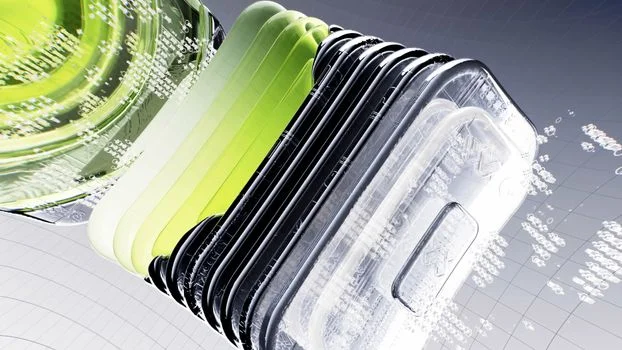
The key to achieving zero-fouling operation in MBR systems for GaN wastewater lies in leveraging the unique material properties of GaN itself, specifically its wide 3.4 eV bandgap. This intrinsic characteristic allows for operation across an exceptionally broad pH range of 2–12 without inducing membrane degradation or scaling, a significant advantage over conventional polymeric membranes that are typically limited to a pH range of 6–8 and are susceptible to damage in acidic or alkaline conditions (Top 2 page). The mechanism behind this resilience is rooted in quantum physics: GaN's wide bandgap minimizes electron-hole recombination, a process that can lead to the generation of reactive species responsible for organic fouling and the precipitation of mineral scales on membrane surfaces. In conventional membranes, especially under UV irradiation or in the presence of strong oxidants, electron-hole pairs can form, generating highly reactive hydroxyl radicals (•OH) and superoxide anions (O₂•⁻). These species attack the membrane material, leading to irreversible fouling by degrading organic foulants or initiating reactions that cause inorganic scaling. GaN's wide bandgap effectively suppresses these detrimental electrochemical reactions on the membrane surface, providing inherent stability and resistance to chemical attack and oxidative degradation. This inherent stability prevents the chemical and physical degradation that plagues traditional membranes when exposed to the aggressive chemical environments found in GaN fabrication effluent, which often include strong acids, bases, and various oxidizing agents.
When evaluating membrane materials, GaN-coated membranes stand out. They offer a significantly finer pore size, typically in the range of 0.01 to 0.05 µm, compared to 0.1 to 0.4 µm for conventional MBR membranes. This finer pore size enhances the rejection of even the smallest colloidal GaN particles, dissolved macromolecules, and microbial contaminants, leading to superior effluent quality. Beyond chemical stability, GaN-based membranes also exhibit exceptional mechanical strength and abrasion resistance, crucial for handling the abrasive GaN particles present in the wastewater. This robustness translates into a longer membrane lifespan and reduced need for frequent replacement, significantly lowering overall operational expenditure. The anti-fouling property also means that these membranes maintain high flux rates over extended periods, minimizing the need for intensive chemical cleaning (Clean-In-Place, CIP) cycles, which saves on chemical costs, water consumption, and system downtime. The combination of chemical resilience, mechanical durability, and intrinsic anti-fouling characteristics makes GaN-based membranes a transformative technology for treating GaN semiconductor wastewater, ensuring stable, high-performance operation and compliance with stringent discharge regulations.
Related Equipment
The following HydropureWater products are engineered for the wastewater challenges discussed above, forming a comprehensive treatment train:
- ozone/ClO₂ disinfection for arsenic oxidation in GaN effluent — This equipment is crucial for converting highly toxic and difficult-to-remove trivalent arsenic (As(III)) into pentavalent arsenic (As(V)), which can then be effectively precipitated or adsorbed in subsequent treatment stages. View specifications, capacity range, and technical data.
- pH Adjustment Systems (Automated Dosing) — Essential for controlling the solubility and colloidal stability of GaN particles and optimizing conditions for coagulation/flocculation, DAF, and biological processes. These systems typically include dosing pumps, chemical storage tanks (for acids like H₂SO₄ and bases like NaOH), and real-time pH monitoring.
- Coagulation and Flocculation Tanks — Designed for the initial destabilization and agglomeration of colloidal GaN particles. These tanks utilize rapid mixing for coagulant addition (e.g., polyaluminum chloride, ferric sulfate) followed by slow mixing to promote the formation of larger, settleable or floatable flocs.
- Sludge Dewatering Units (e.g., Filter Presses, Centrifuges) — Necessary for managing the concentrated sludge generated from DAF, MBR, and chemical precipitation processes. These units reduce sludge volume, lowering disposal costs and improving handling efficiency.
- Advanced Oxidation Processes (AOPs) — For the removal of refractory organic compounds that may not be fully degraded by biological treatment. Technologies such as UV-peroxide, Fenton's reagent, or catalytic oxidation can be integrated to meet ultra-low COD discharge limits.
- Polishing Filters (e.g., Multi-media Filters, Activated Carbon Filters) — Employed as a final treatment step to remove any remaining suspended solids, trace organics, and odors, ensuring the treated effluent meets the highest discharge standards or is suitable for reuse.
Need a customized solution? Request a free quote with your specific flow rate and pollutant parameters.
Further Reading
Explore these in-depth articles on related wastewater treatment topics:
- Third-generation semiconductor wastewater treatment technologies — This guide provides a comprehensive overview of advanced treatment strategies, including zero-fouling and ZLD designs, specifically tailored for emerging semiconductor materials like GaN and SiC, alongside detailed CAPEX benchmarks.
- SiC vs. GaN wastewater treatment system comparison — Delve into a detailed comparison of wastewater treatment requirements and technological solutions for Silicon Carbide (SiC) and Gallium Nitride (GaN) manufacturing, highlighting the unique challenges and optimal approaches for each material.