CMP Slurry Ultrafiltration System Design for Silica Solids Separation
A CMP slurry ultrafiltration system removes more than 99% of suspended silica and other solids below about 150 nm without coagulants in the process stream. Crossflow hollow-fiber units such as Pall Microza commonly deliver 92–97% TSS removal at 50–150 LMH. Vibratory plate-and-frame trains send permeate to ion exchange for soluble copper below 0.1 mg/L.
That performance window, not brochure flux, is what utilities teams actually buy. This article consolidates 2026 design points for silica-rich CMP streams: membrane format trade-offs, flux and TMP setpoints, cleaning chemistry, cost per cubic meter, and the copper polishing step that ultrafiltration cannot replace.
Why CMP Slurry Wastewater Remains a High-Cost Fab Problem
Semiconductor fabs often use 2–4 million gallons of water per day. Chemical Mechanical Planarization (CMP) commonly accounts for 30–40% of that demand (SEMI 2023 data). The resulting wastewater routinely carries 500–5,000 mg/L TSS as silica or alumina abrasives, 1–10 mg/L soluble copper, and organic slurry additives from the slurry formulations used on copper and oxide tools. According to New Logic Research, the engineered abrasives in CMP slurries span roughly 20–200 nm and are stabilized against settling by design.
Those loads frequently exceed semiconductor effluent rules such as EPA 40 CFR Part 469. EPA maps semiconductor manufacturing to Subpart A of that regulation, and its 2023 detailed study concluded the existing rules need no revision. Section 40 CFR § 469.12 defines total toxic organics (TTO) as the sum of toxic organics found in the discharge at a concentration greater than ten (10) micrograms per liter. Discharge targets that fabs must meet typically show TSS below 30 mg/L, with some regions under 10 mg/L.
Water-stressed regions, including Taiwan, add pressure with stiff exceedance penalties—on the order of $10,000/day for TSS violations—so plants push reuse or zero-liquid-discharge paths. Untreated CMP disposal often costs $5–$15 per cubic meter, while reuse-quality treatment for cooling-tower make-up can fall to about $0.50–$2 per cubic meter. According to Pall (2024), broader UF adoption could avoid about $100M/year in water and disposal cost. Vibratory concentration changes the disposal math: New Logic reports CMP waste concentrated to 15–25% solids, cutting haul volumes by 80–95%.
How Crossflow Ultrafiltration Handles Semiconductor Wastewater
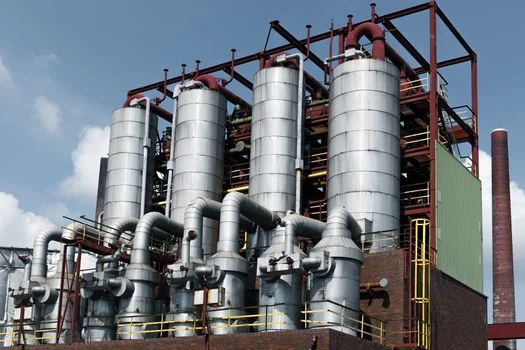
Crossflow ultrafiltration moves feed tangentially across the membrane so permeate leaves through the pores while retentate stays in the channel. Typical crossflow velocity is 1–10 m/s in industrial CMP slurry skids. That shear limits dense cake growth compared with dead-end filtration, which is why the format dominates abrasive service.
For CMP service, pores are usually specified at 0.01–0.1 μm (10–100 nm) to hold sub-micron silica while soluble copper passes to a downstream polisher such as ion exchange. Pall Microza hollow fibers are one common product family sized for that cut-off. Hollow-fiber modules pack about 500–1,000 m²/m³ and often run at 0.5–1.5 kWh/m³ with periodic backwash. Plate-and-frame trains, including VSEP, pack closer to 100–300 m²/m³ and draw about 2–4 kWh/m³.
Membrane polymers are selected for chemistry and temperature: PVDF for chemical resistance, PES for higher clean-water flux, and ceramics when abrasion or heat dominate CapEx trade-offs. For high-solids slurry streams, PVDF flat sheet membranes for high-solids wastewater are frequently preferred because they tolerate aggressive cleaning. Plants comparing polymer and hard-material options should also review dedicated guidance on ceramic membrane wastewater service before locking the material of construction.
| Feature | Hollow Fiber UF | Plate-and-Frame UF (e.g., VSEP) |
|---|---|---|
| Typical Packing Density | 500–1,000 m²/m³ | 100–300 m²/m³ |
| Energy Consumption | 0.5–1.5 kWh/m³ | 2–4 kWh/m³ |
| Cleaning Protocol | Backwash, occasional CIP | CIP (Chemical-In-Place) |
| Fouling Resistance | Good (crossflow) | Excellent (high shear) |
| Footprint | Compact | Larger |
| Capital Cost | Moderate | Higher |
What Ultrafiltration Problems Affect CMP Wastewater?
Ultrafiltration problems on CMP wastewater center on silica cake growth, additive fouling, and copper that UF cannot remove. Rapid TMP rise after short runs usually means the cake layer outpaces crossflow shear, so flux must drop or backwash interval must shorten. Organic slurry dispersants can also wet the membrane and cut recoverable flux until CIP restores permeability. Soluble copper still needs a separate barrier after solids removal.
What Silica Content Remains in Cu CMP Effluent?
Silica content in Cu CMP effluent after a well-tuned UF stage is typically driven down with TSS to below 10 mg/L when feed solids sit in the mid-hundreds to a few thousand mg/L range. Pore cut-offs of 0.01–0.1 μm retain the abrasive fraction that dominates TSS, so permeate silica as suspended solids falls into the reuse window for cooling-tower make-up after polishing. Dissolved silica species, if present, are not a UF rejection target and must be checked separately against the reuse specification.
CMP Wastewater UF Flux and TMP Specs

CMP UF duty typically targets 50–150 LMH. Most plants we size for abrasive slurry settle near 80–100 LMH when they need roughly 90% uptime and longer membrane life, matching common Pall operating guidance. Clean TMP often starts at 1–4 bar and climbs toward 3–6 bar as the cake builds; the slope of that rise is the practical fouling alarm on silica-rich feeds.
Crossflow of 1–3 m/s is the usual shear window during continuous filtration. Higher velocity cuts cake thickness but raises pump power. Backwash every 30–60 minutes for 5–10 seconds at 2–3 bar clears loose solids. CIP every 1–4 weeks with 0.5–1% NaOH plus 0.2% NaOCl (when the polymer allows oxidant) follows typical Microza practice, and an Automatic Chemical Dosing System with PLC-timed CIP keeps those concentrations repeatable on multi-skid installations.
PVDF and PES membranes commonly last 3–5 years, while ceramic membranes often last 5–10 years at about 3–5× higher CapEx. Vibratory designs add a second mechanism: New Logic drives its membrane pack at high frequency (50 Hz), so shear waves keep colloids suspended instead of caking at high solids. That is why plate-and-frame units hold flux where conventional crossflow fouls quickly.
| Parameter | Typical Range for CMP Wastewater | Notes |
|---|---|---|
| Flux Rate | 50–150 LMH | Optimal for 90% uptime: 80–100 LMH |
| Transmembrane Pressure (TMP) | 1–4 bar (clean) to 3–6 bar (fouled) | Monitored for fouling indication |
| Crossflow Velocity | 1–3 m/s | Higher velocity reduces fouling but increases energy |
| Backwash Frequency | Every 30–60 minutes | Duration: 5–10 seconds at 2–3 bar |
| CIP Frequency | Every 1–4 weeks | Chemicals: 0.5–1% NaOH + 0.2% NaOCl (if membrane compatible) |
| PVDF/PES Membrane Lifespan | 3–5 years | Dependent on operating conditions and cleaning |
| Ceramic Membrane Lifespan | 5–10 years | Higher CapEx, lower OPEX |
Ultrafiltration Versus Alternatives: CapEx, OPEX, and Effluent Quality
Ultrafiltration leads many CMP solids-removal comparisons because it cuts chemical dose in the process stream and still reaches reuse-grade TSS. For a 50 m³/h train, UF CapEx is commonly $250K–$500K ($5K–$10K per m³/h), with OPEX about $0.50–$1.20/m³ for energy and membrane replacement. Effluent near <10 mg/L TSS and <5 mg/L copper before ion exchange is typical for many industrial reuse cases on copper CMP tools.
Coagulation-sedimentation as an alternative to ultrafiltration, often paired with Dissolved Air Flotation (DAF), usually costs less up front at about $3K–$7K per m³/h. OPEX climbs to roughly $1.50–$3/m³ because coagulants, flocculants, and sludge haul dominate. DAF TSS of 20–50 mg/L rarely supports direct reuse without polishing.
Ion exchange for post-UF copper removal can reach <0.1 mg/L copper at about $2K–$5K per m³/h CapEx, but regeneration chemicals push OPEX to $2–$5/m³. Membrane distillation can deliver very high purity, yet CapEx and energy keep it uncommon as the primary CMP solids barrier on slurry dumps.
Similar abrasive streams outside the fab, such as grinding wastewater ultrafiltration, face the same solids-versus-dissolved-metal split when abrasives dominate TSS.
Resource-recovery hybrids for silicon carbide wastewater or photovoltaic fluoride recovery also keep UF as the solids gate before selective ion steps.
| Technology | CapEx (per m³/h capacity) | OPEX (per m³) | TSS Removal | Copper Removal | Chemical Use | Footprint | Water Reuse Potential |
|---|---|---|---|---|---|---|---|
| Ultrafiltration (UF) | $5K–$10K | $0.50–$1.20 | >99% (<10 mg/L) | Low (suspended only) | Minimal (cleaning) | Compact | High (post-polishing) |
| Coagulation + DAF | $3K–$7K | $1.50–$3.00 | 80–90% (20–50 mg/L) | Moderate (co-precipitation) | High (coagulants, flocculants) | Large | Moderate (with further treatment) |
| Ion Exchange | $2K–$5K | $2.00–$5.00 | N/A (soluble only) | >99.9% (<0.1 mg/L) | High (regeneration chemicals) | Moderate | High (for specific ions) |
| Membrane Distillation | $15K–$30K | $5.00–$10.00+ | >99.9% (all solids) | >99.9% (all ions) | Minimal | Moderate | Very High (high purity) |
How Does the CMP Slurry Wastewater Treatment Process Work?
A CMP reclaim train usually sequences equalization, crossflow UF for solids, then ion exchange or RO for dissolved metals and conductivity before sending water to cooling towers or further ultrapure polishing. Equalization dampens TSS spikes from tool dumps so flux setpoints stay stable across shifts. UF concentrates silica-rich retentate for disposal or secondary recovery while permeate moves to copper removal. Final polishing with RO polishing for UF permeate to achieve ultrapure water reuse is added only when the reuse point demands conductivity or ionic purity beyond cooling-tower make-up.
Main cost drivers stay consistent across fab sizes: membrane area and replacement, pump energy for crossflow, CIP chemicals, retentate disposal, and the copper polisher resin or RO stage. Plants that chase brochure flux without a cake curve usually overspend on CIP and under-deliver on uptime within the first year.
Selection checklist before you freeze the P&ID:
- Measure peak and average TSS, particle size, and soluble copper on real tool dumps, not only composite samples.
- Set design flux from pilot cake curves at your TMP limit, not from clean-water brochure values.
- Confirm whether oxidant CIP is allowed on the chosen polymer before specifying NaOCl.
- Size equalization for at least one high-TSS dump so crossflow velocity stays in the 1–3 m/s band.
- Budget membrane replacement at year 3–5 for PVDF/PES when comparing OPEX to coagulation trains.
- Decide reuse quality early: cooling-tower make-up versus ultrapure feed changes the polisher CapEx.
- Plan retentate handling; concentrated slurry solids still need a permitted disposal or recovery path.
CMP Slurry Silica Recovery by Ultrafiltration: What the Retentate Holds
Silica recovery by ultrafiltration is a mass-balance question before it is a revenue question. The membrane retains more than 99% of the suspended abrasive fraction, so nearly all incoming silica mass reports to the retentate rather than the permeate. New Logic reports that vibratory concentration reaches 15–25% solids in the reject stream, cutting the volume to be hauled by 80–95%. Permeate turbidity below 1 NTU from the same step is what makes downstream ion exchange or RO polishing practical.
Recovery of the abrasive itself remains rare at fab scale because slurry chemistry degrades inside the tool. Research on alternative routes continues: an IWA Water Practice & Technology study on magnetic nanoparticle treatment of CMP wastewater achieved 89% turbidity removal in experiments, with regeneration holding above 80 percent across five cycles. For most plants, the recoverable value sits in the water, not the silica.
Ultrafiltration for CMP Wastewater Reuse: Targets and Polishing
Ultrafiltration for CMP wastewater reuse works when the permeate target is fixed before the skid is ordered. Cooling-tower make-up is the most common destination, and typical fab turbidity targets sit below 5 NTU for those discharges. Ultrapure rinse reuse demands far more: RO on UF permeate, then electrodeionization or terminal polishing. Decide the destination early, because each step up the purity ladder adds CapEx and energy that flux alone cannot offset.
Case Study: UF Plus Ion Exchange Reuse in Silicon Valley
A Silicon Valley semiconductor fab installed a VSEP ultrafiltration train in 2014 to treat 50 m³/h of CMP wastewater ahead of ion exchange for cooling-tower make-up. Influent TSS typically ran 2,000–3,000 mg/L with soluble copper at 5–8 mg/L. The train held effluent TSS below 10 mg/L and copper below 0.1 mg/L, supporting EPA 40 CFR Part 469 discharge limits and industrial reuse inside the utility loop.
Water reuse reached about 85%, or roughly 170 m³/day returned to the plant. Annual savings were estimated near $120,000 on procurement and disposal, with a broader $140,000/year figure when new-water costs were included against about $350,000 CapEx—an ROI near 2.5 years. Cleaning used a 45-minute backwash interval and CIP every two weeks with 0.5% NaOH; chlorine was omitted to protect PVDF. Most plants we size for similar copper CMP loads still run flux at the lower end of the 50–150 LMH band once silica cake appears in the first pilot week.
Who This Is For and Next Step
CMP slurry UF guidance here is for fab utilities engineers, EPC process leads, and procurement teams comparing UF against coagulation for slurry solids. Look elsewhere if your primary load is dissolved fluoride or organics with almost no abrasive TSS, or if you already meet reuse specs with a stable clarifier train. To size flux, CIP chemistry, and copper polishing for your dump schedule, request a CMP ultrafiltration quote with recent TSS and copper analyses attached.
Frequently Asked Questions
What membrane pore size works best for CMP slurry wastewater?
The usual pore window is 0.01–0.1 μm (10–100 nm) for CMP slurry wastewater. That cut-off retains fine silica and other suspended abrasives while soluble copper ions pass to ion exchange or another polisher. Tighter pores raise TMP without helping dissolved metals; wider pores leak sub-micron solids into the reuse stream.
How often do UF membranes need replacement on CMP wastewater?
PVDF and PES UF membranes on CMP wastewater usually need replacement every 3–5 years under normal CIP discipline. Ceramic membranes often last 5–10 years but carry roughly 3–5 times higher CapEx. Shorter life almost always traces to oxidant misuse, chronic high TMP, or missed backwash intervals rather than calendar age alone.
Can ultrafiltration remove copper from CMP wastewater?
No. Ultrafiltration removes suspended solids and large macromolecules by pore exclusion and does not strip soluble copper ions. Discharge or reuse targets near <0.1 mg/L copper still need ion exchange, precipitation, or reverse osmosis after the UF stage. Design the solids barrier and the metal barrier as separate unit operations.
What energy does a CMP UF system consume?
Hollow-fiber CMP UF systems typically use 0.5–1.5 kWh per cubic meter of permeate. Plate-and-frame or vibratory shear units such as VSEP more often draw 2–4 kWh/m³ because vibration or higher crossflow adds pump and drive load. Energy rises further if you push flux above the cake-limited set point instead of adding area.
Is ultrafiltration cost-effective for small fabs under 10 m³/h?
Yes. Modular UF packages down to about 5 m³/h commonly cost $50,000–$100,000 CapEx with OPEX near $0.80–$1.50/m³. That range stays competitive with chemical coagulation, sludge haul, and purchased water on small continuous dumps. Confirm sludge and retentate disposal costs before assuming the clarifier option is cheaper.
Does a CMP slurry ultrafiltration system need coagulants?
No, a CMP slurry ultrafiltration system holds solids by pore exclusion and crossflow shear, so the process stream needs no coagulant. Chemicals appear only in backwash and CIP steps, typically 0.5–1% NaOH with 0.2% NaOCl where the polymer tolerates oxidant. That is the main OPEX separation from coagulation trains, which dose continuously and haul chemical sludge.
What TSS can CMP ultrafiltration permeate reach?
Permeate from a well-tuned CMP UF stage typically lands below 10 mg/L TSS against feed solids in the mid-hundreds to a few thousand mg/L. Removal of 92–97% is routine for hollow-fiber trains on silica-dominated dumps. Check your permit wording, because some regions enforce limits stricter than the common 30 mg/L benchmark.
Which regulation governs CMP effluent in the United States?
CMP effluent at US direct dischargers falls under 40 CFR Part 469, with semiconductor manufacturing assigned to Subpart A. EPA reviewed the rule in its 2023 detailed study and found no revision warranted on current monitoring data. Definitions sit in 40 CFR § 469.12, including total toxic organics above ten (10) micrograms per liter, and monitoring provisions follow in § 469.13.