Wastewater Treatment Plant Cost in Saskatchewan 2025: CAPEX, OPEX & Tech-Specific Breakdown for Industrial Buyers
In Saskatchewan, wastewater treatment plant costs vary widely based on capacity, technology, and compliance requirements. For example, a 500 m³/day industrial MBR system costs $2.1M–$3.5M CAPEX, while a 10,000 m³/day municipal plant can exceed $20M. OPEX ranges from $0.50–$2.00/m³, driven by energy (30–40% of costs), chemical dosing, and sludge disposal. Saskatchewan’s Water Security Agency mandates effluent limits of ≤25 mg/L BOD, ≤25 mg/L TSS, and ≤1 mg/L phosphorus for Class 4 facilities—non-compliance risks fines up to $500K/year. This guide breaks down CAPEX, OPEX, and tech-specific trade-offs to help buyers make zero-risk decisions.
Why Saskatchewan’s Wastewater Treatment Costs Are Rising in 2025
Saskatchewan's population growth of 5.2% from 2016–2021, as reported by StatsCan, directly contributes to rising wastewater treatment costs by increasing volumes 8–12% in major cities like Regina and Saskatoon, thereby exceeding the capacities of many 1970s-era facilities. This demographic shift necessitates significant investment in new infrastructure and upgrades to existing plants to manage the expanded load.
Further driving these costs are the stringent regulatory updates from the Water Security Agency. The 2023 effluent standards, particularly the ≤1 mg/L phosphorus limit for Class 4 facilities, now require municipal and industrial operations to upgrade from basic primary treatment to more advanced Biological Nutrient Removal (BNR) or Membrane Bioreactor (MBR) systems. These upgrades can add an estimated $5M–$20M to the capital expenditure (CAPEX) for municipal wastewater treatment plants, making phosphorus removal a critical cost driver.
Aging infrastructure presents another substantial challenge. A 2022 provincial audit revealed that 60% of Saskatchewan’s existing treatment plants are over 30 years old. Decades of operation have led to widespread corrosion, decreased efficiency, and increased maintenance demands, collectively pushing operational expenditure (OPEX) up by 2–5% annually. The need for costly repairs and rehabilitation projects is a continuous drain on budgets, making the overall wastewater treatment plant cost in Saskatchewan Canada a growing concern.
Industrial compliance is also under increased scrutiny, with significant financial implications for non-adherence. Food processing plants in Saskatoon, for instance, face potential fines up to $500K per year for exceeding biochemical oxygen demand (BOD) limits. A notable 2023 case study involved a meatpacking facility incurring an $180K fine for non-compliance, underscoring the severe financial risks associated with inadequate industrial wastewater compliance in Canada. These factors combined create a complex and costly environment for wastewater management in the province.
CAPEX Breakdown: How Technology and Capacity Drive Upfront Costs
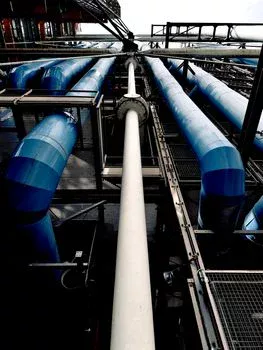
Capital expenditure (CAPEX) for wastewater treatment plants in Saskatchewan varies significantly, ranging from $15,000/m³/day for lagoon systems to $70,000/m³/day for advanced MBR systems in industrial applications, according to the 2024 Saskatchewan Infrastructure Report. Municipal plants generally average $30,000–$50,000/m³/day, reflecting the scale and complexity of urban facilities. This wide range highlights the critical impact of technology selection and plant capacity on the initial investment required for wastewater treatment plant CAPEX in Saskatchewan.
For example, a 500 m³/day MBR system, suitable for many industrial applications, typically costs between $2.1M–$3.5M. In contrast, a conventional lagoon system of the same capacity might cost $750K–$1.2M. However, lagoons demand 5–10 times more land area and generally cannot meet modern phosphorus effluent limits without additional tertiary filtration, which introduces further CAPEX. The choice between these technologies involves a careful balance of upfront cost, land availability, and stringent engineering specs and cost models for remote industrial sites in Saskatchewan.
Large-scale municipal projects provide benchmarks for component-level CAPEX. Regina’s $180.8M upgrade, designed for 24.3 mgd (approximately 92,000 m³/day), allocated significant portions of its budget to specific processes: approximately $45M for Biological Nutrient Removal (BNR), $30M for UV disinfection, and $25M for biosolids handling. These line items demonstrate the substantial investment required for advanced treatment stages necessary to meet current and future regulatory standards.
Procurement models also influence CAPEX. Modular wastewater treatment systems, such as HydropureWater’s WSZ series compact MBR systems for small-scale industrial plants, can reduce CAPEX by 20–30% compared to custom-built facilities. These pre-engineered solutions offer faster deployment and predictable costs but may have scalability limitations beyond 2,000 m³/day, making them ideal for smaller industrial sites or remote communities. For larger industrial applications, high-efficiency DAF systems for industrial wastewater pretreatment can offer a cost-effective solution for solids and grease removal, impacting overall CAPEX favorably.
The following table provides a comparative breakdown of CAPEX across various technologies and capacities, considering Saskatchewan-specific factors like soil conditions and climate which can influence civil works costs.
| Technology | 50 m³/day (Industrial/Remote) | 500 m³/day (Mid-size Industrial/Small Municipal) | 5,000 m³/day (Large Industrial/Mid-size Municipal) |
|---|---|---|---|
| Lagoons (Aerated/Facultative) | $75K – $250K | $750K – $1.2M | $7.5M – $12M |
| DAF (Dissolved Air Flotation) | $200K – $450K | $1.5M – $2.5M | $10M – $18M |
| MBR (Membrane Bioreactor) | $350K – $700K | $2.1M – $3.5M | $15M – $35M |
| Hybrid Systems (e.g., DAF + BNR + UV) | $300K – $600K | $2.0M – $3.0M | $12M – $25M |
| Note: Costs are indicative CAPEX ranges (2025 USD) and include equipment, civil works, and installation. Excludes land acquisition. Saskatchewan-specific factors like challenging soil conditions (e.g., clay expansion) and extreme winter climate can add 5-15% to civil works costs compared to temperate regions. | |||
OPEX Deep Dive: The Hidden Costs That Break Budgets
Operational expenditure (OPEX) for wastewater treatment in Saskatchewan typically ranges from $0.50–$2.00/m³, with energy, chemicals, and sludge disposal consistently identified as the top three cost drivers, collectively accounting for 65–95% of total operating costs (per 2023 Saskatchewan Water and Wastewater Association data). Understanding these OPEX cost drivers is crucial for long-term budget planning and ensuring the financial sustainability of a wastewater treatment plant.
Energy costs represent a significant portion of OPEX, often 30–40% of the total. MBR systems, while highly efficient in treatment, are energy-intensive, consuming 0.8–1.2 kWh/m³ due to aeration and membrane scouring. In contrast, lagoon systems typically consume less energy, around 0.3–0.5 kWh/m³. With Saskatchewan’s average electricity rate at approximately $0.12/kWh, the difference in energy consumption between these technologies can significantly impact the overall OPEX cost drivers for a wastewater plant, especially for larger facilities.
Chemical dosing for advanced treatment processes, particularly phosphorus removal, accounts for 20–30% of OPEX. Meeting the stringent ≤1 mg/L phosphorus limit often requires the addition of 20–50 mg/L of ferric chloride or alum. At 2024 market prices, this can translate to $0.10–$0.30/m³ in chemical costs. Optimizing dosage and exploring alternative coagulants are vital strategies to manage this aspect of phosphorus removal cost in Saskatchewan.
Sludge disposal is another major expense, contributing 15–25% to OPEX. Landfill costs in Saskatchewan average $120/ton (2024). Implementing dewatering technologies, such as plate and frame filter presses, can reduce sludge volumes by 70–80%, significantly cutting disposal tonnage. However, the operation of dewatering equipment and associated polymer dosing adds $0.15–$0.25/m³ to OPEX. For facilities treating high-strength waste, like those in slaughterhouse wastewater treatment, efficient sludge management is paramount.
Labor costs, while varying by automation level, also play a role. Automated systems like Dissolved Air Flotation (DAF) and MBR typically require 0.5–1 full-time equivalent (FTE) for operation and maintenance. Less automated systems, such as lagoons, often necessitate 2–3 FTEs. Given Saskatchewan’s labor rates of $30–$40/hour for skilled operators, the labor savings from automation can be substantial, influencing the total OPEX for a wastewater plant. Integrating automatic chemical dosing systems further reduces manual intervention and improves chemical efficiency.
The following table details the typical OPEX cost drivers by technology type:
| Cost Driver | Lagoons ($/m³ / % OPEX) | DAF ($/m³ / % OPEX) | MBR ($/m³ / % OPEX) | Hybrid Systems ($/m³ / % OPEX) |
|---|---|---|---|---|
| Energy | $0.05 – $0.15 / 10-25% | $0.15 – $0.30 / 25-35% | $0.25 – $0.45 / 30-40% | $0.20 – $0.40 / 25-35% |
| Chemicals | $0.02 – $0.08 / 5-15% | $0.10 – $0.25 / 20-30% | $0.10 – $0.30 / 15-25% | $0.15 – $0.35 / 20-30% |
| Labor | $0.15 – $0.30 / 25-40% | $0.10 – $0.20 / 15-25% | $0.08 – $0.18 / 10-20% | $0.10 – $0.20 / 15-25% |
| Sludge Disposal | $0.08 – $0.20 / 15-25% | $0.12 – $0.28 / 20-30% | $0.15 – $0.35 / 20-30% | $0.15 – $0.30 / 20-30% |
| Maintenance & Parts | $0.05 – $0.10 / 10-15% | $0.08 – $0.15 / 10-15% | $0.10 – $0.20 / 10-15% | $0.10 – $0.18 / 10-15% |
| Note: Values are indicative ranges for typical operations in Saskatchewan (2025 USD). Percentages are approximate contributions to total OPEX. Total OPEX per m³ can vary based on influent characteristics, plant efficiency, and optimization strategies. | ||||
Compliance Checklist: Meeting Saskatchewan’s Effluent Standards Without Overpaying
Saskatchewan’s Water Security Agency mandates stringent Class 4 effluent limits, requiring treated wastewater to meet ≤25 mg/L BOD, ≤25 mg/L TSS, ≤1 mg/L phosphorus, and ≤100 CFU/100 mL fecal coliform, as stipulated by 2023 regulations. Adhering to these provincial standards is not optional; non-compliance can lead to substantial fines and operational disruptions, making a clear compliance strategy essential for any wastewater treatment plant in Saskatchewan.
Technology mapping is key to achieving these limits efficiently. While conventional lagoon systems can often meet BOD and TSS limits, they typically fail to achieve the strict ≤1 mg/L phosphorus standard without tertiary filtration, which can add $1M–$3M to CAPEX. DAF systems, when combined with chemical dosing, can effectively achieve BOD, TSS, and phosphorus limits, but may struggle with fecal coliforms, necessitating additional UV disinfection at a cost of $500K–$1M. MBR systems consistently meet all Class 4 effluent limits, including phosphorus and coliforms, often requiring less space and offering superior effluent quality.
A strategic approach can optimize costs without compromising compliance. For instance, a 1,000 m³/day food processing plant in Saskatoon successfully reduced its CAPEX by 25% by implementing a hybrid system. Instead of a full MBR system, they combined a DAF system for efficient solids and organic load reduction with on-site ClO₂ generators for coliform disinfection. This tailored approach met all regulatory requirements while avoiding the higher upfront cost of a complete MBR solution, demonstrating a smart way to manage phosphorus removal cost in Saskatchewan and other parameters.
To navigate these requirements and make informed decisions, consider the following Saskatchewan Compliance Decision Tree:
- Test Influent Characteristics: Analyze raw wastewater for BOD, TSS, phosphorus, and fecal coliform levels to establish baseline treatment needs.
- Select Primary Treatment: Choose a primary treatment technology (e.g., DAF, lagoons) based on initial load reduction requirements and space constraints.
- Address Phosphorus Levels: If influent phosphorus levels are high or the target effluent limit is <1 mg/L, integrate chemical dosing (e.g., ferric chloride, alum) and/or tertiary filtration (e.g., sand filters) or consider a system inherently designed for nutrient removal like MBR.
- Ensure Disinfection: If fecal coliforms exceed 100 CFU/100 mL, implement a disinfection step such as UV irradiation or chlorine dioxide generation.
- Evaluate Sludge Management: Plan for efficient sludge dewatering and disposal to minimize operational costs and ensure regulatory compliance for biosolids.
- Monitor & Optimize: Continuously monitor effluent quality and process parameters to ensure ongoing compliance and identify opportunities for optimization.
Financing Models: DBFOM vs. Traditional Procurement—Which Saves You Money?
The choice of financing model significantly impacts the total lifecycle cost of a wastewater treatment plant in Saskatchewan, with Design, Build, Finance, Operate, Maintain (DBFOM) models capable of reducing upfront CAPEX by 20–40% but typically increasing long-term OPEX by 15–20% due to private operator margins, as highlighted in the 2024 Saskatchewan P3 report. Understanding these trade-offs is crucial for industrial buyers and municipal planners evaluating wastewater treatment financing models.
The DBFOM model, a public-private partnership (P3), shifts the financial burden and operational risks from the public entity to a private consortium. Regina’s $180.8M DBFOM project for its wastewater treatment plant upgrade is a prime example. This 30-year contract effectively shifted approximately $120M of CAPEX into OPEX through annual payments of $6M–$8M, which included ongoing maintenance, operations, and financing costs. While this approach allows municipalities with limited capital to undertake large-scale infrastructure projects without immediate large-scale borrowing, it typically comes with a higher overall cost over the contract period due to the private sector's required rate of return and risk premiums.
Traditional procurement, conversely, involves the public entity (municipality or industrial facility) taking full responsibility for design, construction, financing (often through municipal bonds, grants, or direct capital budgets), and subsequent operation and maintenance. This model requires full upfront CAPEX but generally results in lower long-term OPEX because there are no private operator margins or financing premiums built into the operational costs. traditional procurement offers greater direct control over operations, staffing, and future modifications, which can be advantageous for organizations prioritizing flexibility and long-term cost control.
The decision matrix below helps evaluate the core trade-offs between DBFOM and traditional procurement:
| Factor | DBFOM (Design, Build, Finance, Operate, Maintain) | Traditional Procurement |
|---|---|---|
| Upfront CAPEX | Significantly lower (e.g., -$5M to -$20M CAPEX for a $50M project) | Full upfront CAPEX required |
| Long-term OPEX | Higher (e.g., +$1M to +$3M/year OPEX due to private margins) | Lower (no private operator margins) |
| Risk Transfer | High transfer to private partner (design, construction, operational, performance risks) | Retained by public entity |
| Flexibility | Lower (contractually bound to project specifications and operator) | Higher (full control over changes, upgrades, operations) |
| Control | Limited operational control, oversight model | Full operational control |
| Speed of Delivery | Potentially faster due to integrated project delivery | Can be slower due to separate design/build phases |
| Suitability | Ideal for municipalities with limited capital or high-risk projects | Preferred for entities with strong capital access and desire for full control |
| Note: Cost impacts are illustrative and vary based on project specifics, market conditions, and contract terms. | ||
Frequently Asked Questions
Industrial buyers and municipal planners in Saskatchewan frequently seek clear, data-driven answers regarding wastewater treatment plant costs and compliance, which are addressed in the following responses.
Q: What is the average cost per m³ for a wastewater treatment plant in Saskatchewan?
A: CAPEX averages $30K–$50K/m³/day for municipal plants and $15K–$70K/m³/day for industrial plants, depending on technology. OPEX ranges from $0.50–$2.00/m³ (per 2024 Saskatchewan Infrastructure Report).
Q: How much does a 500 m³/day MBR system cost in Saskatchewan?
A: A 500 m³/day MBR system typically costs $2.1M–$3.5M CAPEX, including civil works and automation. OPEX is generally $0.80–$1.20/m³ due to higher energy consumption and membrane replacement costs (2024 benchmarks).
Q: What are Saskatchewan’s effluent limits for industrial wastewater?
A: Saskatchewan’s Water Security Agency (WSA) mandates Class 4 effluent limits of ≤25 mg/L BOD, ≤25 mg/L TSS, ≤1 mg/L phosphorus, and ≤100 CFU/100 mL fecal coliform (per 2023 WSA standards). Non-compliance fines range from $50K–$500K/year.
Q: Is DBFOM financing cheaper than traditional procurement for wastewater plants?
A: DBFOM reduces upfront CAPEX by 20–40% but increases long-term OPEX by 15–20% due to private operator margins. It can be cost-effective for municipalities with limited immediate capital, but often results in higher total lifecycle costs compared to traditional procurement for industrial buyers with access to low-interest loans.
Q: What technology is best for removing phosphorus in Saskatchewan?
A: MBR or DAF systems combined with chemical dosing (e.g., ferric chloride or alum) are highly effective in achieving ≤1 mg/L phosphorus limits. Conventional lagoons typically require tertiary filtration (e.g., sand filters) to meet these limits, which can add $1M–$3M to CAPEX.