Sewage Treatment Equipment Suppliers in Morocco: 2025 Engineering Guide with Costs, Compliance & Vendor Decision Framework
Morocco’s demand for sewage treatment equipment is surging, driven by urbanization (Casablanca’s population grew 2.1% annually since 2020) and stricter environmental regulations (Law 10-95 mandates secondary treatment for all discharges >50 m³/day). Leading suppliers offer turnkey solutions, but project costs vary widely—from $50,000 for a 10 m³/h package plant to $2M+ for a 500 m³/h MBR system. This guide compares technical specs, compliance requirements, and vendor selection criteria to help you choose the right equipment for your needs.
As of 2025, the Moroccan government has accelerated its "National Water Plan 2020-2050," which allocates approximately $12 billion toward water security, including massive investments in wastewater reclamation. For engineers and procurement officers, the Moroccan market presents a unique set of challenges: high salinity in coastal regions like Agadir, extreme temperature fluctuations in the interior Atlas regions, and a desperate need for decentralized systems in rural "douars." Consequently, the selection of sewage treatment equipment is no longer just about meeting a budget; it is about ensuring long-term mechanical resilience against harsh environmental conditions and ensuring that treated water meets the standards for agricultural reuse, which is critical for the nation's "Generation Green" strategy.
The procurement landscape in Morocco is also shifting toward modularity. With the rise of "smart cities" and industrial zones like the Tanger Med Zones and the Atlantic Free Zone in Kenitra, developers are moving away from traditional concrete-intensive civil works toward prefabricated, containerized units. These "package plants" offer a 40-60% reduction in installation time, which is vital for projects facing strict commissioning deadlines. Furthermore, the 2025 outlook suggests a 15% increase in the adoption of automated SCADA-integrated systems as Moroccan facility managers seek to reduce operational errors and optimize energy consumption in the face of rising utility costs.
Morocco’s Wastewater Treatment Landscape: Regulations, Challenges, and Opportunities
Morocco’s Law 10-95 (Water Code) and Decree 2-04-553 set the definitive effluent standards for the kingdom, requiring municipal discharges to maintain BOD levels below 30 mg/L, COD below 125 mg/L, and TSS below 35 mg/L. These regulations are strictly enforced by the Agences de Bassins Hydrauliques (ABH), particularly in water-stressed regions like the Tensift and Haouz basins. For industrial operators, the requirements are often more stringent; for instance, the Moroccan Ministry of Environment 2023 guidelines mandate that textile dye effluents must achieve a COD of less than 200 mg/L before discharge into public sewers or natural water bodies.
The urgency for advanced wastewater treatment plant design in Morocco is underscored by the World Bank’s 2024 report, which indicates that Casablanca’s wastewater treatment capacity must double by 2030 to accommodate rapid urban expansion and industrial growth. This pressure is compounded by chronic water scarcity, making wastewater reuse in Morocco a strategic priority for agricultural irrigation and industrial cooling. However, facility operators face significant hurdles, including high energy costs—where DAF vs. clarifiers and sedimentation for industrial wastewater evaluations show DAF systems consuming between 0.3 and 0.5 kWh/m³—and a shortage of local specialized maintenance expertise for complex membrane systems.
Beyond the technical hurdles, the economic framework of wastewater in Morocco includes the "Polluter Pays" principle. Under the current legislative framework, companies that exceed discharge limits are subject to a "Redevance de déversement" (discharge fee). These fees are calculated based on the volume and toxicity of the effluent, creating a direct financial incentive for investing in high-efficiency sewage treatment equipment. In the Souss-Massa region, for example, several citrus processing plants have successfully reduced their annual environmental levies by 70% after upgrading to MBR and DAF-based treatment trains.
Seasonal flow variations pose a challenge for rural and tourism-heavy areas. In regions like Marrakech or Agadir, sewage treatment equipment must handle peak loads during tourist seasons while remaining efficient during off-peak months. Failure to comply with Law 10-95 can result in administrative fines reaching $10,000 per year and potential facility closures, making the selection of robust, compliant equipment a matter of operational continuity rather than just environmental stewardship. Furthermore, the "Programme National d'Assainissement Liquide" (PNA) has set an ambitious target to reach a 60% wastewater reuse rate by 2030, meaning that equipment purchased today must be capable of producing effluent that meets the "Category A" standards for unrestricted crop irrigation.
To navigate these challenges, Moroccan engineers are increasingly focusing on the following key performance indicators (KPIs) during the vendor selection process:
- Specific Energy Consumption (SEC): Given Morocco's electricity prices, equipment that operates below 0.8 kWh/m³ for secondary treatment is highly prioritized.
- Sludge Volume Index (SVI) Management: In the high-temperature Moroccan climate, biological activity is accelerated, which can lead to "sludge bulking." Equipment must include advanced aeration control to manage these biological kinetics.
- Corrosion Resistance: For coastal installations (Casablanca, Tangier, Safi), equipment must utilize SS316L stainless steel or specialized FRP (Fiber Reinforced Plastic) to withstand the saline marine air.
- Chemical Logistics: Suppliers must demonstrate that the coagulants and polymers required for their systems (especially for DAF units) are readily available in the local Moroccan market through distributors in cities like Mohammedia or El Jadida.
Sewage Treatment Technologies for Moroccan Projects: A Comparison Matrix
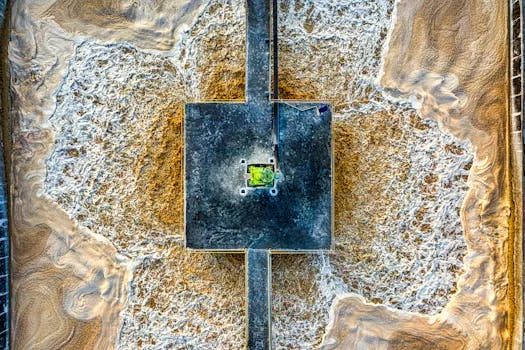
Membrane Bioreactor (MBR) systems reduce the physical footprint of treatment facilities by 200–300% compared to Conventional Activated Sludge (CAS) while achieving significantly higher effluent clarity suitable for immediate reuse. For Moroccan projects ranging from 10 m³/h to 500 m³/h, the choice of technology depends heavily on the balance between available land, budget, and the required quality of the treated water.
Conventional Activated Sludge remains the standard for large-scale municipal plants exceeding 500 m³/h due to its lower technology risk and established maintenance protocols. However, for industrial effluent treatment in Morocco, particularly in the food and beverage sector, the high-efficiency DAF system for industrial wastewater is often the preferred choice. It removes 90–95% of Total Suspended Solids (TSS) and Fats, Oils, and Grease (FOG), which are prevalent in Moroccan olive oil and fish processing industries. For smaller communities or remote mining sites, a compact package plant for small communities (WSZ Series) provides a "set-and-forget" solution that requires minimal operator intervention.
Deep Dive into Moroccan Technology Applications
1. Membrane Bioreactors (MBR) for Water Scarcity: In luxury resorts in Marrakech and eco-lodges in the High Atlas, MBR technology is the gold standard. The ability to produce water with turbidity <0.2 NTU allows for direct reuse in toilet flushing and high-end landscape irrigation. However, engineers must account for the "fouling" potential of Moroccan groundwater, which often has high mineral content. Utilizing MBR systems for space-constrained sites with automated back-pulsing and Chemical-in-Place (CIP) systems is essential to maintain membrane flux rates over a 5-to-8-year lifespan.
2. DAF Systems for the Agri-Food Sector: Morocco is a global leader in olive oil and sardine exports. These industries produce high-strength wastewater that can easily overwhelm biological systems. The implementation of Dissolved Air Flotation (DAF) as a pre-treatment step is critical. By injecting micro-bubbles into the wastewater, the DAF unit floats oils and solids to the surface for mechanical skimming. This not only protects downstream biological processes but also allows for the recovery of valuable organic solids that can be repurposed as compost or biomass energy.
3. WSZ Package Plants for Rural Decentralization: Under the "PNA" initiative, extending the sewer network to remote villages is often cost-prohibitive. The solution lies in decentralized, underground package plants. These systems are typically housed in carbon steel tanks with high-performance epoxy coatings or fiberglass. Because they are buried, they are protected from the intense Moroccan sun, which helps maintain a stable temperature for the bacteria within the bioreactors. For a village of 500 people, a WSZ-50 unit can be installed in less than 30 days, providing immediate relief to local groundwater tables.
| Technology | Ideal Flow Rate | Effluent Quality (BOD/TSS) | Energy Use (kWh/m³) | Footprint Requirement | Primary Use Case |
|---|---|---|---|---|---|
| CAS (Activated Sludge) | >500 m³/h | <25 / <35 mg/L | 0.3 – 0.6 | Very Large | Municipal plants with ample land |
| MBR (Membrane Bioreactor) | 10 – 500 m³/h | <5 / <1 mg/L | 0.7 – 1.2 | Very Small | Hotels, Hospitals, Water Reuse |
| DAF (Dissolved Air Flotation) | 4 – 300 m³/h | 90% TSS Removal | 0.4 – 0.6 | Medium | Food Processing, Textiles, Mining |
| WSZ Package Plant | 1 – 80 m³/h | <30 / <30 mg/L | 0.2 – 0.4 | Small (Underground) | Residential zones, Rural villages |
Vendor Decision Framework for the Moroccan Market
When evaluating sewage treatment equipment suppliers in Morocco, procurement teams should utilize a multi-weighted decision matrix. Price is important, but in the Moroccan context, "Total Cost of Ownership" (TCO) over 10 years is the superior metric. Consider the following factors:
- After-Sales Support and Spare Parts: Does the supplier have a local partner in Casablanca or Tangier? The cost of downtime in a textile factory in the "Cité de l'Air" industrial zone can exceed $5,000 per hour. Suppliers must guarantee the delivery of critical components (blowers, pumps, sensors) within 48-72 hours.
- Customs and Logistics Expertise: Importing heavy industrial equipment into Morocco involves navigating "Portnet" and specific "Douane" (customs) classifications. Choosing a vendor experienced with Moroccan import duties (and potential exemptions under investment charters) can save 10-20% on the landed cost.
- Compliance Documentation: Ensure the vendor provides technical datasheets that directly correlate with ABH (Agences de Bassins Hydrauliques) reporting requirements. This includes certified laboratory testing results of the equipment's performance under similar climatic conditions.
- Sludge Handling Solutions: A common mistake in Moroccan projects is neglecting sludge management. Suppliers should offer integrated solutions like filter presses or sludge drying beds, as the disposal of wet sludge is increasingly restricted and expensive in the Kingdom.
For high-density urban areas like Tangier, an MBR system for space-constrained sites offers the highest ROI by producing near-potable quality effluent that can be used for landscape irrigation, effectively reducing the facility's freshwater purchase costs. While MBR systems involve higher membrane replacement costs (estimated at $0.10–$0.15/m³ based on HydropureWater field data), the ability to bypass expensive municipal water tariffs in cities like Rabat or Casablanca makes the technology economically viable for most commercial and industrial applications in the long run.
Finally, consider the "Digital Twin" and remote monitoring capabilities. As Morocco pushes toward Industry 4.0, sewage treatment equipment that features IoT connectivity allows engineers in central offices to monitor dissolved oxygen (DO) levels and flow rates in real-time across multiple sites in the country. This proactive approach prevents biological "upsets" and ensures that the facility remains 100% compliant with Law 10-95 at all times.
Further Reading
Explore these in-depth articles on related wastewater treatment topics to further your understanding of global benchmarks and North African regional specifics:
- cost benchmarks for wastewater treatment plants - A comparative look at international project costs and ROI metrics.
- package plant solutions for North African projects - Specific insights into the Maghreb market, including logistics and regional regulatory trends.
- Technical Whitepaper: Impact of High Ambient Temperatures on Aeration Efficiency in Maghreb Climates (Available via regional engineering associations).
- Regulatory Update 2025: New Effluent Standards for the Moroccan Phosphate and Mining Industry.