Danish EPA Wastewater Standards for Food Processing: What You Must Achieve
Food processing wastewater in Denmark requires treatment to meet strict Danish EPA standards (e.g., BOD ≤ 20 mg/L, COD ≤ 75 mg/L, TSS ≤ 30 mg/L). Typical influent from dairy plants ranges from 1,000–5,650 mg/L COD and 450–4,500 mg/L BOD, while fish processing wastewater often exceeds 3,000 mg/L TSS. Solutions like dissolved air flotation (DAF) and membrane bioreactors (MBR) achieve 90–98% removal rates, with CAPEX ranging from €500K for small DAF systems to €12M for large-scale MBR plants.
The Danish Environmental Protection Agency (Miljøstyrelsen) enforces discharge limits under the Danish Environmental Protection Act § 33, which mandates that industrial effluent discharged to municipal sewers or surface waters must not compromise the receiving environment's ecological status. For food processors, the most critical parameters are Biochemical Oxygen Demand (BOD), Chemical Oxygen Demand (COD), Total Suspended Solids (TSS), and Fats, Oils, and Grease (FOG). According to 2024 guidelines, plants exceeding these limits face fines up to DKK 1M per year, mandatory equipment upgrades, or immediate production shutdowns.
The organic load varies significantly based on the specific commodity processed. For instance, dairy plants producing cheese generate wastewater with higher organic concentrations compared to those focused on fluid milk bottling. Arla Foods has documented that effluent loads are directly correlated to product type, where whey-heavy processes significantly increase COD levels. In fish processing, the challenge shifts toward high TSS and FOG, often stemming from blood, scales, and oils released during filleting and canning.
| Parameter | Danish EPA Limit (Surface Water) | Dairy Influent (Typical) | Fish Influent (Typical) | Meat Influent (Typical) |
|---|---|---|---|---|
| BOD5 (mg/L) | ≤ 20 | 450 – 4,500 | 600 – 2,500 | 2,000 – 6,000 |
| COD (mg/L) | ≤ 75 | 1,000 – 5,650 | 1,200 – 4,000 | 3,000 – 10,000 |
| TSS (mg/L) | ≤ 30 | 500 – 1,500 | 1,500 – 3,000 | 800 – 2,000 |
| FOG (mg/L) | ≤ 10 | 150 – 500 | 200 – 500 | 200 – 1,200 |
| Total P (mg/L) | ≤ 1.5 | 10 – 100 | 20 – 60 | 15 – 50 |
How Food Processing Wastewater Differs by Industry: Dairy vs. Fish vs. Meat
Dairy wastewater is characterized by high organic loads and extreme pH fluctuations ranging from 4.5 to 11, primarily due to the presence of cleaning-in-place (CIP) chemicals and lactose. The high sugar content leads to rapid acidification if the wastewater is not treated promptly. To manage this, dairy plants typically employ an equalization tank followed by a MBR system for dairy wastewater treatment and water reuse. This configuration handles the variable organic loading while producing effluent suitable for non-potable reuse in cooling towers or floor washing.
Fish processing wastewater presents a different engineering challenge, dominated by high concentrations of Total Suspended Solids (TSS) and Fats, Oils, and Grease (FOG). Nitrogen and phosphorus levels are also elevated due to the presence of blood and proteins. Pretreatment is the most critical phase in fish processing; without efficient solids removal, downstream biological systems will suffer from foaming and clogging. A high-efficiency DAF system for food processing wastewater is the industry standard here, often preceded by step screens for food processing wastewater pretreatment to remove scales and larger tissue fragments.
Meat processing wastewater (slaughterhouses and rendering) contains the highest BOD and TSS levels, frequently accompanied by pathogens and heavy grease loads. The treatment train usually begins with a rotary screen, followed by a DAF unit to remove 90% of FOG. Because meat processing effluent is high in nitrogen, the biological stage must include nitrification and denitrification zones. Post-treatment disinfection, using UV or chlorine dioxide, is often required to ensure the elimination of pathogens before discharge or reuse.
Typical Treatment Train - Dairy:
Equalization Tank → pH Adjustment → Anaerobic/Aerobic (A/O) Process → MBR → Water Reuse.
Typical Treatment Train - Fish:
Rotary Screen → how to select the best DAF clarifier for industrial wastewater → Aerobic Biological Treatment → Clarification.
Typical Treatment Train - Meat:
Static Screen → DAF → Anaerobic Lagoon or Digester → Activated Sludge → Disinfection.
Treatment Technology Comparison: DAF vs. MBR vs. Anaerobic Digestion for Danish Plants
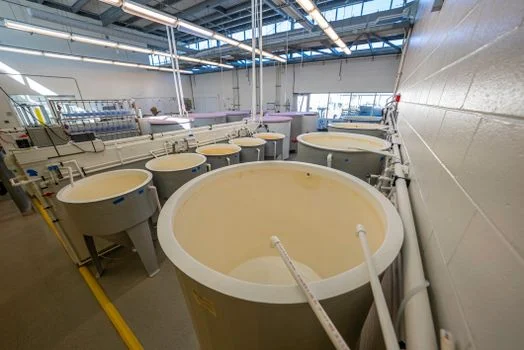
Dissolved Air Flotation (DAF) systems are the most cost-effective solution for removing insoluble organics and fats, achieving 90–95% efficiency for FOG and TSS. In the Danish market, DAF is preferred for fish and meat processing where the primary goal is to protect municipal sewers from grease blockages. While DAF has a lower CAPEX (€500K–€2M), its ability to remove dissolved BOD is limited, necessitating a biological secondary stage if surface water discharge is the goal.
Membrane Bioreactors (MBR) combine biological degradation with membrane filtration, eliminating the need for secondary clarifiers. For Danish food processors with limited footprint, MBR is often the only viable path to meet the strict BOD ≤ 20 mg/L limit. MBR systems produce high-quality effluent with TSS ≤ 5 mg/L and COD ≤ 50 mg/L. Although the CAPEX is 30–50% higher than traditional activated sludge systems, the ability to recycle water significantly reduces the long-term cost of water procurement in Denmark. Hybrid systems, utilizing DAF for pretreatment and MBR for polishing, are increasingly common in cheese production facilities.
Anaerobic digestion is an attractive option for high-strength wastewater (COD > 2,000 mg/L) because it generates biogas while reducing sludge volume by 50–70%. In Denmark, where energy prices are volatile, the ability to offset 30–50% of plant power consumption through biogas is a major strategic advantage. However, anaerobic systems require longer hydraulic retention times and higher CAPEX (€1.5M–€5M). For pathogens control in meat processing, many plants integrate a chlorine dioxide generator at the final stage to ensure compliance with hygiene standards.
| Technology | Primary Removal Target | Effluent Quality (COD) | Footprint | Energy Use (kWh/m³) |
|---|---|---|---|---|
| DAF | FOG, TSS, Insoluble BOD | Moderate (300-600 mg/L) | Small | 0.1 - 0.3 |
| MBR | Dissolved BOD, TSS, Bacteria | Excellent (< 50 mg/L) | Very Small | 0.6 - 1.2 |
| Anaerobic | High-load COD, Biogas | Moderate (500-1,000 mg/L) | Large | Net Positive (Energy Gen) |
| A/O Process | BOD, Nitrogen, Phosphorus | Good (< 100 mg/L) | Medium | 0.3 - 0.6 |
Sludge Dewatering in Denmark: How to Cut Disposal Costs by 40%
Sludge disposal represents one of the largest ongoing operational expenses for Danish food processors, with costs driven by weight and water content. Optimizing dewatering can reduce these costs by up to 40%. Arla Foods’ Videbaek plant demonstrated that switching to a high-performance centrifuge (like the D5L model) increased cake dryness by 6% compared to conventional methods. This seemingly small percentage translates to thousands of tons in reduced waste volume annually and a 15% reduction in polymer consumption.
For smaller plants (flow rates < 50 m³/h), a sludge dewatering filter press for cost-effective disposal remains a viable choice. These systems achieve 25–35% cake dryness, which is superior to belt presses, though they require more manual intervention. Belt filter presses are preferred for continuous, large-scale operations where influent variability is low, offering cake dryness in the 20–28% range. The choice between a centrifuge and a filter press often depends on the available labor and the specific nature of the sludge (e.g., greasy meat sludge vs. fibrous vegetable sludge).
Automation plays a vital role in modern Danish dewatering operations. PLC-controlled dosing systems adjust polymer injection in real-time based on sludge density, preventing chemical waste and ensuring a consistent "capture rate." High capture rates (>95%) are essential to prevent solids from recirculating back to the headworks, which can lead to process instability and increased aeration costs.
| Equipment Type | Cake Dryness (%) | CAPEX Range | OPEX (Disposal + Chem) | Labor Requirement |
|---|---|---|---|---|
| Centrifuge | 28 – 35% | €150K – €500K | Low | Low (Automated) |
| Plate & Frame Press | 25 – 40% | €80K – €300K | Medium | High (Manual) |
| Belt Filter Press | 20 – 28% | €100K – €350K | Medium | Medium |
CAPEX and OPEX Breakdown: What Danish Food Processors Spend on Wastewater Treatment
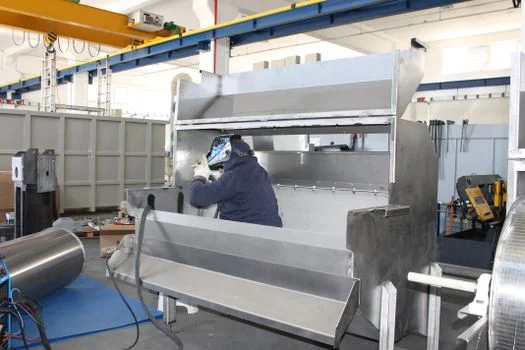
Budgeting for a wastewater treatment plant in Denmark requires a clear distinction between initial capital expenditure (CAPEX) and long-term operational expenditure (OPEX). For a mid-sized dairy plant (100 m³/h), a DAF system typically involves a CAPEX of €1M to €2M. The OPEX for such a system ranges from €0.10 to €0.30 per cubic meter, covering electricity, chemical coagulants, and routine maintenance. If the plant requires an MBR for water reuse, the CAPEX can rise to €5M–€8M, with OPEX increasing to €0.20–€0.50/m³ due to membrane replacement cycles every 5–8 years.
Anaerobic digestion systems have high upfront costs (€1.5M–€5M) but offer the most attractive ROI in scenarios with high organic loads. The biogas produced can offset energy costs by 30–50%, effectively lowering the net OPEX to €0.15–€0.40/m³. For meat and fish processors, sludge disposal is the dominant OPEX factor, costing between €50 and €150 per ton of dry sludge. Implementing advanced dewatering technology is often the fastest way to improve the plant's bottom line.
To calculate the Return on Investment (ROI) for a new treatment system, engineers use the following formula: Payback Period = CAPEX / (Annual OPEX Savings + Avoided Fines + Water Reuse Value). For example, a 100 m³/h DAF system costing €1.2M that saves €300K/year in municipal surcharges and DKK 500K in potential fines has a payback period of approximately 3 years. Detailed cost modeling for other regions, such as food processing wastewater treatment in Greece, shows similar ROI patterns, though energy and labor costs vary by market.
| System Type | Capacity (m³/h) | CAPEX (€) | OPEX (€/m³) | ROI (Years) |
|---|---|---|---|---|
| Small DAF | 10 – 30 | 500K – 800K | 0.15 – 0.35 | 3 – 5 |
| Large DAF | 100+ | 1.5M – 2.5M | 0.10 – 0.25 | 2 – 4 |
| Medium MBR | 50 | 2M – 4M | 0.25 – 0.55 | 4 – 7 |
| Anaerobic Digester | 50 - 100 | 1.5M – 5M | 0.15 – 0.40* | 5 – 8 |
*Note: Anaerobic OPEX is often offset by biogas energy production.
Frequently Asked Questions
What are the Danish EPA’s penalties for exceeding wastewater discharge limits?Under the Danish Environmental Protection Act § 33, companies can face fines up to DKK 1M per year. Persistent non-compliance may lead to mandatory plant upgrades, production caps, or complete shutdowns by the Miljøstyrelsen.
How much does a DAF system cost for a 50 m³/h dairy plant in Denmark?For a 50 m³/h capacity, CAPEX typically ranges from €800K to €1.5M. The OPEX is generally between €0.15 and €0.30 per cubic meter, depending on the chemical dosage required for fat and protein removal.
Can MBR systems enable water reuse in food processing?Yes. MBR effluent typically meets the quality standards required for non-potable reuse under EU Drinking Water Directive 98/83/EC. In Denmark, this water is commonly reused for cooling, irrigation, and initial equipment rinsing.
What’s the best sludge dewatering technology for a fish processing plant?Centrifuges are generally considered the best technology for fish processing sludge. They achieve 28–35% cake dryness and are highly effective at handling the oily, protein-rich sludge typical of this industry, reducing disposal volumes by 40% compared to standard presses.
How do I choose between DAF and MBR for my meat processing plant?Choose DAF if your primary concern is removing FOG and TSS (90–95% efficiency) to meet municipal sewer standards. Choose MBR if you need to meet strict surface water discharge limits (COD ≤ 50 mg/L) or if you intend to reuse the treated water within your facility.
Further Reading
Explore these in-depth articles on related wastewater treatment topics: