Kisumu’s Sewage Crisis: Why Equipment Suppliers Are Critical in 2026
Kisumu's sewage treatment infrastructure serves a mere 18% of its population, a stark reality that places the onus on industrial and municipal buyers to source essential treatment equipment. This critical gap is further exacerbated by the burgeoning industrial activity in zones like Kibos and Miwani, which collectively generate approximately 12,000 m³/day of wastewater. This volume significantly strains KIWASCO’s existing 26,000 m³/day capacity, underscoring the urgent need for robust, decentralized wastewater treatment solutions. Kisumu's unique water conditions, characterized by high turbidity and seasonal rainfall variability, necessitate equipment that is not only efficient but also resilient. the National Environment Management Authority's (NEMA) intensified enforcement of the Water Act 2016 standards, which mandate strict effluent limits—typically ≤50 mg/L BOD and ≤100 mg/L TSS—in 2023, has made the selection of compliant technology paramount for avoiding regulatory penalties.
How to Choose Sewage Treatment Equipment for Kisumu’s Conditions
Selecting the appropriate sewage treatment equipment for Kisumu requires a strategic approach that directly addresses the region's specific environmental and operational challenges. Land availability is a significant constraint in urbanized areas; Membrane Bioreactor (MBR) systems, for instance, typically require only 0.2 m²/m³ of treatment capacity, a substantial reduction compared to the 0.5 m²/m³ needed for conventional systems, making them ideal for space-limited projects. Kisumu’s influent water quality, which can average between 300–800 mg/L COD, demands technologies capable of high removal rates. MBR systems excel here, achieving up to 95% COD removal, significantly outperforming Dissolved Air Flotation (DAF) systems at around 80% and traditional oxidation ponds at approximately 70%. Energy efficiency is another crucial factor; while MBR systems consume between 0.8–1.2 kWh/m³, some advanced conventional systems can operate at a lower 0.4–0.6 kWh/m³. However, to consistently meet NEMA’s stringent ≤50 mg/L BOD standard, only MBR and advanced DAF systems typically avoid the need for costly tertiary treatment stages. When evaluating potential suppliers, prioritize those with demonstrable local support, including NEMA certification for their equipment, a commitment to 24/7 service availability, and readily accessible spare parts within Kisumu to minimize downtime.
| Factor | Consideration for Kisumu | Technology Recommendation |
|---|---|---|
| Land Footprint | Urban density and high land costs necessitate compact solutions. | MBR systems (0.2 m²/m³) significantly outperform conventional (0.5 m²/m³). |
| Influent Quality | High COD (300–800 mg/L) and potential turbidity require robust treatment. | MBR systems (95% COD removal) are preferred over DAF (80%) and oxidation ponds (70%). |
| Energy Consumption | Operating costs are a key concern; balancing efficiency with performance. | Evaluate kWh/m³; some advanced conventional systems offer lower energy use (0.4–0.6 kWh/m³) than MBR (0.8–1.2 kWh/m³). |
| Compliance | Meeting NEMA’s ≤50 mg/L BOD and ≤100 mg/L TSS standards is mandatory. | MBR and advanced DAF systems consistently achieve these limits without tertiary treatment. |
| Local Support | Minimizing downtime and ensuring operational continuity. | Look for NEMA certification, 24/7 service, and local spare parts availability. |
Top 5 Sewage Treatment Technologies for Kisumu: Head-to-Head Comparison
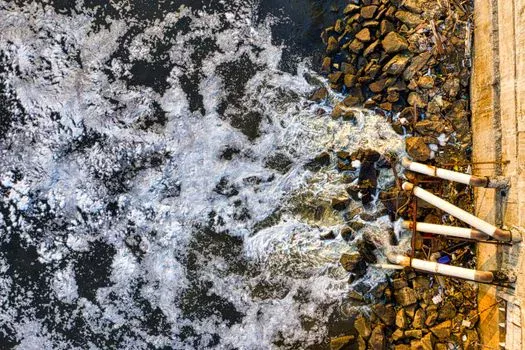
To navigate the complex landscape of sewage treatment equipment, a direct comparison of leading technologies is essential, especially when tailored to Kisumu’s specific context. The following table outlines key performance indicators, cost benchmarks, and compliance capabilities for prevalent systems, incorporating data from existing municipal infrastructure like KIWASCO's Nyalenda Oxidation Ponds and insights from various treatment plant types.
| Technology | COD Removal (%) | TSS Removal (%) | Footprint (m²/m³) | Energy Consumption (kWh/m³) | CAPEX (KSh/m³) | OPEX (KSh/m³/year) | NEMA 2023 Compliance | Best For |
|---|---|---|---|---|---|---|---|---|
| MBR Integrated Wastewater Treatment | 95 | 98 | 0.2 | 0.8–1.2 | 80,000–150,000 | 5,000–8,000 | Excellent | High-density urban areas, land-constrained projects requiring high effluent quality. |
| Conventional Activated Sludge (with tertiary treatment) | 85–90 | 85–90 | 0.5 | 0.4–0.7 | 50,000–90,000 | 6,000–9,000 | Good (with tertiary) | Larger, less space-constrained municipal or industrial sites. |
| Dissolved Air Flotation (DAF) | 70–85 (Primary) | 75–90 (Primary) | 0.3 | 0.3–0.5 | 60,000–110,000 | 4,000–7,000 | Fair (often requires pre/post-treatment) | Industrial effluent pretreatment, solids separation. |
| Oxidation Ponds (KIWASCO example) | 70–85 | 70–85 | 2.0+ | Minimal | 10,000–30,000 | 1,000–3,000 | Poor (typically fails NEMA standards) | Low-cost, large-scale rural applications with abundant land. |
| Sequencing Batch Reactor (SBR) | 90–95 | 90–95 | 0.4 | 0.6–1.0 | 70,000–130,000 | 5,500–8,500 | Very Good | Intermittent flow conditions, smaller to medium-sized plants. |
Conventional systems, while having lower initial CAPEX, often require additional tertiary treatment units like sand filters or UV disinfection to meet NEMA standards, adding approximately 20% to CAPEX and 15% to OPEX. For industrial pretreatment in Kisumu, DAF systems offer efficient removal of suspended solids and oils. For projects with significant land constraints and a need for superior effluent quality, MBR systems present a compelling, albeit higher CAPEX, solution.
Cost Breakdown: Sewage Treatment Plants in Kisumu (2026 CAPEX & OPEX)
Understanding the financial implications of sewage treatment is crucial for effective budgeting and long-term operational planning. Capital Expenditure (CAPEX) for sewage treatment plants in Kisumu can vary significantly based on capacity and technology chosen. For a 10 m³/day system, expect CAPEX to range from KSh 5 million to KSh 8 million. Larger installations, such as a 50 m³/day plant, typically fall between KSh 12 million and KSh 20 million, while a 100 m³/day facility could cost KSh 25 million to KSh 40 million, reflecting economies of scale. Operational Expenditure (OPEX) is a continuous cost that must be carefully modelled. For MBR systems, OPEX typically constitutes about 40% for energy, 25% for chemicals, 20% for labor, and 15% for maintenance. While MBR systems may have higher initial CAPEX, they can offer significant OPEX savings over their lifespan, potentially up to 30% over 5 years compared to conventional systems. Hidden costs are also a critical consideration; land acquisition in Kisumu's industrial zones can range from KSh 1 million to KSh 3 million per acre. NEMA permitting fees can add KSh 500,000 to KSh 1 million, and sludge disposal costs, based on KIWASCO's 2019 data of KSh 500 per tonne, also contribute to the overall financial burden. Advanced technologies like DAF systems with micro-bubble technology can reduce chemical costs by up to 20%.
| Capacity (m³/day) | Estimated CAPEX (KSh) | Estimated Annual OPEX (KSh) | Key OPEX Components |
|---|---|---|---|
| 10 | 5,000,000 – 8,000,000 | 500,000 – 1,000,000 | Energy, Chemicals, Labor, Maintenance |
| 50 | 12,000,000 – 20,000,000 | 2,500,000 – 4,000,000 | Energy, Chemicals, Labor, Maintenance |
| 100 | 25,000,000 – 40,000,000 | 5,000,000 – 8,000,000 | Energy, Chemicals, Labor, Maintenance |
| *Additional Costs* | Land Acquisition: KSh 1M–3M/acre | NEMA Permitting: KSh 500K–1M | Sludge Disposal: KSh 500/tonne (KIWASCO 2019) |
Compliance Checklist: Meeting Kenya’s Water Act 2016 in Kisumu
Adherence to Kenya's Water Act 2016 and NEMA’s stringent discharge standards is not merely a regulatory requirement but a fundamental aspect of responsible wastewater management in Kisumu. The key effluent standards to meet include a Biochemical Oxygen Demand (BOD) of ≤50 mg/L, Total Suspended Solids (TSS) of ≤100 mg/L, and ammonia levels of ≤10 mg/L, as stipulated in Part IV of the Water Act 2016. For sludge management, the Act permits the sale of dewatered sludge (≤20% moisture) for agricultural use, with KIWASCO data from 2019 indicating a price of KSh 500 per tonne. This necessitates efficient dewatering technologies like plate-and-frame filter presses, which are crucial for achieving the required solids content. For plants treating over 10 m³/day, obtaining NEMA approval is mandatory, requiring submission of comprehensive documentation including Environmental Impact Assessments (EIAs), detailed design drawings, and proof of supplier NEMA certification. Continuous monitoring of critical parameters such as pH, TSS, and flow is also required, often facilitated by automatic dosing systems that ensure precise chemical application. Failure to comply with these regulations can result in severe penalties, including fines of up to KSh 10 million or imprisonment for up to 5 years, as outlined in Section 78 of the Water Act 2016. Implementing technologies like the plate and frame filter press for sludge dewatering and automatic chemical dosing systems are vital steps towards ensuring compliance and avoiding these repercussions.
Zero-Risk Supplier Selection: 7 Questions to Ask Before Buying
To mitigate risks and ensure a successful sewage treatment project in Kisumu, a thorough vetting process for suppliers is essential. Asking the right questions can prevent costly mistakes and ensure long-term operational efficiency and compliance. Here are seven critical questions to pose to potential equipment suppliers:
- Do you have NEMA-certified installations in Kisumu? Request verifiable case studies or site visit opportunities to assess past performance and local acceptance.
- What is your warranty and service response time? Aim for at least a 12-month warranty and a guaranteed response time of 24 hours for emergency service calls.
- Can you provide a detailed 5-year OPEX projection? This allows for accurate financial planning and comparison against your own cost models.
- Do you offer operator training and maintain a local spare parts inventory in Kisumu? Local support is critical for minimizing downtime and ensuring quick resolution of issues.
- What is your compliance track record with NEMA standards? Request recent NEMA inspection reports from previous installations to gauge their reliability.
- Can you customize the system to effectively handle Kisumu’s specific water conditions, such as high turbidity and seasonal rainfall? Generic solutions may not perform optimally under local environmental stresses.
- What is your typical lead time for delivery and installation of turnkey projects? Target a lead time of six months or less for efficient project scheduling.
Frequently Asked Questions
What are the key NEMA standards for sewage discharge in Kisumu?
NEMA mandates effluent limits of ≤50 mg/L BOD, ≤100 mg/L TSS, and ≤10 mg/L ammonia. Compliance is crucial to avoid penalties under the Water Act 2016.
What is the estimated CAPEX for a 50 m³/day sewage treatment plant in Kisumu?
For a 50 m³/day plant, the estimated CAPEX typically ranges from KSh 12 million to KSh 20 million, depending on the chosen technology.
How do MBR systems compare to oxidation ponds in terms of land use for Kisumu?
MBR systems are significantly more compact, requiring approximately 0.2 m²/m³ of treatment capacity, compared to oxidation ponds which can need 2.0 m²/m³ or more, a critical advantage in Kisumu's urban environment.
What are the main OPEX components for wastewater treatment plants?
The primary OPEX components typically include energy consumption, chemical costs, labor, and routine maintenance. For MBR systems, energy can account for up to 40% of OPEX.
Is local support important when selecting a sewage treatment equipment supplier in Kisumu?
Yes, local support is vital for ensuring prompt service, readily available spare parts, and effective operator training, which collectively minimize operational downtime and costs.
What are the penalties for non-compliance with sewage discharge standards in Kenya?
Non-compliance can lead to severe penalties, including fines of up to KSh 10 million or imprisonment for up to five years, as per Section 78 of the Water Act 2016.
Sources:
National Environment Management Authority (NEMA), Kenya Water Act 2016, Kisumu Water and Sanitation Company (KIWASCO) reports (2019 data), HydropureWater internal data (2025).