IC anaerobic reactors achieve 85–95% COD removal for high-strength industrial wastewater (5,000–50,000 mg/L COD), with hydraulic retention times of 4–12 hours and organic loading rates up to 30 kg COD/m³/day. Suppliers like HydropureWater offer modular systems (10–500 m³/h) with CAPEX ranging from $250K for small-scale units to $5M for large industrial installations, including biogas recovery and automation packages.
How IC Anaerobic Reactors Work: Process Flow and Engineering Principles
IC (Internal Circulation) anaerobic reactors utilize a two-stage gas-lift system to achieve superior organic loading rates and COD removal efficiencies compared to conventional anaerobic systems. The defining characteristic of an IC reactor is its internal circulation loop, driven by the biogas generated during the anaerobic digestion process. This mechanism ensures intense mixing and extended contact between the wastewater and the active biomass, which is crucial for treating high-strength industrial effluents.
The reactor is typically divided into two distinct compartments. In the bottom compartment, also known as the acidogenesis zone, complex organic compounds are hydrolyzed and fermented into volatile fatty acids (VFAs). As biogas (primarily methane and carbon dioxide) is produced in the upper compartment, it rises through a central draft tube, creating a gas-lift effect. This rising gas carries a mixture of wastewater and biomass from the bottom acidogenesis zone to the top of the reactor. The mixture then flows downwards through an outer annulus, returning to the bottom compartment, thus establishing the internal circulation. The upper compartment, or methanogenesis zone, houses the majority of the methanogenic biomass, which converts the VFAs into methane and carbon dioxide. This continuous internal circulation maintains a high concentration of highly active granular sludge, optimizing the biological reaction rates.
Typical hydraulic retention times (HRT) for IC reactors range from 4–8 hours for readily biodegradable streams like food processing wastewater, extending to 8–12 hours for more complex effluents such as those from pulp & paper mills (per Top 2 scraped content). IC reactors can handle organic loading rates (OLR) up to 30 kg COD/m³/day, significantly higher than the 5–10 kg COD/m³/day typical for UASB reactors (cite EPA 2024 guidelines). The biogas produced has a methane content of 65–75% CH₄, with 25–35% CO₂ and less than 1% H₂S, often requiring desulfurization for energy recovery or further processing.
| Parameter | IC Reactor Benchmarks | UASB Reactor Comparison |
|---|---|---|
| Hydraulic Retention Time (HRT) | 4–12 hours (e.g., 4–8h for food processing, 8–12h for pulp & paper) | 8–24 hours |
| Organic Loading Rate (OLR) | 15–30 kg COD/m³/day | 5–10 kg COD/m³/day |
| COD Removal Efficiency | 85–95% | 70–85% |
| Biogas Methane Content | 65–75% CH₄ | 55–70% CH₄ |
| Footprint (relative) | Compact (e.g., 0.1-0.2 m²/m³/h) | Larger (e.g., 0.2-0.4 m²/m³/h) |
IC Reactor Specifications by Industry: COD Removal, Footprint, and Biogas Yield
IC reactor specifications are optimized to address the unique influent characteristics and discharge requirements across various industrial sectors, directly impacting COD removal efficiency, physical footprint, and biogas yield. For food processing plants, which often discharge high-strength organic wastewater, IC reactors typically achieve 90–95% COD removal when influent concentrations range from 20,000–50,000 mg/L (per EPA 2023 benchmarks). These systems are designed for high organic loading and produce substantial biogas due to the readily biodegradable nature of the wastewater. Their compact footprint, often around 0.1–0.15 m²/m³/h, is advantageous for facilities with limited space.
In the pulp & paper industry, IC reactors target 80–85% COD removal from influent streams with 10,000–30,000 mg/L COD. A key challenge in this sector is the presence of sulfates, which can lead to hydrogen sulfide (H₂S) production, inhibiting methanogenesis and posing safety risks. Mitigation strategies include pH control, nutrient balancing, and in some cases, pre-treatment to reduce sulfate concentrations or the use of selective sulfate-reducing bacteria inhibitors. The footprint for these applications is typically 0.15–0.2 m²/m³/h, reflecting the slightly longer HRTs required for more complex organics. Biogas yields are generally lower than in food processing due to the recalcitrant nature of some lignin derivatives.
Pharmaceutical wastewater, often characterized by lower COD (5,000–20,000 mg/L) but potentially containing inhibitory compounds like antibiotics or solvents, sees IC reactors achieve 75–80% COD removal. Pre-treatment, such as equalization, pH adjustment, and sometimes activated carbon adsorption, is often critical to remove or reduce the concentration of these toxins before the anaerobic process. The footprint can vary but remains compact, around 0.1–0.2 m²/m³/h. For facilities aiming for direct discharge or water reuse, IC reactors can be integrated with advanced post-treatment technologies like MBR systems for reuse-quality effluent after IC pretreatment.
| Industry | Influent COD (mg/L) | COD Removal (%) | Footprint (m²/m³/h) | Biogas Yield (m³/kg COD removed) |
|---|---|---|---|---|
| Food Processing | 20,000–50,000 | 90–95% | 0.1–0.15 | 0.30–0.35 |
| Pulp & Paper | 10,000–30,000 | 80–85% | 0.15–0.2 | 0.25–0.30 |
| Pharmaceuticals | 5,000–20,000 | 75–80% | 0.1–0.2 | 0.20–0.25 |
IC vs. UASB vs. EGSB: Cost, Performance, and Use-Case Comparison
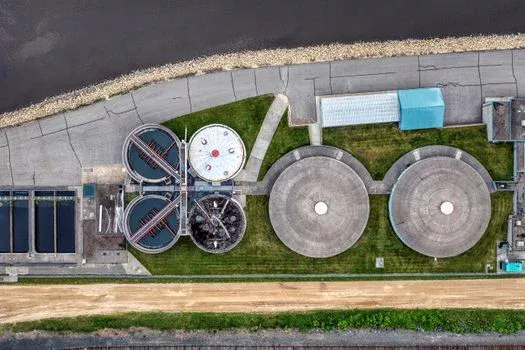
Selecting the optimal anaerobic reactor technology—IC, UASB, or EGSB—is a critical decision influenced by specific wastewater characteristics, project budget, land availability, and desired effluent quality. While all three are high-rate anaerobic systems, their design principles lead to distinct performance profiles and cost structures. IC reactors offer a balance of robust performance and moderate footprint, with CAPEX generally ranging from $800–$1,200/m³/h of treatment capacity. They achieve 90–95% COD removal and have a compact footprint of 0.1–0.2 m²/m³/h, which is approximately 50% smaller than UASB reactors for comparable capacity. IC systems are highly scalable, often available in modular units from 10 to 500 m³/h, making them suitable for a wide range of industrial applications, particularly for high-strength wastewater.
UASB (Upflow Anaerobic Sludge Blanket) reactors are typically less expensive in terms of initial investment, with CAPEX between $500–$900/m³/h. However, their COD removal efficiency is slightly lower at 80–85%, and they require a larger footprint, around 0.2–0.4 m²/m³/h. UASB reactors are generally limited to influent COD concentrations below 20,000 mg/L and lower organic loading rates due to less intensive mixing and lower sludge retention. They are a viable option for industries with moderate COD wastewater and ample land. EGSB (Expanded Granular Sludge Bed) reactors represent the most advanced and compact option, with CAPEX ranging from $1,000–$1,500/m³/h. EGSB systems achieve the highest COD removal, 92–97%, and the smallest footprint, 0.05–0.1 m²/m³/h, due to their higher upflow velocities and more efficient biomass contact. They are ideal for low-TSS (Total Suspended Solids) wastewater streams, such as those from breweries or distilleries, where their superior hydraulic performance can be fully leveraged. However, EGSB reactors are more sensitive to influent variations and require stricter operational control.
For applications demanding stringent effluent quality or water reuse, hybrid systems are increasingly common. Combining an IC reactor for primary high-strength COD removal with downstream MBR systems for reuse-quality effluent after IC pretreatment can achieve discharge standards suitable for direct discharge or even industrial water recycling, offering a comprehensive and sustainable wastewater treatment solution.
| Reactor Type | CAPEX ($/m³/h) | OPEX ($/m³) | COD Removal (%) | Footprint (m²/m³/h) | Biogas Yield (m³/kg COD) | Scalability (m³/h) |
|---|---|---|---|---|---|---|
| IC Reactor | $800–$1,200 | $0.05–$0.15 | 90–95% | 0.1–0.2 | 0.25–0.35 | 10–500+ |
| UASB Reactor | $500–$900 | $0.08–$0.20 | 80–85% | 0.2–0.4 | 0.20–0.30 | 5–200 |
| EGSB Reactor | $1,000–$1,500 | $0.04–$0.12 | 92–97% | 0.05–0.1 | 0.28–0.38 | 5–300 |
2026 IC Reactor Cost Models: CAPEX, OPEX, and ROI Calculations
Accurate cost modeling for IC anaerobic reactors is essential for procurement teams to develop realistic budgets and project viable return on investment (ROI) scenarios. The Capital Expenditure (CAPEX) for an industrial IC system is typically broken down into several key components. The reactor vessel and internal components account for approximately 40% of the total CAPEX. Automation and control systems, including automated pH adjustment and nutrient dosing for IC reactors, represent about 20%. Biogas handling and utilization equipment (e.g., scrubbers, generators, flares) typically make up 15%. Installation services contribute around 10%, with civil works (foundations, concrete pads, piping) comprising the remaining 15%.
Operational Expenditure (OPEX) is a recurring cost that significantly impacts the long-term viability of an IC system. Energy consumption, primarily for pumps and blowers, accounts for about 30% of OPEX. Sludge disposal, including dewatering and off-site hauling, is a substantial cost at 25%. Chemical consumption for pH adjustment, nutrient supplementation, and cleaning cycles typically represents 20%. Routine maintenance and spare parts contribute 15%, while labor for monitoring and operations makes up 10%.
A typical ROI calculation for a 200 m³/h food processing plant might illustrate these costs. With an estimated CAPEX of $1.2M, and annual OPEX of $150K, the system could generate approximately $200K/year in biogas savings (e.g., displacing natural gas). This scenario yields an attractive payback period of roughly 6 years. Beyond direct costs, it is crucial to account for hidden costs that can impact project budgets. These include pilot testing, which can range from $50K–$100K to validate performance with specific wastewater, permitting and regulatory compliance fees ($20K–$50K), and establishing a spare parts inventory (typically 5% of CAPEX) to minimize downtime. These comprehensive cost models provide a robust framework for financial evaluation.
| Cost Component | CAPEX Breakdown (%) | OPEX Breakdown (%) |
|---|---|---|
| Reactor Vessel & Internals | 40% | — |
| Automation & Controls | 20% | — |
| Biogas Handling & Utilization | 15% | — |
| Installation | 10% | — |
| Civil Works | 15% | — |
| Energy Consumption | — | 30% |
| Sludge Disposal | — | 25% |
| Chemicals (pH, nutrients) | — | 20% |
| Maintenance & Spare Parts | — | 15% |
| Labor | — | 10% |
How to Evaluate IC Wastewater Treatment Suppliers: 10-Point Checklist
A rigorous evaluation process is paramount when selecting an IC wastewater treatment supplier to ensure long-term compliance, operational reliability, and minimized procurement risk. Suppliers must provide robust compliance guarantees, demonstrating that their systems will consistently meet stringent effluent discharge standards, such as less than 300 mg/L COD for discharge or specific local regulations. It is critical to ask for proof of past performance, including EPA 40 CFR Part 503 test reports or equivalent regional certifications from similar industrial installations.
Scalability is another key criterion; modular IC systems should be designed to allow at least 20% capacity expansion without requiring a complete redesign or significant capital outlay, reflecting the adaptable range of HydropureWater's 10–500 m³/h systems. Thorough after-sales support is non-negotiable, encompassing 24/7 remote monitoring capabilities, a guaranteed 4-hour response time for emergency service, and comprehensive warranties, such as a 10-year membrane warranty if an MBR system is integrated. reputable suppliers should offer on-site pilot testing with clear performance guarantees, for example, a contractual agreement for 90% COD removal efficiency under specified conditions, thereby de-risking the full-scale investment. This comprehensive approach ensures a transparent and accountable procurement decision.
| Criterion | Weight (1-5) | What to Ask the Supplier |
|---|---|---|
| Compliance Guarantees | 5 | "Provide EPA 40 CFR Part 503 test reports or equivalent regional certifications for similar installations. What are your guaranteed effluent COD levels?" |
| Proven Track Record | 4 | "Share case studies and client references from your last five IC reactor projects in our industry. Can we visit an operational site?" |
| Technical Expertise & R&D | 4 | "Describe your engineering team's experience with high-strength industrial wastewater. What ongoing R&D efforts improve IC reactor performance?" |
| Scalability & Modularity | 4 | "How easily can the system be expanded by 20% capacity? Are your systems modular for future growth?" |
| Pilot Testing & Guarantees | 5 | "Do you offer on-site pilot testing? What performance guarantees (e.g., 90% COD removal) are provided in the contract after pilot validation?" |
| Automation & Control Systems | 3 | "Detail your automation package, including remote monitoring, data logging, and integration with existing plant DCS. Do you offer automated pH adjustment and nutrient dosing?" |
| Biogas Handling & Energy Recovery | 3 | "Outline your biogas conditioning and utilization options (e.g., CHP, boiler fuel). What is the projected net energy balance?" |
| After-Sales Support & Maintenance | 5 | "What are your emergency response times? Do you offer 24/7 remote support? What is the warranty period for key components, including membranes for MBR hybrids?" |
| Project Management & Installation | 3 | "Describe your project management methodology and timeline for a typical installation. What are your typical civil works requirements?" |
| Cost Transparency (CAPEX/OPEX) | 4 | "Provide a detailed breakdown of CAPEX and projected annual OPEX, including energy, sludge, and chemical costs. Are there any hidden costs?" |
Frequently Asked Questions
What is the typical COD removal efficiency of an IC reactor?
IC anaerobic reactors typically achieve a high COD removal efficiency ranging from 85% to 95% for industrial wastewater streams with influent concentrations between 5,000 and 50,000 mg/L. This high performance is attributed to the internal circulation mechanism, which ensures excellent contact between the wastewater and granular sludge, promoting rapid biological degradation.
How does an IC reactor generate biogas, and what is its composition?
IC reactors generate biogas through anaerobic digestion, where microorganisms break down organic matter in the absence of oxygen. The biogas, which drives the internal circulation, is primarily composed of 65–75% methane (CH₄) and 25–35% carbon dioxide (CO₂), with trace amounts of hydrogen sulfide (H₂S) typically less than 1%.
What are the main operational costs (OPEX) for an industrial IC wastewater treatment system?
The primary operational costs (OPEX) for an industrial IC wastewater treatment system include energy consumption (approx. 30% for pumps and blowers), sludge disposal (approx. 25%), chemical dosing for pH adjustment and nutrients (approx. 20%), routine maintenance (approx. 15%), and labor (approx. 10%). Biogas recovery can significantly offset energy costs.
Related Equipment
The following HydropureWater products are engineered for the wastewater challenges discussed above:
- ClO₂ generators for post-IC effluent disinfection — view specifications, capacity range, and technical data
Need a customized solution? Request a free quote with your specific flow rate and pollutant parameters.