Resin adsorption arsenic removal cuts dissolved arsenic in industrial wastewater to below the EPA Maximum Contaminant Level of 0.01 mg/L (10 ppb) when As(V) is the dominant species and empty bed contact time (EBCT) is held at 2–5 minutes. Hybrid iron oxide resins such as Purolite FerrIX A33E and Lewatit FO 36 typically adsorb 1.2–3.5 mg As/g resin, about 2–7 times the 0.5–1.0 mg As/g range reported for activated charcoal. Pre-oxidation at 1–3 mg/L chlorine with 30–60 minutes contact converts poorly adsorbed As(III) to As(V). Typical total cost of ownership sits at $0.50–$2.00 per 1,000 gallons treated over a 5–10 year resin life spanning 100–300 regeneration cycles.
How Resin Adsorption Arsenic Removal Compares to Other Methods
Resin adsorption systems remove more than 95% of As(V) at EBCT 2–5 minutes when influent arsenic is 0.05–0.5 mg/L and hybrid capacity is 1.2–3.5 mg As/g. Activated charcoal averages 0.5–1.0 mg As/g with 3–6 month change-outs. RO/NF reaches 90–98% removal but at higher energy cost. Hybrid beds usually last 5–10 years at $0.50–$2.00 per 1,000 gallons treated.
Activated charcoal remains common for organics, yet its low arsenic capacity drives frequent change-out and large hazardous spent-media volumes. Membrane trains achieve high rejection, but energy often lands in the $0.80–$2.50/kWh band once high-pressure pumps and cleaning chemicals are included. Fouling shortens membrane life toward the lower end of the 5–7 year window and adds downtime for clean-in-place every 2–4 weeks on many industrial feeds.
Hybrid resins balance capacity and operating cost for industrial arsenic polishing. Capacities of 1.2–3.5 mg As/g resin are 2–7 times charcoal, so service cycles between regenerations stretch longer on the same vessel volume. A well-run bed lasts 5–10 years when regenerant chemistry and oxidant residuals stay in control. Overall operating cost for resin adsorption systems typically falls within $0.50–$2.00 per 1,000 gallons treated on arsenic-focused trains.
Mechanism differs by resin class and by arsenic speciation in the feed. Strong-base anion (SBA) resins exchange arsenate As(V) for chloride or similar counter-ions on quaternary ammonium sites. Hybrid iron oxide resins add surface complexation: iron oxide sites bind arsenate more selectively than sulfate under the same ionic strength. As(V) is anionic across typical wastewater pH; As(III) is mostly neutral below pH 9.2 and adsorbs poorly until oxidized. Most plants we size for arsenic polishing therefore insist on speciation data before locking resin type or EBCT.
| Method | Arsenic Adsorption Capacity (mg As/g) | Typical Lifespan/Replacement | Operational Cost (per 1,000 gallons) | Key Disadvantages |
|---|---|---|---|---|
| Activated Charcoal | 0.5–1.0 | 3–6 months | $1.00–$3.00 | Low capacity, frequent replacement, hazardous waste generation |
| Membrane Filtration (RO/NF) | N/A (separation) | 5–7 years (membranes) | $0.80–$2.50 | High energy consumption, fouling, lower water recovery |
| Resin Adsorption (Hybrid) | 1.2–3.5 | 5–10 years | $0.50–$2.00 | Requires pre-oxidation for As(III), regeneration waste |
Engineering Specs: Resin Types, Capacities, and Process Parameters
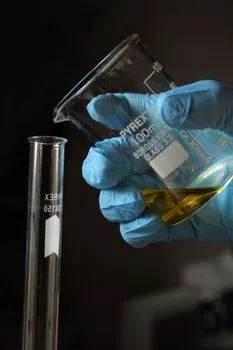
Industrial wastewater arsenic treatment depends on matching resin chemistry to influent speciation and competing anions. Three resin families appear in arsenic duty: strong-base anion exchange (SBA), weak-base anion exchange (WBA), and hybrid iron oxide resins. SBA grades such as Dowex PSR-2 and AmberLite IRA400 work for As(V) but lose capacity when sulfate is high. WBA resins are pH-limited and rarely selected as the primary arsenic bed. Hybrid products such as Purolite FerrIX A33E and Lewatit FO 36 give higher selectivity for arsenate on complex matrices.
Hybrid resins typically adsorb 1.2–3.5 mg As/g resin for As(V) according to manufacturer capacity bands used in design. Conventional SBA resins more often sit at 0.8–1.5 mg As/g under comparable feed conditions. That gap lengthens service cycles and cuts regeneration frequency on hybrid beds. Optimal pH for arsenate uptake on most resins is 6.5–8.5; SBA windows of 6.0–8.0 are common on datasheets and should be confirmed during pilot work at the actual temperature and ionic strength.
Flow design uses bed volumes per hour (BV/h) rather than linear velocity alone. Hybrid ion exchange resin for arsenic duty usually runs at 5–20 BV/h. EBCT should stay at 2–5 minutes to hold greater than 95% removal; short EBCT shows up as early breakthrough on the effluent analyzer. SBA beds often run faster at 10–30 BV/h with EBCT 1–3 minutes, trading contact time for throughput when competition is low and sulfate is controlled upstream.
Resin regeneration cycles keep long-term cost predictable for operations teams. Hybrid beds typically regenerate with 4–10% NaOH for 30–60 minutes, then neutralize with 5–10% HCl before return to service. Spent regenerant carries concentrated arsenic and must be managed as hazardous waste under local rules. A maintained hybrid ion exchange resin commonly survives 100–300 regeneration cycles across its life when oxidant breakthrough is prevented. Automated oxidant dosing for arsenic pretreatment and later pH trim is usually handled with an automatic chemical dosing system.
| Parameter | Strong-Base Anion (SBA) Resin | Hybrid Iron Oxide Resin |
|---|---|---|
| Example Resins | AmberLite IRA400, Dowex PSR-2 | Purolite FerrIX A33E, Lewatit FO 36 |
| Adsorption Capacity (mg As/g) | 0.8–1.5 (for As(V)) | 1.2–3.5 (for As(V)) |
| Optimal pH Range | 6.0–8.0 | 6.5–8.5 |
| As(III) Removal | Poor (requires pre-oxidation) | Poor (requires pre-oxidation) |
| Flow Rate (BV/h) | 10–30 | 5–20 |
| EBCT (minutes) | 1–3 | 2–5 |
| Regeneration Chemical | 4–8% NaCl | 4–10% NaOH, then 5–10% HCl |
| Regeneration Cycles (lifespan) | 50–100 | 100–300 |
| Selectivity for Arsenic | Moderate (competes with sulfate) | High |
What Is Pre-Oxidation for Arsenic Removal?
Pre-oxidation for arsenic removal converts arsenite As(III) to arsenate As(V) so anion or hybrid resins can reach greater than 95% capture. At industrial wastewater pH 6–9, As(III) exists mainly as neutral H3AsO3 and binds poorly to anion exchange sites and iron oxide surfaces. As(V) exists as H2AsO4- and HAsO42- across a wide pH band and adsorbs readily on those same sites. Skipping this step is the most common root cause of early breakthrough we see on field audits of resin arsenic trains.
Chlorine dosed at 1–3 mg/L with 30–60 minutes contact is the usual plant choice on cost and availability. Ozone at 0.5–2 mg/L with 10–20 minutes contact works faster but needs generators and off-gas control. Potassium permanganate at 1–5 mg/L with 20–40 minutes contact suits sites that must avoid chlorine residuals in finished water. Pick the oxidant from residual limits, organics load, and operator skill—not from brochure language.
Excess oxidant must be stripped before the resin bed to protect polymer integrity. Residual chlorine can attack the polymer matrix and cut exchange capacity over successive cycles. Activated carbon filtration or sodium bisulfite at 1–2 mg/L removes leftover oxidant ahead of the adsorber. An activated carbon filtration system also trims some organics that would foul the resin. Target ORP of 600–800 mV usually indicates complete As(III) conversion; feed that signal into an automatic chemical dosing system to avoid under-dose and over-dose alike.
System Sizing and Compliance with EPA, WHO, and EU Limits

EPA sets the arsenic Maximum Contaminant Level at 0.01 mg/L (10 ppb) for public water systems. WHO and EU drinking-water guidance use the same 0.01 mg/L figure, and many industrial discharge permits mirror that number. System volume must therefore be sized for continuous compliance, not for average-day influent alone or for best-case speciation assumptions.
Resin volume sizing starts from flow, influent concentration, capacity, and bed density. The working formula used in preliminary design is:
Resin volume (L) = (Influent flow rate (m³/h) × Influent As concentration (mg/L) × 1000 g/kg) / (Adsorption capacity (mg As/g resin) × Resin density (g/L))
Example: 100 m³/h flow, 0.1 mg/L influent arsenic, 2.0 mg As/g hybrid capacity, and 0.7 g/L density yields (100 × 0.1 × 1000) / (2.0 × 0.7) = 10,000 / 1.4 ≈ 7143 L (7.14 m³) of resin for one service cycle. That volume is the calculated minimum for the stated cycle, not the installed design volume after contingency factors.
Engineers typically oversize calculated resin volume by 20–30% to cover influent spikes and breakthrough curves. That buffer often stretches hybrid service life toward 7–10 years and reduces emergency regeneration calls. Lead-lag columns add another layer of continuity: one vessel treats while the second regenerates or is inspected. Online analyzers from vendors such as Hach or Thermo Fisher, with detection near 0.1 ppb, flag breakthrough early enough to protect the permit. Quarterly lab checks by EPA Method 200.8 (ICP-MS) close the compliance loop with independent data.
| Parameter | Value/Standard | Notes |
|---|---|---|
| EPA MCL for Arsenic | 0.01 mg/L (10 ppb) | Mandatory for public water systems, often mirrored in industrial discharge permits. |
| WHO/EU Standard | 0.01 mg/L (10 ppb) | Global benchmark for arsenic in drinking water. |
| Typical Influent Flow Rate | 10–500 m³/h | Varies by industrial application. |
| Influent As Concentration | 0.05–0.5 mg/L (50–500 ppb) | Higher concentrations may require pre-treatment (e.g., chemical precipitation). |
| Resin Volume Oversizing | 20–30% | Accounts for breakthrough, extends lifespan, provides buffer. |
| Online Monitoring | Arsenic analyzers (0.1 ppb detection) | Real-time effluent quality and breakthrough detection. |
| Lab Verification | EPA Method 200.8 (quarterly) | Independent regulatory compliance check. |
Cost Models: CAPEX, OPEX, and Total Cost of Ownership
Industrial resin adsorption for arsenic removal budgets split into CAPEX, recurring OPEX, and multi-year total cost of ownership (TCO). Scale, influent arsenic, and resin class drive every line item on the estimate sheet. Plants in the 10–500 m³/h band usually see equipment CAPEX of $50,000–$500,000 covering vessels, pre-oxidation skids, PLC/SCADA automation, pumps, piping, instruments, and installation labor.
Resin replacement dominates media OPEX on arsenic polishing trains. Hybrid resin purchase cost is typically $50–$150/kg depending on grade and logistics. Lifespan of 5–10 years across 100–300 regeneration cycles usually yields a lower annualized media cost than cheaper SBA resins that last only 2–5 years (50–100 cycles). Chemical OPEX for oxidants, NaOH, and HCl commonly runs $0.10–$0.30 per 1,000 gallons treated and rises with influent arsenic and regeneration depth.
Labor often sits at 2–4 hours per week for monitoring, regeneration, and routine checks on a stable plant. Remote monitoring and stronger automation can cut on-site labor by 30–50% once alarms and ORP loops are trusted. Energy for resin systems is typically $0.05–$0.20/kWh—well below membrane trains—because operating pressure stays modest. TCO for industrial wastewater arsenic treatment via resin adsorption typically lands at $0.50–$2.00 per 1,000 gallons treated. When influent arsenic is very high, chemical precipitation can serve as an effective pre-treatment that lowers resin load and stretches bed life.
| Cost Category | Typical Range | Key Factors |
|---|---|---|
| CAPEX (Equipment) | $50,000–$500,000 (for 10–500 m³/h) | System size, automation level, materials of construction |
| Resin Replacement Cost | $50–$150/kg (Hybrid resin) | Resin type, volume, lifespan (5–10 years for hybrid) |
| Chemical Consumption | $0.10–$0.30/1,000 gallons | Oxidants (Cl2, O3, KMnO4), NaOH, HCl; influent As conc. |
| Labor | 2–4 hours/week | Automation level, remote monitoring capabilities |
| Energy | $0.05–$0.20/kWh | Pump sizes, control systems; significantly lower than membrane systems |
| Waste Disposal | Varies by jurisdiction | Regenerant volume, arsenic concentration in waste, local regulations |
| Total Cost of Ownership (TCO) | $0.50–$2.00/1,000 gallons treated | Overall cost-effectiveness over system lifespan |
Resin Selection Framework for Arsenic Duty
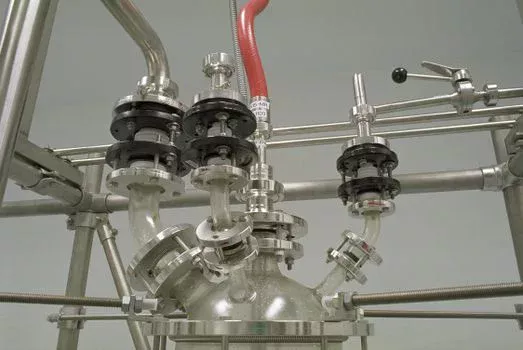
Resin choice hinges on arsenic speciation, competing ions, and the CAPEX versus TCO trade-off at the plant gate. If As(III) dominates, pre-oxidation is mandatory, then a hybrid ion exchange resin such as Purolite FerrIX A33E is the usual pick for selectivity after conversion. If As(V) already dominates and sulfate/phosphate are low, SBA resins such as AmberLite IRA400 remain viable for arsenic duty.
Sulfate above 200 mg/L or phosphate above 1 mg/L can crush SBA arsenic capacity because those anions compete for the same exchange sites. Hybrid iron oxide groups keep higher arsenic selectivity under the same competition, which is why complex industrial matrices favor hybrids. Upfront hybrid pricing often sits at $100–$150/kg versus $50–$100/kg for SBA and $30–$60/kg for WBA, yet hybrid life of 5–10 years versus 2–5 years for SBA and 1–3 years for WBA frequently flips the TCO ranking after year three.
Regeneration durability matters on the same ledger as media price. Hybrid beds commonly tolerate 100–300 cycles; SBA/WBA grades more often fade after 50–100 or 20–50 cycles. More cycles mean less spent media and fewer change-out outages across a decade of operation. Document cycle counts against capacity loss so replacement is planned, not reactive.
What Is the Best Resin for Chromium Removal?
The best resin for chromium removal is usually a strong-base anion exchanger sized for chromate when chromium is the primary anion target, not a hybrid arsenic-selective iron oxide bed. Hybrid arsenic resins may pick up some oxyanions but are optimized for arsenate, not broad hexavalent chromium duty. For multi-metal anion trains, review ion exchange for heavy metal removal applications and run jar or column tests on the actual matrix before freezing the media list.
| Factor | Hybrid Iron Oxide Resins | Strong-Base Anion (SBA) Resins | Weak-Base Anion (WBA) Resins |
|---|---|---|---|
| Arsenic Speciation | As(V) (after pre-oxidation of As(III)) | As(V) (after pre-oxidation of As(III)) | Limited for As(V), poor for As(III) |
| Competing Ions (Sulfate, Phosphate) | High selectivity for As, less impacted | Lower selectivity, significantly impacted | Poor selectivity, highly impacted |
| Upfront Cost (per kg) | Higher ($100–$150) | Moderate ($50–$100) | Lower ($30–$60) |
| Lifespan (years) | 5–10 | 2–5 | 1–3 |
| Regeneration Cycles | 100–300 | 50–100 | 20–50 |
| TCO Impact | Generally lowest long-term | Moderate to higher long-term | Highest long-term |
Design reviews should also confirm vessel materials, underdrain freeboard, and regenerant day-tank segregation before fabrication drawings are released. Stainless or lined carbon steel vessels are common for hybrid arsenic beds at industrial pressure ratings; plastics may suit smaller package units when temperature and oxidant residuals allow. Freeboard of roughly 50–100% of bed depth is typical to accommodate backwash expansion without resin loss. Regenerant day tanks for NaOH and HCl must sit in secondary containment sized for the largest tank volume plus freeboard required by local code. Instrument lists should include inlet/outlet arsenic analyzers or sample ports, differential pressure across each vessel, flow totalizers for BV tracking, and ORP on the oxidation contactor. These details do not change the 1.2–3.5 mg As/g capacity band, but they determine whether the plant actually delivers the 0.01 mg/L effluent target day after day.
Pilot columns remain the cheapest insurance before a 10–500 m³/h capital commitment. A 2–5 minute EBCT pilot with the candidate hybrid resin, measured As(III)/As(V) feed, and the planned oxidant package will expose sulfate competition, organic fouling, and true breakthrough BV faster than spreadsheet sizing alone. Record effluent arsenic versus BV, regenerant arsenic mass balance, and residual oxidant after the carbon or bisulfite step. If pilot capacity falls below about 1.2 mg As/g under real feed, revisit pretreatment—precipitation, hardness control, or stronger oxidation—before enlarging vessels. Field experience shows most underperforming arsenic resin plants were sized on pure As(V) isotherms while the plant feed still carried substantial As(III) or sulfate above 200 mg/L.
Operations playbooks should define regeneration triggers in measurable terms: effluent arsenic approaching 50% of the 0.01 mg/L limit, differential pressure rise indicating solids loading, or cumulative BV reaching the pilot-derived run length within the 100–300 BV hybrid window. After each NaOH strip and HCl neutralization, rinse to a stable pH near the 6.5–8.5 adsorption window before returning the bed to service. Track regenerant arsenic mass so disposal contractors receive accurate profiles. When labor is budgeted at 2–4 hours per week, most of that time should go to analyzer verification and regenerant handling—not to manual valve sequences if the PLC already owns the cycle.
Cost control on the OPEX side usually comes from three levers that do not require a new CAPEX package. First, keep As(III) fully oxidized so the hybrid bed works at the upper end of the 1.2–3.5 mg As/g band instead of starving on neutral arsenite. Second, hold competing sulfate and phosphate in check with upstream treatment when they exceed 200 mg/L and 1 mg/L. Third, avoid chronic oxidant leakage onto the resin; replacing a degraded bed early at $50–$150/kg erases the TCO advantage that should have delivered $0.50–$2.00 per 1,000 gallons. Plants that miss these three controls often blame the resin brand when the real issue is feed conditioning.
For package-scale arsenic polishing ahead of reuse or discharge, mechanical layout still follows the same chemistry rules even when footprint is tight. Pre-oxidation contact time of 30–60 minutes for chlorine, oxidant destruction, then EBCT 2–5 minutes on hybrid media must fit the skid or underground chamber without short-circuiting. Hydraulic dead zones cut effective contact time and show up as unexplained breakthrough despite “correct” vessel volume on paper. Keep sample taps before and after each stage so operators can prove where arsenic is actually removed.
Commissioning should verify oxidant dose against ORP 600–800 mV, confirm residual oxidant is destroyed to protect the resin, and demonstrate effluent arsenic below 0.01 mg/L across at least one full service cycle at design flow between 10–500 m³/h. Document the first regeneration with 4–10% NaOH and 5–10% HCl so operators have a baseline for chemical use near the $0.10–$0.30 per 1,000 gallons chemical band. Keep the same sample points used in pilot work so later troubleshooting compares like-for-like data rather than new tap locations invented after a permit excursion.
Selection Checklist, Fit, and Next Step
Use this checklist before freezing a resin adsorption arsenic design package:
- Measure As(III)/As(V) split and total arsenic at 0.05–0.5 mg/L design points.
- Confirm sulfate and phosphate against the 200 mg/L and 1 mg/L competition thresholds.
- Set EBCT at 2–5 minutes for hybrid beds and oversize resin volume by 20–30%.
- Specify pre-oxidation dose, contact time, ORP 600–800 mV, and oxidant destruction.
- Budget regenerant NaOH/HCl handling and hazardous spent-brine disposal routes.
- Plan online arsenic monitoring near 0.1 ppb plus quarterly EPA Method 200.8 labs.
- Compare hybrid versus SBA TCO at $0.50–$2.00 per 1,000 gallons, not CAPEX alone.
This page is for plant engineers and EPC teams sizing arsenic polishing on industrial or municipal trains where arsenic is the controlling contaminant. Buyers chasing broad dissolved-solids rejection should evaluate RO first. Compact sites that need pretreatment and polishing in one footprint can pair resin stages with an Underground Package Sewage Treatment Plant (WSZ Series). For a site-specific resin volume, oxidant package, and TCO sketch, request a process quote with your flow and arsenic data.
Frequently Asked Questions
What is the maximum arsenic concentration resin adsorption can handle?
Hybrid resins such as Purolite FerrIX A33E can treat influent arsenic up to about 500 ppb (0.5 mg/L) while still meeting the 0.01 mg/L EPA limit when EBCT and pre-oxidation are correct. Above roughly 0.5 mg/L, add bulk reduction first. Chemical precipitation for heavy metal removal lowers the load on the resin, extends service life, and keeps regenerant volumes manageable on high-arsenic streams.
How often do resins need to be regenerated?
Hybrid resin regeneration typically falls every 100–300 bed volumes, set by influent arsenic and flow rather than a fixed calendar date. A 100 m³/h train at 0.1 mg/L arsenic often regenerates every 10–30 days once breakthrough curves are mapped. Operators should trigger regeneration from effluent arsenic rise, not from guesswork. Logging BV throughput against analyzer data keeps the schedule honest across seasonal influent swings.
Can resin adsorption systems remove other heavy metals?
Hybrid iron oxide resins are selective for arsenic and may also take up oxyanions such as selenium, antimony, and phosphate under favorable pH. They are not a universal heavy-metal catch-all for mixed industrial wastes. Conventional SBA resins remove a wider anion set—including nitrate, sulfate, and chromate—when the process goal is broader than arsenic alone. Column tests on the real wastewater remain the correct way to confirm co-removal claims before purchase.
What are the disposal requirements for spent resins?
Spent hybrid iron oxide resins are often classified as non-hazardous where arsenic is tightly bound and leachate tests pass, but local rules still govern the final call. Conventional SBA/WBA resins loaded above about 5 mg As/g resin may fall under hazardous waste rules in EPA RCRA frameworks. Always run the required leachate protocol and document transporter manifests before shipment. Regenerant brine is a separate waste stream and usually needs hazardous handling regardless of spent-resin status.
How does resin adsorption compare to reverse osmosis for arsenic removal?
Resin adsorption usually costs less energy than RO for arsenic-focused duty: about $0.05–$0.20/kWh versus $0.80–$2.50/kWh for high-pressure membrane trains. Water recovery on resin beds commonly reaches 95–99%, against roughly 70–90% for RO. RO still wins when the permit also demands broad TDS or multi-ion rejection in one step. Choose resin when arsenic is the controlling contaminant and recovery or energy intensity dominates the decision.