Saskatoon’s Industrial Wastewater Challenge: Compliance, Costs, and System Selection
Industrial wastewater treatment in Saskatoon requires systems that meet Saskatchewan’s stringent Class 4 discharge standards, including TSS ≤ 25 mg/L, BOD ≤ 25 mg/L, phosphorus ≤ 1 mg/L. Local options include lagoon-based systems, with a capital expenditure (CAPEX) of $50K–$500K and an operating expenditure (OPEX) of $0.10–$0.30/m³, suitable for low-maintenance needs, or mechanical systems, with a CAPEX of $1M–$5M and an OPEX of $0.50–$1.20/m³, such as DAF or MBR, for high-strength effluents. Permits from the Ministry of Environment are mandatory for all industrial waste works (IWW) facilities, with application lead times of 6–12 months.
A meat processing facility in the Saskatoon region faced a $120,000 regulatory fine in 2023 after its untreated effluent reached Chemical Oxygen Demand (COD) levels of 1,200 mg/L, significantly exceeding its 500 mg/L permit limit. This scenario is increasingly common as the Saskatchewan Water Security Agency (WSA) and the Ministry of Environment tighten enforcement to align with federal Canadian Council of Ministers of the Environment (CCME) guidelines. For facilities operating in the South Saskatchewan River basin, compliance is not merely a legal hurdle but a prerequisite for operational continuity. The local regulatory framework categorizes facilities based on complexity; Saskatoon’s municipal plant is a Class 4 facility, the highest level of certification in Canada, setting a high benchmark for industrial pretreatment before sewer discharge.
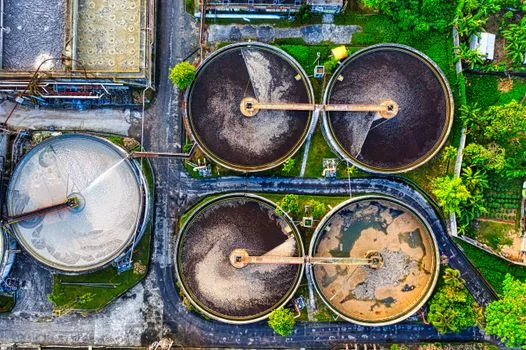
Industrial operators must choose between three primary architectural paths: lagoon-based systems, mechanical systems, such as Dissolved Air Flotation or Membrane Bioreactors, and hybrid configurations. In Saskatoon’s Marquis Industrial Area, land availability often dictates this choice. While lagoons offer lower operating costs, they require extensive footprints—often 10 to 20 times larger than mechanical alternatives. Conversely, high-strength effluents from food processing or metal finishing typically require the precision of mechanical systems to meet phosphorus limits of ≤ 1 mg/L and nitrogen limits of ≤ 10 mg/L. Understanding these technical trade-offs is the first step in mitigating the risk of escalating surcharges and environmental litigation.
Lagoon vs. Mechanical Systems: Engineering Specs and Process Parameters
Saskatchewan’s climate necessitates specific engineering adaptations for wastewater systems, particularly regarding temperature-dependent biological activity. Lagoon systems in the province, such as the Nipawin Regional 4-cell system, are designed to achieve 70–85% BOD removal even when ambient temperatures drop, though they require significant Hydraulic Retention Times (HRT) of 30 to 60 days for facultative processes. Aerated lagoons utilize mechanical surface aerators or submerged diffusers to reduce HRT to 10–20 days, making them more viable for mid-sized industrial applications where land is at a moderate premium.
Mechanical systems offer higher removal efficiencies and smaller footprints. DAF systems for high-efficiency TSS removal in Saskatoon’s industrial wastewater are the industry standard for removing fats, oils, and grease (FOG) and suspended solids, achieving 90–98% TSS removal. For facilities requiring near-reuse quality effluent, MBR systems for near-reuse-quality effluent in space-constrained Saskatoon facilities provide 99%+ pathogen removal and ultra-low effluent turbidity. These systems rely heavily on precise chemical conditioning; chemical dosing systems for pH adjustment and coagulation in Saskatoon’s industrial pretreatment are essential for optimizing flocculation before the flotation or filtration stages.
| Parameter | Facultative Lagoon | Aerated Lagoon | DAF System | MBR System |
|---|---|---|---|---|
| Hydraulic Retention Time (HRT) | 30–60 Days | 10–20 Days | 30–120 Minutes | 6–15 Hours |
| BOD Removal Efficiency | 60–80% | 80–90% | 40–60% (Soluble) | 95–99% |
| TSS Removal Efficiency | 50–70% | 70–85% | 90–98% | 99.9% |
| Footprint Requirement | Very Large | Large | Compact | Very Compact |
| Sludge Production (kg/m³) | 0.1–0.3 | 0.2–0.4 | 0.5–0.8 | 0.4–0.6 |
Sludge management is a critical engineering consideration often overlooked during the initial procurement phase. Lagoons store sludge in-situ for years, requiring periodic dredging every 10–15 years. Mechanical systems, however, produce a continuous waste stream. To manage this, facilities often implement a plate and frame filter press or centrifuge to dewater sludge to 20–35% solids, significantly reducing disposal costs. The process flow for a typical mechanical DAF system involves: coagulation (destabilizing particles) → flocculation (forming larger aggregates) → air dissolution (saturating water with air at high pressure) → flotation (micro-bubbles lifting flocs to the surface) → skimming (removing the sludge blanket).
CAPEX and OPEX Breakdown: Cost Models for Industrial Buyers in Saskatoon
The cost of industrial wastewater systems in Saskatoon is heavily influenced by civil engineering requirements and the complexity of the treatment train. For a facility processing 500 m³/day, a facultative lagoon system might range from $150,000 to $500,000, primarily covering excavation, liners, and piping. However, in industrial zones like the Marquis or North Industrial areas, land acquisition costs—currently averaging $250,000 to $450,000 per acre—can quickly equalize the cost between lagoons and mechanical systems. Mechanical DAF plants for the same flow rate typically require $400,000 to $1.2M, while high-performance MBR systems can exceed $3M due to membrane costs and advanced automation.
Operating expenditure (OPEX) follows an inverse relationship with CAPEX. Lagoons are the most economical to operate, with costs between $0.10 and $0.30 per cubic meter treated, primarily for occasional electricity and seasonal maintenance. Mechanical systems incur higher OPEX ($0.50 to $1.20/m³) due to constant energy consumption for pumps and blowers, chemical reagents (coagulants/flocculants), and skilled labor. When evaluating wastewater treatment equipment suppliers in Alberta and Saskatchewan, procurement teams must look at the 10-year Net Present Value (NPV) to understand the true cost of ownership.
| Cost Component | Lagoon (500 m³/day) | DAF System (500 m³/day) | MBR System (500 m³/day) |
|---|---|---|---|
| Initial CAPEX | $250,000 – $600,000 | $500,000 – $1,500,000 | $2,000,000 – $5,000,000 |
| Annual OPEX | $25,000 – $45,000 | $90,000 – $145,000 | $160,000 – $220,000 |
| Energy Intensity | Low (0.1 kWh/m³) | Medium (0.5 kWh/m³) | High (1.2 kWh/m³) |
| Chemical Demand | None to Low | High | Medium |
| 10-Year NPV | ~$1.2M | ~$3.5M | ~$5.8M |
The Return on Investment (ROI) for advanced treatment often comes from the avoidance of municipal surcharges. For example, a Saskatoon-based brewery discharging effluent with a TSS of 800 mg/L might face surcharges exceeding $100,000 annually. By installing a DAF system to reduce TSS to 50 mg/L, the facility can achieve a payback period of approximately 3.5 years. Additionally, MBR systems enable water reuse for non-potable applications like cooling tower makeup or floor washing, providing a hedge against rising municipal water rates. These financial models align with global benchmarks for industrial wastewater treatment costs and compliance, where resource recovery is becoming a standard driver for technology adoption.
Saskatchewan’s Industrial Wastewater Permit Process: Step-by-Step Compliance Guide
Securing a permit for an Industrial Waste Works (IWW) facility in Saskatchewan is a rigorous process governed by the Environmental Management and Protection Act (2010). The Ministry of Environment requires comprehensive documentation to ensure that the proposed system will not adversely impact the local watershed or groundwater. For industrial projects exceeding 500 m³/day, the timeline from initial concept to permit issuance typically spans 6 to 12 months. Failure to secure these permits before construction can lead to "Stop Work" orders and administrative penalties ranging from $10,000 to $250,000 per violation.
- Step 1: Pre-application Meeting: Engage with the Ministry of Environment 4–6 weeks before submission. This step clarifies whether your project requires a full Environmental Impact Assessment (EIA).
- Step 2: Technical Submission: Submit a detailed application package including engineering drawings, an operations plan, and a hydrogeological study. This study is critical for lagoon systems to prove soil permeability will not lead to groundwater contamination. Costs for these studies range from $20,000 to $50,000.
- Step 3: Public Consultation: For large-scale projects, a 30-day public comment period is mandatory. This is particularly relevant for facilities located near residential developments or ecologically sensitive areas of the South Saskatchewan River.
- Step 4: Ministry Review: The review period takes 6–12 months. Rejections often stem from incomplete sludge management plans or failure to demonstrate that the effluent will meet Class 4 standards during winter months.
- Step 5: Permit Issuance and Monitoring: Permits are generally valid for 5 years. Compliance requires quarterly reporting for mechanical systems and biannual reporting for lagoons, including laboratory analysis of BOD, TSS, pH, and nutrient levels.
To maintain compliance, facilities must also integrate disinfection solutions for food processing wastewater in Saskatoon to manage pathogen loads, especially if the effluent is discharged to a surface water body. The Saskatchewan Water Security Agency (WSA) conducts unannounced inspections, and maintaining a digital log of all system parameters is highly recommended to demonstrate "due diligence" in the event of an accidental discharge.
Equipment Selection Framework: Matching System Type to Industrial Application
Selecting the correct wastewater system requires a multi-criteria decision analysis based on influent characteristics, budget, and long-term sustainability goals