Industrial Wastewater Discharge Limits in Malmö, Sweden: The 2026 Baseline
Malmö, Sweden enforces industrial wastewater discharge limits through Environmental Code Chapter 9 permits and EU Directive 91/271/EEC: phosphorus below 0.5 mg/L, BOD below 15 mg/L, and nitrogen below 10 mg/L. Recast Directive (EU) 2024/3019, in force on 1 January 2025, tightens receiving-plant standards and requires verified industrial pre-treatment before sewer connection.
Industrial facilities in Malmö work under some of Sweden's strictest permit conditions while treating high-strength influent. Typical raw loads reach COD 1,000–10,000 mg/L from food processing, pharmaceutical, and pulp/paper plants. For 2026 projects, MBR systems achieve 95% TSS removal at 50–2,000 m³/day, while DAF units offer 30% lower CapEx (SEK 1.2M–5M) for pre-treatment. The specs, checklists, and selection framework below help plants avoid SEK 1M fines without oversizing equipment.
Food processing plants generate influent with Chemical Oxygen Demand (COD) averaging between 3,000–8,000 mg/L and Total Suspended Solids (TSS) from 500–2,000 mg/L, according to 2023 data from the Malmö Water Authority. Pharmaceutical manufacturers contribute ammonia-nitrogen (100–500 mg/L) and heavy metals such as nickel and chromium (5–50 mg/L), often exceeding EU Urban Waste Water Directive 91/271/EEC reference levels. Pulp and paper mills can discharge wastewater with COD as high as 5,000–10,000 mg/L, laden with lignin and solids that overwhelm conventional biological treatment.
What the Swedish and EU Rules Actually Require
The regulatory baseline has three layers. The Swedish Environmental Code Chapter 9 sets permit conditions for environmentally hazardous activities, and Malmö permits commonly carry phosphorus below 0.5 mg/L with BOD below 15 mg/L. Directive 91/271/EEC Article 11 adds that industrial waste water entering collecting systems and urban waste water treatment plants is subject to prior regulations or specific authorizations by the competent authority. Operators who also hold permits abroad will recognize the same prior-authorization logic in industrial waste water discharge requirements for Australia.
Non-compliance carries real money. Fines can reach SEK 1 million under the Environmental Code framework, and permits can be revised between compliance cycles. One Malmö food production plant faced an SEK 800,000 fine in 2023 for exceeding phosphorus discharge limits. Its influent pre-treatment, struggling with COD of 6,500 mg/L and TSS of 1,800 mg/L, proved insufficient—a pattern repeatable at any site that sizes equipment from nameplate flow alone.
Municipal receiving-plant standards define the practical backstop. According to the Swedish EPA regulation NFS 2016:6, treatment plants serving 2,000 pe or more must meet BOD7 of 15 mg/l as an annual mean. COD limits sit at 70 mg/l as an annual mean and 125 mg/l per sampling occasion. Phosphorus and nitrogen ceilings then follow plant size.
Total phosphorus is capped at 2 mg/l for plants between 10,000 and 100,000 pe and 1 mg/l above 100,000 pe, while total nitrogen limits run at 15 mg/l and 10 mg/l for the same size bands. Industrial dischargers that push a municipal plant toward those ceilings usually pay through revised permit conditions. Pre-treatment sized to protect the receiving plant therefore protects your own permit margin.
EU rules are tightening again. The recast Urban Wastewater Treatment Directive (EU) 2024/3019 entered into force on 1 January 2025, with obligations phasing in gradually until 2045 according to the Austrian ministry's implementation summary. It brings municipal wastewater treatment plants from 1,000 PE into scope and requires secondary treatment for agglomerations of that size by 31 December 2035.
A phosphorus limit of 0.5 mg/L applies from 2039 for large plants, and integrated management plans follow by 2033 for 100,000 PE settlements and by 2039 for selected 10,000 PE settlements. Energy neutrality at Member State level is the 2045 endpoint. Pre-treatment specs agreed today should therefore be checked against those dates, because receiving-plant chemistry keeps shifting under every discharge permit.
Which Industries Hit the Limits Hardest
Every sector fails at a different parameter, so influent data drives everything. Food plants fail on FOG, nutrients, and solids; pharmaceutical sites on ammonia and metals; pulp mills on COD and color. The table below pairs each industry's raw loads with the Malmö discharge limits that apply after treatment.
| Industry | Typical Influent COD (mg/L) | Typical Influent TSS (mg/L) | Key Pollutants of Concern | Malmö Discharge Limits (Chapter 9 / EU Directive) |
|---|---|---|---|---|
| Food Processing | 3,000–8,000 | 500–2,000 | FOG, BOD, TSS, Nutrients | Phosphorus <0.5 mg/L, BOD <15 mg/L |
| Pharmaceutical | 1,000–5,000 | 100–500 | Ammonia-N, Heavy Metals, COD, Pharmaceuticals | Phosphorus <0.5 mg/L, BOD <15 mg/L, Nitrogen <10 mg/L |
| Pulp & Paper | 5,000–10,000 | 800–3,000 | Lignin, BOD, TSS, Color | Phosphorus <0.5 mg/L, BOD <15 mg/L |
Influent vs. Effluent: Industry-Specific Parameters for Malmö Plants
Measuring the facility's wastewater accurately is the foundation of system design. Malmö's rules, driven by the Swedish Environmental Code Chapter 9 and Directive 91/271/EEC, set a hard benchmark that industrial influent must be measured against. The parameter tables below help environmental engineers and procurement teams diagnose treatment needs before shortlisting equipment.
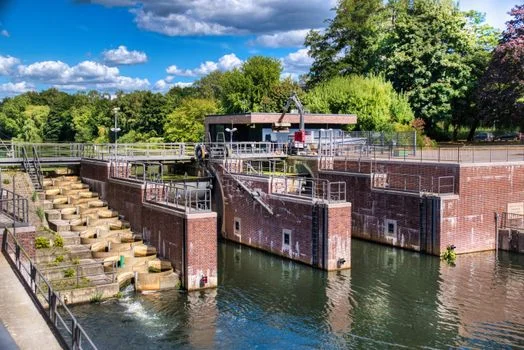
The Sjölunda wastewater treatment plant shows how demanding the receiving side has become. Recent expansions in its biological treatment capacity cut reliance on precipitation chemicals while meeting Swedish emission requirements for organic compounds, phosphorus, and nitrogen. Reported data indicate the plant lowered phosphorus from approximately 2.1 mg/L to a compliant 0.3 mg/L. Municipal plants of this class now screen industrial discharge applications carefully, and robust pre-treatment for COD, TSS, and specific pollutants is usually a condition of acceptance.
Primary treatment alone cannot bridge the gap. Directive (EU) 2024/3019 defines primary treatment as reducing incoming BOD5 by at least 20 % and total suspended solids by at least 50 %. For industries discharging COD exceeding 1,000 mg/L with heavy TSS loads, most of the load still passes to the plant downstream, so DAF or clarification upstream is a necessity rather than an option. Pharmaceutical sites add ammonia-nitrogen and heavy metals needing targeted chemical precipitation or advanced oxidation, and continuous monitoring for nitrogen keeps compliance visible between sampling rounds.
| Parameter | Food Processing (Malmö Influent) | Pharmaceutical (Malmö Influent) | Pulp & Paper (Malmö Influent) | Malmö Effluent Limit (Swedish EPA 2024 / EU Directive) | Notes |
|---|---|---|---|---|---|
| COD (mg/L) | 3,000–8,000 | 1,000–5,000 | 5,000–10,000 | <50 (typical for treated effluent, specific limits vary) | High-strength wastewater requires pre-treatment. |
| BOD (mg/L) | 1,500–4,000 | 500–2,000 | 2,500–6,000 | <15 | Indicator of organic pollution. |
| TSS (mg/L) | 500–2,000 | 100–500 | 800–3,000 | <10 (typical for treated effluent, specific limits vary) | Requires physical separation. |
| Phosphorus (mg/L) | 20–100 | 10–50 | 10–40 | <0.5 | Eutrophication risk. Strict limits. |
| Total Nitrogen (mg/L) | 30–150 | 100–500 (Ammonia-N) | 20–80 | <10 (continuous monitoring often required) | Ammonia-N is toxic; nitrification/denitrification needed. |
| Heavy Metals (e.g., Ni, Cr) (mg/L) | Trace | 5–50 | Trace | Varies by metal, often <0.1 mg/L | Pharmaceutical industry specific; requires chemical precipitation. |
| Microplastics | Present | Present | Present | Emerging concern, monitoring may be required | Requires advanced filtration or separation. |
For facilities dealing with high TSS and FOG, DAF pre-treatment for Malmö's food and pulp industries is often the first critical step, capable of removing up to 92% of TSS and significantly reducing organic load before biological treatment.
Equipment Showdown: MBR vs DAF vs Lamella Clarifiers for Malmö Industries
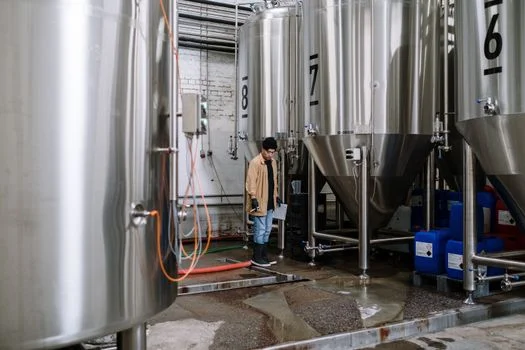
Choosing among Membrane Bioreactor (MBR), Dissolved Air Flotation (DAF), and lamella clarification comes down to influent strength, target effluent, and footprint. MBR systems, such as HydropureWater's DF Series, deliver reuse-grade effluent with 95% TSS removal and a footprint approximately 60% smaller than conventional systems. CapEx runs from SEK 10M to SEK 15M for a 500 m³/h capacity system, and membranes foul when influent solids or specific compounds run high. DAF units (HydropureWater) cost SEK 1.2M–5M for the same 500 m³/h train and remove 92% of TSS, which suits food processing loads rich in fats, oils, and grease.
Lamella clarifiers, represented by HydropureWater's high-efficiency sedimentation tanks, handle high solid loads at up to 98% TSS removal with a surface loading rate of 20–40 m/h. Their OPEX is typically lower thanks to reduced chemical consumption, which suits pulp and paper mills where suspended solids dominate but FOG is minor. For a Malmö pharmaceutical plant, DAF pre-treatment followed by an MBR has demonstrated COD reduction from 6,000 mg/L to below 50 mg/L, meeting stringent discharge requirements. Most food plants we size for Malmö settle at the DAF-plus-biological end of that spectrum unless reuse targets demand membranes.
| Parameter | MBR (HydropureWater DF Series) | DAF (HydropureWater) | Lamella Clarifier (HydropureWater High-Efficiency Sedimentation Tank) |
|---|---|---|---|
| Typical Influent COD (mg/L) | 500–5,000 | 1,000–10,000 (Pre-treatment) | 1,000–8,000 |
| TSS Removal Efficiency (%) | 95+ | 92+ | 98+ |
| Footprint (m² per m³/h) | 0.5–1.5 | 1.0–2.5 | 1.5–3.0 |
| CapEx (SEK per m³/h) | 20,000–30,000 (for 500 m³/h system) | 2,400–10,000 (for 500 m³/h system) | 1,500–5,000 (for 500 m³/h system) |
| OPEX (SEK/m³ treated) | 1.5–3.0 | 0.8–1.5 | 0.5–1.0 |
| Sludge Production (kg/m³ treated) | 0.3–0.6 | 0.1–0.3 | 0.1–0.2 |
| Malmö Industry Suitability | Pharma, High-Standard Food, Post-Biological | Food (FOG), Pulp/Paper (Pre-treatment), General Pre-treatment | Pulp/Paper (High TSS), Mining, General Pre-treatment |
| Compliance with Swedish EPA Limits (for TSS/COD) | Yes (near-discharge quality) | Partial (requires post-treatment for COD/BOD) | Partial (requires post-treatment for COD/BOD/Nutrients) |
For facilities requiring advanced treatment, MBR systems for Malmö's high-strength industrial wastewater offer near-discharge effluent quality in a compact footprint. DAF remains the economical first stage wherever FOG and solids dominate the load budget.
Step-by-Step: Selecting a Treatment System for Your Malmö Facility
A structured selection path keeps compliance and lifecycle cost in one frame. Start from measured influent, fix the pre-treatment stage, then match downstream polishing to the permit you hold or seek. The steps below reflect how Malmö projects move from sampling campaign to purchase order.
Size the Pre-Treatment Stage First
Assess influent COD and TSS against the tables above. If COD exceeds 1,000 mg/L or TSS runs consistently above 500 mg/L, a robust pre-treatment stage is essential. Food plants with high FOG content should specify DAF, and pulp and paper mills with very high TSS often start with lamella clarification. Where reuse-grade purity or a small footprint matters, add an MBR stage, then disinfect with UV or ClO₂ disinfection for Malmö's pharma and hospital wastewater where microbial limits apply.
Vendor Checks That Protect Compliance
Ask vendors for Malmö-specific case studies with measured effluent data from similar industries. Request projected CapEx and OPEX for your actual flow, for example a 200 m³/h system, plus warranty and after-sales support structure in Sweden. Sjölunda's recent MABR upgrade carried a two-year performance clause, and replicating that procurement pattern—pilot testing plus strict performance terms—protects both sides. Calculate payback as CapEx divided by annual savings from avoided fines and reduced OPEX; a SEK 5M DAF system saving SEK 1.5M annually repays in roughly 3.3 years.
Space-constrained sites have a compact route. An Underground Package Sewage Treatment Plant (WSZ Series) buries the biological stage below grade, freeing yard area for sludge handling and chemical storage. Installations of this type suit food plants that must add capacity without giving up production floor.
Buyers comparing permit regimes can benchmark further afield. The Industrial Wastewater Treatment in Sydney: 2026 Compliance Guide explains trade-waste agreements in another market, and how Malmö's industrial pre-treatment compares to UK municipal standards rounds out the northern-European picture.
Next step: assemble a sampling file, a draft permit number, and a flow diagram before requesting quotes. Send the package through the inquiry form for a Malmö treatment-system quotation and engineering will size the train against your measured loads. Plants that arrive with twelve months of influent data typically compress vendor selection by several weeks.
Frequently Asked Questions
What are the industrial wastewater discharge limits in Malmö, Sweden?
Malmö enforces phosphorus below 0.5 mg/L, BOD below 15 mg/L, and nitrogen below 10 mg/L under Swedish Environmental Code Chapter 9 permits. The municipal side applies NFS 2016:6 values—BOD7 15 mg/l, COD 70 mg/l as an annual mean, and 125 mg/l per sampling occasion—which cap what industries may send to the sewer. Recast Directive (EU) 2024/3019 adds a 0.5 mg/L phosphorus limit from 2039 for large receiving plants. Continuous monitoring for nitrogen and microplastics increasingly appears in permits.
How much does an industrial wastewater treatment system cost in Malmö?
CapEx ranges from roughly SEK 1.2 million for a 50 m³/h DAF system to SEK 15 million for a 500 m³/h MBR system. OPEX averages SEK 0.5–2.0 per cubic meter treated, driven mainly by chemicals, sludge disposal, and membrane replacement where applicable. Lamella clarification sits at the low end, at SEK 1,500–5,000 per m³/h of capacity. Count roughly 3.3 years as a typical payback once avoided fines and reduced OPEX are included.
Can a food plant discharge high-COD wastewater into Malmö's sewer system?
No. Malmö's municipal plants, including Sjölunda, apply strict acceptance criteria and typically reject influents with COD exceeding 1,000 mg/L without advanced pre-treatment. DAF pre-treatment for Malmö's food and pulp industries can cut COD by 50–70%, bringing discharge within acceptance limits. Directive 91/271/EEC Article 11 also requires prior authorization for industrial waste water entering collecting systems, so the sewer connection itself is a permitted act.
What is the best treatment train for a Malmö pharmaceutical plant?
A multi-stage train works best for Malmö pharma sites. Dissolved Air Flotation pre-treatment removes 92% of TSS and protects downstream biology from shock loads. An MBR stage then cuts COD to below 50 mg/L, and a chlorine dioxide generator handles final disinfection, including antibiotic-resistant bacteria. Size each stage from twelve months of influent data covering ammonia peaks and metal excursions.
How do plants in Malmö avoid non-compliance fines?
Continuous monitoring of phosphorus, nitrogen, and COD is the first defense against non-compliance fines in Malmö. Pilot-test candidate equipment on your actual influent for at least three months before purchase. Negotiate performance clauses modeled on Sjölunda's MABR upgrade, which carried a two-year performance term. Recheck permit numbers against NFS 2016:6 and Directive (EU) 2024/3019 dates whenever you renew.