Why High-Salinity Wastewater Demands Evaporation Crystallization Over Conventional Methods
Industrial operations generating high-salinity wastewater, characterized by Total Dissolved Solids (TDS) exceeding 35,000 mg/L, face significant challenges with conventional treatment methods. These effluents, common in petrochemical, pharmaceutical, textile, and mining sectors, often result in prohibitive disposal costs and severe regulatory penalties. Evaporation crystallization stands out as a leading Zero-Liquid Discharge (ZLD) solution, achieving ≥95% COD removal and ≥90% salt recovery. Thermal evaporation systems operate efficiently within a temperature range of 60–120°C and a pressure of 0.1–0.5 bar, concentrating brine to supersaturation before crystallizing salts like NaCl and Na₂SO₄ for beneficial reuse or responsible disposal. Capital expenditure (CapEx) for these systems can range from $800K for small-scale units (5 m³/h) to over $5M for large-scale installations (50 m³/h), with operational expenditure (OpEx) primarily driven by energy consumption, typically between 0.05–0.15 kWh/kg of water evaporated. Compliance with stringent environmental regulations, such as EPA 40 CFR Part 435 for petroleum industries or the EU Industrial Emissions Directive 2010/75/EU, is readily achievable through optimized parameter settings.
Conventional treatment methods often fall short when confronted with high-salinity streams:
- Reverse Osmosis (RO) systems falter at TDS levels above 70,000 mg/L. The escalating osmotic pressure necessitates higher energy input, while increased salt concentration accelerates membrane fouling. Consequently, RO recovery rates can plummet below 50% for highly saline brines, significantly increasing the volume of concentrated brine that still requires costly disposal.
- Chemical Precipitation methods struggle with complex, mixed-salt streams containing compounds like NaCl and Na₂SO₄. These processes often demand precise pH adjustments and can generate substantial volumes of hazardous sludge, which itself requires specialized and expensive disposal. While biotechnological approaches are emerging, they are not yet scalable or robust enough for many industrial high-salinity applications.
- Ion Exchange, while effective for specific ionic removal, becomes prohibitively expensive for high-salinity wastewater due to the continuous need for resin regeneration and the significant consumption of chemicals. The frequent regeneration cycles lead to high operational costs and a substantial waste stream from the regeneration process itself.
In contrast, evaporation crystallization offers a definitive path to ZLD. By transforming brine into solid salts and pure distilled water, it eliminates liquid discharge entirely. This not only sidesteps the escalating costs and environmental liabilities associated with brine disposal but also unlocks opportunities for resource recovery. The crystallized salt products can often be purified to a grade suitable for reuse in various industrial processes, creating a circular economy model and further enhancing the economic viability of the treatment system. For industries striving for true ZLD and seeking to mitigate risks associated with stringent environmental regulations, evaporation crystallization presents the most robust and economically sound solution for high-TDS wastewater.
| Treatment Method | Optimal TDS Range (mg/L) | Recovery Rate (Water) | Salt Recovery Potential | Sludge/Waste Generation | ZLD Capability | Key Limitation for High Salinity |
|---|---|---|---|---|---|---|
| Reverse Osmosis (RO) | 5,000 - 35,000 | 70-90% | Low (brine concentrate) | Concentrated brine | Limited (requires further treatment of brine) | Osmotic pressure limits, membrane fouling above 70,000 mg/L |
| Chemical Precipitation | < 5,000 (simple salts) | Variable | Low (depends on precipitant) | High (sludge) | No | Ineffective for mixed salts, high sludge volume |
| Ion Exchange | < 1,000 (specific ions) | High (if regeneration is efficient) | N/A (ion removal) | Regenerant waste | No | Cost-prohibitive for high TDS, high chemical consumption |
| Evaporation Crystallization | > 35,000 | ≥ 95% | ≥ 90% (salts) | Solid salts | Yes | Higher CapEx and OpEx (energy intensive) |
Evaporation Crystallization Process: Step-by-Step Engineering Specs for Industrial Systems
The evaporation crystallization process for high-salinity wastewater is a sophisticated, multi-stage operation designed to maximally recover water and valuable salts while minimizing waste. It typically involves two primary phases: thermal concentration to achieve supersaturation, followed by controlled crystallization. Industrial systems are engineered with specific components and operating parameters to ensure efficiency, reliability, and compliance.
The process begins with pre-treatment to remove suspended solids and other contaminants that could foul downstream equipment or interfere with crystallization. This often includes dissolved air flotation (DAF) using a DAF system for pre-treatment of high-salinity wastewater to separate lighter suspended particles, followed by a multi-media filter for finer turbidity reduction, as provided by our multi-media filter for turbidity reduction in high-salinity wastewater. These steps are crucial for preparing the influent for thermal processing.
Following pre-treatment, the wastewater enters the evaporation stage. Here, thermal energy is applied to vaporize water, concentrating the dissolved salts. Two common evaporator types are employed:
- Falling Film Evaporators: These are highly energy-efficient, particularly for large flow rates. They operate by distributing the liquid feed down the inside of heated tubes, forming a thin film that evaporates rapidly. They are well-suited for clean feed streams and offer excellent heat transfer.
- Forced Circulation Evaporators: These systems pump the brine through heat exchangers at a high velocity, minimizing residence time in the hot zone and reducing the risk of scaling and precipitation on heat transfer surfaces. They are more robust for feed streams prone to scaling or fouling and are often coupled with crystallizers.
The operating parameters for this stage are critical: temperatures typically range from 60–120°C, and pressures are maintained at 0.1–0.5 bar (vacuum conditions) to lower the boiling point of water, thereby reducing energy requirements. The residence time in the evaporator is carefully controlled, usually between 2–6 hours, to achieve the desired concentration level without excessive degradation of any organic components. Energy consumption is a key metric, typically falling between 0.05–0.15 kWh per kilogram of water evaporated, depending on the system design and energy recovery measures.
The concentrated brine then flows to the crystallization stage. In a forced-circulation crystallizer, the supersaturated solution is held under controlled conditions (temperature, pressure, and agitation) to promote the formation and growth of salt crystals. The design ensures that crystals grow to a manageable size for subsequent separation.
Finally, the slurry of crystals and residual brine is sent to a separation unit, commonly a centrifuge or dryer, to physically separate the solid salts from the remaining liquid. The recovered salts can achieve a purity of 95–99%, making them suitable for reuse in applications such as chlor-alkali production or as industrial feedstock. The liquid phase from the centrifuge, still containing some dissolved salts, may be recycled back to the evaporator for further concentration. The evaporated water, now virtually pure, is condensed and can be polished further using an industrial reverse osmosis (RO) water treatment system or ion exchange if extremely high purity is required for reuse as process water or safe discharge, achieving <50 mg/L COD and <10 mg/L TDS in the final distillate.
Salt recovery rates are a crucial performance indicator. For NaCl, recovery rates typically exceed 90%. For Na₂SO₄, rates are around 85%, and for mixed salts, they are generally above 80%. These high recovery rates are fundamental to the economic viability and ZLD objective of the process.
| Parameter | Typical Range/Value | Description |
|---|---|---|
| Operating Temperature | 60–120°C | Enables efficient water vaporization at sub-atmospheric pressures. |
| Operating Pressure | 0.1–0.5 bar (absolute) | Vacuum conditions to lower boiling point and reduce energy demand. |
| Residence Time | 2–6 hours | Time for brine to reach supersaturation and for crystal growth. |
| Energy Consumption | 0.05–0.15 kWh/kg water evaporated | Highly dependent on system design, heat integration, and feed salinity. |
| Pre-treatment TSS Removal | > 95% | Essential to prevent fouling of evaporators and crystallizers. |
| Salt Recovery Rate (NaCl) | ≥ 90% | Maximizes resource recovery and minimizes brine discharge. |
| Salt Recovery Rate (Na₂SO₄) | ≥ 85% | Achievable with optimized crystallization conditions. |
| Salt Purity | 95–99% | Enables reuse in various industrial applications. |
| Distillate Quality (TDS) | < 10 mg/L | Suitable for reuse or discharge under most regulations. |
| Distillate Quality (COD) | < 50 mg/L | Achieved through efficient evaporation and potential polishing. |
| Evaporator Type | Energy Efficiency | Scalability | Fouling/Scaling Risk | Typical Application |
|---|---|---|---|---|
| Falling Film | High | Excellent | Moderate (requires cleaner feed) | Large flow rates, clean wastewater |
| Forced Circulation | Moderate to High | Very Good | Low to Moderate (robust against fouling) | Wastewater with potential for scaling/fouling, high concentration |
Cost Models: CapEx, OpEx, and ROI for Evaporation Crystallization Systems
Investing in an evaporation crystallization system for high-salinity wastewater requires a thorough understanding of its financial implications, encompassing both initial capital expenditure (CapEx) and ongoing operational expenditure (OpEx). While the upfront investment can be substantial, the long-term benefits, including significant operational cost savings and revenue generation from recovered salts, often lead to a compelling return on investment (ROI).
CapEx Benchmarks: The initial capital cost of an evaporation crystallization system is heavily influenced by its capacity and the complexity of the wastewater stream. For smaller-scale operations with a capacity of 5–10 m³/h, CapEx typically ranges from $800K to $1.5M. Mid-range systems, processing 20–30 m³/h, fall within the $2M to $3.5M bracket. For large industrial facilities requiring capacities of 50 m³/h or more, CapEx can exceed $4M to $5M+. A typical cost breakdown for these systems includes:
- Evaporator and Crystallizer: 40%
- Pre-treatment equipment (DAF, filters): 15%
- Salt separation and drying equipment: 25%
- Automation and control systems: 10%
- Installation and commissioning: 10%
OpEx Drivers: Operational expenditure is primarily driven by energy consumption, which accounts for 60–70% of the total OpEx. Other significant contributors include chemicals (10–15%), maintenance and spare parts (10–15%), and labor (5–10%). The cost of energy, typically ranging from $0.05 to $0.15 per kWh depending on regional pricing and energy sources, is a critical factor. However, substantial OpEx reductions, often by 30–50%, can be achieved through effective waste heat integration from other plant processes or by utilizing co-generation systems. Chemical costs are mainly associated with pre-treatment and potential scale/corrosion inhibitors, while maintenance ensures the longevity and efficiency of the equipment.
ROI Calculation: The return on investment for evaporation crystallization systems is calculated by considering several revenue streams and cost savings:
- Salt Recovery Value: Recovered salts, such as NaCl, can be sold for industrial use, with market prices ranging from $50 to $200 per ton, depending on purity and local demand.
- Reduced Disposal Costs: The elimination of brine disposal, which can cost between $100 to $500 per ton for hazardous wastewater, represents a significant cost saving.
- Regulatory Compliance Savings: Avoiding regulatory fines, which can amount to $10,000 per day for non-compliance with ZLD mandates or discharge limits, is a crucial financial benefit.
Sample ROI Table (20 m³/h System):
| Metric | Value | Notes |
|---|---|---|
| Annual Water Treated | 175,200 m³ (20 m³/h * 24h/d * 365d/yr) | Assumes 100% operational uptime. |
| Annual Salt Recovered (approx.) | ~10,500 tons (assuming 70% salt in brine @ 200,000 mg/L TDS) | Highly dependent on influent TDS. |
| Annual Salt Revenue (@ $100/ton) | $1,050,000 | |
| Annual Brine Disposal Savings (@ $300/ton, 50% brine volume) | $945,000 | Assumes 20% brine volume from 95% water recovery. |
| Total Annual Financial Benefit | $1,995,000 | |
| Estimated Annual OpEx (Energy, Chemicals, Maint., Labor) | $500,000 - $800,000 | Assumes significant energy costs and some heat integration. |
| Net Annual Benefit | $1,195,000 - $1,495,000 | |
| Estimated CapEx (20 m³/h system) | $2,500,000 | Mid-range estimate. |
| Payback Period | ~1.7 - 2.1 years | Net Benefit / CapEx. |
Case Example: A petrochemical plant in Texas, facing escalating brine disposal fees and potential fines, implemented a 30 m³/h evaporation crystallization system. This investment resulted in an 80% reduction in their brine disposal expenses and generated approximately $1.2 million annually through the sale of recovered NaCl. The system achieved a payback period of just under three years, demonstrating the significant economic advantages of ZLD solutions.
How to Select the Right Evaporation Crystallization System for Your Wastewater
Selecting the optimal wastewater treatment technology, especially for high-salinity streams, is a critical decision that impacts operational efficiency, regulatory compliance, and long-term financial viability. Evaporation crystallization is a powerful ZLD solution, but its suitability relative to alternatives like Reverse Osmosis (RO) and chemical precipitation depends on several key factors. A structured decision-making process, informed by specific wastewater characteristics and regulatory requirements, is essential.
The following decision matrix provides a framework for comparing these technologies based on critical parameters:
| Parameter | Evaporation Crystallization | Reverse Osmosis (RO) | Chemical Precipitation |
|---|---|---|---|
| TDS Range (mg/L) | > 35,000 (Optimal) | 5,000 - 35,000 (Viable) | < 5,000 (Best for simple compositions) |
| Effluent Quality (Distillate/Permeate) | < 10 mg/L TDS, < 50 mg/L COD (suitable for reuse) | 50-500 mg/L TDS (may require polishing for reuse) | Variable, often requires further treatment. |
| Salt Recovery | ≥ 90% (solid salts for reuse/disposal) | Low (produces concentrated brine requiring further treatment) | Low to none (depends on precipitant) |
| CapEx | High ($800K - $5M+ for 5-50 m³/h) | Moderate ($500K - $2M+ for 5-50 m³/h) | Low to Moderate ($100K - $500K for 5-50 m³/h) |
| OpEx | Moderate to High (energy intensive) | Moderate (energy for pumping, membrane replacement) | Moderate (chemicals, sludge disposal) |
| ZLD Capability | Yes (primary solution) | No (requires brine management) | No |
| Regulatory Compliance (Examples) | EPA 40 CFR Part 435, EU IED 2010/75/EU, GB 31570-2015 | Can contribute to meeting discharge limits but not ZLD alone. | Limited for high TDS, often generates regulated waste streams. |
| Suitability for Mixed Salts | High | Moderate (complex salts can foul membranes) | Low (complex compositions are difficult to manage) |
Salinity Thresholds: For wastewater streams with TDS consistently above 35,000 mg/L, evaporation crystallization is the most effective and often the only viable ZLD technology. RO systems become increasingly inefficient and prone to failure as salinity rises above 35,000 mg/L, and are generally best suited for TDS in the 5,000–35,000 mg/L range, often used for pre-concentration before evaporation or for polishing RO permeate. Chemical precipitation is typically reserved for lower TDS streams (<5,000 mg/L) where specific contaminants can be targeted with conventional chemical reactions, and significant sludge generation is manageable.
Effluent Quality and Reuse: Evaporation crystallization yields high-purity distillate (<10 mg/L TDS, <50 mg/L COD), which is ideal for direct reuse in industrial processes or for discharge, meeting the most stringent environmental standards. RO permeate, while cleaner than the feed, often still contains dissolved salts and may require further polishing steps, such as ion exchange or secondary RO, to achieve the purity needed for many applications. This adds complexity and cost to the overall treatment train.
Regulatory Compliance: Achieving ZLD is paramount for industries operating under strict environmental mandates. Evaporation crystallization directly addresses ZLD requirements, such as those mandated by EPA 40 CFR Part 435 for petroleum refining wastewater, the EU Industrial Emissions Directive 2010/75/EU, and China’s GB 31570-2015 standard for the petrochemical industry. These regulations often necessitate the complete elimination of liquid discharge or the recovery of all usable water and salts, a goal that evaporation crystallization is uniquely positioned to fulfill. For industries looking to understand broader regulatory landscapes, resources like the Industrial Wastewater Treatment in the UK: 2026 Compliance, Costs & Tech-Specific Equipment Guide can offer valuable context.
Case Study: Evaporation Crystallization for High-Salinity Wastewater in a Petrochemical Plant
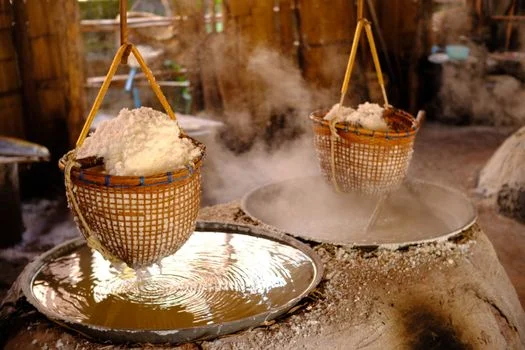
A major petrochemical complex in Saudi Arabia was grappling with a substantial environmental challenge: the generation of 50 m³/h of highly saline wastewater. This effluent contained a complex mixture of salts, primarily NaCl and Na₂SO₄, with a TDS level of 120,000 mg/L and a Chemical Oxygen Demand (COD) of 1,500 mg/L. The plant faced immense pressure from regulatory bodies and incurred significant costs associated with the disposal of this challenging wastewater, with fees reaching $300 per ton. ongoing non-compliance issues led to escalating annual fines totaling approximately $500,000.
Solution Deployed: To address these critical issues, the petrochemical plant invested in a state-of-the-art 50 m³/h evaporation crystallization system. The system was engineered with a falling film evaporator to maximize thermal efficiency, coupled with a forced-circulation crystallizer to manage the high salt load and prevent scaling. For robust pre-treatment, the solution incorporated a DAF system for effective removal of suspended solids and oil, followed by a multi-media filter to ensure minimal turbidity entering the thermal process. A downstream salt dryer was included to produce a marketable solid salt product.
Measurable Outcomes: The implementation of the evaporation crystallization system yielded transformative results:
- Salt Recovery: The system achieved an impressive salt recovery rate of 92%. The recovered NaCl was purified to 98% purity, making it suitable for sale to local industrial consumers.
- Water Recovery and Quality: Over 95% of the wastewater was converted into high-quality distillate. The distillate exhibited a TDS of less than 10 mg/L and a COD removal rate of 97%, reducing COD to below 50 mg/L. This high-purity water was successfully reintegrated into the plant's process water system, significantly reducing freshwater intake requirements.
- Cost Savings: Brine disposal costs were reduced by a remarkable 90%, effectively eliminating a major operational expense.
- Revenue Generation: The sale of recovered, high-purity salt generated an additional revenue stream of approximately $1.5 million per year for the plant.
- ROI: The combination of drastic cost savings and new revenue streams led to an exceptional return on investment, with the system achieving full payback in just 2.8 years.
Lessons Learned and Optimization: Several key operational insights were gained during the project's implementation and operation:
- Waste Heat Integration: Strategically integrating waste heat from other plant processes into the evaporation system reduced energy costs by 40%, significantly lowering OpEx.
- Automated Control: Implementing automated pH control and scale inhibitor dosing minimized scaling within the evaporator and crystallizer, ensuring consistent performance and reducing the frequency of shutdowns for cleaning.
- Preventative Maintenance: A proactive maintenance schedule, including acid cleaning of the evaporator tubes every three months, proved effective in preventing fouling and maintaining optimal heat transfer efficiency.
Frequently Asked Questions
Q1: What is the typical energy consumption for an evaporation crystallization system treating high-salinity wastewater?
A1: Energy consumption typically ranges from 0.05 to 0.15 kWh per kilogram of water evaporated. This figure is highly dependent on the specific system design, the efficiency of heat integration, and the operating temperature and pressure. Advanced designs with waste heat recovery can significantly reduce this consumption.
Q2: Can evaporation crystallization handle variable influent salinity and composition?
A2: Yes, evaporation crystallization systems are generally robust and can handle variations in influent salinity and composition. However, pre-treatment and system design must be tailored to the expected range of variability to prevent scaling, corrosion, or operational upsets. Our engineers conduct thorough analyses to ensure system resilience.
Q3: What is the expected lifespan of an evaporation crystallization system?
A3: With proper design, material selection (e.g., corrosion-resistant alloys like duplex stainless steel or titanium), and regular maintenance, evaporation crystallization systems can have a lifespan of 20–30 years or more. Key factors include the corrosivity of the brine and adherence to maintenance schedules.
Q4: How is the purity of the recovered salt determined, and what are its potential uses?
A4: Salt purity is determined by laboratory analysis (e.g., ICP-OES, titration) for key ions and impurities. Purity typically ranges from 95% to 99%. Recovered salts like NaCl can be used in chlor-alkali production, as industrial feedstock, for road de-icing, or in food processing, depending on the specific purity achieved and regulatory approvals.
Q5: What are the primary risks of scaling and corrosion in evaporation crystallization, and how are they mitigated?
A5: Scaling (precipitation of salts on surfaces) and corrosion (material degradation) are the primary risks. Mitigation strategies include: careful pre-treatment to remove scale-forming precursors, precise control of operating parameters (temperature, concentration), use of scale inhibitors, selection of appropriate corrosion-resistant materials, and regular cleaning cycles (e.g., acid washing).
Q6: How does evaporation crystallization contribute to a facility's overall sustainability goals?
A6: Evaporation crystallization facilitates Zero-Liquid Discharge (ZLD), eliminating the environmental burden of wastewater discharge. It also recovers valuable water for reuse, reducing freshwater dependency, and recovers salts that can be repurposed, promoting a circular economy. These aspects significantly enhance a facility's environmental footprint and sustainability credentials.
Further Reading
Explore these in-depth articles on related wastewater treatment topics: