Ammonia-Nitrogen Wastewater Treatment by Contact Oxidation: 2026 Engineering Specs, 98% Removal & Zero-Risk Reactor Design
Contact oxidation achieves 95–98% ammonia-nitrogen removal in industrial wastewater by leveraging biofilm-coated carriers to oxidize NH₄⁺-N to N₂ via nitrification-denitrification. Under optimal conditions (pH 7.5–8.5, DO 2–4 mg/L, HRT 6–12 h), effluent NH₄⁺-N concentrations drop below 5 mg/L—meeting EPA’s 10 mg/L limit for chemical manufacturing (40 CFR Part 417) and China’s GB 18918-2002 Grade A standard. Unlike electrochemical or ozonation methods, contact oxidation requires no chemical dosing, operates at ambient temperatures, and scales linearly with influent load (50–500 mg/L NH₄⁺-N). The "zero-risk" aspect stems from its inherent stability; biofilm systems are generally more resilient to shock loads and pH fluctuations compared to suspended growth systems, minimizing the chance of complete system failure or sudden effluent quality deterioration. This robust nature contributes significantly to long-term operational reliability.
Why Ammonia-Nitrogen in Wastewater Fails Compliance (And How Contact Oxidation Fixes It)
Industrial facilities face significant penalties for ammonia-nitrogen discharge violations, with EPA’s 40 CFR Part 417 limiting chemical manufacturing effluent to 10 mg/L and China’s GB 18918-2002 Grade A standard setting an even stricter 5 mg/L for industrial discharge. Failure to meet these stringent ammonia-nitrogen removal efficiency benchmarks can result in substantial fines, operational shutdowns, and severe environmental repercussions, particularly given ammonia’s high toxicity (e.g., LC50 for fish: 0.02–0.05 mg/L NH₃-N). Beyond acute toxicity, high ammonia discharges contribute to eutrophication in receiving waters, leading to algal blooms, subsequent oxygen depletion, and severe disruption of aquatic ecosystems. Industries like textile, pharmaceutical, and fertilizer production frequently grapple with elevated ammonia concentrations, and even specialized sectors such as rare earth mining wastewater, as highlighted by a study on ozonation, face challenges where ammonia-rich discharges inhibit natural nitrification and lead to ecosystem damage.
Common failures in conventional biological wastewater treatment reactor design for ammonia removal include incomplete nitrification due to persistently low dissolved oxygen (DO) levels, often falling below the critical 1 mg/L threshold. pH drift outside the optimal 7.5–8.5 range for nitrifying bacteria also severely impairs biological activity. excessive total suspended solids (TSS) exceeding 200 mg/L can lead to carrier fouling, reducing the active surface area for biofilm development and hindering overall ammonia-nitrogen removal. Contact oxidation, a robust biological contact oxidation process, offers a compelling solution by providing stable conditions for biofilm growth. Its inherent advantages include requiring no continuous chemical dosing for nitrogen conversion, operating effectively at ambient temperatures, and demonstrating linear scalability across a wide range of influent NH₄⁺-N loads, typically from 50 mg/L to 500 mg/L, making it a reliable solution for diverse industrial applications. The stable biofilm in contact oxidation systems, being less prone to washout than activated sludge, effectively maintains the necessary microbial population even during variable flow conditions, ensuring consistent ammonia removal.
How Contact Oxidation Removes Ammonia-Nitrogen: Mechanism and Process Flow
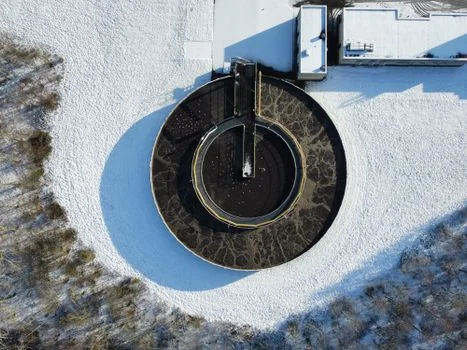
Contact oxidation employs a two-step biological process, nitrification-denitrification, to convert harmful ammonia-nitrogen (NH₄⁺-N) into inert nitrogen gas (N₂). The first step, nitrification, involves two distinct microbial groups: ammonia-oxidizing bacteria (e.g., Nitrosomonas) convert ammonium (NH₄⁺-N) to nitrite (NO₂⁻-N), followed by nitrite-oxidizing bacteria (e.g., Nitrobacter) transforming nitrite into nitrate (NO₃⁻-N). This aerobic process typically requires dissolved oxygen (DO) levels maintained between 2–4 mg/L. The second step, denitrification, occurs in anoxic zones where facultative heterotrophic bacteria (e.g., Pseudomonas) reduce nitrate (NO₃⁻-N) to nitrogen gas (N₂), which then escapes to the atmosphere. This anoxic environment is characterized by DO levels below 0.5 mg/L.
The core of the contact oxidation reactor design lies in its biofilm carriers, which provide a high specific surface area for microbial attachment and growth. Materials such as polypropylene honeycomb or polyurethane foam are commonly used, offering a substantial surface area ranging from 300–500 m²/m³. These carriers facilitate the formation of robust biofilms, enabling efficient biological contact oxidation. Research, including SEM/EDS data on iron-based carriers, underscores the importance of carrier materials in supporting dense and active microbial communities. The fixed-film nature of contact oxidation also offers advantages in terms of sludge management, typically producing less excess sludge than conventional activated sludge systems, and the sludge produced is often more concentrated and easier to dewater. This reduces downstream sludge handling costs and environmental impact.
Effective aeration is crucial for the nitrification phase. Fine-bubble diffusers, typically producing bubbles 0.5–1.0 mm in diameter, are preferred as they achieve oxygen transfer efficiencies of 30–40%. In contrast, coarse bubbles (2–3 mm) can cause excessive shear, leading to biofilm detachment and reduced efficiency. Following the biological treatment, a post-oxidation clarifier is essential for sedimentation, removing sloughed biofilm and suspended solids (TSS 20–50 mg/L) to prevent downstream fouling of critical components like reverse osmosis (RO) membranes. A typical process flow for a contact oxidation system includes influent wastewater undergoing initial pH adjustment, entering the contact oxidation reactor, followed by a clarifier, and then discharged as treated effluent, with optional disinfection. HydropureWater's WSZ series underground contact oxidation systems for industrial wastewater exemplify this integrated approach.
Contact Oxidation vs. Electrochemical/Ozonation: Head-to-Head Comparison for Industrial Applications
Selecting the optimal ammonia-nitrogen treatment technology for industrial wastewater hinges on a rigorous evaluation of removal efficiency, capital expenditure (CapEx), operational expenditure (OPEX), and compliance reliability across diverse methods. While contact oxidation excels in biological nitrification-denitrification, alternative advanced oxidation processes like electrochemical oxidation and ozonation offer different trade-offs in terms of footprint, chemical usage, and specific application suitability.
The following table provides a direct comparison of these prominent ammonia-nitrogen wastewater treatment methods:
| Parameter | Contact Oxidation | Electrochemical Oxidation | Ozonation |
|---|---|---|---|
| Removal Efficiency (NH₄⁺-N) | 95–98% | 90–95% | 85–90% |
| CapEx (100 m³/h capacity) | $80–150K | $120–200K | $100–180K |
| OPEX (per m³ treated) | $0.15–0.30 | $0.40–0.60 (incl. NaCl) | $0.50–0.80 (incl. ozone gen.) |
| Footprint (approx. 100 m³/h) | 50 m² | 30 m² | 40 m² |
| Chemical Use | No continuous dosing (pH/nutrient adjustment as needed) | Requires 1.0 g/L NaCl (Top 1 research) | No direct chemical dosing for ammonia, but ozone generation is energy intensive |
| Scalability | Linear, high flexibility for variable loads | Limited to <300 m³/h due to electrode fouling/maintenance | Moderate, can produce NO₃⁻-N byproducts |
| Compliance Reliability | High, stable effluent <5 mg/L NH₄⁺-N | Moderate, N₂ selectivity around 88.3% (Top 1 research) | Moderate, pH-sensitive (optimal pH 11), often produces NO₃⁻-N (Top 3 research) |
Contact oxidation, a biological contact oxidation process, is particularly well-suited for high-flow, variable-load industrial applications such as textile and chemical manufacturing due to its robust biological nature and lower operational costs. For instances where high total suspended solids (TSS) might be an issue, DAF pre-treatment for high-TSS wastewater before contact oxidation can enhance system performance. In contrast, electrochemical oxidation processes are often preferred for smaller-scale, high-strength wastewater streams like landfill leachate, where a compact footprint and specific contaminant removal are priorities, despite requiring chemical additions like NaCl (Top 1 research). Ozonation, while effective for low-concentration ammonia and odor-sensitive sites (e.g., municipal pre-treatment), can produce nitrate byproducts and is highly pH-sensitive, operating optimally at pH 11 (Top 3 research). While electrochemical methods can be effective for highly concentrated, low-volume streams with specific refractory compounds, their high energy consumption and the need for electrolyte addition can make them economically prohibitive for larger industrial applications. Ozonation, despite its efficacy in disinfection and COD reduction, requires careful management to prevent nitrate formation, which itself is a regulated pollutant. For comprehensive COD removal benchmarks for contact oxidation reactors, further resources are available.
2026 Engineering Specifications for Contact Oxidation Reactors: Design, Operating Parameters, and Carrier Media
Optimal performance of contact oxidation reactors for ammonia-nitrogen removal is achieved by precise adherence to a critical set of engineering specifications, encompassing hydraulic retention time, dissolved oxygen levels, and specialized biofilm carrier media. These parameters are fundamental for designing new systems or evaluating the efficiency and compliance of existing biological contact oxidation units.
The following table outlines the definitive engineering specifications for contact oxidation reactors:
| Parameter | Optimal Range | Source/Standard |
|---|---|---|
| Hydraulic Retention Time (HRT) | 6–12 h | EPA 40 CFR Part 417; longer HRT for influent >300 mg/L NH₄⁺-N |
| Dissolved Oxygen (DO) | 2–4 mg/L (nitrification); <0.5 mg/L (anoxic zones for denitrification) | Standard biological treatment practice |
| pH | 7.5–8.5 | Optimal range for nitrifying bacteria; supported by research showing high efficiency at neutral conditions (Top 2 research) |
| Temperature | 20–35°C | Psychrophilic bacteria extend range to 10°C, but with ~30% efficiency reduction |
| Carrier Fill Ratio | 50–60% | Polypropylene honeycomb: 300–400 m²/m³; polyurethane foam: 500 m²/m³ |
| Carrier Type | Polypropylene honeycomb, polyurethane foam, various plastic media | Industry standard for biofilm attachment (e.g., preventing carrier fouling in contact oxidation reactors) |
| Aeration Rate | 0.1–0.3 m³ air/m³ wastewater | Fine-bubble diffusers for high oxygen transfer efficiency |
| Influent NH₄⁺-N | 50–500 mg/L | Higher loads typically require pre-treatment (e.g., DAF for TSS >200 mg/L) |
| Effluent NH₄⁺-N | <5 mg/L | GB 18918-2002 Grade A; EPA 40 CFR Part 417: 10 mg/L |
Maintaining these operating parameters is critical for achieving consistent ammonia-nitrogen removal efficiency. For instance, the specified hydraulic retention time for ammonia removal ensures sufficient contact between wastewater and the active biofilm. pH control is often managed through automated pH and nutrient dosing for contact oxidation reactors to counteract the acidity produced during nitrification. The selection of biofilm carrier media directly impacts the active surface area available for microbial growth, influencing the overall volumetric loading rate of the reactor. Furthermore, adequate nutrient supply, particularly phosphorus and trace elements, is essential for optimal microbial growth and activity within the biofilm, even though it's not explicitly listed as a continuous dosing requirement. Reactor configuration, whether submerged or trickling, also plays a role in oxygen transfer and biofilm sheer, influencing overall performance and maintenance requirements. Adherence to these specifications ensures that the biological contact oxidation system meets stringent discharge limits, including EPA ammonia discharge limits and GB 189