Why Biratnagar’s Hospitals Need Dedicated Wastewater Treatment
Biratnagar Eye Hospital generates 100,000 litres of wastewater daily, contaminated with hazardous chemicals and biological pollutants. Nepal lacks centralized hospital wastewater treatment standards, but WHO and EPA guidelines mandate COD removal to ≤125 mg/L and fecal coliforms to ≤1,000 CFU/100 mL. For facilities processing 100–1,000 m³/day, MBR systems achieve 95%+ COD removal in a 60% smaller footprint than conventional activated sludge, while chlorine dioxide generators provide 99.9% pathogen kill without chemical residuals.
High-volume healthcare facilities in Biratnagar face a critical challenge: managing substantial quantities of medical effluent that pose significant public health and environmental risks. Biratnagar Eye Hospital, for instance, produces approximately 100,000 litres of wastewater daily (per PMC8528061). A substantial portion, estimated at 30–50%, is classified as hazardous due to the lack of source segregation, containing a complex mix of chemical and biological contaminants such as pharmaceuticals, blood, disinfectants, and heavy metals.
Current waste management practices in many Biratnagar healthcare facilities are inadequate. Mixed hazardous and non-hazardous waste is often transported in open rickshaws, leading to direct exposure risks. Irregular incineration and municipal dumping are common, with waste collection intervals sometimes extending to 1–2 weeks, exacerbating contamination. Handlers frequently lack proper Personal Protective Equipment (PPE), increasing their vulnerability. This uncontrolled discharge contributes to significant public health risks, including the transmission of infections to staff, patients, and surrounding communities. Studies like Gautam (2021) highlight the prevalence of antibiotic-resistant bacteria in hospital effluent, underscoring the potential for widespread microbial resistance if untreated wastewater is released into the environment. While Nepal's National Environment Act (NEA) 1997 provides general effluent guidelines, it lacks hospital-specific wastewater discharge standards. This regulatory gap necessitates adherence to international benchmarks from organizations like the World Health Organization (WHO) and the U.S. Environmental Protection Agency (EPA), which recommend stringent limits such as ≤125 mg/L COD and ≤1,000 CFU/100 mL fecal coliforms for safe discharge.
Hospital Wastewater Characteristics: What Your Treatment System Must Handle
Hospital wastewater is significantly more complex and hazardous than typical municipal sewage, requiring specialized treatment systems capable of handling a diverse range of contaminants and variable flow rates. The contaminant profile of medical effluent includes high concentrations of Chemical Oxygen Demand (COD) ranging from 300–1,200 mg/L, Biological Oxygen Demand (BOD) between 150–600 mg/L, and Total Suspended Solids (TSS) from 200–800 mg/L. Pathogen loads are exceptionally high, with fecal coliform counts typically in the range of 106–108 CFU/100 mL. Beyond conventional pollutants, hospital wastewater contains pharmaceuticals (e.g., antibiotics, analgesics at 0.1–10 mg/L, per WHO 2020 hospital effluent data), endocrine disruptors, and radioisotopes, which are generally absent in municipal streams.
Flow variability presents a significant design challenge. Facilities like Biratnagar Eye Hospital, managing 1,300 outpatients and performing 250 surgeries daily, experience pronounced diurnal peaks. Wastewater flow can exhibit a 3:1 peak-to-average ratio, meaning a system designed for average flow will be overwhelmed during peak hours without adequate equalization. This necessitates careful system sizing to accommodate these fluctuations and prevent hydraulic overloading.
the toxicity of certain hospital wastewater components can inhibit biological treatment processes. Chlorine residuals from disinfectants, often present at 5–20 mg/L, can be biocidal to the microorganisms essential for BOD/COD removal. Heavy metals, such as mercury from dental amalgams (0.01–0.1 mg/L, per EPA 2023 hospital wastewater guidelines), also pose a threat to biological activity and require careful management. These parameters collectively highlight that hospital wastewater is not merely concentrated municipal sewage; it demands a robust medical effluent treatment system designed for specific hazardous constituents and operational variabilities.
| Parameter | Typical Range in Hospital Wastewater | Comparison to Municipal Wastewater |
|---|---|---|
| COD | 300–1,200 mg/L | 2–5x higher |
| BOD | 150–600 mg/L | 2–4x higher |
| TSS | 200–800 mg/L | 2–5x higher |
| Fecal Coliforms | 106–108 CFU/100 mL | 10–100x higher |
| Pharmaceuticals | 0.1–10 mg/L (specific compounds) | Generally absent or trace |
| Chlorine Residuals | 5–20 mg/L | Low or absent |
| Heavy Metals | 0.01–0.1 mg/L (e.g., Mercury) | Low or absent |
Nepal’s Regulatory Landscape: Compliance Requirements for Hospital Wastewater

Nepal's regulatory framework for hospital wastewater discharge currently lacks specific, dedicated standards, creating a compliance vacuum that facilities must navigate using general environmental laws and international benchmarks. The National Environment Act (NEA) 1997 outlines general effluent limits applicable to all industrial and commercial discharges, including healthcare facilities. These general limits include parameters such as pH (6–9), Total Suspended Solids (TSS ≤100 mg/L), and Biochemical Oxygen Demand (BOD ≤50 mg/L). While these provide a baseline, they do not adequately address the unique biological and chemical hazards present in hospital effluent.
In the absence of hospital-specific Nepal wastewater discharge standards, healthcare facilities in Biratnagar are strongly advised to adhere to international guidelines to ensure public safety and environmental protection. The WHO Guidelines for Safe Use of Wastewater, Excreta and Greywater (2020) provide critical benchmarks for treated effluent, particularly for potential reuse applications. These guidelines recommend discharge limits of ≤125 mg/L COD, ≤1,000 CFU/100 mL fecal coliforms, and ≤1 helminth egg/L for unrestricted irrigation. For direct discharge into sensitive receiving waters, more stringent standards are often adopted, such as those referenced in the U.S. EPA 40 CFR Part 503 regulations, which can mandate limits as low as ≤30 mg/L BOD, ≤30 mg/L TSS, and ≤200 CFU/100 mL fecal coliforms for surface water discharge. These serve as aspirational targets for high-quality treatment.
Beyond national and international guidelines, local municipality requirements must also be considered. Biratnagar Metropolitan City may impose additional limits for discharge into its municipal sewer network or local waterways, such as requirements for no visible solids and no objectionable odor. Facility managers must proactively engage with local environmental authorities to obtain necessary permits and ensure compliance. This typically involves submitting detailed plans that demonstrate adherence to NEA 1997 general limits, alongside a commitment to achieving WHO benchmark adherence for a zero-risk medical effluent treatment system.
Treatment Technologies Compared: MBR vs. DAF vs. Chlorine Dioxide for Hospital Effluent
Selecting the optimal hospital sewage treatment plant design requires a clear understanding of each technology's strengths in handling the complex and variable nature of medical effluent. For high-volume healthcare facilities in Biratnagar, three primary technologies stand out: Membrane Bioreactors (MBR), Dissolved Air Flotation (DAF), and Chlorine Dioxide (ClO₂) Generators. Each offers distinct advantages depending on the specific contaminant profile, desired effluent quality, and available footprint.
Membrane Bioreactor (MBR) Systems
MBR systems for hospital wastewater treatment integrate biological degradation with membrane filtration, offering superior effluent quality and a compact footprint. These systems achieve 95–98% COD removal, over 99% TSS removal, and 99.9% pathogen kill. The use of PVDF membranes with pore sizes typically around 0.1 μm effectively blocks bacteria, viruses, and suspended solids, producing effluent suitable for discharge or even reuse. MBR systems are ideal for facilities generating 100–1,000 m³/day, requiring a footprint approximately 60% smaller than conventional activated sludge systems. Typical flux rates range from 15–25 LMH (liters per square meter per hour), optimizing membrane performance and longevity. HydropureWater offers advanced MBR systems for hospital wastewater treatment that are engineered for high-efficiency operation.
Dissolved Air Flotation (DAF)
DAF is a physical-chemical treatment process particularly effective for the pre-treatment of high-solid, oily wastewater streams often found in surgical or kitchen areas of hospitals. DAF systems achieve 70–85% TSS removal and 50–70% COD removal by using micro-bubbles (20–50 μm) to float suspended solids, fats, oils, and greases to the surface for skimming. This technology is best suited for handling flows from 4–300 m³/h and can significantly reduce the load on subsequent biological treatment stages. Typical loading rates for DAF range from 5–10 m/h, making it a robust option for facilities with fluctuating high-solid influent.
Chlorine Dioxide (ClO₂) Generators
For terminal disinfection, on-site chlorine dioxide generators for hospital disinfection are highly effective, achieving 99.9% pathogen kill within 30 minutes at a low dosing concentration of 0.5–2 mg/L. Chlorine dioxide is a powerful oxidant that does not form harmful disinfection byproducts like trihalomethanes (THMs) and leaves no chemical residuals, making it compliant with stringent WHO and EPA disinfection guidelines. HydropureWater's chlorine dioxide generators offer output capacities from 50–20,000 g/h, ensuring reliable, on-demand disinfection for any hospital scale.
Hybrid Systems
For facilities demanding the highest effluent quality and comprehensive contaminant removal, hybrid systems combine these technologies. A common configuration involves DAF for initial solids and FOG removal, followed by MBR for biological organics degradation and fine filtration, and finally, ClO₂ for robust pathogen disinfection. Such integrated approaches can achieve over 99% COD/TSS removal and 99.999% pathogen kill in pilot studies, ensuring full compliance with even the most stringent discharge or reuse standards.
| Technology | Primary Function | COD Removal | TSS Removal | Pathogen Kill | Footprint (compared to A/O) | Ideal Flow Range |
|---|---|---|---|---|---|---|
| MBR | Biological + Filtration | 95–98% | >99% | 99.9% | 60% smaller | 100–1,000 m³/day |
| DAF | Pre-treatment (Solids, FOG) | 50–70% | 70–85% | N/A | Compact | 4–300 m³/h (pre-treatment) |
| Chlorine Dioxide | Disinfection | N/A | N/A | 99.9% | Minimal (generator) | All flows (post-treatment) |
Sizing and Footprint: How to Design a System for Your Hospital’s Flow Rate
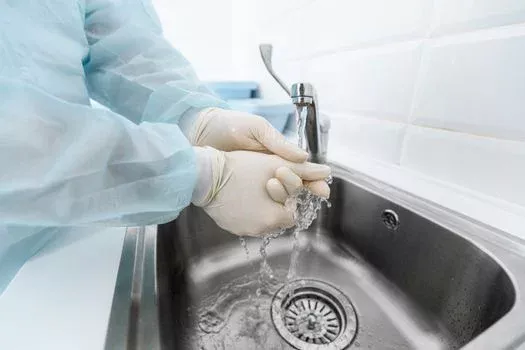
Accurately sizing a hospital sewage treatment plant design is critical to ensure it can effectively manage daily wastewater volumes and peak flows, while also fitting within available space constraints. The first step involves calculating the average daily wastewater generation. A general formula for this includes contributions from beds, outpatients, and surgeries: Daily wastewater = (beds × 0.5 m³/bed/day) + (outpatients × 0.05 m³/patient) + (surgeries × 0.2 m³/surgery). For example, Biratnagar Eye Hospital, with its 1,300 outpatients and 250 surgeries per day, generates an approximate baseline of 100 m³/day (100,000 L/day).
However, simply designing for the average flow is insufficient. Hospital operations create significant diurnal peaks; therefore, systems must be designed to handle at least 3x the average flow. For a hospital with an average flow of 500 m³/day, the system should be capable of processing up to 1,500 m³/day during peak periods. An equalization tank, sized for 2–4 hours of retention at peak flow, is essential to buffer these spikes and ensure a consistent flow rate to downstream treatment processes.
Footprint is a major consideration for urban hospitals. MBR systems are notably space-efficient, requiring approximately 0.1–0.2 m²/m³/day of treatment capacity. In contrast, conventional Activated Sludge (A/O) systems typically demand a larger footprint of 0.3–0.5 m²/m³/day. DAF units are compact, needing only 0.05–0.1 m²/m³/day. For a 500 m³/day MBR plant, this translates to an area of 50–100 m², which is significantly smaller than the 150–250 m² required for a conventional A/O plant of the same capacity. HydropureWater offers underground wastewater treatment plants for hospitals from the WSZ Series, which save up to 70% of surface space but require 3–4 meters of depth for installation and access. Mobile trailer-mounted options are also available for temporary facilities or rapid deployment, providing flexibility where permanent infrastructure is not feasible.
| Technology Type | Specific Footprint (m²/m³/day) | Example: 500 m³/day System Area (m²) |
|---|---|---|
| MBR System | 0.1–0.2 | 50–100 |
| Conventional Activated Sludge (A/O) | 0.3–0.5 | 150–250 |
| DAF Unit (Pre-treatment) | 0.05–0.1 | 25–50 |
| Underground WSZ Series (surface footprint) | 0.03–0.06 | 15–30 |
Cost Breakdown: CAPEX, OPEX, and ROI for Hospital Wastewater Treatment in Nepal
Investing in a hospital wastewater treatment system in Biratnagar requires a clear understanding of both Capital Expenditure (CAPEX) and Operational Expenditure (OPEX), alongside a compelling Return on Investment (ROI) justification. CAPEX for a medical effluent treatment system varies significantly by technology and capacity. Conventional Activated Sludge (A/O) systems typically range from $80–$150/m³/day. MBR systems, offering superior effluent quality and a smaller footprint, have a higher CAPEX of $200–$400/m³/day. DAF units, primarily used for pre-treatment, are more economical at $30–$80/m³/day. Chlorine dioxide generators, which are disinfection components, range from $10,000–$50,000 for units with 50–20,000 g/h output capacity.
OPEX represents the ongoing costs of running the plant. Electricity is a primary component, typically ranging from $0.05–$0.15/m³ of treated water, influenced by pump and aeration demands. Chemical costs, including coagulants and flocculants for DAF or pH adjustment, can add $0.02–$0.10/m³. MBR systems incur membrane replacement costs, usually $0.03–$0.08/m³ over the membrane's lifespan. Labor for 1–2 operators contributes $0.05–$0.15/m³, depending on automation and local wage rates. Total OPEX for a typical MBR system can range from $0.15–$0.40/m³.
The ROI for hospital wastewater treatment is driven by several factors beyond direct cost savings. Avoiding municipal fines for non-compliance, which can range from NPR 50,000–200,000 per year, is a significant financial incentive. More importantly, reducing infection risks through effective treatment can lead to a 30% lower incidence of hospital-acquired infections (HAIs) in facilities with on-site treatment, improving patient outcomes and reducing associated healthcare costs. the ability to reuse treated water for non-potable applications like irrigation or cooling towers can significantly reduce municipal water consumption, offering long-term savings. Hospitals can explore financing options such as the Nepal Government’s Climate Change Fund or WHO grants, and equipment leasing programs to manage initial investment costs. Details on eligibility and application processes for these funds should be sought from relevant government and international bodies.
| Cost Category | Item | Typical Range (USD) | Notes |
|---|---|---|---|
| CAPEX (per m³/day capacity) | Conventional A/O System | $80–$150 | Lower initial cost, larger footprint |
| MBR System | $200–$400 | Higher quality effluent, smaller footprint | |
| DAF Unit | $30–$80 | Pre-treatment component | |
| ClO₂ Generator | $10,000–$50,000 (unit cost) | For 50–20,000 g/h output | |
| OPEX (per m³ treated) | Electricity | $0.05–$0.15 | Pumps, blowers, controls |
| Chemicals | $0.02–$0.10 | Coagulants, flocculants, cleaning agents | |
| Membrane Replacement (MBR) | $0.03–$0.08 | Amortized over membrane lifespan | |
| Labor | $0.05–$0.15 | 1–2 operators for routine checks/maintenance |
Step-by-Step Implementation: From Permitting to Commissioning
Implementing a hospital wastewater treatment system in Biratnagar involves a structured process, from initial regulatory approvals to final operational handover, with careful attention to common pitfalls. The first critical step is permitting. Hospitals must submit comprehensive plans to Biratnagar Metropolitan City, detailing compliance with Nepal's NEA 1997 general effluent limits and demonstrating adherence to WHO benchmark recommendations for safe discharge. Required documentation typically includes a detailed site layout, process flow diagrams, and a compliance report. The permitting timeline can range from 2–4 months, with common delays stemming from the lack of hospital-specific standards and municipal backlogs, necessitating proactive engagement.
Following permit approval, site preparation commences. For underground wastewater treatment plants for hospitals, such as the WSZ Series, this involves excavation to a depth of 3–4 meters. Reliable power supply (typically 380V/50Hz for MBR systems) must be established, and the equalization tank, designed for 2–4 hours of retention to manage peak flows, needs to be installed. Proper grading and drainage are essential to prevent water accumulation around the plant.
Installation of the treatment system follows. HydropureWater's factory-tested skid-mounted systems, including modular MBR units for phased expansion, significantly reduce on-site installation time to 2–3 weeks. This modular approach minimizes disruption to hospital operations and allows for future capacity upgrades. Careful connection of influent and effluent piping, electrical systems, and control units is performed by certified technicians.
Commissioning is the final phase, ensuring the system operates as designed and meets all performance criteria. For biological systems like MBR, initial biological startup can take 4–6 weeks to establish a healthy microbial population. DAF and chlorine dioxide systems typically require only 2–3 days for startup and calibration. Performance testing involves regular sampling and analysis to verify COD/TSS removal rates, pathogen kill efficacy, and overall compliance with discharge standards. Finally, comprehensive training for 1–2 hospital operators is provided, covering essential tasks such as membrane cleaning protocols (weekly backwash, monthly chemical cleaning), chemical dosing, routine maintenance, and emergency response procedures, ensuring long-term operational efficiency and compliance.
Frequently Asked Questions
What are the discharge limits for hospital wastewater in Nepal?
Nepal’s NEA 1997 sets general effluent limits (e.g., pH 6–9, TSS ≤100 mg/L, BOD ≤50 mg/L) that apply to hospitals. However, due to the lack of hospital-specific standards, WHO guidelines are highly recommended, suggesting ≤125 mg/L COD and ≤1,000 CFU/100 mL fecal coliforms for safe disposal. Always check with Biratnagar Metropolitan City for any specific local requirements or permits.
How much space does an MBR system need for a 500 m³/day hospital?
A 500 m³/day MBR system typically requires a footprint of 50–100 m², including equalization tanks and control rooms. For space-constrained sites, underground WSZ Series plants can reduce the surface footprint by up to 70%, integrating seamlessly into existing hospital landscapes.
What’s the best disinfection method for hospital wastewater?
Chlorine dioxide (ClO₂) generators are highly effective for hospital wastewater disinfection. They achieve 99.9% pathogen kill in 30 minutes at 0.5–2 mg/L dosing, without producing harmful chemical residuals or disinfection byproducts. UV disinfection is generally less effective for hospital effluent due to high TSS and turbidity, which can shield pathogens from UV light.
Can hospital wastewater be reused for irrigation or cooling towers?
Yes, highly treated hospital wastewater, particularly from MBR systems, can be reused. Effluent with ≤50 mg/L COD and ≤10 CFU/100 mL fecal coliforms meets WHO standards for unrestricted irrigation. For cooling towers, additional polishing may be required. Always verify local reuse regulations and obtain necessary permits from Biratnagar Metropolitan City before implementing any water reuse scheme.
What’s the lifespan of an MBR membrane?
PVDF (Polyvinylidene Fluoride) membranes used in MBR systems typically have a lifespan of 5–8 years. This longevity is dependent on proper operation and regular maintenance, including routine cleaning (e.g., weekly backwash, monthly chemical cleaning) and adherence to manufacturer guidelines. Replacement membrane cost ranges from $50–$100 per square meter of membrane area.
Related Equipment
- on-site chlorine dioxide generators for hospital disinfection — view specifications, capacity range, and technical data
Need a customized solution? Request a free quote with your specific flow rate and pollutant parameters.