India generates 72,368 million litres per day (MLD) of urban sewage. According to the CPCB National Inventory cited in a Lok Sabha reply (March 2026), installed STP capacity is 31,841 MLD, operational capacity is 26,869 MLD, and actual utilization is 20,235 MLD—about 28% of generation. Earlier industry summaries often cited roughly 40% coverage against installed capacity; the 2026 parliamentary figures separate installed, operational, and utilized capacity more clearly. For urban local bodies (ULBs) and developers specifying municipal sewage treatment plants, choosing among MBR, SBR, DAF pre-treatment, and conventional activated sludge still turns on effluent targets (BOD < 30 mg/L, TSS < 100 mg/L under common CPCB discharge limits), footprint (MBR about 0.5 m²/MLD versus conventional about 1.2 m²/MLD), and CAPEX of about $1.2M–$2.5M per 10 MLD.
Municipal sewage treatment plants: what Indian ULBs must decide in 2026
Municipal sewage treatment plants in India face a 72,368 MLD sewage load with only 20,235 MLD actually utilized (about 28%) and 31,841 MLD installed. New 10 MLD trains typically cost $1.0M–$2.5M CAPEX. Footprint runs about 0.5 m²/MLD for MBR versus about 1.2 m²/MLD for conventional sludge, while CPCB floors remain BOD < 30 mg/L and TSS < 100 mg/L.
Most plants we size for mid-size ULBs still start from measured influent BOD, TSS, and peak-factor data rather than brochure averages. Process choice then follows land availability, reuse ambition, and sludge logistics—not brand preference.
India’s sewage capacity gap, AMRUT deadlines, and compliance pressure
India’s urban sewage load of 72,368 MLD still exceeds usable treatment capacity by a wide margin. Lok Sabha data tied to the CPCB inventory list actual utilization at 20,235 MLD and operational capacity at 26,869 MLD, so many cities have steel in the ground that is not yet running at design load. That gap drives groundwater risk, river BOD spikes, and public-health exposure in dense wards.
AMRUT 2.0 targets universal sewerage and septage coverage in the 500 AMRUT cities and promotes recycle/reuse of treated sewage. A PRS summary of the August 2026 Standing Committee review notes AMRUT 2.0 has been extended to March 2027, with only 104 of 594 planned sewerage/septage projects completed at that review point. Under AMRUT 2.0, MoHUA has approved hundreds of sewerage projects covering several thousand MLD of new or augmented treatment capacity, including dedicated recycle/reuse trains. Funding discipline and milestone monitoring are tightening; ULBs that miss sewerage and treatment milestones risk delayed central assistance and slower project releases.
Modernization still moves the needle when it is done at scale. The upgraded Okhla STP in Delhi (564 MLD) has been cited for cutting Yamuna pollution load by about 40% after modernization, showing how large secondary/tertiary trains change receiving-water outcomes when they stay online.
| Parameter | CPCB 2015 Norms (mg/L, unless specified) | CPCB 2026 Norms (mg/L, unless specified) |
|---|---|---|
| BOD (Biochemical Oxygen Demand) | < 30 | < 30 |
| TSS (Total Suspended Solids) | < 100 | < 100 |
| COD (Chemical Oxygen Demand) | < 250 | < 250 |
| Ammoniacal Nitrogen (as N) | < 50 | < 50 |
| Fecal Coliform (MPN/100mL) | < 1,000 | < 1,000 |
| pH | 6.5 – 9.0 | 6.5 – 9.0 |
Where a state board or court order sets tighter limits for a sensitive stretch, treat the table above as the floor, not the ceiling. Reuse buyers usually demand BOD and TSS well below those discharge values.
Municipal sewage treatment technologies: head-to-head for Indian ULBs
Selecting a municipal process train for Indian ULBs means trading effluent quality, land, energy, and sludge mass against CAPEX. MBR systems for municipal sewage treatment in India routinely deliver about 95% BOD removal and over 99% pathogen reduction when membranes and pretreatment stay healthy, which suits non-potable reuse. Compact footprint is typically 0.5–0.7 m²/MLD, but CAPEX sits near $2.0M–$2.5M per 10 MLD and membrane replacement often adds about $0.05/m³ (HydropureWater field data, 2025).
Sequencing batch reactors (SBR) usually achieve 85–90% BOD removal and about 30% less sludge than conventional activated sludge under comparable loads. Most SBR trains we commission for Indian cities run 4–6 hour cycles with automated fill–aerate–settle–decant logic, which helps when diurnal and monsoon peaks swing hard.
DAF pre-treatment for municipal sewage plants removes about 90–95% of TSS and 60–70% of BOD when air saturation and polymer dosing are tuned to the influent solids curve. That cut protects downstream aeration basins and membranes and often extends biological-train life on greasy or high-TSS catchments.
Conventional activated sludge (CAS) still wins lowest first cost, averaging about $1.2M per 10 MLD and commonly $1.0M–$1.4M in the budget table below. Land demand is the highest at about 1.0–1.2 m²/MLD, and sludge disposal often runs ₹800–₹1,500/tonne in Indian metros (HydropureWater field data, 2025). For constrained urban plots that still need secondary treatment, an Underground Package Sewage Treatment Plant (WSZ Series) can cover satellite networks or colony catchments without a full above-grade CAS footprint.
| Technology | Achievable Effluent Quality (BOD mg/L) | Achievable Effluent Quality (TSS mg/L) | Achievable Effluent Quality (Fecal Coliform MPN/100mL) | Footprint (m²/MLD) | Energy Use (kWh/m³) | CAPEX (per 10 MLD) | OPEX (per m³) |
|---|---|---|---|---|---|---|---|
| MBR | < 5 | < 2 | < 10 | 0.5 – 0.7 | 0.6 – 1.0 | $2.0M – $2.5M | $0.10 – $0.15 |
| SBR | < 10 | < 10 | < 200 | 0.8 – 1.0 | 0.4 – 0.7 | $1.5M – $1.8M | $0.07 – $0.10 |
| DAF (Pre-treatment) | (60-70% reduction) | (90-95% reduction) | N/A | 0.2 – 0.4 | 0.1 – 0.2 | $0.3M – $0.5M | $0.02 – $0.03 |
| Conventional Activated Sludge | < 20 | < 30 | < 1,000 | 1.0 – 1.2 | 0.3 – 0.5 | $1.0M – $1.4M | $0.05 – $0.08 |
2026 cost models: CAPEX, OPEX, and ROI for 10–100 MLD STPs
CAPEX and OPEX models for Indian municipal STPs should be built per MLD and then scaled with shared headworks, not with a flat unit rate. For a 10 MLD plant, MBR CAPEX is about $2.2 million within a $2.0M–$2.5M band, while conventional activated sludge sits near $1.2 million within $1.0M–$1.4M. Relative gaps between trains usually persist at 50 MLD and 100 MLD even after economies of scale.
| Capacity (MLD) | MBR CAPEX ($M) | SBR CAPEX ($M) | Conventional CAPEX ($M) |
|---|---|---|---|
| 10 | 2.0 – 2.5 | 1.5 – 1.8 | 1.0 – 1.4 |
| 50 | 7.5 – 9.0 | 6.0 – 7.5 | 4.5 – 6.0 |
| 100 | 13.0 – 16.0 | 10.0 – 13.0 | 8.0 – 10.0 |
OPEX for sewage treatment plants in India typically stacks as energy ($0.03–$0.08/m³), chemicals ($0.01–$0.03/m³), sludge disposal ($0.02–$0.05/m³), and labor ($0.01–$0.02/m³). MBR OPEX is higher, but reuse sales of ₹20–₹50/m³ to industry can pull payback into a 5–7 year window; conventional plants without reuse often show 3–5 year simple payback on a lower CAPEX base. A 50 MLD SBR plant in Bengaluru reported about 20% lower OPEX than a comparable conventional plant, mainly from lower sludge haulage and tighter aeration control (Shubham India 2025). The Standing Committee review also notes that only about 26% of treated wastewater against available capacity is currently reused nationally, so reuse revenue should be modeled only where bulk offtake contracts exist.
What does a 50 L/s sewage pumping station cost in India?
A 50 L/s (about 4.3 MLD continuous) municipal sewage pumping station in India usually budgets in the mid–high tens of lakhs to a few crores INR installed, depending on head, wet-well depth, standby philosophy, and odour control—not on pump nameplate alone. Civil works, screens, valves, VFD panels, and force-main fittings often exceed the pump-set cost. Pair station design with downstream STP hydraulic peaks; oversizing pumps without matching aeration or clarifier capacity only shifts the bottleneck.
Step-by-step equipment selection for Indian municipal STPs
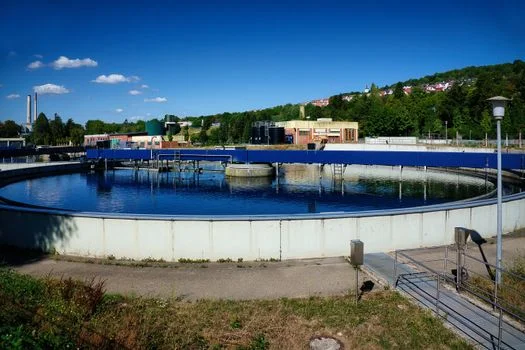
A structured selection framework keeps ULB tenders aligned to site limits, budget, and CPCB compliance instead of lowest sticker price.
1. Assess influent and required effluent. Characterize BOD, TSS, ammoniacal nitrogen, and fecal coliform, then lock the discharge or reuse specification. Sensitive water bodies and industrial reuse buyers push toward SBR or MBR rather than bare CAS.
2. Evaluate site constraints. Footprint, soil bearing, flood level, and noise rules decide whether MBR, SBR, CAS, or a buried package plant fits. Variable inflows favor SBR; tight urban plots favor MBR or underground package units such as the Underground Package Sewage Treatment Plant (WSZ Series).
3. Compare 10-year total cost of ownership. Include energy, chemicals, labor, membrane or diffuser replacements, and sludge disposal—not only civil CAPEX.
| Technology | 10-Year TCO for 10 MLD Plant ($M) | Key Cost Drivers |
|---|---|---|
| MBR | 4.0 – 5.5 | Membrane replacement, higher energy for filtration |
| SBR | 3.0 – 4.0 | Automation, aeration, sludge handling |
| Conventional Activated Sludge | 2.5 – 3.5 | Large footprint, higher sludge disposal, energy for aeration |
4. Score vendor support. Demand local spare parts, commissioning manpower, and documented O&M training. For a practical supplier checklist used on other municipal programs, see our notes on vendor selection best practices for municipal STPs.
5. Validate large plants with pilots. Projects above 50 MLD benefit from a 3–6 month pilot to confirm kinetics, sludge yield, and membrane or settler performance under real monsoon peaks before steel is ordered.
Decision path in practice: tight effluent or reuse → MBR/SBR; abundant land and discharge-only → CAS; high TSS/FOG headworks → add DAF; satellite catchments → package/underground trains.
How do municipal water boards plan net-zero equipment upgrades?
Municipal water boards planning net-zero equipment upgrades usually start with energy baselining of blowers, pumps, and sludge handling, then add solar on available plant area and biogas where digesters already exist. Process upgrades that cut aeration kWh/m³ and raise reuse sales often move the carbon and opex ledgers faster than nameplate “green” add-ons alone. Boards under AMRUT reuse mandates should sequence OCEMS, tertiary polishing, and offtake piping before claiming net-zero progress.
Compliance checklist for CPCB limits and plant documentation
Meeting CPCB discharge limits for a municipal STP in India requires consistent effluent quality, online monitoring, sludge dryness, disinfection, and auditable reports. Target floors remain BOD < 30 mg/L, TSS < 100 mg/L, and fecal coliform < 1,000 MPN/100mL unless a tighter local order applies.
| Parameter | CPCB 2026 Limit | Achievable with Conventional Activated Sludge | Achievable with SBR | Achievable with MBR |
|---|---|---|---|---|
| BOD (mg/L) | < 30 | < 20 | < 10 | < 5 |
| TSS (mg/L) | < 100 | < 30 | < 10 | < 2 |
| Fecal Coliform (MPN/100mL) | < 1,000 | < 1,000 (with disinfection) | < 200 (with disinfection) | < 10 (with disinfection) |
Selection checklist before tender award:
- Influent composite data covering dry and monsoon weeks
- Written effluent or reuse specification with units
- Footprint and flood-level survey tied to process option
- 10-year TCO with energy tariff and sludge tip fees
- OCEMS points for pH, DO, TSS, and flow with telemetry
- Sludge plan to ≥20% solids before haul-off
- Disinfection method matched to fecal coliform limit
Online sensors for pH, dissolved oxygen, TSS, and flow should feed CPCB-facing telemetry where OCEMS directions apply. Sludge should be dewatered to at least 20% solids before disposal under common CPCB sludge-handling practice; plate and frame filter presses are a standard way to hit that dryness. For disinfection, chlorine dioxide is often preferred over UV when transmittance is unstable; a plant-scale chlorine dioxide generator keeps residual control simpler across variable Indian sewage quality. Keep monthly operational reports and effluent certificates in the format your state board requests.
Cost drivers that most often move the tender beyond the process-train sticker price are land acquisition or lease, power tariff at the plant gate, sludge tip distance, monsoon peak factor, and the length of reuse conveyance to the first bulk buyer. Most plants we size for 10–50 MLD Indian ULBs run toward the lower end of published energy bands when fine-bubble aeration and VFDs are commissioned correctly, and drift upward when screens and grit removal are undersized.
Who this is for / Who should look elsewhere / Next step
This guide is for ULB engineers, EPC contractors, and developers sizing 10–100 MLD municipal trains under AMRUT or state board scrutiny. Pure industrial effluent plants, or buyers hunting only potable reuse without tertiary scope, should use a different process brief. If you already have flow, BOD/TSS, land area, and a reuse or discharge target, request a process and equipment quotation so CAPEX/OPEX can be checked against your site envelope.
Frequently Asked Questions
What are the key differences between MBR and SBR for municipal STPs?
MBR trains deliver tighter effluent—typically BOD < 5 mg/L and TSS < 2 mg/L—on a 0.5–0.7 m²/MLD footprint, while SBR trains usually sit near BOD < 10 mg/L and TSS < 10 mg/L on 0.8–1.0 m²/MLD. MBR CAPEX and membrane replacement are higher. SBR units handle variable municipal flows with less sludge mass and simpler civil works when land is available.
How do CPCB 2026 norms impact existing STPs?
Existing STPs that miss current BOD, TSS, or fecal coliform limits need process upgrades, better disinfection, or capacity augmentation. ULBs can face delayed funding and enforcement action when plants stay non-compliant. Retrofits often add fine screens, aeration control, tertiary filters, or membrane polishing rather than a full rebuild.
What is the average operational cost per MLD for a municipal STP in India?
OPEX typically ranges from about $0.05/m³ for conventional activated sludge to about $0.15/m³ for MBR when energy, chemicals, sludge disposal, and labor are included. Energy for aeration and solids handling is usually the largest variable. Convert to per-MLD cost by multiplying the unit rate by 1,000 m³ and your actual utilization factor.
Can treated sewage be reused in India, and what are the benefits?
Yes. Treated municipal sewage is reused for industrial cooling, irrigation, and toilet flushing when tertiary quality is met, often via MBR or tertiary filters. Benefits include lower freshwater abstraction and potential sales of ₹20–₹50/m³ to industrial users. National reuse is still limited—about 26% of treated volume against available capacity in recent parliamentary committee figures—so offtake contracts matter.
What support should I expect from a sewage treatment equipment supplier?
Expect process design, equipment supply, installation supervision, commissioning, operator training, spare-parts stocking, and remote troubleshooting. Municipal contracts should also define response times for critical rotating equipment and membrane or diffuser replacements. Weak after-sales support is a common reason otherwise sound STPs drift out of compliance within two to three seasons.