Ecuador Municipal Coverage Gaps, Funding, and Design Drivers
Ecuador municipal sewage treatment plants must meet TULSMA and INEN 2176 discharge limits under altitude, coastal corrosion, and tropical sludge loads. Coverage remains incomplete: 38.1% of municipalities lack treatment works (Reef Resilience Network, 2023), and only 22.4% of distributed water reaches a WWTP. CAPEX for 10,000–100,000 PE plants typically runs $35M–$120M.
Regions such as Guayas, Manabí, and Esmeraldas still discharge large volumes of untreated sewage. That gap drives new builds and upgrades for engineers sizing plants from 10,000 PE package units to city-scale works such as Guayaquil’s Los Merinos facility, often cited at about 4 m³/s design flow.
Regulatory drivers are clear. TULSMA sets the national water-quality and discharge framework, and INEN 2176 is widely used for effluent limits on municipal projects. IDB and World Bank financed plants usually add tighter BOD₅ and TSS caps plus long O&M guarantees.
Geography changes equipment sizing. At Quito (2,850 m), lower oxygen transfer often requires aeration basins about 20–30% larger than sea-level designs. Coastal Guayaquil needs corrosion-resistant metals; most plants we size for humid saline sites specify 316L stainless steel on DAF wetted parts. Tropical sites such as Esmeraldas can raise sludge mass by 30–50%, so dewatering trains need extra capacity.
Those three site factors should appear on the first page of every process design basis. If a bid package ignores altitude, salinity, or sludge yield, score it as incomplete before price is even opened.
Earlier articles often framed Latin America’s treated share near 42%.Guayaquil’s Las Esclusas WWTP entered operation in 2023, and Los Merinos is under construction with full operation targeted for 2026 (World Bank, 2024)./p>
Funding remains active beyond flagship cities. Earlier project notes cited a $40 million IDB package for Esmeraldas and a $120 million World Bank figure for Guayaquil expansion. Separately, the IDB approved a $120 million PROSANEAMIENTO loan for water, sewage, and solid-waste works in mid-size municipalities of 10,000–100,000 residents (IDB). Ecuador’s national water plan still targets about 80% wastewater treatment coverage by 2030.
| Metric | Ecuadorian Context | Implication for WWTP Design |
|---|---|---|
| Wastewater Treatment Coverage | 38.1% of municipalities lack infrastructure (Reef Resilience Network, 2023) | High demand for new plant construction and upgrades. |
| Water Entering WWTPs | 22.4% of distributed water (Interactive Country Fiches) | Significant gap to address, requiring substantial investment. |
| Regulatory Framework | TULSMA, INEN 2176 | Strict effluent quality standards must be met. |
| Funding Requirements | IDB/World Bank mandates | Emphasis on advanced treatment, O&M guarantees, and compliance. |
| Altitude (e.g., Quito) | 2,850m | Requires larger aeration basins (20-30% increase) for oxygen transfer. |
| Climate (Coastal, e.g., Guayaquil) | High humidity, salinity | Corrosion-resistant materials (316L SS for DAF) essential. |
| Climate (Tropical, e.g., Esmeraldas) | High temperatures, humidity | Increased sludge production (30-50% higher); larger dewatering capacity needed. |
| National Water Plan Target | 80% coverage by 2030 | Accelerated project timelines and increased procurement activity. |
Engineering Specs: Influent, Effluent, and Process Sizing
Engineering specifications for Ecuadorian municipal WWTPs start with measured influent strength, local climate, and the permit that will govern discharge. Designers who skip site-specific sampling usually oversize biology or undersize solids handling.
Record wet-season and dry-season composites before you freeze PE and tank volumes. Coastal catchments swing harder on FOG and TSS after rainfall, while Andean plants see colder nights that slow nitrification. A one-week snapshot is not a design basis for a 20–25 year civil asset.
Typical municipal influent in Ecuador, drawn from published MDPI studies and ACCIONA project ranges, clusters as follows:
- BOD₅: 200–400 mg/L in general municipal sewage; coastal cities often see 300–500 mg/L when domestic and light industrial loads combine.
- TSS: 250–500 mg/L overall; Quito-type catchments with lower industry may run 200–350 mg/L.
- pH: usually 6.5–8.5; seawater intrusion on the coast can push readings toward 7.0–9.0.
- Temperature: about 18–28°C in lowland cities; Quito often sits at 10–20°C, slowing biological kinetics and favoring insulated tanks.
Effluent targets follow TULSMA and INEN 2176, then any lender rider. Common municipal discharge limits are BOD₅ <30 mg/L and TSS <50 mg/L. Many IDB-funded scopes tighten those to BOD₅ <20 mg/L and TSS <30 mg/L. E. coli for general discharge is often near <1,000 CFU/100 mL; reuse targets can drop toward <100 CFU/100 mL under WHO-aligned briefs.
Process sizing must lock to altitude and climate. Above 2,000 m, plan aeration volume about 20–30% above sea-level norms. Coastal DAF tanks and internals should be 316L stainless steel, with epoxy-protected concrete where steel is not used. Tropical plants need sludge dewatering sized for 30–50% higher mass; plate-and-frame presses in the 2–5 m³/h class are a common match for mid-size trains.
| Parameter | Typical Ecuadorian Influent (General) | Coastal Influent (e.g., Guayaquil) | High-Altitude Influent (e.g., Quito) | Required Effluent (INEN 2176) | Stricter Effluent (IDB Projects) |
|---|---|---|---|---|---|
| BOD₅ (mg/L) | 200–400 | 300–500 | 200–350 | <30 | <20 |
| TSS (mg/L) | 250–500 | 300–550 | 200–350 | <50 | <30 |
| pH | 6.5–8.5 | 7.0–9.0 | 6.8–8.2 | 6.0–9.0 | 6.0–9.0 |
| Temperature (°C) | 18–28 | 22–30 | 10–20 | N/A (ambient) | N/A (ambient) |
| E. coli (CFU/100mL) | 10⁵–10⁷ | 10⁵–10⁷ | 10⁵–10⁷ | <1,000 | <100 (for reuse) |
| Design Consideration | Standard | Corrosion resistance (316L SS for DAF), higher FOG potential | Larger aeration volumes (20-30%), insulated tanks | Meeting limits | Exceeding limits for reuse potential |
| Sludge Production | Standard | Slightly higher | Standard | N/A | N/A |
| Tropical Climate Impact | N/A | N/A | N/A | N/A | Increased sludge production (30-50% higher), requiring larger dewatering capacity. |
When reuse or tight urban footprints force advanced polishing, the HydropureWater MBR Series is often shortlisted because effluent BOD₅ below 10 mg/L and TSS below 5 mg/L are routine under stable membrane operation.
Technology Comparison for Municipal Plants in Ecuador
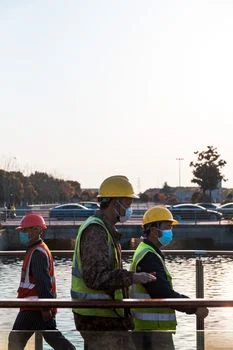
Technology choice for Ecuadorian municipal WWTPs hinges on footprint, effluent class, energy, and O&M skill available at the utility. No single process wins every PE band.
Match the process to the operator you actually have, not the operator on the bid brochure. A compact MBR that nobody can clean will miss effluent limits faster than a simple A/O train with steady solids control. For 10,000 PE towns, package plants with clear alarm lists usually beat custom civil layouts that need a full laboratory shift.
MBR packages fit dense urban sites and lender-driven BOD₅ <20 mg/L / TSS <30 mg/L scopes. Conventional A/O activated sludge still wins on CAPEX when land is cheap and operators can run solids inventory day to day. DAF ahead of biology helps coastal plants with FOG and peak TSS. Lamella clarifiers cut settling area but may need tertiary polishing to hold <30 mg/L BOD₅.
| Parameter | MBR | Conventional Activated Sludge (A/O) | DAF + Biological | Lamella Clarifiers |
|---|---|---|---|---|
| CAPEX ($/PE) | $5,000–$8,000 | $2,500–$4,000 | $3,000–$5,000 | $1,500–$3,000 |
| OPEX ($/m³) | $0.20–$0.35 | $0.25–$0.40 | $0.20–$0.35 | $0.05–$0.10 |
| Footprint (m²/PE) | 0.05–0.10 | 0.20–0.40 | 0.15–0.25 | 0.10–0.20 |
| Energy Consumption (kWh/m³) | 1.5–2.5 | 1.0–1.8 | 1.2–2.0 | 0.1–0.3 |
| Effluent Quality (BOD₅, mg/L) | <10 | <20–30 | <20–30 | 30–50 (may require tertiary) |
| Effluent Quality (TSS, mg/L) | <5 | <20–30 | <20–30 | 30–50 (may require tertiary) |
| Effluent Quality (E. coli) | Very Low (with disinfection) | Moderate (with disinfection) | Moderate (with disinfection) | Moderate (with disinfection) |
| Sludge Production (kg/m³) | 0.5–0.8 | 0.7–1.0 | 0.6–0.9 | 0.4–0.6 |
| Maintenance Complexity | Moderate (membrane cleaning) | High (biological process control) | Moderate (DAF operation, biological) | Low (physical cleaning) |
| Altitude Adaptability | Excellent (with adjusted blowers) | Good (requires larger aeration) | Good | Excellent |
| Corrosion Resistance | Good (stainless steel components) | Good (concrete/coated steel) | Requires 316L SS for coastal areas | Good (concrete/coated steel) |
For coastal FOG peaks, pair biology with DAF systems in 316L construction. Compact urban plots often move to MBR or underground package plants rather than large secondary clarifiers.
How should aeration equipment be procured?
Aeration equipment for municipal plants should be procured against site altitude, design oxygen demand, and a documented spare-parts plan, not against brochure airflow alone. Blowers, diffusers, and controls fail projects when those three items are split across unrelated vendors with no joint performance guarantee.
Write the specification around standard oxygen transfer efficiency at the design temperature and barometric pressure. For Quito-class sites near 2,850 m, require blower curves corrected for thin air and confirm basin volume already includes the 20–30% altitude allowance. Ask for factory witness tests, local service response times, and a two-year wearing-parts kit as bid deliverables.
Procurement packages should bundle blowers, diffusers, DO probes, and the control PLC under one performance responsibility. Split awards look cheaper on paper, then stall when oxygen deficit shows up during commissioning. Include acceptance tests at average and peak diurnal load before the retention release.
Operation and maintenance clauses matter as much as the machine. Most plants we size for mid-size Ecuador utilities run DO setpoints at the lower compliant end to cut power, so VFD blowers and reliable DO probes pay back faster than oversized fixed-speed units. Include membrane or diffuser cleaning intervals in the O&M manual before award, not after commissioning.
What do disinfection systems typically cost?
Disinfection of piping, tanks, structures, and equipment typically shows up inside the chemicals line of OPEX at about $0.03–$0.07 per m³ treated for Ecuador municipal plants in the 10,000–100,000 PE band. That band covers routine chlorination or hypochlorite dosing for effluent compliance more than one-off construction sterilizations.
Capital cost for contact tanks, dosing skids, and analyzers is usually a small share of total CAPEX compared with aeration and solids handling. Budget still needs separate line items for commissioning disinfection of new pipelines and tanks, operator PPE, and residual monitoring. Where reuse or lender E. coli limits approach <100 CFU/100 mL, expect higher chlorine dose or UV energy and verify CT or UV dose under peak flow, not average day.
For new concrete tanks and long force mains, owners often buy a one-time chlorinated flush plus bacteriological clearance before handover. Keep that construction disinfection cost outside the steady-state $0.03–$0.07 per m³ chemicals allowance so OPEX models stay honest after year one.
Cost Breakdown: CAPEX, OPEX, and Funding Paths
CAPEX for Ecuadorian municipal WWTPs in published 2025 planning bands runs roughly $35M–$50M at 10,000 PE, $80M–$100M at 50,000 PE, and $120M–$150M at 100,000 PE, depending on technology depth. OPEX commonly lands between $0.15 and $0.35 per m³, with energy, sludge haulage, chemicals, and labor as the four largest drivers.
Use the table bands as screening numbers, then build a site-specific estimate from earthworks, power tariff, polymer price, and haul distance to the licensed disposal site. Remote municipalities often spend more on logistics than on the process equipment itself. That is why early freight and crane access checks belong in the pre-feasibility memo.
| Capacity (PE) | CAPEX Range (2025 USD) | Technology Example | OPEX Range ($/m³) | Key OPEX Components |
|---|---|---|---|---|
| 10,000 | $35M–$50M | Conventional Activated Sludge / MBR | $0.15–$0.25 | Energy, Sludge Disposal |
| 50,000 | $80M–$100M | DAF + Biological / MBR | $0.18–$0.30 | Energy, Chemicals, Sludge Disposal |
| 100,000 | $120M–$150M | Advanced MBR / Integrated Systems | $0.20–$0.35 | Energy, Labor, Sludge Disposal |
| OPEX Breakdown ($/m³) | ||||
| Energy | $0.08–$0.15 | Aeration, Pumping | ||
| Chemicals | $0.03–$0.07 | Disinfection, Coagulation | ||
| Labor | $0.05–$0.10 | Skilled Operators | ||
| Sludge Disposal | $0.04–$0.08 | Landfill Fees |
Energy alone often takes $0.08–$0.15 per m³ because aeration dominates the power bill. Sludge disposal at $0.04–$0.08 per m³ rises fast in tropical climates, which is why correctly sized plate and frame filter presses protect OPEX as much as they protect cake dryness.
On funding, keep Guayaquil World Bank works and the IDB PROSANEAMIENTO $120 million mid-size municipal loan on separate tracks when you model cash flow. Lender environmental and social safeguards, plus 10-year O&M guarantees on many IDB scopes, change both process selection and spare-parts stocking.
Equipment Selection Checklist for Plant Buyers
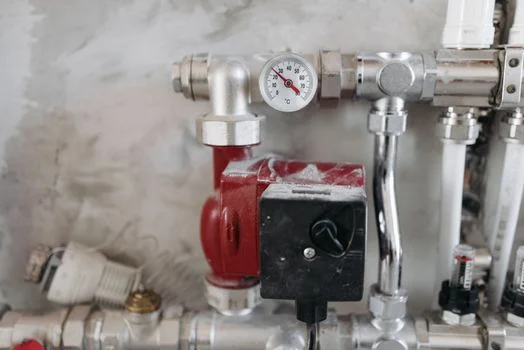
Equipment selection for Ecuadorian WWTPs should follow a fixed checklist that ties PE, influent, permit, climate, and funding rules before any vendor shortlist is opened. Skipping that order is how plants miss MAATE licenses or fail IDB effluent riders after concrete is poured.
Treat vendor claims as hypotheses until they show reference plants at similar altitude or salinity. Ask for blower curves, membrane flux at design temperature, and spare-parts lead times in writing. A clean datasheet without those three items is not ready for a municipal tender evaluation.
Document the altitude factor, materials class, and lender effluent rider on one page before tender release. That record stops redesign fights during construction supervision.
Selection checklist
- Lock design PE, average and peak flows, and measured BOD₅/TSS before choosing process family.
- Map effluent to TULSMA / INEN 2176, then overlay IDB or World Bank riders if those funds apply.
- Apply altitude (+20–30% aeration volume above 2,000 m), coastal 316L rules, or tropical sludge (+30–50%) factors to every major unit.
- Compare MBR, A/O, DAF + biology, and lamella options on CAPEX $/PE, OPEX $/m³, footprint, and operator skill.
- Require 10-year O&M support language where lenders demand it, plus local spares for blowers, membranes, and dosing pumps.
- Confirm MAATE environmental licensing and municipal construction permits on the critical path.
- Prefer vendors who can document altitude or coastal reference plants, not only sea-level catalog curves.
For constrained urban plots that still need lender-grade automation, the Underground Package Sewage Treatment Plant (WSZ Series) keeps the process train below grade while meeting typical municipal discharge limits. High-altitude or reuse scopes can step up from the same Underground Package Sewage Treatment Plant (WSZ Series) family to membrane polishing, while 316L coastal DAF builds close saline-site gaps. Pair either package with a local EPC for civil works and ongoing service.
Who this is for: municipal utilities, EPC contractors, and procurement teams sizing 10,000–100,000 PE plants under TULSMA/INEN rules or IDB/World Bank safeguards. Who should look elsewhere: industrial cyanide, arsenic, or high-salinity process wastewater outside municipal sewage envelopes. Next step: send design PE, influent data, and target effluent limits through the project inquiry form so equipment lists can be checked against site altitude and climate before tender documents freeze.
Frequently Asked Questions
What regulations govern municipal WWTP effluent in Ecuador?
TULSMA and INEN 2176 set the core discharge framework for municipal plants. Typical planning limits are BOD₅ <30 mg/L and TSS <50 mg/L, while many IDB-funded scopes tighten those to BOD₅ <20 mg/L and TSS <30 mg/L. World Bank and IDB projects also add environmental and social safeguard clauses and often require multi-year O&M guarantees.
How does altitude change aeration design in Quito?
At Quito’s 2,850 m elevation, lower oxygen transfer usually forces aeration basins about 20–30% larger than equivalent sea-level designs. Blowers must be selected on altitude-corrected curves, and DO control should be commissioned under local barometric pressure. Ignoring that correction is a common reason plants miss dissolved-oxygen setpoints after startup.
What CAPEX and OPEX should a 50,000 PE plant expect?
A 50,000 PE municipal plant in Ecuador typically budgets about $80 million to $100 million CAPEX in 2025 planning bands, depending on whether the process is DAF plus biology or full MBR. OPEX often falls between $0.18 and $0.30 per m³, led by energy, chemicals, and sludge disposal. Tropical sludge yields push dewatering and haulage toward the high end of that range.
Which process fits coastal cities such as Guayaquil?
Coastal Guayaquil plants with higher FOG and TSS often use DAF ahead of biological treatment, with 316L stainless steel on DAF wetted parts. MBR remains the tighter footprint option when lender effluent caps approach BOD₅ <20 mg/L and TSS <30 mg/L. Either path still needs corrosion detailing for humidity and salt aerosol on electrical and metalwork.
What extra rules apply on IDB-funded municipal plants?
IDB-funded municipal plants commonly require stricter effluent (often BOD₅ <20 mg/L and TSS <30 mg/L), documented environmental and social safeguards, and long O&M commitments around 10 years. Those clauses favor automated package plants and vendors who can stock critical spares in-country. Confirm the exact rider text in the loan agreement before freezing the process train.
Further Reading
Explore these in-depth articles on related wastewater treatment topics: