Morocco’s Water Crisis: Why Municipal Sewage Treatment is Urgent
Morocco’s renewable water resources have dropped to approximately 500 m³ per capita per year, a threshold defined by the United Nations as "absolute water scarcity," with availability declining by 3% annually due to persistent drought (World Bank 2024). This environmental pressure has catalyzed the Moroccan government to launch a $5.6 billion national program aimed at expanding wastewater infrastructure to 223 urban centers by 2030. While Morocco has achieved an 88% sanitation access rate, only about 30% of collected wastewater currently undergoes secondary or tertiary treatment, leaving a significant gap in the national water balance. Under Law No. 36-15, the regulatory landscape has shifted from simple disposal to mandatory tertiary treatment, specifically targeting the reuse of treated effluent for agricultural irrigation and landscape maintenance in water-stressed regions like Marrakech and Agadir.
The urgency for a municipal sewage treatment plant in morocco is further driven by the National Liquid Sanitation and Wastewater Reuse Program (PNAM), which has already equipped 43 rural centers to benefit over 105,000 residents. For municipal engineers, the challenge lies in designing systems that can withstand high evaporation rates (often exceeding 2,000 mm/year) and significant sand intrusion while meeting the strict Law No. 36-15 standards for BOD and TSS. Transitioning to wastewater treatment solutions for water-scarce regions is no longer optional; it is the primary strategy for preserving the Kingdom's dwindling groundwater reserves.
Case Study: Fez and Marrakech Plants – Engineering Specs and Performance
The Fez and Marrakech municipal wastewater treatment plants utilize a multi-stage biological process to achieve COD removal rates exceeding 92% with an energy consumption profile below 0.3 kWh/m³. These flagship projects serve as the technical benchmark for the $5.6B national expansion, demonstrating how compact designs can handle high-strength municipal influent in arid climates. The engineering core of these facilities typically employs an Anoxic/Oxic (A/O) biological contact oxidation process combined with advanced sedimentation and UV disinfection to meet reuse standards.
Technical specifications for these plants highlight a focus on energy efficiency and footprint optimization. For instance, an underground sewage treatment system for Morocco’s water-scarce cities allows for temperature stabilization of the biological broth, protecting nitrifying bacteria from the extreme ambient heat of the Moroccan summer. The following table outlines the performance benchmarks observed in these large-scale municipal installations:
| Parameter | Influent Concentration | Effluent Target (Law 36-15) | Removal Efficiency |
|---|---|---|---|
| Chemical Oxygen Demand (COD) | 500–750 mg/L | <50 mg/L | 92–97% |
| Biochemical Oxygen Demand (BOD₅) | 300–450 mg/L | <30 mg/L | 90–95% |
| Total Suspended Solids (TSS) | 250–400 mg/L | <10 mg/L | 96–99% |
| Total Nitrogen (TN) | 40–60 mg/L | <15 mg/L | 70–80% |
| Energy Consumption | N/A | <0.3 kWh/m³ | N/A |
To adapt to Morocco's specific climate, these plants incorporate specialized inlet screens designed for sand filtration to prevent grit accumulation in aeration basins. sedimentation tanks are frequently covered to reduce evaporation losses and control odors in proximity to urban centers. The integration of solar-powered aeration in newer phases of the Marrakech expansion has further reduced the operational carbon footprint, aligning with the "Green Morocco" initiative. Engineers evaluating new projects should prioritize a 0.5 m²/m³ footprint ratio, a standard set by integrated WSZ-series designs that minimize land acquisition costs in densely populated urban zones.
Treatment Technology Comparison for Moroccan Municipalities
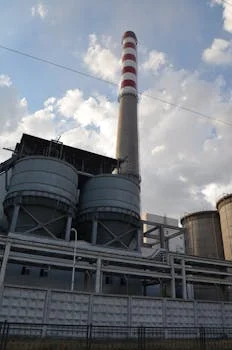
Selecting a treatment technology for Moroccan urban centers requires balancing the high Total Suspended Solids (TSS) typical of arid regions against the stringent tertiary standards required for agricultural reuse. While conventional activated sludge (CAS) remains a common legacy choice, its large footprint and high evaporation risk make it increasingly unsuitable for new projects in the southern and central provinces. Instead, Membrane Bioreactors (MBR) and Dissolved Air Flotation (DAF) systems are gaining traction due to their superior effluent quality and resilience to influent fluctuations.
For projects where high-quality reuse water is the primary goal, an MBR system for reuse-ready effluent in Moroccan municipalities provides 99.9% pathogen removal, often eliminating the need for complex tertiary chlorination. Conversely, in cities with high industrial contributions or significant sand intrusion, a DAF pre-treatment for high-TSS influent in desert cities is essential to protect downstream biological processes. The following table compares the three primary technologies currently deployed under the ONEE wastewater treatment guidelines:
| Feature | Activated Sludge (CAS) | Membrane Bioreactor (MBR) | Dissolved Air Flotation (DAF) + Bio |
|---|---|---|---|
| COD Removal | 80–85% | 95–99% | 90–95% |
| Footprint | Large (1.5 m²/m³) | Very Compact (0.3 m²/m³) | Moderate (0.7 m²/m³) |
| OPEX (per m³) | $0.08–$0.15 | $0.25–$0.40 | $0.15–$0.25 |
| Sand Tolerance | Low (requires grit removal) | Very Low (requires 1mm screen) | High (excellent pre-treatment) |
| Reuse Suitability | Requires Tertiary Filter | Direct Reuse Ready | Direct Reuse Ready |
For most Moroccan municipal applications, a hybrid approach is recommended. This involves using DAF for primary solids removal—critical for handling the "first flush" of sand and silt common after rare but intense rainfall events—followed by an A/O or MBR process for nutrient removal. This configuration ensures compliance with Law No. 36-15 while maintaining a lower MBR vs. SBR cost comparison for municipal projects by extending membrane life through aggressive pre-treatment.
Cost Benchmarks for Municipal Sewage Treatment Plants in Morocco
Capital expenditure (CAPEX) for municipal-scale sewage treatment in Morocco currently averages $1,200 per m³/day of installed capacity, based on recent 10,000 m³/day plant benchmarks in the Fez-Meknès region. This figure includes civil works, electro-mechanical equipment, and initial commissioning, though costs can fluctuate based on the level of tertiary treatment required for reuse. For smaller rural centers (500–2,000 m³/day), CAPEX typically rises to $1,500–$1,800 per m³/day due to the loss of economies of scale and the need for more integrated, "plug-and-play" equipment.
Operational expenditure (OPEX) is heavily influenced by energy costs and membrane replacement cycles in MBR systems. For a standard municipal plant, engineers should budget between $0.10 and $0.30 per m³ for conventional systems, while MBR-based plants may reach $0.50 per m³ when including chemical cleaning and periodic membrane replacement. The financial viability of these projects is often anchored by water reuse revenue; treated effluent can be sold to agricultural cooperatives or golf courses at rates of approximately $0.05 to $0.10 per m³, partially offsetting OPEX.
| Plant Capacity (m³/day) | Estimated CAPEX (USD) | Annual OPEX (USD) | Typical ROI (Years) |
|---|---|---|---|
| 1,000 (Small Town) | $1.5M – $1.8M | $45,000 – $60,000 | 8–12 |
| 5,000 (Urban Center) | $6.5M – $7.5M | $180,000 – $220,000 | 7–10 |
| 10,000 (Large City) | $11M – $13M | $350,000 – $450,000 | 6–9 |
Funding for these projects is primarily funneled through the $5.6B national program, which utilizes a combination of ONEE subsidies, World Bank loans, and African Development Bank (AfDB) grants. Procurement managers should note that ROI calculations must also factor in the avoidance of environmental fines under Law No. 36-15, which can reach $50,000 per year for non-compliant discharge. For a deeper look at budgeting, refer to this wastewater treatment strategies for arid climates guide, which explores similar cost structures in water-scarce Australian regions.
Compliance Checklist: Meeting Morocco’s Law No. 36-15 and Local Standards
Law No. 36-15 establishes the legal framework for water management in Morocco, mandating that all municipal effluent intended for reuse must meet specific microbiological and chemical thresholds. Compliance is overseen by the Ministry of Equipment and Water, along with regional multi-service public companies (SRM) and ONEE. For an engineer, ensuring a design is compliant requires more than just meeting BOD/TSS limits; it involves seismic resilience for the Rif and Atlas regions and robust sludge management protocols.
The following checklist provides the essential parameters required for permitting and ONEE approval in 2025:
| Requirement Category | Standard / Target | Verification Method |
|---|---|---|
| Effluent Quality (Reuse) | BOD <30mg/L; E. coli <1,000 CFU/100mL | Bi-weekly Lab Sampling |
| Structural Integrity | Seismic Zone 3-4 Resilience | Eurocode 8 / Moroccan RPS 2000 |
| Operational Monitoring | SCADA with Remote ONEE Access | Real-time Telemetry Data |
| Sludge Management | Dewatering to >20% Dry Solids | Belt Press or Centrifuge Spec |
| Design Lifespan | Minimum 20 Years (Civil & Mechanical) | Material Certification (316L SS) |
The permitting process typically spans 6 to 12 months and requires a comprehensive Environmental Impact Assessment (EIA). design documents must explicitly show sand intrusion protection, as abrasive desert silt can reduce the lifespan of standard pumps and aerators by 50% within the first three years of operation. For comparative standards in similar regulatory environments, engineers may find the wastewater treatment solutions for water-scarce regions guide useful for cross-referencing African municipal compliance trends.
Equipment Selection Framework for Moroccan Municipalities
Engineering a resilient municipal sewage treatment plant in Morocco requires a five-step framework that prioritizes sand intrusion mitigation and evaporation control. Because influent quality varies drastically between the high-BOD tourist districts of Marrakech and the high-TSS industrial zones of Casablanca, a "one-size-fits-all" approach often leads to premature equipment failure or non-compliance.
- Step 1: Influent Characterization: Conduct a 7-day diurnal sampling program. In desert cities, expect TSS values 30-40% higher than European standards due to wind-blown sand entering the sewer network.
- Step 2: Treatment Train Selection: Use a decision tree logic. If reuse for "Category A" crops is required, MBR is the preferred path. If the budget is constrained and land is available, an A/O process with a DAF pre-treatment stage offers the best balance of CAPEX and performance.
- Step 3: Climate Adaptation: Implement "Arid-Zone Shielding." This includes using UV-stabilized materials for any exposed piping, covering all clarification tanks to prevent 5-10% water loss via evaporation, and selecting pumps with hardened impellers to resist sand abrasion.
- Step 4: Vendor Evaluation: Use a weighted scorecard. Priority should be given to suppliers who provide local after-sales support and spare parts within Morocco. Compliance with Law No. 36-15 must be backed by third-party performance certificates.
- Step 5: Pilot Testing: For any MBR installation over 1,000 m³/day, a 3-month on-site pilot is recommended to calibrate membrane flux rates against local influent chemistry and fouling potential.
By following this framework, procurement managers can ensure that the selected Morocco sewage treatment plant design is not only compliant but also operationally sustainable. Utilizing integrated designs, such as the WSZ series, can simplify this process by providing a pre-engineered solution that incorporates these climate-specific protections into a single, modular footprint.
Frequently Asked Questions
What are the primary effluent standards for wastewater reuse in Morocco? Under Law No. 36-15, treated wastewater intended for agricultural reuse must generally achieve BOD₅ <30 mg/L, TSS <10 mg/L, and fecal coliform counts below 1,000 CFU/100mL. Specific requirements may vary depending on the crop category (e.g., raw vs. processed food), with the highest standards required for public green spaces and vegetable irrigation.
How does sand intrusion affect equipment selection in Moroccan cities? Sand and silt intrusion are significant in Morocco, particularly in southern regions. This requires the installation of advanced grit chambers and fine screens (1-3 mm). Standard centrifugal pumps should be replaced with models featuring hardened coatings or semi-open impellers to prevent premature wear and clogging from abrasive solids.
What is the typical energy cost for a municipal sewage treatment plant in Morocco? For a modern plant using A/O or biological contact oxidation, energy use typically ranges from 0.25 to 0.45 kWh/m³. With Morocco’s high solar irradiance, many plants are now integrating photovoltaic arrays to offset 20-40% of their daytime energy demand, significantly reducing the OPEX associated with aeration.
Can MBR systems handle the high temperatures of the Moroccan summer? Yes, but biological activity and oxygen transfer efficiency change at higher temperatures. Designing for a maximum liquor temperature of 35-40°C is essential. Underground or semi-buried installations are often used to provide natural thermal insulation, maintaining the biomass at an optimal temperature for nutrient removal.
How can a municipality apply for funding under the $5.6B program? Municipalities must submit a technical and financial proposal to the Ministry of Equipment and Water and the regional SRM. The proposal must include an Environmental Impact Assessment (EIA), a 20-year sustainability plan, and a clear strategy for treated effluent reuse to qualify for the highest tier of national subsidies and international grants.