Why CMP Wastewater Breaks Conventional Treatment Systems
Chemical mechanical polishing (CMP) wastewater contains nano-silica particles with an average diameter of 77.6 nm, which is significantly smaller than the 1–10 µm range that most industrial clarifiers and sedimentation tanks are engineered to handle effectively (Liu et al., 2006).
Dissolved air flotation (DAF) achieves >98% silica removal from chemical mechanical polishing (CMP) wastewater when optimized for nano-sized particles (77.6 nm). At 30 mg/L CTAB, pH 6.5 ± 0.1, and 30% recycle ratio, DAF systems operate at 4-6 kg/cm² saturation pressure to maximize flotation efficiency. Semiconductor plants using these parameters report turbidity reductions from 130 NTU to <3 NTU, meeting stringent discharge limits without secondary sedimentation.
The primary engineering failure in treating CMP wastewater via gravity-based methods lies in the settling velocity. Nano-silica exhibits a settling velocity of less than 0.1 mm/s, meaning a standard 3-meter deep clarifier would theoretically require over 8 hours of perfectly still hydraulic conditions to settle a single particle—an impossibility in high-volume semiconductor fabrication plants. The presence of surfactants and stabilizers in CMP slurries further inhibits sedimentation by maintaining particle repulsion.
A documented case study of a semiconductor plant in Taiwan illustrates this frustration: the facility attempted to use a standard coagulation-sedimentation process to treat CMP effluent. Despite heavy alum dosing, the system only reduced turbidity from 120 NTU to 80 NTU. This failed to meet the local discharge limit of 30 NTU, resulting in significant regulatory fines and the necessity for an immediate technology pivot toward dissolved air flotation. Unlike sedimentation, which fights the physics of nano-particle buoyancy, DAF leverages it by attaching micro-bubbles to the particles to force them to the surface.
How DAF Removes Nano-Silica: Electrostatic Flocculation and Micro-Bubble Physics
The successful removal of nano-silica in a DAF system relies on the modification of the silica particle surface to increase its hydrophobicity and collision efficiency with air bubbles. Cetyltrimethyl ammonium bromide (CTAB), a cationic surfactant, is the industry-standard collector for this application.
CTAB adsorbs onto the negatively charged silica particles through electrostatic interaction, neutralizing the surface charge. This adsorption facilitates a "bridging effect," where the nano-silica particles aggregate into larger flocs ranging from 10–50 µm. These larger aggregates are much more susceptible to bubble attachment than individual 77.6 nm particles.
Micro-bubble physics are the second pillar of the DAF mechanism. For CMP applications, the DAF system for CMP wastewater is designed to produce micro-bubbles in the 30–50 µm range. This is achieved by maintaining a saturation pressure of 4–6 kg/cm².
Operational data indicates that pH levels between 4.5 and 8.5 have a relatively minor impact on overall removal efficiency (varying by less than 5%), yet a pH of 6.5 ± 0.1 is considered the "sweet spot" for maximizing CTAB adsorption density. A 30% recycle ratio typically achieves the benchmark 98% removal; while increasing this to 40% can yield a 99% removal rate, the 1% gain rarely justifies the increased energy consumption of the recycle pump.
| Parameter | Value/Range | Impact on Silica Removal Efficiency |
|---|---|---|
| Particle Size (Nano-Silica) | 77.6 nm | Requires CTAB for effective flotation |
| CTAB Dosage | 30 mg/L | Peak efficiency (>98%); higher causes foaming |
| Saturation Pressure | 4–6 kg/cm² | Optimizes bubble size (30–50 µm) |
| Optimal pH | 6.5 ± 0.1 | Maximizes electrostatic adsorption |
| Recycle Ratio | 30% | Balance between 98% removal and OPEX |
| Reaction Time | 10–15 min | Ensures complete floc-bubble attachment |
DAF Process Parameters for CMP Wastewater: A 2026 Engineering Checklist
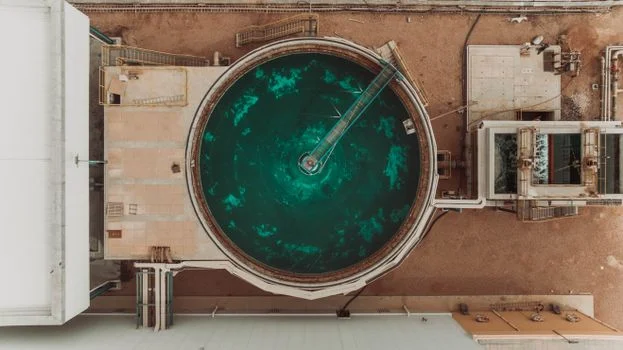
Designing a DAF system for the semiconductor industry requires precision in chemical dosing and hydraulic management. A PLC-controlled CTAB dosing system for DAF is essential to maintain the 30 mg/L threshold.
The hydraulic loading rate (HLR) for CMP-specific DAF systems should be strictly maintained between 5 and 10 m/h. For high-turbidity influent (>200 NTU), the recycle ratio should be adjusted to 40% to provide a higher bubble density, ensuring that every silica aggregate has multiple attachment points.
In many modern 2026-spec facilities, activators such as Al³⁺ (10 mg/L) or Fe³⁺ (15 mg/L) are introduced as secondary coagulants. These ions enhance removal efficiency by 15–20% in particularly difficult wastewater streams.
Sludge management is the final step in the checklist. DAF systems treating CMP wastewater typically generate 0.5–1.0% sludge by volume. Implementing sludge dewatering for DAF-generated solids can reduce the final waste volume by up to 70%, significantly lowering disposal costs at hazardous waste landfills.
| Engineering Component | Specification | Operational Consideration |
|---|---|---|
| Hydraulic Loading Rate | 5–10 m/h | Lower rates for >98% silica removal |
| Air-to-Solids (A/S) Ratio | 0.02 – 0.05 | Critical for maintaining floc buoyancy |
| Saturation Tank Residence | 1 – 2 minutes | Ensures 90%+ air saturation efficiency |
| Skimmer Speed | 0.5 – 2.0 rpm | Adjust to prevent "plowing" of the sludge blanket |
| Activator Dosing (Optional) | 10 mg/L Al³⁺ | Use for high-organic CMP streams |
| Effluent Turbidity Target | < 5 NTU | Achievable without secondary filtration |
DAF vs. Alternatives for CMP Wastewater: CapEx, OPEX, and Performance Comparison
When procurement teams evaluate CMP wastewater treatment, they must balance the high performance of DAF against alternative methods like electrocoagulation-flotation (ECF) for CMP wastewater and traditional sedimentation.
Compared to coagulation-sedimentation for CMP wastewater, DAF has a 30% higher OPEX primarily due to the power required for the saturation pump and the cost of CTAB. However, the footprint of a DAF system is approximately 60% smaller than a sedimentation basin of equal capacity.
The ROI for a DAF system in a semiconductor plant with a flow rate of 50 m³/h is typically realized within 2.5 to 3.5 years. This calculation is based on three factors: the total avoidance of environmental fines, a 40% reduction in sludge disposal costs due to the higher solids concentration of DAF float vs. settled sludge, and the ability to reclaim treated water for cooling tower makeup, reducing raw water purchase costs.
| Technology | Silica Removal % | CapEx (10 m³/h) | OPEX ($/m³) | Footprint |
|---|---|---|---|---|
| Dissolved Air Flotation (DAF) | 98–99% | $120,000 | $0.45 – $0.60 | Small |
| Electrocoagulation (ECF) | 90–92% | $90,000 | $0.35 – $0.50 | Medium |
| Coagulation-Sedimentation | 80–85% | $75,000 | $0.25 – $0.35 | Large |
| Ultrafiltration (UF) | >99% | $240,000 | $0.80 – $1.20 | Medium |
5 Common DAF Failures in CMP Wastewater Treatment (and How to Fix Them)
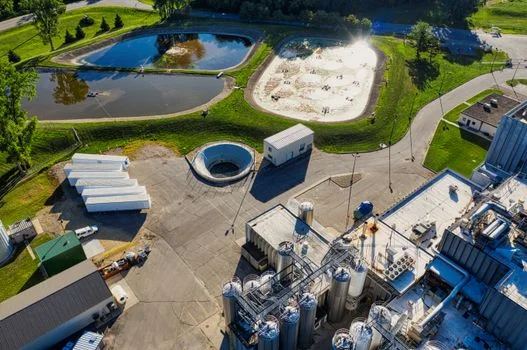
Operational uptime is critical in semiconductor manufacturing. If a DAF system fails, the entire CMP line may be forced to shut down once storage tanks reach capacity.
Cause: CTAB underdosing (typically <25 mg/L) or a pH drift above 7.5 which reduces the cationic charge of the collector.
Fix: Increase CTAB dosing to 30 mg/L and recalibrate the pH controller to maintain 6.5 ± 0.1. Verify that the CTAB is fully dissolved before injection.
Cause: CTAB overdosing (>50 mg/L) or a sudden spike in organic surfactants from the CMP process.
Fix: Reduce CTAB dosing immediately. If the foam persists, add a silicon-based antifoam agent at a concentration of 0.1–0.5 mg/L to break the surface tension without affecting bubble-particle attachment.
Cause: Low saturation pressure (<3 kg/cm²) or a recycle ratio below 20%, leading to insufficient bubble density.
Fix: Increase the air compressor output to maintain 5 kg/cm² and adjust the recycle pump VFD to reach a 30% recycle ratio.
Cause: Use of hard water for the recycle stream or the addition of Al³⁺/Fe³⁺ activators at a pH above 6.5, leading to hydroxide scaling.
Fix: Lower the process pH to 5.5–6.0. If the source water is hard (>150 mg/L CaCO₃), use softened water for the recycle stream to prevent nozzle blockages.
Cause: Over-flocculation