Why Buenos Aires’ Industrial Wastewater Treatment Is a $2.3B Compliance Challenge
The Buenos Aires industrial wastewater treatment landscape is defined by the $2.3B Riachuelo System, which sets pretreatment benchmarks for 2.3M m³/day of municipal and industrial effluent. For industrial plants, compliance requires COD removal ≥90% (to ≤250 mg/L) and TSS ≤50 mg/L before discharge into the Riachuelo basin or municipal sewers. Key technologies—DAF systems for FOG/heavy metals (92-97% removal), MBR for high-BOD effluents (≤10 mg/L permeate), and chemical precipitation for silica (99% removal)—align with Argentina’s Law 24,051 and Provincial Decree 999/92. CapEx for industrial-scale systems ranges from $1.2M–$8M, with OPEX of $0.80–$2.50/m³, depending on flow rate and pollutant load.
The Riachuelo System represents the largest environmental infrastructure project in Latin America, serving 4.3 million beneficiaries. Industrial discharge from the petrochemical, textile, and food processing corridors contributes approximately 60% of the Riachuelo River’s chemical oxygen demand (COD) load. Under Provincial Decree 999/92, the Autoridad de Cuenca Matanza Riachuelo (ACUMAR) and the Provincial Water Authority (ADA) mandate that all industrial effluents meet strict pretreatment standards before entering the municipal collector or the Río de la Plata.
Failure to meet these standards carries severe financial consequences, such as the $500,000 fine imposed on a La Boca textile plant in 2024 for exceeding chromium limits. This incident underscores the necessity for specialized treatment like ion exchange for chromium and arsenic removal in Buenos Aires. The Riachuelo System’s Lot 2 pretreatment facility serves as a municipal-scale model for the grit, oil, and grease removal that industrial plants must now replicate at the source.
Industrial Wastewater Treatment Technologies for Buenos Aires: DAF vs MBR vs Chemical Precipitation
The selection of industrial wastewater treatment technology in Buenos Aires depends on the specific pollutant profile.Food processing and petrochemical plants often face high concentrations of fats, oils, and grease (FOG), while textile and metalworking facilities must manage heavy metal loads and high COD. Dissolved Air Flotation (DAF) systems are the primary choice for removing 92-97% of TSS and 85-95% of FOG. These systems operate via microbubble flotation at 4–6 bar pressure with a 10–20% recycle ratio. For engineers, DAF systems for FOG and heavy metal removal in Buenos Aires industrial effluents provide a compact footprint and high tolerance for flow fluctuations.
In contrast, Membrane Bioreactors (MBR), such as the DF series, are required for high-strength organic waste from slaughterhouses or dairy plants. These MBR systems for high-BOD industrial wastewater in Buenos Aires utilize PVDF membranes with 0.1 μm pore sizes, achieving a flux rate of 10–20 L/m²·h and producing permeate with BOD levels ≤10 mg/L. For heavy metal removal, chemical precipitation remains the engineering standard, achieving 99.9% removal.
| Technology | Target Pollutant | Removal % | Influent Range | Footprint | OPEX/m³ |
|---|---|---|---|---|---|
| DAF | FOG / TSS | 92% - 97% | 500 - 3,000 mg/L | Medium | $0.80 - $1.50 |
| DF Series MBR | BOD / COD | 95% - 99% | 800 - 5,000 mg/L | Small | $1.20 - $2.50 |
| Chem. Precipitation | Heavy Metals | 99.9% | 10 - 500 mg/L | Large | $0.60 - $1.80 |
| Electrocoagulation | Silica / Metals | 90% - 95% | 50 - 200 mg/L | Small | $1.10 - $2.10 |
Engineering Specs for Industrial Wastewater Treatment in Buenos Aires: Process Parameters and Compliance Thresholds
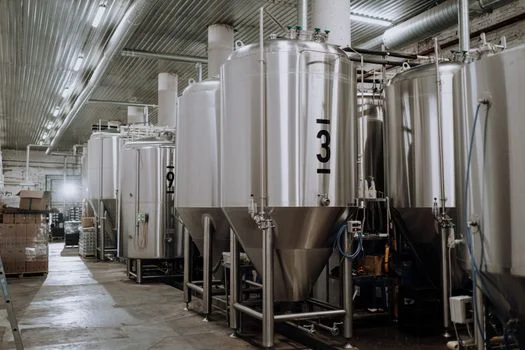
For industrial effluents, HRT varies significantly by technology: 2–4 hours for DAF (FOG removal), 6–12 hours for MBR (BOD biological oxidation), and 1–2 hours for chemical precipitation. MBR systems require an SRT of 15–30 days to maintain Mixed Liquor Suspended Solids (MLSS) between 3–5 g/L, with membrane scouring air flow rates maintained at 0.2–0.4 m³/m²·h to prevent fouling.
Chemical dosing precision is critical for meeting Provincial Decree 999/92. For chromium precipitation, dosing 1.5–2.5 mg/L of ferric chloride is standard, while arsenic removal often requires 0.8–1.2 mg/L of sodium sulfide at a controlled pH. Utilizing automated chemical dosing for heavy metal precipitation in Buenos Aires ensures that industrial plants avoid common pitfalls like manual dosing errors.
| Parameter | Law 24,051 (Hazardous) | Provincial Decree 999/92 | Riachuelo Lot 2 Limit | Typical Industrial Influent |
|---|---|---|---|---|
| COD (mg/L) | < 150 | < 250 | < 300 | 1,200 - 4,500 |
| BOD (mg/L) | < 30 | < 50 | < 150 | 600 - 2,500 |
| TSS (mg/L) | < 30 | < 50 | < 100 | 400 - 1,500 |
| Chromium (mg/L) | < 0.1 | < 0.2 | < 0.5 | 2.0 - 15.0 |
| FOG (mg/L) | < 10 | < 30 | < 50 | 100 - 800 |
Cost Breakdown for Industrial Wastewater Treatment in Buenos Aires: CapEx, OPEX, and ROI by System Size
Budgeting for a wastewater upgrade in Buenos Aires involves balancing initial capital expenditure (CapEx) against long-term operational costs (OPEX).For a medium-scale industrial system (flow rates of 50–500 m³/h), CapEx for DAF systems ranges from $1.2M to $8M. MBR systems, while more expensive at $1.8M to $12M due to membrane costs and advanced aeration, offer superior effluent quality suitable for industrial reuse. Chemical precipitation systems combined with filter presses are the most cost-effective for pure metal removal, ranging from $0.9M to $6M.
OPEX is driven primarily by energy consumption (40%), chemical reagents (30%), and sludge disposal fees (20%). In Buenos Aires, sludge disposal costs have risen by 15% annually, making technologies that minimize sludge volume highly attractive. MBR systems often recoup their higher CapEx 18–24 months faster than DAF for high-BOD applications. For broader regional context, procurement managers can reference Latin American wastewater treatment cost benchmarks.
| System Size | Technology | CapEx (Est.) | OPEX/m³ | Payback Period |
|---|---|---|---|---|
| 100 m³/day | DAF | $1.2M - $1.8M | $0.95 | 3.5 Years |
| 500 m³/day | MBR (DF) | $3.5M - $5.2M | $1.40 | 2.8 Years |
| 1,000 m³/day | Chem. Precip + Press | $4.8M - $6.5M | $0.75 | 4.2 Years |
| 2,500 m³/day | Integrated DAF/MBR | $8M - $12M | $1.10 | 3.1 Years |
Compliance Roadmap for Industrial Dischargers in Buenos Aires: Law 24,051, Provincial Decree 999/92, and Riachuelo System Alignment
Compliance is not a one-time event but a continuous operational requirement monitored by both the Provincial Water Authority (ADA) and ACUMAR. Following global industrial wastewater treatment best practices can help local plants stay ahead of shifting local mandates.
- Effluent Characterization: Conduct a comprehensive 72-hour composite sampling to identify peak loads of COD, heavy metals, and FOG.
- Technology Selection: Size the system for 20% overcapacity to ensure compliance during production spikes.
- Automation: Implement automated chemical dosing for heavy metal precipitation in Buenos Aires.
- Reporting: Submit monthly self-monitoring reports (SMRs) to the APA.
| Regulatory Requirement | Action Item | Deadline | Responsible Party |
|---|---|---|---|
| Permit Renewal | Submit updated flow/load data | Annual | EHS Manager |
| Self-Monitoring | Lab analysis of COD/TSS/Metals | Monthly | Plant Engineer |
| Hazardous Waste | Sludge disposal manifest (Law 24,051) |