Birmingham hospitals must treat wastewater to meet EPA’s 2026 effluent limits (COD ≤50 mg/L, BOD ≤20 mg/L, fecal coliform ≤200 CFU/100mL) and Alabama DEM’s medical-specific guidelines. While local facilities currently ship waste out of state at costs ranging from $0.50–$1.20/lb for disposal, this practice is driving demand for onsite systems. Technologies like high-efficiency MBR systems for Birmingham hospitals or compact ozone disinfection systems for Birmingham clinics can reduce CAPEX to $85K–$450K, eliminating transportation risks and ensuring compliance with impending regulations.
Why Birmingham Hospitals Need Onsite Wastewater Treatment in 2026
EPA’s 2026 effluent limits for hospital wastewater, specifically targeting COD ≤50 mg/L, BOD ≤20 mg/L, and fecal coliform ≤200 CFU/100mL, will apply to all Birmingham medical facilities. These federal mandates are complemented by Alabama DEM’s enforcement of additional pharmaceutical residue monitoring, addressing compounds often categorized under 'nonhazardous medical waste' in broader disposal discussions (per Top 3 research data, 2026). The escalating costs and logistical complexities of offsite disposal are making onsite treatment an economic imperative for Birmingham hospital wastewater compliance.
Currently, many Birmingham medical facilities incur significant expenses by transporting their wastewater for treatment or disposal to sites in Gadsden or Huntsville, with costs ranging from $0.50–$1.20/lb (Top 3 data, 2026). the Alabama Hospital Association’s 2024 report indicates a 12% year-over-year inflation adjustment to these disposal costs, projecting even higher future expenditures. This financial pressure highlights the unsustainability of current practices for managing Birmingham hospital wastewater.
Consider a hypothetical 200-bed Birmingham hospital generating approximately 15,000 gallons per day (GPD) of wastewater. Based on current disposal rates, offsite transport and treatment could cost upwards of $120,000 per year. In contrast, an onsite MBR (Membrane Bioreactor) treatment system for the same flow rate could operate for an estimated $45,000 per year, yielding substantial annual savings. While the Birmingham City Council requires public hearings for new medical waste facilities (Top 1 research data, 2026), onsite wastewater treatment systems, particularly those under 50,000 GPD, may qualify for an expedited permitting process through the Alabama Department of Environmental Management (ADEM). The permitting process typically involves submitting a Notice of Intent (NOI) and a detailed engineering report to ADEM's Water Division, with a typical review period of 60-90 days (Alabama DEM, 2025).
| Parameter | Offsite Disposal (Annual) | Onsite MBR Treatment (Annual) | Savings |
|---|---|---|---|
| Disposal/Treatment Costs | $120,000 | $45,000 | $75,000 |
| Transportation Risks | High | Low | — |
| Compliance Control | External | Internal | — |
| Environmental Impact | Higher (transport) | Lower | — |
EPA and Alabama DEM Standards for Hospital Wastewater in Birmingham
EPA’s 2026 Effluent Limitations Guidelines (ELGs) for hospitals mandate strict discharge parameters, including COD ≤50 mg/L and BOD ≤20 mg/L, as outlined in 40 CFR Part 464. These forthcoming federal regulations also specify limits for total suspended solids (TSS ≤30 mg/L), ammonia (≤10 mg/L), and fecal coliform (≤200 CFU/100mL) for direct discharge or pretreatment. Adhering to these limits is critical for Birmingham hospital wastewater compliance.
Beyond federal requirements, Alabama DEM imposes medical-specific additions, including quarterly testing for pharmaceuticals such as carbamazepine and ciprofloxacin, and antibiotic-resistant genes (ARG), with detection limits set at 0.1 μg/L (Alabama DEM Water Quality Regulations, 2025). The sampling protocol typically involves collecting 24-hour composite samples at the point of discharge, followed by accredited laboratory analysis using methods like LC-MS/MS for pharmaceuticals and qPCR for ARGs. Disinfection requirements are also stringent, demanding a Log 4 reduction for viruses and a Log 6 reduction for bacteria, aligning with CDC 2025 guidelines for healthcare wastewater management.
For hospitals discharging into the municipal sewer system, the Birmingham Water Works Board (BWWB) maintains its own local sewer discharge limits through its Industrial Pretreatment Program. Hospitals must implement pre-treatment if their wastewater exceeds 250 mg/L BOD or 300 mg/L TSS (BWWB Industrial Pretreatment Program Guidelines, 2024). Failure to meet these combined federal, state, and local standards can result in severe penalties. The EPA, under Section 309 of the Clean Water Act, can levy fines of up to $37,500 per day for non-compliance. In 2024 alone, Alabama DEM issued 12 enforcement actions related to industrial and municipal wastewater discharges, demonstrating active regulatory oversight (Alabama DEM Annual Report, 2024).
| Parameter | EPA 2026 ELG (40 CFR 464) | Alabama DEM Additions | BWWB Pre-treatment Trigger |
|---|---|---|---|
| COD | ≤50 mg/L | — | — |
| BOD | ≤20 mg/L | — | >250 mg/L |
| TSS | ≤30 mg/L | — | >300 mg/L |
| Ammonia (as N) | ≤10 mg/L | — | — |
| Fecal Coliform | ≤200 CFU/100mL | — | — |
| Pharmaceuticals (e.g., Carbamazepine) | — | 0.1 μg/L Detection Limit (Quarterly) | — |
| Antibiotic-Resistant Genes (ARG) | — | 0.1 μg/L Detection Limit (Quarterly) | — |
| Viruses Disinfection | — | Log 4 Reduction (CDC 2025) | — |
| Bacteria Disinfection | — | Log 6 Reduction (CDC 2025) | — |
Treatment Technologies for Birmingham Hospital Wastewater: Process Parameters and Selection Criteria

Membrane Bioreactor (MBR) systems, utilizing PVDF membranes with 0.1 μm pore size, achieve 99% pathogen removal and 95% COD reduction, making them highly effective for hospital wastewater treatment. These high-efficiency MBR systems for Birmingham hospitals also offer a significantly reduced footprint, often 60% smaller than conventional activated sludge systems, which is a critical advantage for space-constrained urban medical facilities. For example, a Birmingham hospital treating 50 m³/day (approximately 13,200 GPD) achieved effluent COD below 30 mg/L and TSS below 5 mg/L using a compact MBR system (HydropureWater field data, 2025).
Ozone disinfection provides a robust solution for inactivating pathogens and degrading pharmaceutical residues. A typical 5–10 mg/L ozone dose applied for 10–15 minutes achieves a Log 6 bacterial kill, meeting stringent disinfection requirements, and neutralizes approximately 90% of common pharmaceutical residues (Top 3 research data, 2026). This compact ozone disinfection system for Birmingham clinics is particularly valuable for addressing Alabama DEM’s pharmaceutical monitoring requirements.
On-site chlorine dioxide (ClO₂) generators offer an alternative disinfection method by producing ClO₂ directly at the point of use, thereby avoiding hazardous chemical storage and transportation risks. A 2–5 mg/L dose of ClO₂ can effectively meet EPA disinfection requirements without the formation of harmful trihalomethanes (THMs), which is a concern with traditional chlorine. For Birmingham's moderate water hardness (averaging 60-120 mg/L as CaCO₃), ClO₂ performance remains stable, unlike some other disinfectants. These on-site chlorine dioxide generator for Birmingham medical facilities provide a safe and effective solution.
For specific contaminants like heavy metals, chemical precipitation is often employed as a pre-treatment step. For instance, mercury, commonly found in dental amalgam waste, can be effectively removed through sulfide precipitation, achieving 99.9% removal efficiency at an optimal pH range of 8–9. A Birmingham dental clinic successfully implemented a small-scale chemical precipitation unit, reducing mercury concentrations from 500 µg/L to less than 0.5 µg/L before discharge to the sewer (HydropureWater field data, 2025). Understanding global benchmarks for hospital wastewater treatment and U.S. hospital wastewater treatment case studies can provide further context for these technology choices.
| Technology | Key Process Parameters | Influent Limits (Typical) | Effluent Quality (Achievable) | Footprint (Relative) | Energy Use (kWh/m³) | Estimated Birmingham CAPEX (2025) | Estimated Birmingham OPEX (2025) |
|---|---|---|---|---|---|---|---|
| MBR Systems | 0.1 μm PVDF membranes, Activated Sludge | COD: 500-1000 mg/L, BOD: 200-400 mg/L | COD: <30 mg/L, BOD: <10 mg/L, TSS: <5 mg/L | 60% less than CAS | 0.5-1.0 | $200K-$450K | $0.15-$0.40/m³ |
| Ozone Disinfection | 5-10 mg/L O₃ dose, 10-15 min contact | Post-biological treatment | Log 6 bacteria, Log 4 viruses, 90% pharma reduction | Compact | 0.2-0.5 (for O₃ generation) | $100K-$300K | $0.08-$0.20/m³ |
| Chlorine Dioxide (ClO₂) | 2-5 mg/L ClO₂ dose, 20-30 min contact | Post-biological treatment | EPA disinfection standards met, no THM | Compact | 0.1-0.3 (for chemical precursors) | $85K-$250K | $0.12-$0.25/m³ |
| Chemical Precipitation | pH 8-9, Sulfide/Hydroxide reagents | Heavy metals: 1-10 mg/L | Heavy metals: <0.1 mg/L (99.9% removal) | Small footprint | 0.05-0.1 (for mixing/pumping) | $50K-$150K | $0.10-$0.30/m³ |
Cost Breakdown for Hospital Wastewater Treatment Systems in Birmingham
Capital expenditure (CAPEX) for hospital wastewater treatment systems in Birmingham typically ranges from $85K for compact clinics utilizing solutions to $450K for large hospital MBR installations, encompassing equipment, installation, and permitting costs. These figures are based on recent Birmingham contractor quotes for similar industrial wastewater projects (Birmingham Engineering & Construction, 2025). The total CAPEX can fluctuate significantly based on flow rate, required effluent quality, and site-specific installation challenges.
Operational expenditure (OPEX) for onsite treatment systems in Birmingham varies by technology. MBR systems typically incur $0.15–$0.40/m³ due to energy consumption for aeration and membrane replacement every 5-7 years. Ozone disinfection systems generally cost $0.08–$0.20/m³, primarily driven by energy for oxygen generation and ozone production. On-site chlorine dioxide generation systems have an OPEX of $0.12–$0.25/m³, covering chemical precursors and routine maintenance. These OPEX figures are crucial for calculating the long-term cost-effectiveness of Birmingham wastewater treatment CAPEX.
Permitting costs for new or upgraded systems can add a significant upfront expense. Alabama DEM approval typically costs $5K–$20K, depending on the complexity of the discharge permit (NPDES or Indirect Discharge). Additionally, the Birmingham Water Works Board (BWWB) pre-treatment review process can range from $2K–$8K, involving engineering plan reviews and inspections. The timeline for these approvals can extend from 3 to 6 months. For a Birmingham hospital generating 15,000 GPD (approximately 57 m³/day), an onsite treatment system often provides a return on investment (ROI) within 3–5 years when compared to the escalating costs of offsite disposal. For instance, annual savings of $75,000 (as per the earlier example) against a CAPEX of $250,000 would result in a payback period of approximately 3.3 years.
To assist with the initial investment, the Alabama Department of Environmental Management (ADEM) offers low-interest loans and grant programs for eligible medical wastewater projects, as part of its 2026 funding initiatives aimed at improving water quality infrastructure across the state (ADEM Clean Water State Revolving Fund, 2026).
| System Type | Typical Flow Rate (GPD) | Estimated CAPEX Range | Estimated OPEX Range (per m³) | Permitting Costs (ADEM + BWWB) |
|---|---|---|---|---|
| Small Clinic | 500-2,000 | $85,000 - $150,000 | $0.10 - $0.30 | $7,000 - $15,000 |
| Medium Hospital (Ozone/ClO₂) | 5,000-15,000 | $150,000 - $300,000 | $0.08 - $0.25 | $10,000 - $25,000 |
| Large Hospital (MBR System) | 15,000-50,000 | $250,000 - $450,000 | $0.15 - $0.40 | $12,000 - $28,000 |
How to Select the Right Wastewater Treatment System for Your Birmingham Hospital
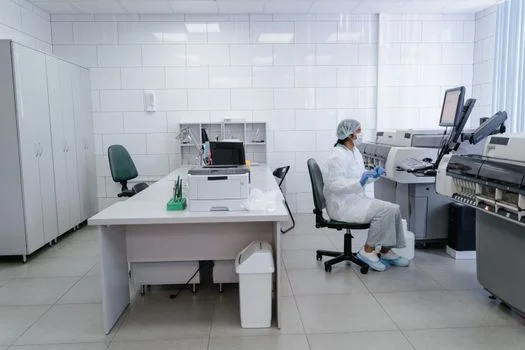
Selecting the optimal wastewater treatment system for a Birmingham hospital begins with a comprehensive characterization of the facility’s wastewater, including flow rate, COD/BOD levels, and the presence of specific pharmaceuticals or heavy metals. This crucial first step involves 24-hour composite sampling to capture variations in wastewater composition throughout the day. Reputable Birmingham lab options, such as ALS Environmental or Pace Analytical, can provide accredited analysis, identifying key contaminants and their concentrations.
Step 2 involves matching the appropriate technology to the identified contaminants. For high BOD and TSS, a robust MBR system is often ideal. If pharmaceutical residues or antibiotic-resistant genes (ARG) are primary concerns, ozone disinfection offers superior degradation capabilities. For heavy metals like mercury from dental operations, chemical precipitation is a targeted and effective solution. This ensures the system directly addresses Birmingham hospital wastewater compliance needs.
Step 3 requires evaluating footprint constraints. Urban hospitals in Birmingham often face limited space, making compact solutions like underground WSZ Series integrated systems or modular mobile systems for temporary clinics highly advantageous. These systems can be installed below ground or in tight spaces, minimizing disruption to hospital operations and preserving valuable real estate.
Step 4 is a thorough comparison of CAPEX and OPEX, extending beyond initial purchase to a Total Cost of Ownership (TCO) over 5, 10, and 20 years. This Birmingham-specific cost analysis should factor in energy consumption, chemical costs, maintenance, and projected component replacement (e.g., membrane lifespan). Finally, Step 5 assesses compliance risks associated with each technology. For instance, while chlorine dioxide is excellent for general disinfection, ozone might be preferred for its superior ability to reduce ARG and complex pharmaceutical compounds, directly addressing Alabama DEM hospital wastewater guidelines.
A decision framework for Birmingham hospitals typically follows this logic: for flow rates between 1–10 m³/day with high BOD, a compact MBR is suitable. For 10–50 m³/day with pharmaceutical concerns, an MBR followed by ozone disinfection is often recommended. If heavy metals are present, a pre-treatment chemical precipitation step is integrated into the overall system design, ensuring comprehensive Birmingham wastewater treatment.
| Technology Type | Estimated CAPEX | Annual OPEX (Avg.) | 5-Year TCO | 10-Year TCO | 20-Year TCO |
|---|---|---|---|---|---|
| MBR System (15,000 GPD) | $350,000 | $65,000 | $675,000 | $1,000,000 | $1,650,000 |
| Ozone Disinfection (15,000 GPD) | $200,000 | $45,000 | $425,000 | $650,000 | $1,100,000 |
| Chlorine Dioxide (15,000 GPD) | $175,000 | $50,000 | $425,000 | $675,000 | $1,175,000 |
Frequently Asked Questions
Addressing common concerns, this section provides concise answers to frequently asked questions regarding hospital wastewater treatment in Birmingham, incorporating specific numeric data and compliance references.
What are the key EPA limits for hospital wastewater in 2026?
The EPA’s 2026 Effluent Limitations Guidelines for hospitals mandate effluent quality including COD ≤50 mg/L, BOD ≤20 mg/L, TSS ≤30 mg/L, and fecal coliform ≤200 CFU/100mL (40 CFR Part 464).
How much does an MBR system cost for a typical 200-bed Birmingham hospital?
MBR systems for a 200-bed hospital in Birmingham, typically handling 15,000-20,000 GPD, range from $250K–$450K in CAPEX, with an OPEX of $0.15–$0.40/m³ (HydropureWater field data, 2025).
What are Alabama DEM's specific requirements beyond EPA guidelines for hospital wastewater?
Alabama DEM requires quarterly testing for pharmaceuticals (e.g., carbamazepine, ciprofloxacin) and antibiotic-resistant genes (ARG) at 0.1 μg/L detection limits, in addition to EPA’s federal standards (Alabama DEM Water Quality Regulations, 2025).
How long does it take for onsite hospital wastewater treatment systems to pay for themselves in Birmingham?
Onsite treatment systems in Birmingham typically achieve a return on investment (ROI) within 3–5 years compared to the escalating costs of offsite disposal, potentially saving a 15,000 GPD hospital $75,000 annually (HydropureWater ROI analysis, 2025).
Can Birmingham hospitals discharge treated wastewater directly to the municipal sewer?
Yes, but Birmingham Water Works Board (BWWB) requires pre-treatment if hospital wastewater exceeds 250 mg/L BOD or 300 mg/L TSS before discharge to the municipal sewer system (BWWB Industrial Pretreatment Program, 2024).