Why Chromium Wastewater Treatment is a $1.2B Compliance Crisis in 2026
Electrocoagulation removes up to 99% of hexavalent chromium (Cr(VI)) from industrial wastewater using iron electrodes at 2 A current and 0.99 L/min flow rate—outperforming aluminum electrodes (83% removal) in mining and tannery applications. This 2026-compliant process meets EU REACH and EPA discharge limits without hazardous chemical additives, reducing sludge volume by 40% compared to chemical precipitation. Key parameters include electrode spacing (165.6 cm for iron), pH 6–8, and second-order kinetic adsorption for iron, making it ideal for high-concentration streams (>50 mg/L Cr(VI)).
The industrial landscape in 2026 is defined by a tightening regulatory vise. The EU REACH framework now restricts Cr(VI) discharge to less than 0.1 mg/L, with non-compliance fines escalating to €10M or 4% of global annual revenue. Simultaneously, the EPA’s 2025 Effluent Limitations Guidelines (ELG) for metal finishing mandate Cr(VI) levels below 0.05 mg/L. These shifts have forced over 6,000 facilities in the United States alone to overhaul legacy treatment systems that rely on outdated chemical reduction and precipitation methods (EPA 2024 data).
The financial stakes are particularly high in the mining sector. Indonesia’s nickel mining industry, a global leader in battery-grade metal production, faces an estimated $800M in annual wastewater treatment costs due to Cr(VI) contamination (Springer 2025 study). For a mid-sized operation, such as a tannery processing 50 m³/h of wastewater with 150 mg/L Cr(VI), the risk of environmental fines can exceed $2M per year. Beyond fines, the threat of total facility shutdowns due to "Zero Liquid Discharge" (ZLD) mandates makes efficient chromium removal a matter of operational survival rather than mere environmental stewardship.
How Electrocoagulation Removes Chromium: The Science Behind Iron vs. Aluminum Electrodes
Electrocoagulation (EC) operates on the principle of in situ generation of coagulants through the electrolytic oxidation of sacrificial anodes. When a direct current is applied, metal ions are released into the wastewater, where they react to form metal hydroxides. In chromium treatment, the choice between iron (Fe) and aluminum (Al) electrodes is the most critical design decision for an engineer.
Iron electrodes are fundamentally superior for Cr(VI) removal because they facilitate a dual-action mechanism: chemical reduction and adsorption. The iron anode releases ferrous ions (Fe²⋅), which act as a powerful reducing agent, converting toxic hexavalent chromium (Cr(VI)) into the less toxic and less soluble trivalent chromium (Cr(III)). Once reduced, the Cr(III) ions are easily adsorbed onto the iron hydroxide flocs (Fe(OH)³) and precipitated out of the solution. This process follows a second-order kinetic model, indicating that chemical adsorption dominates the reaction (Springer 2025 study).
In contrast, aluminum electrodes primarily rely on physical adsorption. The Al³⋅ ions form aluminum hydroxide [Al(OH)³] "sweep flocs" that trap chromium ions. However, because aluminum lacks the reductive capacity of iron, it is significantly less efficient for high-concentration streams where Cr(VI) must be chemically reduced to be effectively stabilized. Kinetic studies show that aluminum-based removal aligns with a pseudo-first-order model, suggesting a reliance on physical surface area rather than chemical transformation.
Operating pH is the secondary lever of control. Iron electrodes perform optimally within a pH range of 6–8. At lower pH levels, the iron remains in a soluble state, while higher pH levels can lead to electrode passivation, where an oxide layer forms on the anode and halts the reaction. Aluminum requires a tighter range of 5–7; exceeding this range results in the formation of soluble aluminate ions, which increases sludge volume and reduces removal efficiency. For precise control, an automated pH dosing for electrocoagulation systems is often integrated into the reactor inflow to maintain these narrow windows.
Iron vs. Aluminum Electrodes: Performance, Cost, and Lifecycle Comparison
Selecting the correct electrode material requires a balance of removal targets, energy availability, and long-term maintenance budgets. Data from 2025 industrial trials highlights that while aluminum may have a lower initial material cost, iron provides a lower total cost of ownership (TCO) for high-load chromium streams.
| Parameter | Iron (Fe) Electrodes | Aluminum (Al) Electrodes |
|---|---|---|
| Max Cr(VI) Removal Efficiency | 99.2% (at 2 A) | 83.5% (at 2.9 A) |
| Specific Energy Consumption | 0.85 kWh/m³ | 1.22 kWh/m³ |
| Electrode Lifespan (Continuous) | 1,200 – 1,500 Hours | 800 – 1,000 Hours |
| Sludge Volume Index (SVI) | 30% lower than Al | Baseline |
| Cost per kg Chromium Removed | $0.12 | $0.18 |
| Optimal pH Range | 6.0 – 8.0 | 5.5 – 7.0 |
The energy efficiency of iron is a decisive factor for procurement managers. Iron electrodes achieve higher removal rates at lower current intensities (2 A vs 2.9 A for aluminum), which translates to a 30% reduction in electricity costs. the sludge generated by iron-based EC is typically more granular and easier to dewater using a sludge dewatering for chromium electrocoagulation system. Aluminum sludge tends to be more gelatinous and hydroscopic, leading to higher disposal weights and increased costs for stabilization.
From a lifecycle perspective, iron electrodes demonstrate greater durability. Aluminum electrodes are prone to pitting corrosion, which can lead to uneven consumption and premature failure. Iron consumes more predictably, allowing maintenance teams to schedule replacements during planned downtime, thus avoiding emergency outages in continuous-flow operations such as electrocoagulation for nickel removal in mining wastewater.
Optimizing Electrocoagulation: Flow Rate, Current Density, and Reactor Design Parameters
System performance is not solely dependent on the material; the reactor's physical geometry and hydraulic residence time (HRT) must be tuned to the specific wastewater profile. For chromium removal, the "reactor flow distance"—the total path the water travels while in contact with the electrodes—is a critical metric for achieving sub-0.1 mg/L effluent.
| Design Parameter | Iron System Spec | Aluminum System Spec |
|---|---|---|
| Optimal Flow Rate | 0.99 L/min | 0.93 L/min |
| Current Density | 10 – 20 A/m² | 25 – 35 A/m² |
| Electrode Spacing | 1.0 – 1.5 cm | 1.5 – 2.5 cm |
| Effective Flow Distance | 165.6 cm | 338.0 cm |
| Retention Time (HRT) | 15 – 20 Minutes | 25 – 35 Minutes |
Current density (A/m²) directly dictates the rate of coagulant production. For iron electrodes, a density of 15 A/m² is typically sufficient to treat concentrations up to 100 mg/L Cr(VI). Increasing density beyond 40 A/m² provides diminishing returns and accelerates electrode fouling. Electrode spacing is also vital; a gap of 1.0 cm is ideal for iron to minimize ohmic resistance (energy loss), whereas aluminum requires wider spacing (up to 2.5 cm) to prevent the accumulation of hydroxide gases and flocs from short-circuiting the plates.
In complex streams, such as electrocoagulation for multi-metal wastewater streams, the presence of co-contaminants like sulfates and nitrates must be considered. Sulfates can actually improve conductivity, reducing energy requirements, while nitrates may interfere with the reduction of Cr(VI) by competing for electrons at the cathode surface. Engineers must design for the "worst-case" contaminant load to ensure consistent compliance.
Cost Breakdown: CAPEX, OPEX, and ROI for Industrial Electrocoagulation Systems
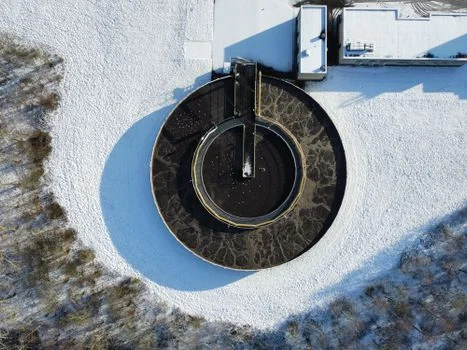
For procurement managers, the transition to electrocoagulation is often justified by the reduction in OPEX compared to chemical precipitation. While the CAPEX for an EC system is roughly 20% higher than a traditional chemical dosing plant, the elimination of bulk chemical purchases and the reduction in sludge disposal costs create a rapid payback period.
| Cost Category (10 m³/h System) | Iron Electrode System | Aluminum Electrode System |
|---|---|---|
| CAPEX (Equipment + Automation) | $80,000 – $150,000 | $60,000 – $120,000 |
| Energy OPEX (per m³) | $0.15 – $0.25 | $0.25 – $0.40 |
| Electrode Replacement (per m³) | $0.05 – $0.08 | $0.10 – $0.15 |
| Sludge Disposal (per m³) | $0.15 – $0.20 | $0.25 – $0.35 |
| Total OPEX (per m³) | $0.35 – $0.53 | $0.60 – $0.90 |
The ROI calculation for a facility treating 50 m³/h with 100 mg/L Cr(VI) typically yields a payback period of 18 to 24 months. This is driven by two primary factors. First, the reduction in sludge volume by 40% significantly lowers the cost of hazardous waste hauling. Second, iron electrodes are approximately 40% cheaper to replace per unit of weight than aluminum electrodes, and they last 50% longer in high-chromium environments.
Maintenance labor should also be factored into the budget. Modern EC systems from HydropureWater feature automated polarity reversal, which cleans the electrodes during operation and reduces manual cleaning labor by 70%. Without these features, "hidden" labor costs can add $0.05/m³ to the OPEX.
Case Study: 98.5% Cr(VI) Removal in a Tannery Wastewater Stream
In a 2025 pilot project at a large-scale leather tannery, an iron-based continuous-flow electrocoagulation system was deployed to address a persistent compliance gap. The facility’s effluent profile consisted of 50 m³/h flow with 120 mg/L Cr(VI), a pH of 7.2, and significant total suspended solids (TSS) at 300 mg/L.
The system was configured with iron electrodes, a 2 A current intensity, and a flow rate of 1.0 L/min, providing a total reactor flow distance of 165 cm. Within 30 minutes of operation, the Cr(VI) concentration dropped to 0.08 mg/L, comfortably meeting the EU REACH limit of 0.1 mg/L. This represented a 98.5% removal efficiency, achieved without the addition of sodium bisulfite or lime.
The economic impact was immediate. The tannery saw a 25% reduction in sludge disposal costs because the EC-generated sludge was denser and had better settling characteristics than the previous chemical sludge. Energy consumption was recorded at 0.82 kWh/m³, 15% lower than the facility's previous test run with aluminum electrodes. A key lesson learned was that adjusting the influent pH to 6.5 using an automated dosing system improved the iron electrode lifespan by 20%, as it prevented the formation of a passive oxide layer on the anode surface.
Frequently Asked Questions
Q: Can electrocoagulation handle high chromium concentrations (>500 mg/L)?
A: Yes. While standard reactors are optimized for 50–150 mg/L, high-concentration streams can be treated using staged reactors or a lower flow rate (e.g., 0.5 L/min) combined with a higher current (3 A). Iron electrodes can still achieve 95%+ removal at 500 mg/L Cr(VI) under these conditions.
Q: How does electrocoagulation compare to chemical precipitation for chromium removal?
A: Electrocoagulation eliminates the need for hazardous chemical storage and reduces sludge volume by approximately 40%. While the initial CAPEX is 20% higher, the long-term OPEX is significantly lower due to reduced disposal costs and chemical savings (per EPA 2024 benchmarks).
Q: What are the maintenance requirements for an electrocoagulation system?
A: Routine maintenance includes electrode cleaning (every 200 hours for iron), monthly calibration of the DC power supply, and quarterly removal of accumulated sludge from the reactor base. Automated systems with polarity reversal can extend cleaning intervals to 500+ hours.
Q: Is electrocoagulation compliant with EPA and EU regulations?
A: Yes. Iron-based electrocoagulation consistently achieves Cr(VI) levels below 0.1 mg/L, fulfilling the requirements of EU REACH and the EPA’s 2025 Effluent Limitations Guidelines (ELG).
Q: What’s the typical payback period for an electrocoagulation system?
A: For industrial facilities treating more than 50 m³/h with chromium levels above 50 mg/L, the payback period is typically 18–36 months, depending on local energy costs and current sludge disposal fees.