
Top Sewage Treatment Equipment Suppliers in Sharjah: 2025 Engineering Specs, Costs & Zero-Risk Selection Guide
Sharjah’s industrial and municipal sectors require sewage treatment equipment that meets UAE Federal Law 24/1999 and Sharjah Municipality’s discharge standards (e.g., BOD ≤ 20 mg/L, TSS ≤ 30 mg/L). Top suppliers in Sharjah offer FBBR, SBR, and MBR systems with capacities from 10–2,000 m³/day, but costs vary widely (AED 50K–2M) based on technology, footprint, and automation. This guide provides engineering specs, cost benchmarks, and a zero-risk selection framework to help buyers avoid non-compliance fines (up to AED 500K) and operational inefficiencies.
Why Sharjah’s Industrial Sector Needs Advanced Sewage Treatment Equipment
Sharjah’s industrial output grew 8.2% YoY in 2023 according to the Sharjah Chamber of Commerce, a surge that has increased industrial wastewater volumes by an estimated 12–15% annually. This rapid expansion places immense pressure on existing infrastructure, making the selection of a reliable sewage treatment equipment supplier in Sharjah a critical operational priority. Under UAE Federal Law 24/1999, industrial facilities must ensure that treated effluent meets stringent quality markers, specifically BOD ≤ 20 mg/L and TSS ≤ 30 mg/L, before discharge or reuse. Failure to meet these standards results in Sharjah Municipality fines ranging from AED 50,000 to AED 500,000, as updated in the 2024 regulatory cycle.
Data from the Abu Dhabi Quality and Conformity Council (ADQCC) suggests that 68% of Sharjah factories audited in 2023 failed to meet Total Suspended Solids (TSS) limits, often due to aging equipment or systems not designed for local environmental stressors. The climate in Sharjah presents unique engineering hurdles; summer temperatures frequently reach 45°C with 80% humidity. These conditions significantly impact biological treatment efficiency by reducing dissolved oxygen (DO) saturation levels and increasing evaporation losses. For instance, a system designed for temperate climates may experience a 20-30% drop in metabolic activity of aerobic bacteria during a Sharjah summer if the aeration system is not appropriately uprated.
Common triggers for procuring new equipment include facility expansion projects, persistent odor complaints from neighboring residential areas in Al Nahda or Muwaileh, and failed compliance audits. Modern systems must address these pain points through high-efficiency aeration, automated sludge management, and odor control units (OCUs). For facilities looking to minimize their environmental footprint, integrating DAF systems for Sharjah’s industrial pre-treatment needs can significantly reduce the load on secondary biological stages, ensuring consistent compliance even during peak production cycles.
Sharjah’s Sewage Treatment Technology Landscape: FBBR vs. SBR vs. MBR
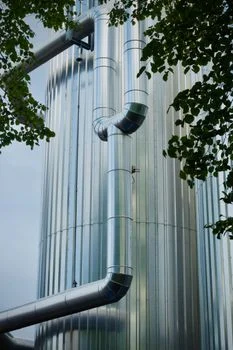
Fluidized Bed Bioreactor (FBBR) systems achieve 90–95% COD removal for high-strength industrial wastewater (COD 3,000–10,000 mg/L) while maintaining a 30–50% smaller footprint than traditional Sequencing Batch Reactors (SBR). Selecting the right technology depends on the influent characteristics, required effluent quality, and available space. In Sharjah’s industrial zones, where land value is high, the compact nature of modern package plants is a primary driver for technology selection.
| Technology | COD Removal Efficiency | Typical Application in Sharjah | Footprint Requirement | Energy Demand (kWh/m³) |
|---|---|---|---|---|
| FBBR | 90–95% | High-strength industrial (Food/Textile) | Low (Compact) | 0.8–1.2 |
| SBR | 85–92% | Labor camps, light industrial, municipal | Moderate | 0.6–1.0 |
| MBR | 95–99% | Hotels, hospitals, water reuse projects | Very Low | 1.2–2.0 |
The SBR (Sequencing Batch Reactor) remains the most common choice for municipal and light industrial use in Sharjah where COD levels are below 1,000 mg/L. While cost-effective, SBRs require 20–30% more space than FBBRs and are prone to odor issues if the decanting phase is not precisely controlled. For space-constrained sites, a WSZ series underground package sewage treatment plant for Sharjah’s space-constrained sites offers a discreet solution that mitigates odor and noise concerns.
For high-end applications like five-star hotels in Al Majaz or private hospitals, MBR (Membrane Bioreactor) technology is the gold standard. MBR delivers reuse-quality effluent (COD ≤ 30 mg/L, turbidity ≤ 1 NTU) suitable for irrigation and cooling tower make-up water. However, MBR systems face specific challenges in Sharjah’s 45°C heat; membrane fouling rates increase as wastewater viscosity changes and biological extracellular polymeric substances (EPS) fluctuate. Despite these challenges, MBR systems for Sharjah hotels and hospitals requiring reuse-quality effluent provide the highest ROI by reducing reliance on expensive desalinated municipal water. High-salinity wastewater in industrial zones also requires specialized media in FBBR systems to prevent clogging and maintain biofilm stability.
Engineering Specs for Sharjah: What to Demand from Your Supplier
Hydraulic loading rates for sewage treatment in Sharjah range from 0.3 to 1.5 m³/m²·h depending on the membrane or media technology used, as per Sharjah Municipality 2024 guidelines. When evaluating a sewage treatment equipment supplier in Sharjah, procurement managers must demand a detailed technical data sheet that accounts for the local ambient temperature and influent variability. Generic specs often fail to account for the peak loading experienced during Sharjah’s humid summer months.
| Parameter | FBBR Specification | SBR Specification | MBR Specification |
|---|---|---|---|
| Hydraulic Loading Rate | 0.5–1.5 m³/m²·h | 0.5–1.2 m³/m²·h | 0.3–0.8 m³/m²·h |
| Sludge Retention Time (SRT) | 15–30 Days | 15–25 Days | 20–40 Days |
| Daily Footprint (per m³) | 0.5–1.0 m² | 0.8–1.5 m² | 0.3–0.6 m² |
| BOD Effluent Quality | ≤ 20 mg/L | ≤ 20 mg/L | ≤ 5 mg/L |
Sludge retention time (SRT) is another critical metric; to consistently meet the BOD ≤ 20 mg/L limit, MBR systems should be operated with an SRT of 20–40 days. This longer retention time allows for the nitrifying bacteria to thrive, which is essential for ammonia removal—a common requirement for Sharjah Municipality discharge permits. Energy consumption is a significant OPEX factor, with SBRs consuming 0.6–1.0 kWh/m³ and MBRs requiring 1.2–2.0 kWh/m³ due to the high-pressure requirements of membrane filtration (per ADQCC 2023 benchmarks).
Beyond performance specs, equipment must comply with the UAE Fire & Life Safety Code, particularly for electrical control panels and blowers installed in industrial zones like Sajaa. Suppliers should provide ISO 14001 certification for environmental management and, crucially, ADQCC approval for the specific equipment model. For healthcare facilities, understanding how Sharjah’s hospitals can apply similar compliance strategies for wastewater treatment used in other global hubs can help in drafting more robust tender documents.
Cost Breakdown: CAPEX, OPEX, and Hidden Expenses for Sharjah Projects
CAPEX for a 100 m³/day SBR system in Sharjah typically ranges from AED 120,000 to AED 250,000, including installation and local certification fees. Budgeting for wastewater infrastructure in the UAE requires a granular understanding of both the initial investment and the long-term operational costs, which are often influenced by local utility tariffs and labor rates.
| Cost Component | Estimated Range (AED) | Percentage of Total Lifecycle Cost |
|---|---|---|
| CAPEX (100 m³/day System) | 120K – 800K (Tech dependent) | 30–40% |
| Energy (Annual) | 15K – 45K | 40–60% of OPEX |
| Chemicals & Consumables | 5K – 15K | 15–25% of OPEX |
| Maintenance & Labor | 10K – 25K | 15–20% of OPEX |
When comparing Sharjah’s wastewater treatment costs to global benchmarks, local buyers must account for the 5% import duty on equipment and ADQCC certification fees, which can range from AED 10,000 to AED 50,000 depending on the system complexity. Civil works in Sharjah, particularly for underground installations in sandy soil conditions, cost between AED 200 and AED 500 per square meter.
The ROI for these systems is increasingly driven by water scarcity. MBR systems in Sharjah hotels typically achieve payback in 3–5 years by substituting expensive municipal water with treated effluent for landscaping and cooling towers. For industrial plants, the ROI is often calculated through "compliance cost avoidance," where the 5–7 year payback period of an SBR system is justified by the elimination of potential AED 500,000 fines and the cessation of expensive sewage tanker hauling services, which can cost a large factory upwards of AED 20,000 per month.
How to Evaluate Sewage Treatment Equipment Suppliers in Sharjah
The Abu Dhabi Quality and Conformity Council (ADQCC) provides the primary certification framework for wastewater equipment compliance across the UAE, including Sharjah. A zero-risk procurement decision begins with verifying that the supplier is not just a trader, but an authorized manufacturer or representative with a proven track record in the Northern Emirates. Follow this four-step framework to ensure a reliable installation:
- Step 1: Regulatory Verification: Confirm the supplier holds valid ADQCC certification and Sharjah Municipality Environmental Health Department approval. Ask for the specific registration number and verify it against the ADQCC pre-approved list.
- Step 2: Local Case Studies: Request at least three Sharjah-specific references. A supplier should be able to demonstrate a successful installation, such as an "SBR system for a 500-bed labor accommodation in Sajaa, operational since 2022."
- Step 3: Warranty and Training: Demand a minimum 12-month comprehensive warranty, which is a standard Sharjah Municipality expectation. Ensure the contract includes on-site training for your facility engineers to manage routine tasks like blower filter cleaning and sludge wasting.
- Step 4: After-Sales Infrastructure: Evaluate the supplier’s local presence. Do they have a workshop in Sharjah or Dubai? A critical "green flag" is a guaranteed emergency response time of ≤ 4 hours and local stock of critical spare parts like diffusers, sensors, and membrane modules.
Red flags to watch for include a lack of a physical UAE office, vague performance guarantees (e.g., "high efficiency" without specifying BOD/COD numerical targets), and no mention of remote monitoring capabilities. Modern systems should offer IoT-enabled dashboards that allow Sharjah plant managers to monitor effluent quality in real-time, providing an early warning system before compliance limits are breached. For those needing specialized industrial solutions, how to select a DAF system for Sharjah’s industrial pre-treatment needs should be a key part of the initial engineering consultation.
Frequently Asked Questions
What are the Sharjah Municipality discharge limits for industrial wastewater?
According to UAE Federal Law 24/1999 and Sharjah Municipality standards, the limits are BOD ≤ 20 mg/L, TSS ≤ 30 mg/L, pH 6–9, and oil & grease ≤ 10 mg/L. Total Dissolved Solids (TDS) limits may also apply if the water is intended for irrigation.
How much does a 100 m³/day SBR system cost in Sharjah?
A standard 100 m³/day SBR system in Sharjah costs between AED 120,000 and AED 250,000. This price typically includes the equipment, control panels, installation, and the necessary ADQCC certification for 2025.
What’s the best sewage treatment technology for a Sharjah hotel?
MBR (Membrane Bioreactor) systems are the best choice for Sharjah hotels. They deliver high-quality effluent (COD ≤ 30 mg/L) that can be safely reused for landscaping and cooling towers, potentially reducing a hotel's water bill by 40–60%.
Do I need a permit to install a sewage treatment plant in Sharjah?
Yes. You must obtain a permit from the Sharjah Municipality (Environmental Health Department). Additionally, the equipment itself must be approved by the ADQCC to ensure it meets UAE national standards.
How often should I service my FBBR system in Sharjah?
For an FBBR system, you should replace the media every 5–7 years, service the blowers every 6 months, and remove accumulated sludge every 3–6 months, depending on the organic load of the influent. Regular sensor calibration is also recommended every 3 months due to high ambient temperatures.


