
Why Casablanca’s Wastewater Treatment Costs Are Rising in 2025
In 2025, wastewater treatment plant costs in Casablanca range from €1.2M for a 50 m³/h compact MBR system to €300M for a 50,000 m³/day municipal facility, with industrial plants averaging €2–5M for capacities of 100–500 m³/day. Morocco’s €5.6B national wastewater program prioritizes water reuse, requiring tertiary treatment that adds 15–25% to CAPEX but enables compliance with ONEE’s BOD <10 mg/L standard for unrestricted irrigation. This guide provides capacity-specific cost breakdowns, technology trade-offs, and a step-by-step ROI calculator to help buyers align investments with local operating conditions and regulatory trajectories.
Casablanca’s water demand currently exceeds its natural supply by approximately 2.5 billion m³ per year, a deficit that has forced municipal and industrial planners to shift from simple discharge to complex reuse models. According to 2024 data from the Moroccan Ministry of Equipment, groundwater depletion accounts for 13% of total demand in the region, leading to stricter extraction limits for industrial zones like Ain Sebaâ and Tit Mellil. To mitigate this, the Office National de l'Electricité et de l'Eau Potable (ONEE) 2024–2027 plan targets a wastewater reuse capacity of 100 Mm³/year, a significant jump from the 38 Mm³/year recorded in 2023. For facility owners, this necessitates advanced tertiary treatment stages—such as ultrafiltration or reverse osmosis—which increase initial capital investment by 15% to 25% compared to secondary treatment alone. This emphasis on reuse is driven by a growing awareness of water scarcity and the economic benefits of recycling treated wastewater for agricultural and industrial purposes, reducing reliance on increasingly strained freshwater sources. Furthermore, the long-term sustainability of Casablanca's economic growth is intrinsically linked to its water management strategy, making these investments crucial for future development.
Regulatory pressure under Law 10-95 has intensified, with the Agence de Bassin Hydraulique du Bouregreg et de la Chaouia (ABHBC) increasing inspections of textile and food processing units. Non-compliance with discharge standards now carries fines of up to MAD 500,000, and repeat offenders face potential plant shutdowns. The increasing stringency of these regulations, coupled with the potential for significant financial penalties, makes proactive investment in compliant treatment technologies not just a regulatory necessity but a sound business decision. Moreover, the rising energy costs in Morocco, which saw an 8% increase in electricity tariffs in 2024, have fundamentally altered the total cost of ownership. While MBR systems for high-efficiency effluent reuse in Casablanca offer superior water quality, they consume 0.8–1.2 kWh/m³ compared to 0.4–0.6 kWh/m³ for conventional activated sludge systems, making energy-efficient aeration and automation critical for long-term budget stability. The Moroccan government is also exploring incentives for adopting renewable energy sources for water treatment facilities, which could offset some of these rising energy expenses in the coming years.
Wastewater Treatment Plant Cost in Casablanca: 2025 CAPEX Breakdown by Capacity and Technology
Capital expenditure (CAPEX) for wastewater facilities in Casablanca is primarily driven by the required effluent quality and the volumetric capacity of the system. For industrial buyers, the presence of high Total Suspended Solids (TSS) or Fats, Oils, and Grease (FOG) in the influent—common in Casablanca’s food processing sector—can necessitate specialized pre-treatment that adds €150,000 to €300,000 to the budget for a 500 m³/day system. This pre-treatment is essential to prevent clogging of downstream equipment, reduce the load on biological treatment stages, and extend the lifespan of more sensitive components like membranes. The specific composition of industrial wastewater, including the presence of heavy metals or complex organic compounds, will further influence the choice and cost of pre-treatment technologies, potentially requiring advanced chemical or physical separation methods.
| Plant Capacity (m³/day) | Technology Type | Estimated CAPEX (€) | Cost per m³/day (€) |
|---|---|---|---|
| 100 - 500 | Compact MBR / Package Plant | €1.2M - €2.5M | €5,000 - €12,000 |
| 1,000 - 5,000 | Conventional Activated Sludge | €3.5M - €8M | €700 - €3,500 |
| 5,000 - 10,000 | MBR with Tertiary Reuse | €12M - €22M | €2,400 - €4,400 |
| 10,000 - 50,000 | Municipal Conventional + UV | €40M - €180M | €800 - €3,600 |
| 50,000+ | Large Scale Municipal | €250M - €300M+ | €5,000 - €6,000 |
The allocation of these costs typically follows a predictable engineering breakdown: civil works account for 30–40% of CAPEX, mechanical and electrical equipment for 25–35%, and automation/control systems for 10–15%. The remaining 10–15% is usually reserved for contingencies and engineering fees. In the Casablanca-Settat region, compact underground WWTP for Casablanca’s space-constrained sites can reduce civil engineering costs by 20–30% because they bypass the need for large-scale concrete tank construction, though they require detailed soil stability studies due to the region's varying clay content. While local labor and basic construction materials are roughly 20–30% less expensive than European averages, specialized equipment like membranes and PLCs are subject to a 17.5% VAT and import duties ranging from 10% to 15%, which must be factored into the initial procurement budget. The inclusion of advanced monitoring and control systems, while a significant portion of CAPEX, is crucial for optimizing operational efficiency and ensuring compliance with evolving environmental standards.
Influent quality significantly impacts these benchmarks. For instance, how DAF systems remove 95% of TSS and FOG from industrial wastewater is a critical consideration for Casablanca’s dairy and meat processing plants; integrating a DAF pre-treatment for Casablanca’s high-FOG industrial wastewater ensures that downstream biological processes are not fouled, preventing premature membrane failure and unplanned maintenance costs. The effectiveness of DAF can be further enhanced by the careful selection of chemical coagulants and flocculants tailored to the specific wastewater characteristics, contributing to higher removal efficiencies and lower operational expenditures over time. The consistent removal of these contaminants also safeguards the public health by preventing the release of harmful substances into the environment.
OPEX and Lifecycle Costs: How Technology Choices Impact Long-Term Budgets
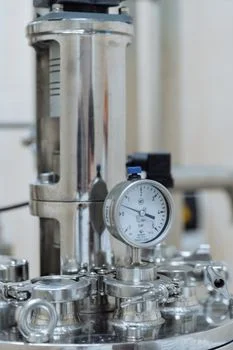
Operating expenditure (OPEX) often outweighs CAPEX over the 20-year lifespan of a wastewater treatment plant in Casablanca. Energy is the largest variable, followed by chemical consumption and membrane replacement. Engineering decisions made during the design phase—such as selecting between hollow-fiber and flat-sheet membranes—will dictate the facility's financial performance for a decade. The ongoing maintenance of mechanical components, sludge disposal, and labor costs also contribute significantly to the overall OPEX, making a holistic lifecycle cost analysis essential for informed investment decisions.
| Cost Component | Conventional Activated Sludge | MBR System | DAF Pre-treatment |
|---|---|---|---|
| Energy (kWh/m³) | 0.4 - 0.6 | 0.8 - 1.2 | 0.1 - 0.2 |
| Chemicals (€/m³) | €0.15 - €0.35 | €0.10 - €0.25 | €0.25 - €0.50 |
| Labor (FTE for 500 m³/d) | 2.0 - 3.0 | 0.5 - 1.0 | 0.5 |
| Annual Maintenance (% CAPEX) | 2% - 3% | 4% - 5% | 3% |
Membrane replacement is a critical lifecycle cost for MBR-equipped facilities. PVDF flat-sheet membranes generally cost between €50 and €80 per m² and offer a service life of 5 to 7 years in typical Casablanca industrial conditions. In contrast, hollow-fiber membranes are cheaper upfront (€30–60/m²) but require more frequent backwashing and chemical cleaning, which can increase downtime. Chemical costs are also rising; coagulants and flocculants typically range from €0.10 to €0.30/m³. To combat this, many facilities are installing on-site ClO₂ generators for Casablanca’s reuse compliance, which can reduce disinfection chemical costs by 30–50% compared to purchasing bulk sodium hypochlorite. The operational lifespan of membranes is heavily influenced by influent quality and operational practices, making proper pre-treatment and regular maintenance crucial for maximizing their service life and minimizing replacement frequency.
Automation plays a pivotal role in OPEX reduction. A fully automated WSZ series system requires only 0.5 Full-Time Equivalent (FTE) for monitoring, whereas manual conventional systems often require 2–3 FTEs. In the Casablanca labor market, this automation can save a facility between €20,000 and €50,000 annually in personnel costs for a mid-sized 500 m³/day plant. The integration of advanced sensors and control algorithms allows for real-time process optimization, reducing energy consumption and chemical usage. Understanding industrial WWTP compliance strategies in water-scarce regions (Bahia case study) shows that proactive maintenance and automated dosing are the most effective ways to prevent the regulatory fines that currently plague Casablanca’s industrial sectors. These automated systems can also provide valuable data for predictive maintenance, further reducing unexpected downtime and associated repair costs.
MBR vs Conventional vs DAF: Side-by-Side Cost and Performance Comparison for Casablanca Buyers
Choosing the right technology requires balancing the higher CAPEX of advanced systems against the space constraints and strict effluent requirements of Casablanca’s urban and industrial zones. While conventional systems are robust, they often fail to meet the "unrestricted irrigation" standards required for water reuse in the city’s green belts and parks without expensive tertiary upgrades. MBR systems, despite their higher initial investment, offer a compact footprint and superior effluent quality, making them ideal for land-constrained or high-standard reuse applications. DAF systems, on the other hand, excel as pre-treatment units, particularly for industrial wastewater with high FOG and TSS content, significantly reducing the load on subsequent biological treatment stages.
| Parameter | MBR (Membrane Bioreactor) | Conventional Activated Sludge | DAF (Dissolved Air Flotation) |
|---|---|---|---|
| CAPEX | High (+30-40%) | Baseline | Low (Pre-treatment) |
| Footprint | Minimal (60% smaller) | Large (Requires Clarifiers) | Compact |
| Effluent BOD (mg/L) | < 5 | < 20 | Reduction of 50-70% |
| Effluent TSS (mg/L) | < 1 | < 30 | < 50 (from high loads) |
| Energy Consumption | High | Moderate | Low |
| Sludge Production | Low (High SRT) | High | Moderate (Oily Sludge) |
| Maintenance Complexity | High (Membrane focus) | Moderate | Moderate (Mechanical) |
| Moroccan Reuse Compliance | Direct Compliance | Needs Tertiary Stage | Pre-treatment Only |
For industrial operators, particularly in the food and beverage sector, DAF pre-treatment for Casablanca’s high-FOG industrial wastewater is often non-negotiable. DAF systems achieve up to 95% removal of FOG and 90% removal of TSS, protecting the biological stages of either MBR or conventional plants. MBR systems are the preferred choice for facilities with limited land, such as those in the Bouskoura industrial park, because they eliminate the need for secondary clarifiers and achieve a higher level of treatment in a smaller footprint. Conversely, conventional systems remain the standard for large-scale municipal projects where land is available and the primary goal is discharge rather than high-purity reuse. The selection process should also consider future expansion plans and potential changes in regulatory requirements, favoring technologies that offer flexibility and scalability.
Casablanca-Specific Compliance: Effluent Limits, Permits, and Reuse Standards

Compliance in Casablanca is governed by a combination of national laws and local municipal action plans. The permit process typically takes 6 to 12 months for plants exceeding 1,000 m³/day, requiring a comprehensive Environmental Impact Assessment (EIA) and hydraulic studies. Fees for these permits generally range from MAD 10,000 to MAD 50,000, depending on the plant's capacity and the complexity of the discharge environment. Understanding these regulatory nuances is crucial for project planning and budgeting. The Agence de Bassin Hydraulique du Bouregreg et de la Chaouia (ABHBC) plays a key role in enforcing these standards, conducting regular monitoring and inspections to ensure adherence to permitted discharge limits.
| Parameter | Unrestricted Irrigation | Industrial Reuse (Cooling) | Discharge to Sewer |
|---|---|---|---|
| BOD5 (mg/L) | < 10 | < 30 | < 500 |
| TSS (mg/L) | < 10 | < 30 | < 600 |
| Fecal Coliform (CFU/100mL) | < 1,000 | < 10,000 | N/A |
| pH | 6.5 - 8.5 | 6.0 - 9.0 | 5.5 - 9.5 |
| Chromium (Industrial) | < 0.1 mg/L | < 0.5 mg/L | < 2.0 mg/L |
Under Casablanca’s Municipal Action Plan (PAC) 2023–2028, the city is investing in 10 new WWTPs specifically designed for watering green spaces. For private industrial owners, ONEE oversees the reuse standards and issues the necessary authorizations. It is important to note that the 2024 enforcement landscape has become more rigid; repeat offenders found discharging untreated effluent into the Oued Bouskoura or the Atlantic Ocean face severe penalties, including substantial fines and mandated plant upgrades. The Moroccan government's commitment to water conservation and environmental protection is driving these stricter regulations, encouraging the adoption of advanced treatment technologies and water recycling practices across all sectors. The inclusion of specific limits for industrial pollutants like chromium highlights the need for tailored treatment solutions for different industrial processes operating within the Casablanca region.


